

AI Petrophysical Net Pay Evaluation
A publication-style case study showing how KnowVerse converts reservoir cutoffs, Archie parameters, and well-log data into an explainable commercial-pay assessment with net-pay footage, completion potential, and production range guidance.
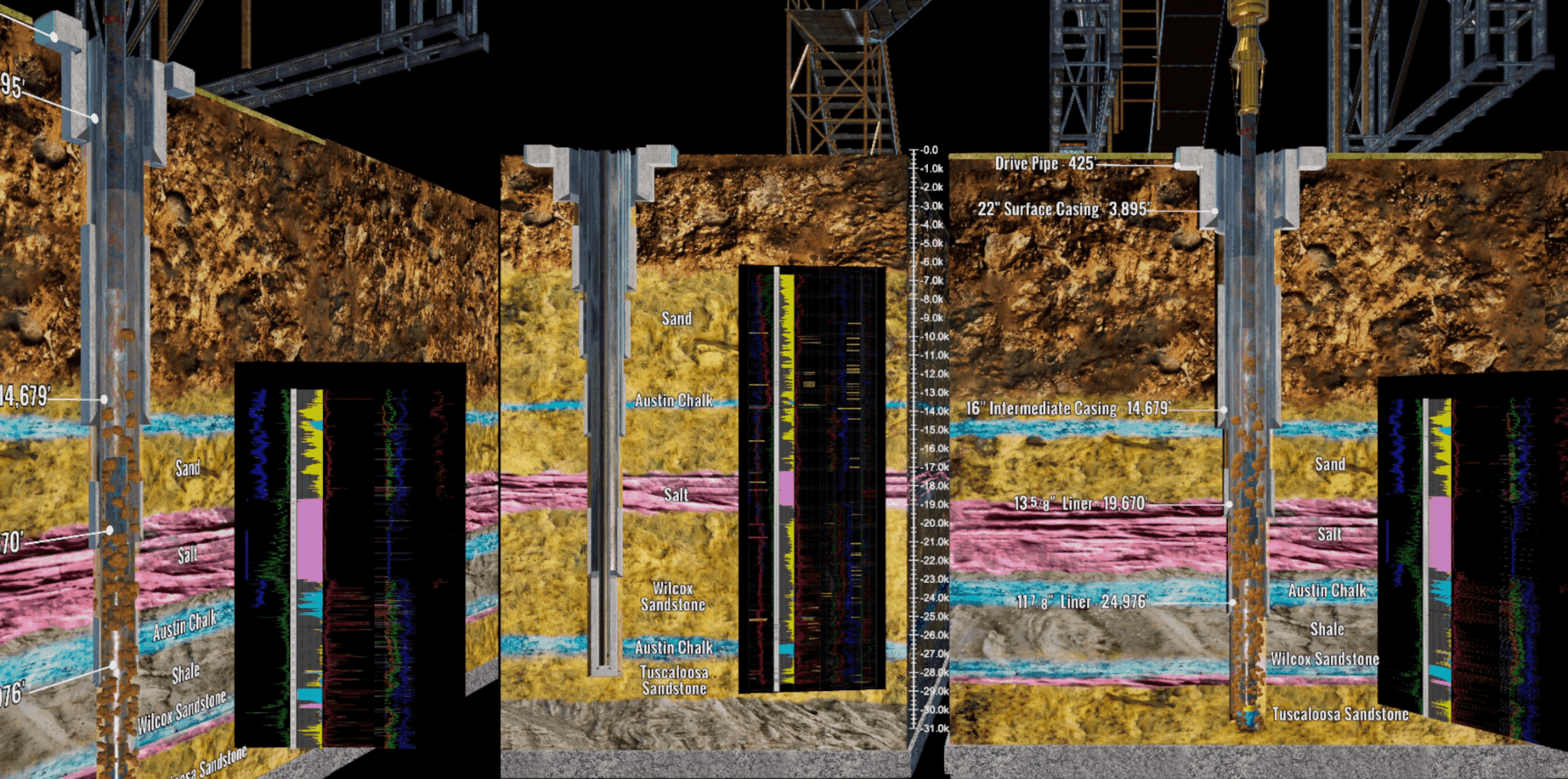
Commercial pay evaluation is slow when logs, cutoffs, and reservoir context sit in separate systems.
Industry challenge
Petrophysical teams must combine well logs, formation tops, resistivity inputs, porosity interpretation, shale-volume screening, water saturation calculations, and completion assumptions before deciding whether a well has commercial hydrocarbon pay. The process is often manual, specialist-heavy, and difficult to repeat consistently across assets.
Business impact
Solving this problem improves completion decisions, reduces non-commercial frac risk, and accelerates asset screening. When commercial pay can be quantified faster, teams can prioritize high-quality intervals, justify capital allocation, and avoid spending on zones that do not meet reservoir-quality thresholds.
KnowVerse executed a multi-data petrophysical workflow from a single engineering query.
Data and sources considered
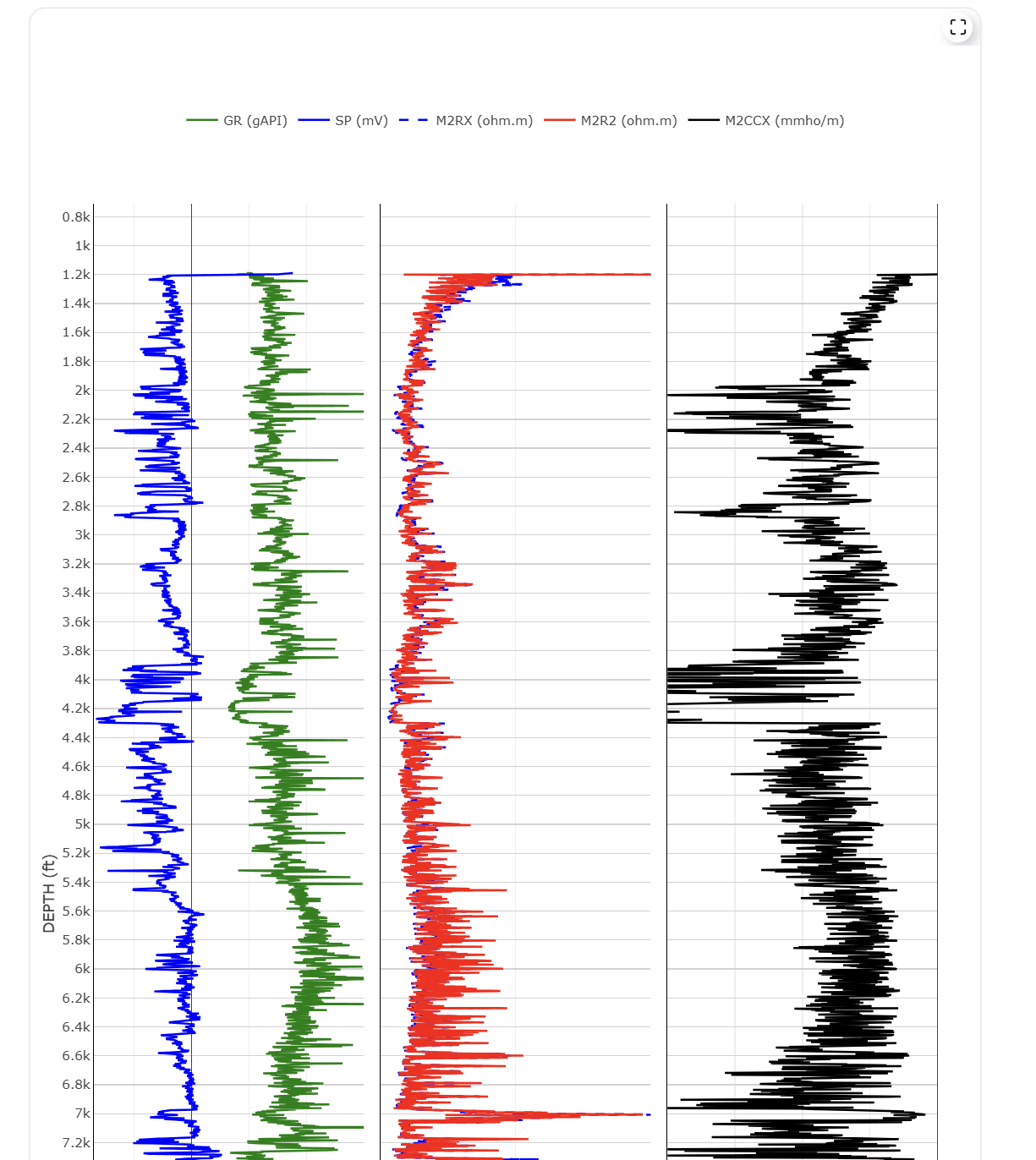
The evaluation considered well-log curves such as gamma ray, spontaneous potential, resistivity, conductivity, and depth-indexed petrophysical measurements, along with formation interval tops and bottoms. The user-defined inputs included Archie parameters a = 0.75, m = 2.15, n = 2.0; Rw = 0.013 ohm·m; porosity cutoff = 0.18; water saturation cutoff = 0.65; shale volume cutoff = 0.425; and intervals from 7,794 ft to 10,000 ft.
Autonomous retrieval
KnowVerse retrieves the required curves and interval data from the organization’s historian, petrophysical databases, LAS/log repositories, and engineering files, then aligns the data by depth so the computation system can apply the correct cutoffs across each interval.
Execution-engine analysis
The agent-built computation workflow calculates shale volume, effective porosity, water saturation, and net-pay qualification by depth sample. It then aggregates pay footage by formation interval, evaluates completion quality, and converts the results into an executive-ready commercial assessment.
The well indicates strong commercial hydrocarbon potential and high-quality frac completion candidacy.
Production interpretation
Log analysis provides static reservoir quality rather than a direct dynamic rate prediction. However, a continuous 254-foot net-pay package with effective porosity above 18% is a high-quality commercial signal. Subject to reservoir pressure, fluid mobility, permeability, completion design, and local basin analogs, a reasonable initial production expectation is robustly commercial and may fall in the 1,000 to 3,000+ BOE/d range.
KnowVerse converts petrophysics from manual interpretation into a reusable AI execution workflow.
| Approach | How the work happens | Accuracy and financial impact |
|---|---|---|
| Traditional petrophysical workflow | Petrophysicists manually load logs, check curves, apply Archie parameters, calculate saturation, screen shale and porosity cutoffs, and summarize pay by interval in separate tools. | Can be accurate, but it is slow, specialist-dependent, and difficult to scale. Financial impact is delayed when completion decisions wait on manual interpretation cycles. |
| ChatGPT / Copilot / Grok / Claude | Generic AI can explain Archie saturation, describe net-pay logic, or draft code, but the user still must retrieve logs, prepare data, run calculations, validate results, and create the decision report. | Useful for explanation, but not sufficient as a controlled engineering workflow. Accuracy depends on the user’s data preparation, prompt quality, and independent technical validation. |
| KnowVerse execution engine | The system retrieves internal log data, applies user-defined petrophysical parameters, executes depth-wise calculations, aggregates net pay, and produces a reusable decision-ready assessment. | Higher operational confidence because outputs are grounded in internal data and repeatable calculations. Financial value comes from faster pay-zone identification, better frac-candidate screening, and reduced risk of investing in poor-quality intervals. |
Executive takeaway
The well demonstrates excellent commercial potential based on the defined cutoffs: 254 ft of net pay, strong porosity, acceptable water saturation, and manageable shale volume. KnowVerse turns this kind of petrophysical evaluation into an autonomous application that supports faster completion decisions and more disciplined reservoir-development planning.