

AI Well Performance Decline Diagnostics
A publication-style case study showing how KnowVerse converts a single executive query into a repeatable diagnostic application for production-decline deviation, root-cause scoring, and field-level action prioritization.
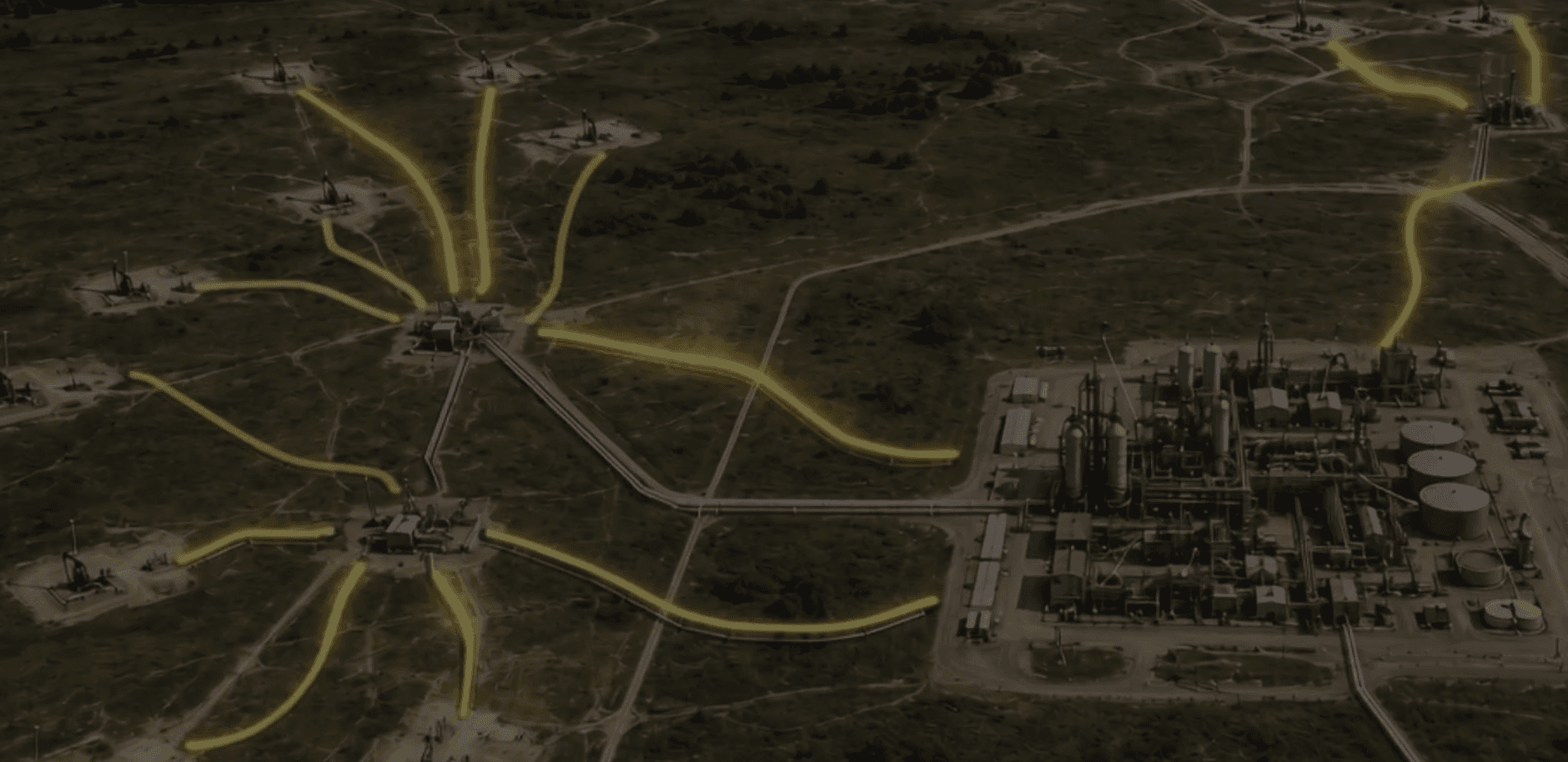
Fragmented production data hides the real cause of decline.
Industry challenge
Production teams often investigate underperformance through disconnected historian exports, production-test sheets, event logs, offset frac records, ESP data, and manual engineering review. The result is delayed surveillance, inconsistent root-cause ranking, and limited executive visibility into what should be fixed first.
Business impact
Solving the problem improves production-defense decisions, prioritizes workovers and surveillance activity, and reduces wasted engineering time. The highest financial value comes from earlier intervention on water breakthrough, lift degradation, choke mismanagement, and parent-child frac communication before losses compound across the field.
KnowVerse built the diagnostic workflow from one natural-language query.
Data and sources considered
The workflow used production-test records, measured oil/gas/water rates, wellhead pressure, choke settings, water cut, timing by test number, well metadata, ESP/artificial-lift indicators, operational-event codes, and offset completion records linked to affected parent wells.
Autonomous retrieval
KnowVerse retrieves the relevant data from the organization’s historian, databases, file repositories, event logs, and engineering records, then maps each source into the analysis context without requiring the user to manually prepare tables or write a technical prompt.
Execution-engine analysis
The platform autonomously creates the analytical application: deriving cohort type curves, computing oil/gas/water deviations, scoring root causes, ranking wells, and generating reusable executive dashboards through its code-execution and visualization engine.
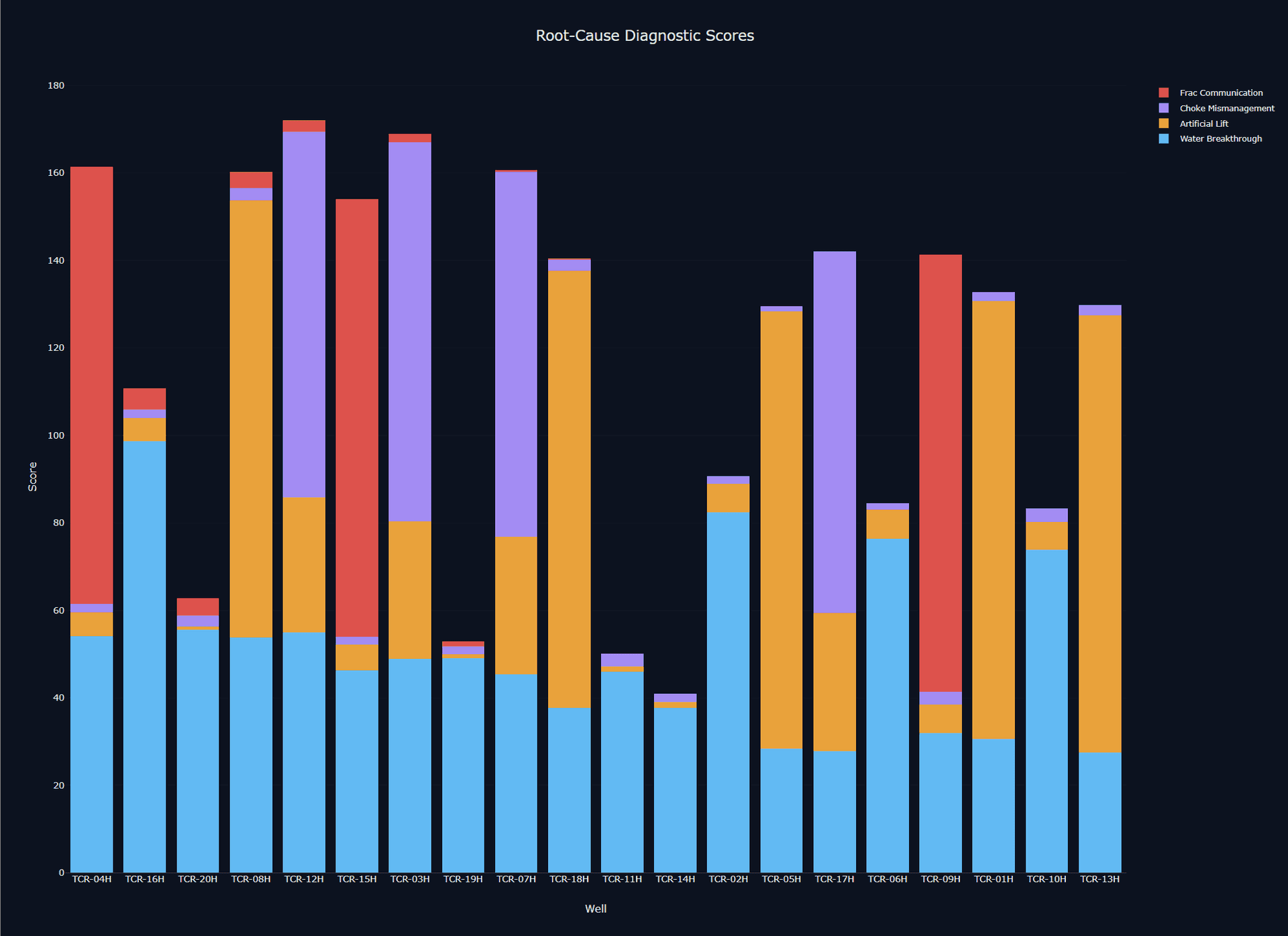
Analysis identified review wells, dominant root causes, and immediate engineering actions.
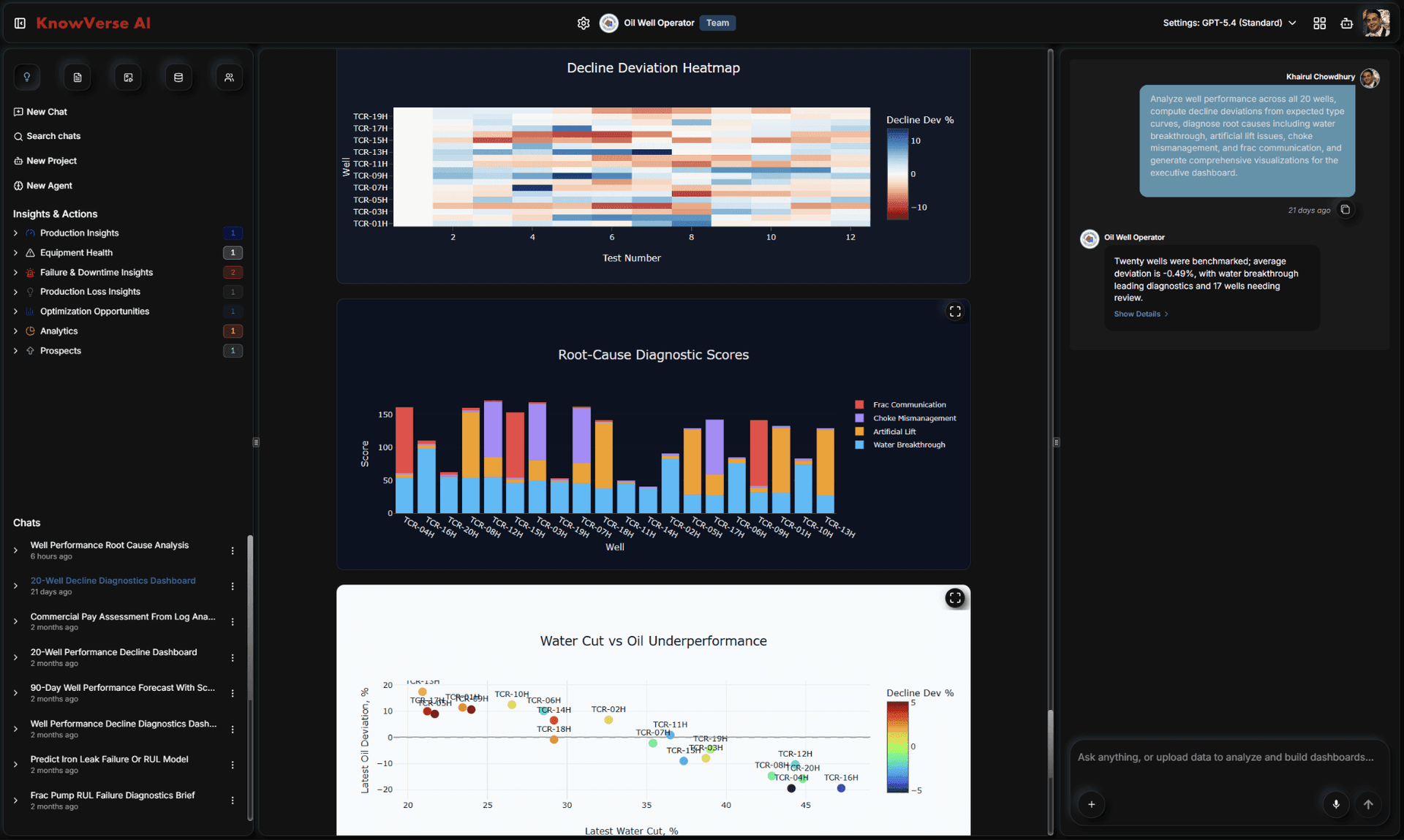
Generative, agentic, and predictive AI becomes an execution layer, not just a chat interface.
| Approach | How the work happens | Accuracy and financial impact |
|---|---|---|
| Traditional engineering workflow | Engineers manually export historian data, prepare spreadsheets, compare type curves, review event logs, and build charts in separate tools. | Accurate when specialists have enough time, but slow and difficult to scale across many wells. Financial impact is delayed because intervention candidates are found late. |
| ChatGPT / Copilot / Grok / Claude | Generic AI can explain decline analysis and draft scripts, but the user still needs to locate data, clean it, execute code, validate charts, and rebuild the workflow each time. | Useful for assistance, but not a governed production workflow. Accuracy depends heavily on user prompting, data preparation, and manual verification. |
| KnowVerse execution engine | The system retrieves internal data, creates the diagnostic application, executes calculations, generates dashboards, and preserves the workflow as a reusable AI application. | Higher operational confidence because outputs are grounded in internal sources, calculations are repeatable, and executive actions are tied to quantified production, event, and diagnostic evidence. |
Executive takeaway
KnowVerse turns a complex production-surveillance problem into a repeatable decision system. The value is not only faster reporting; it is earlier identification of the wells where targeted engineering review can protect production, reduce unnecessary intervention spend, and improve confidence in capital-allocation decisions.