


Predicting Risk of Credit Card Clients Defaulting on Loans
Ensuring financial organizations have the information to cut back their losses.
1Overview & Strategic Importance

Problem Statement
The prediction of loan default risk is a critical challenge in the financial sector. Lending institutions must assess borrowers' creditworthiness accurately to mitigate financial risks and optimize loan approval processes.
Traditional credit risk assessment methods often rely on simple credit scores and manual evaluation, which may overlook complex patterns in borrower data. A machine learning-based predictive model can improve risk evaluation by analyzing multiple borrower attributes to determine the likelihood of loan default.
Required Solutions
- Analyzing historical loan data to identify key factors influencing repayment.
- Developing a classification model to predict default based on credit attributes.
- Enhancing risk management with a data-driven approach to loan approval.
Solution Objectives
- Perform EDA to understand borrower attribute relationships.
- Develop a classification model to predict repayment outcomes.
- Provide insights for data-driven risk mitigation decisions.
Understanding the Problem
Loan default is influenced by multiple factors, including income, employment history, and loan terms. Applicants with unstable financial backgrounds or high debt-to-income ratios pose a higher risk. ML models can identify complex relationships in borrower data to enhance assessment.
2About the Data
Data Collection
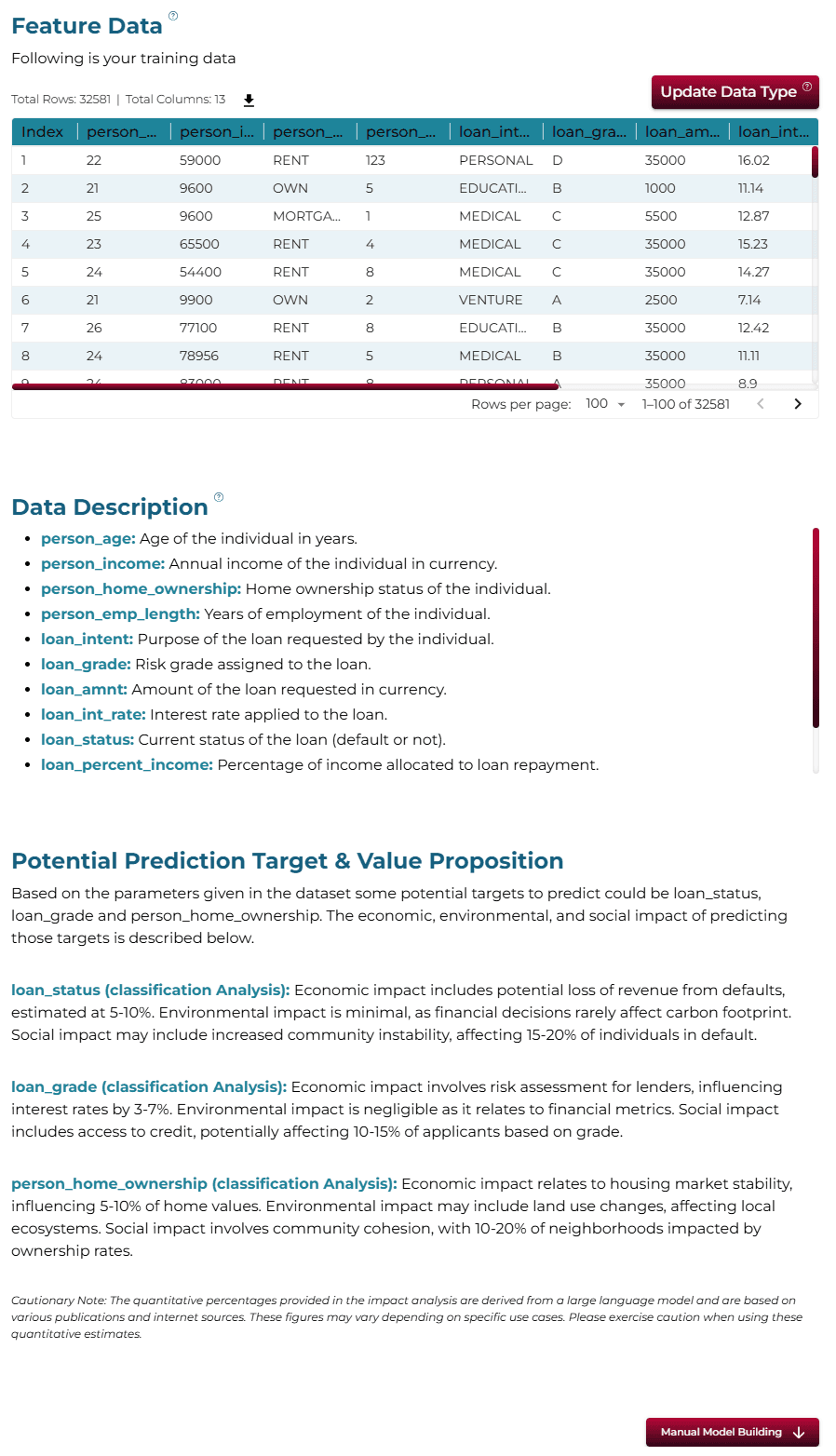
This dataset contains columns simulating credit bureau data, providing a robust foundation for building predictive credit risk models.
Major Parameters Description
Download Training Dataperson_ageThe age of the individual applying for the loan, which may influence creditworthiness and loan approval likelihood.
person_incomeThe annual income of the individual in USD, which affects their ability to repay the loan.
person_home_ownershipThe type of home ownership of the applicant (e.g., RENT, OWN, MORTGAGE, OTHER), which can be a factor in assessing financial stability.
person_emp_lengthThe number of years the individual has been employed, indicating job stability and potential repayment capability.
loan_intentThe purpose of the loan, such as EDUCATION, MEDICAL, VENTURE, PERSONAL, DEBT CONSOLIDATION, or HOME IMPROVEMENT.
loan_gradeThe credit grade assigned to the loan, reflecting the borrower’s creditworthiness based on financial history.
loan_amntThe total loan amount requested by the applicant in USD.
loan_int_rateThe interest rate applied to the loan, which influences the cost of borrowing for the applicant.
loan_statusThe repayment status of the loan (1 for default, 0 for non-default), serving as the target variable for prediction.
3Using iDareAI
Guided Mode Initialization
AUploading Dataset
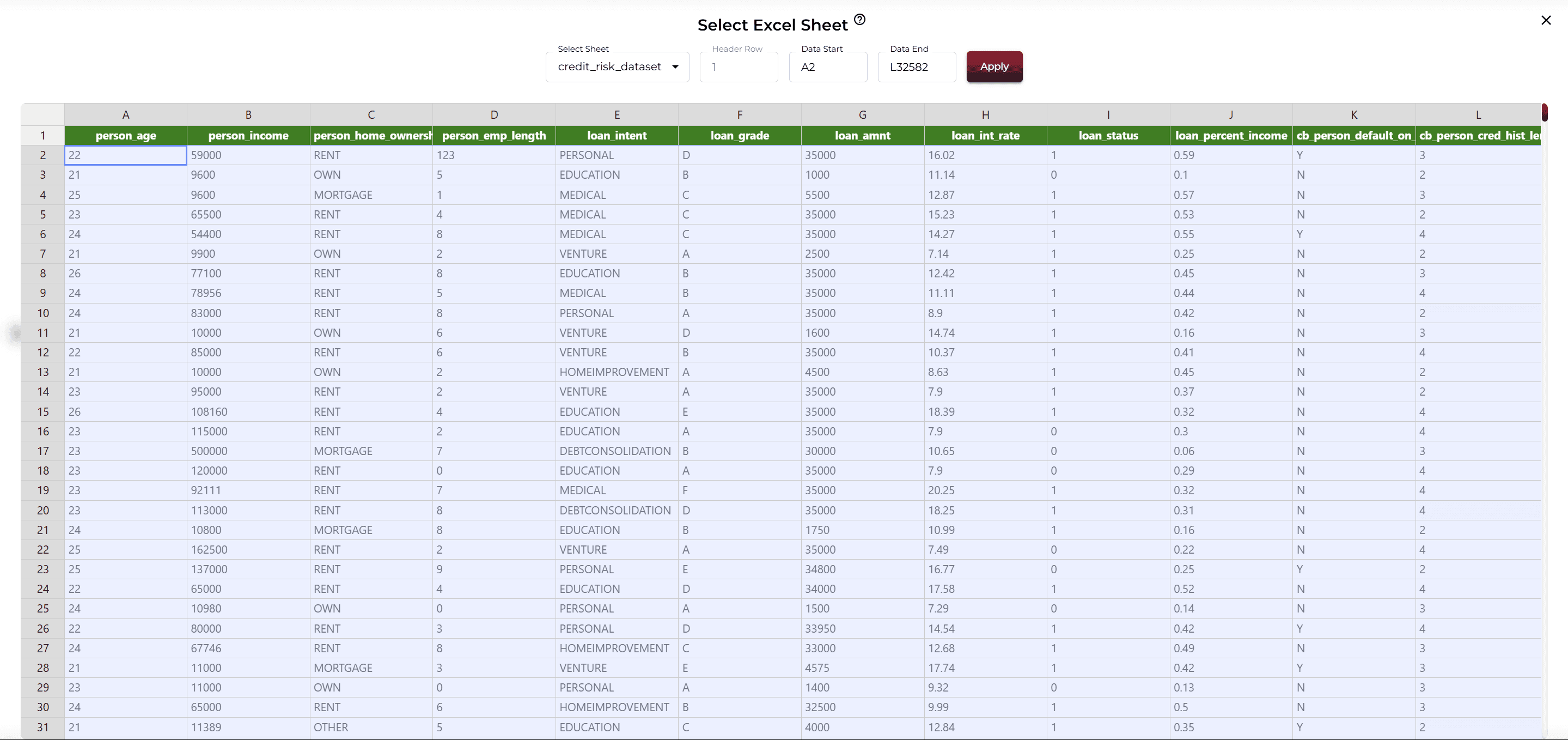
Click on the **'Upload CSV or Excel Data'** button → Select a source for the dataset → Upload `credit_risk_train.xlsx`. The system automatically analyzes the file and identifies the top targets for prediction.
BChoosing Analysis Mode
- How to predict if a creditor will default on their loans using this dataset?
- What are the key factors that contribute to loan default?
Operation Using Autonomous Guided Mode
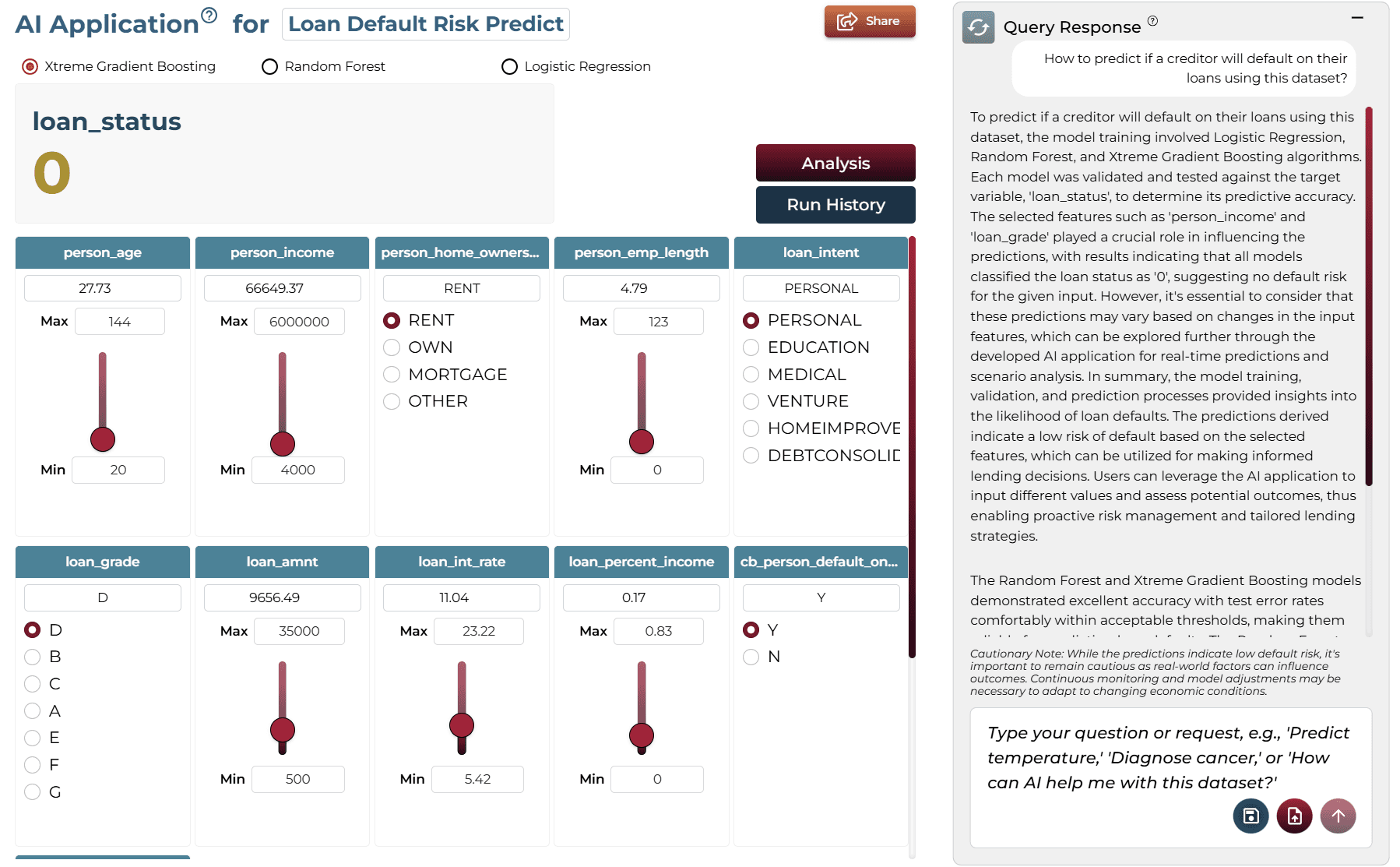
AQuery Response
To predict defaults, the model training involved Logistic Regression, Random Forest, and XGBoost. Each model was validated against 'loan_status'. Selected features like 'person_income' and 'loan_grade' played a crucial role in influencing predictions.
BAI Application
Running the query generates an on-demand AI application. Users can adjust sliders to test different scenarios and see real-time updates to predictions without technical knowledge.
Model Fine-Tuning/Manual Model Building
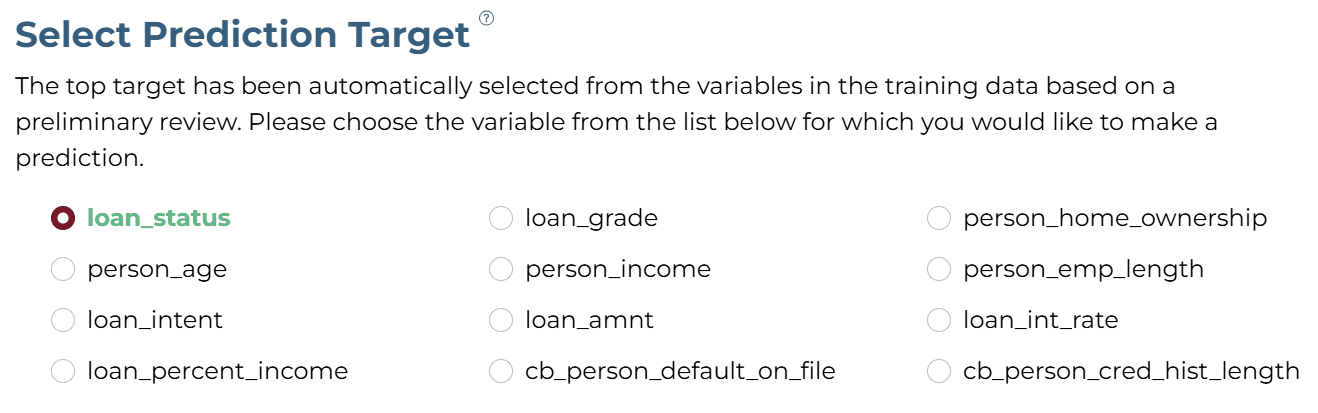
ASelecting Prediction Target
The 'loan_status' column was selected as the target.
BSelecting Analysis Type
The analysis target is a categorical column. So, 'Classification' is selected.

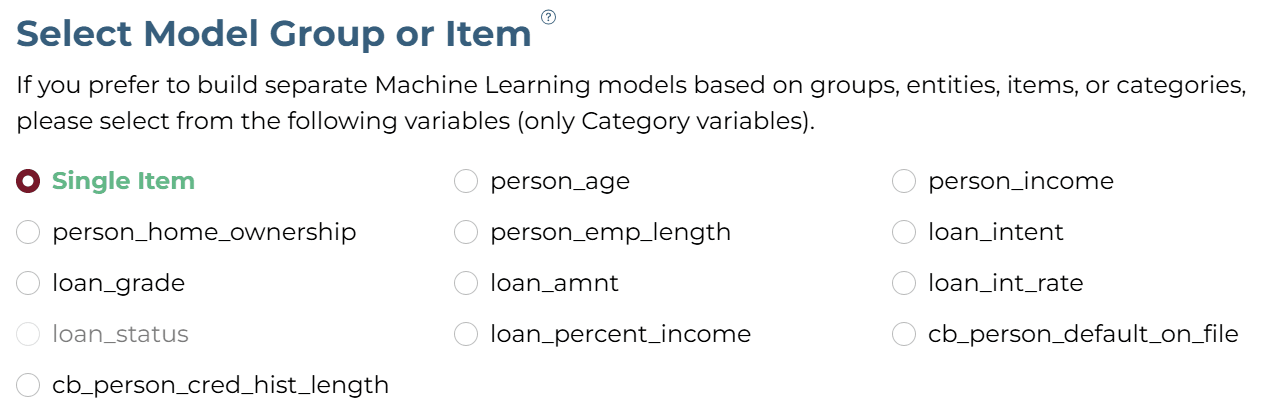
CSelecting Model Group/Item
No item/group is required for this dataset.
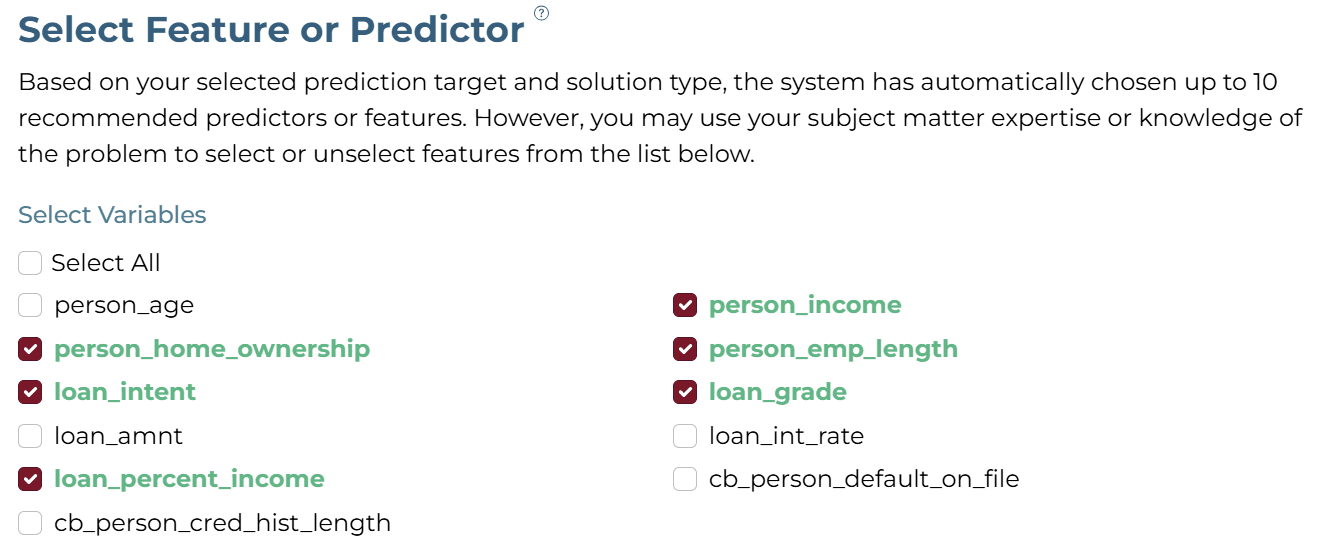
DSelecting Features
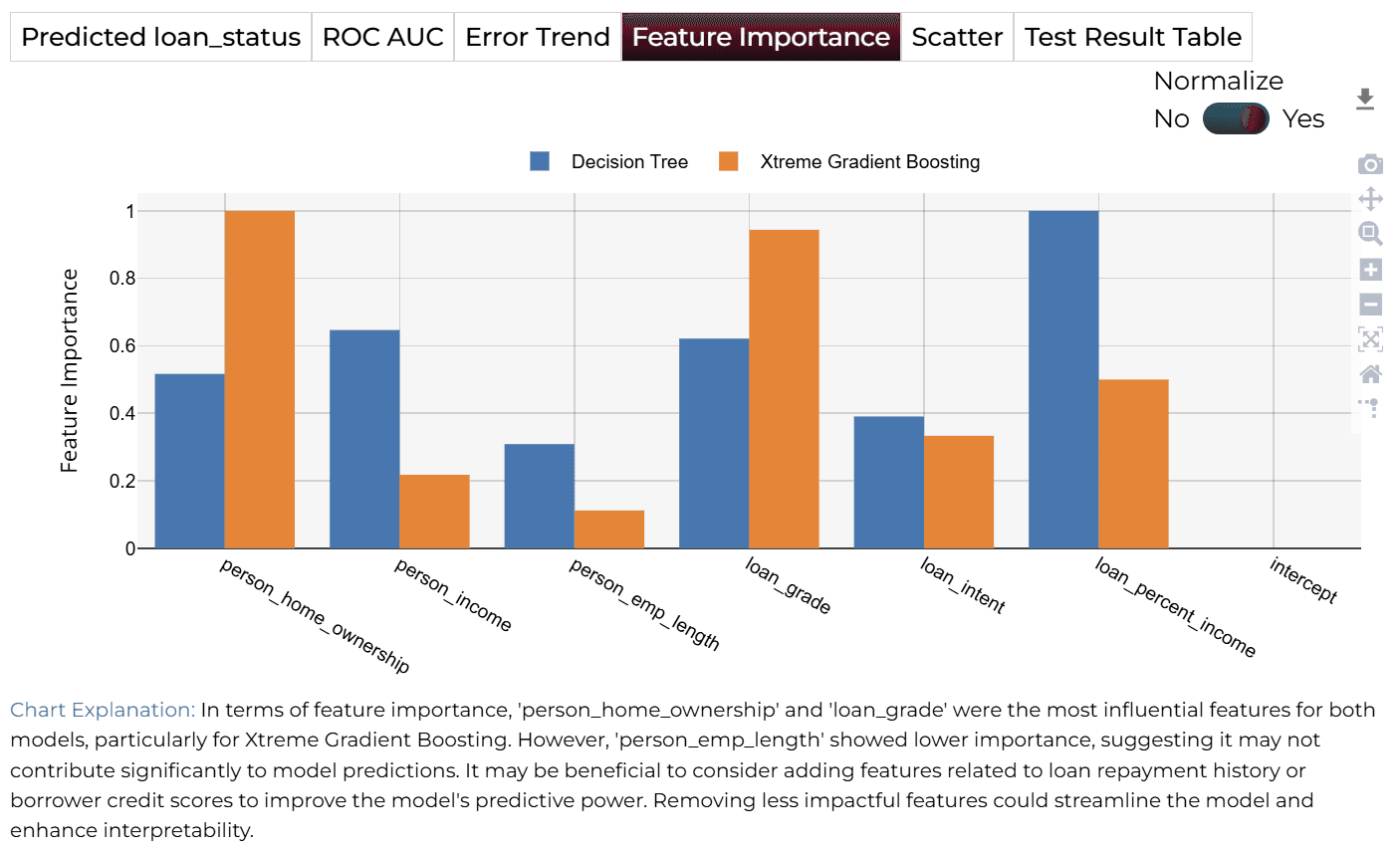
Select the following features: person_income, person_home_ownership, person_emp_length, loan_intent, loan_grade, and loan_percent_income.
ESelecting Training Level
Training is conducted step by step. Since this dataset did not perform well in the "Fast" level, the "Moderate" level was opted for.

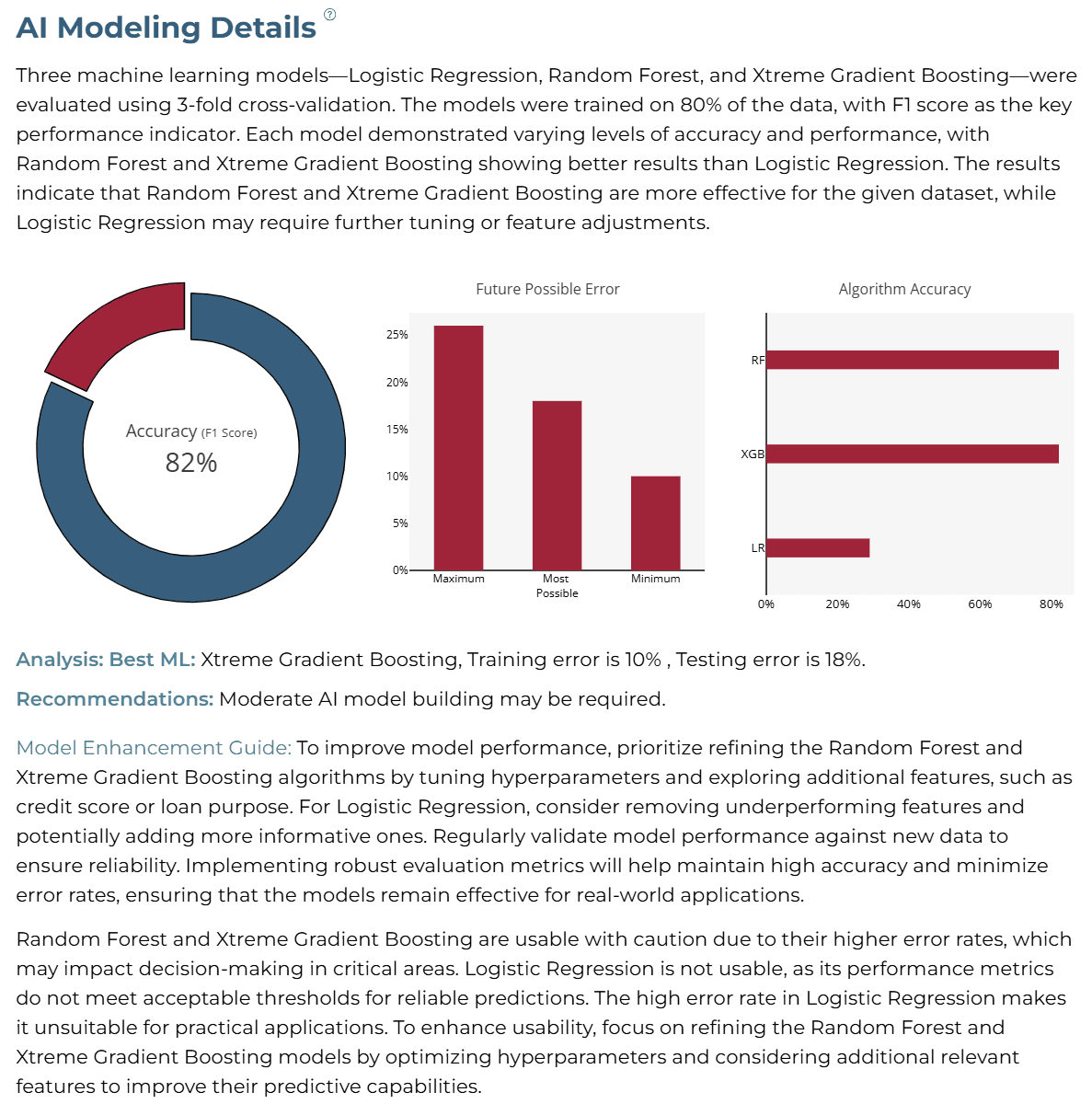
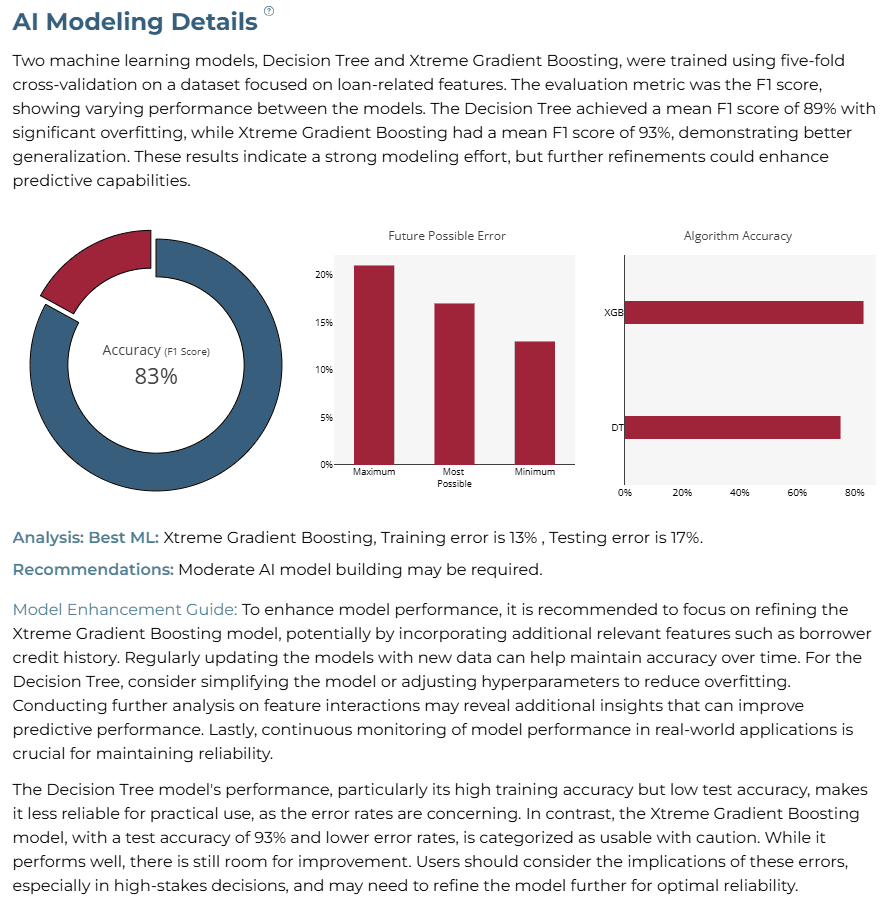
AI Modeling Details
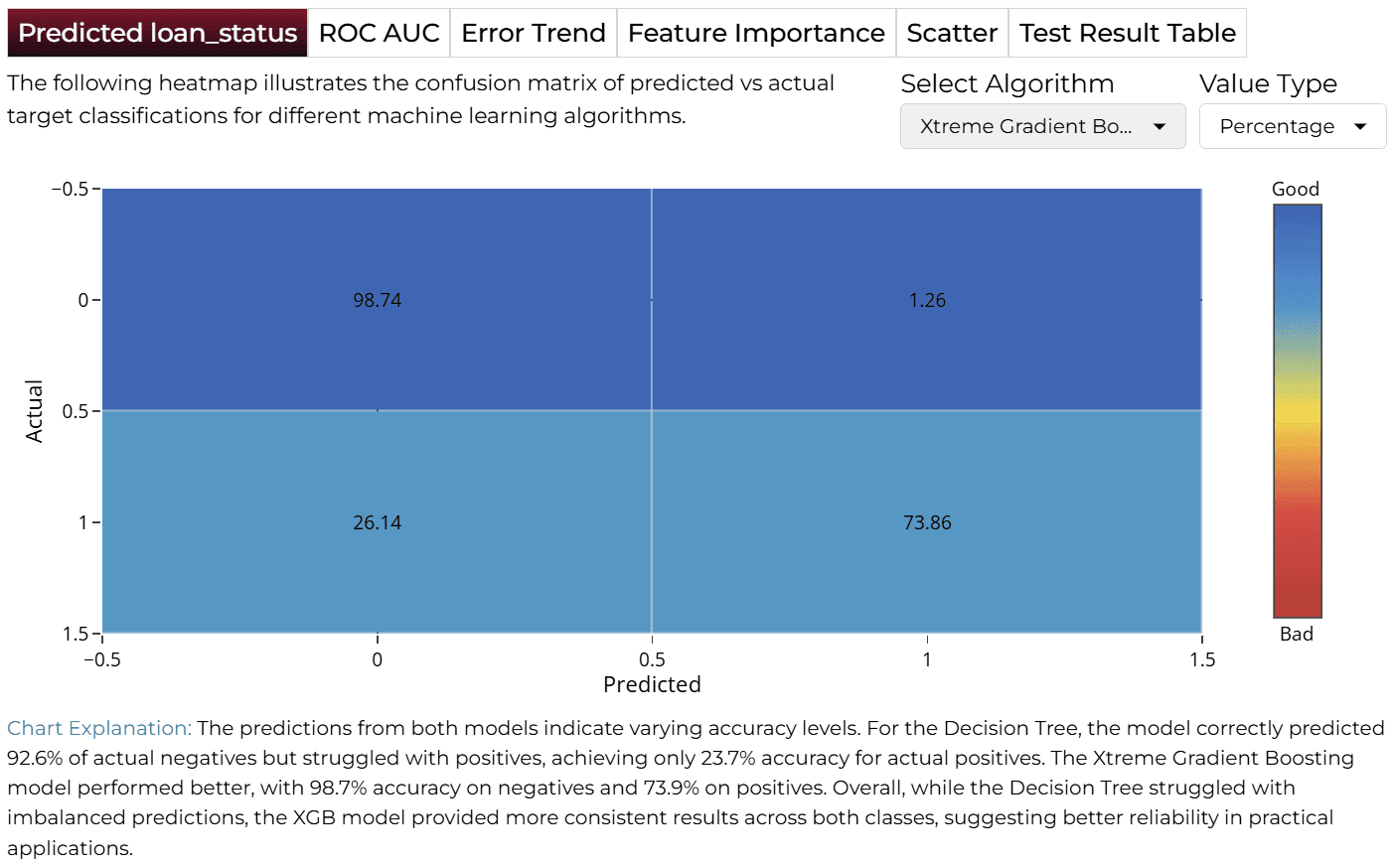
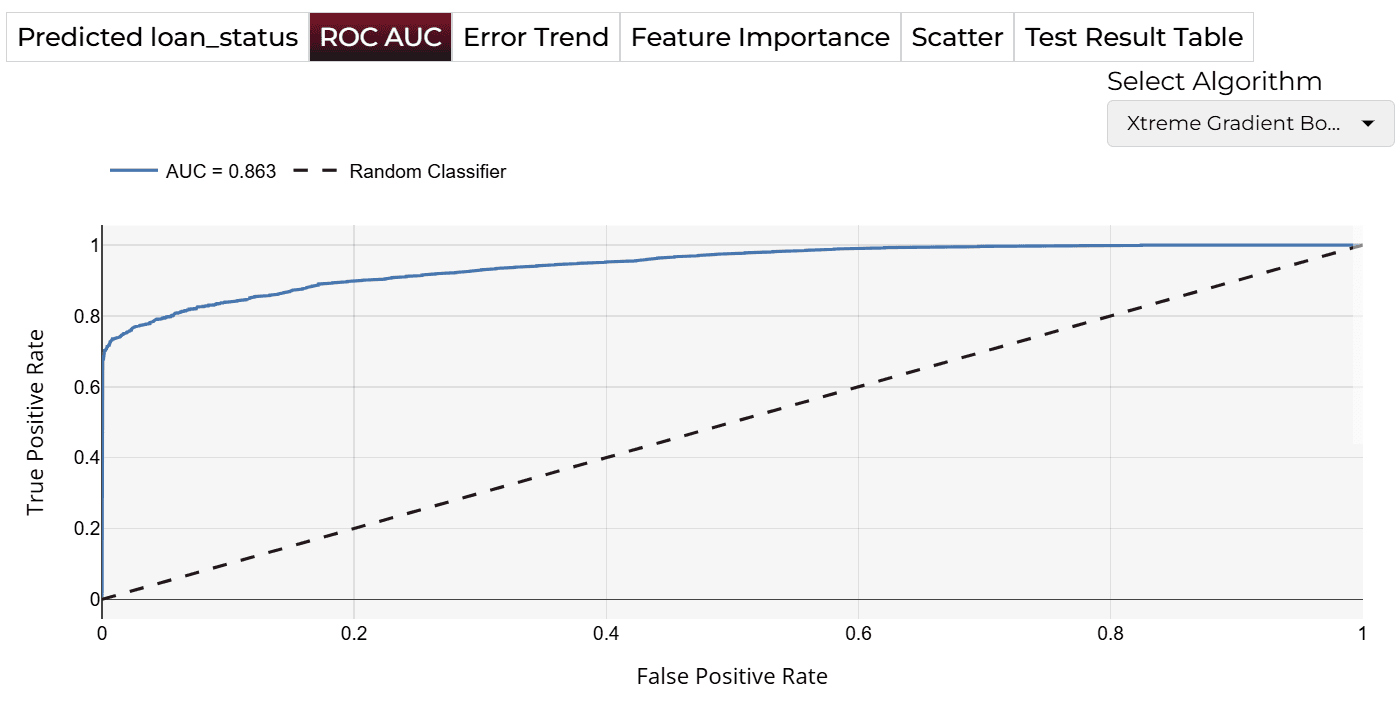
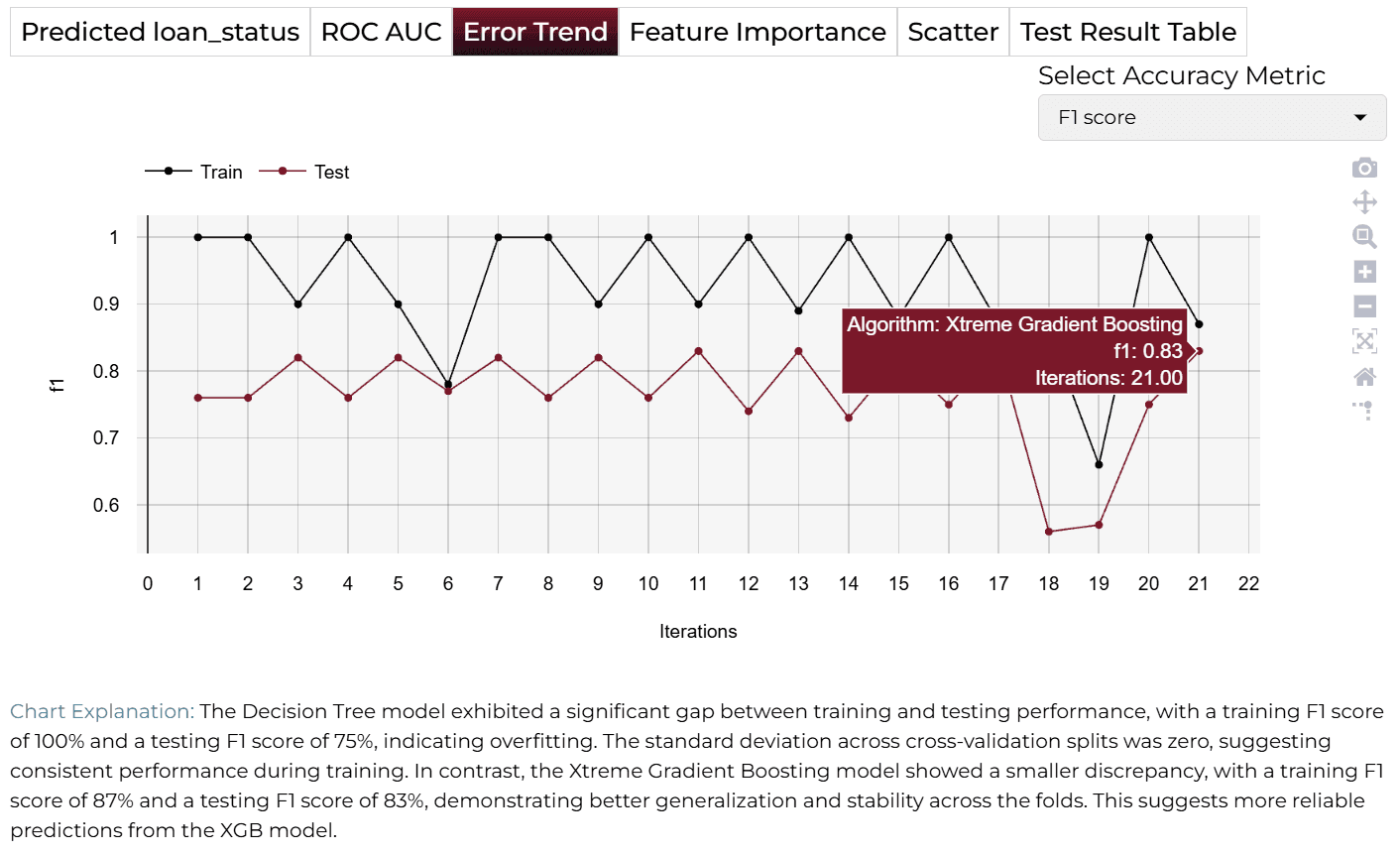
Two machine learning models, Decision Tree and XGBoost, were trained using 5-fold cross-validation. XGBoost demonstrated better generalization with a mean F1 score of 93%.
Training Analysis Details
APredicted Target
BROC AUC Performance
CError Trend Analysis
DFeature Importance
Finalize Models
Once satisfied with performance, click 'Deploy'. The system saves and deploys models for future demand analysis or production environment.

4AI APPLICATION
Manual Model Building
In Manual Training Mode, users can modify sliders for variables like person_income and loan_percent_income. Clicking ‘Analysis’ triggers a tailored prediction.
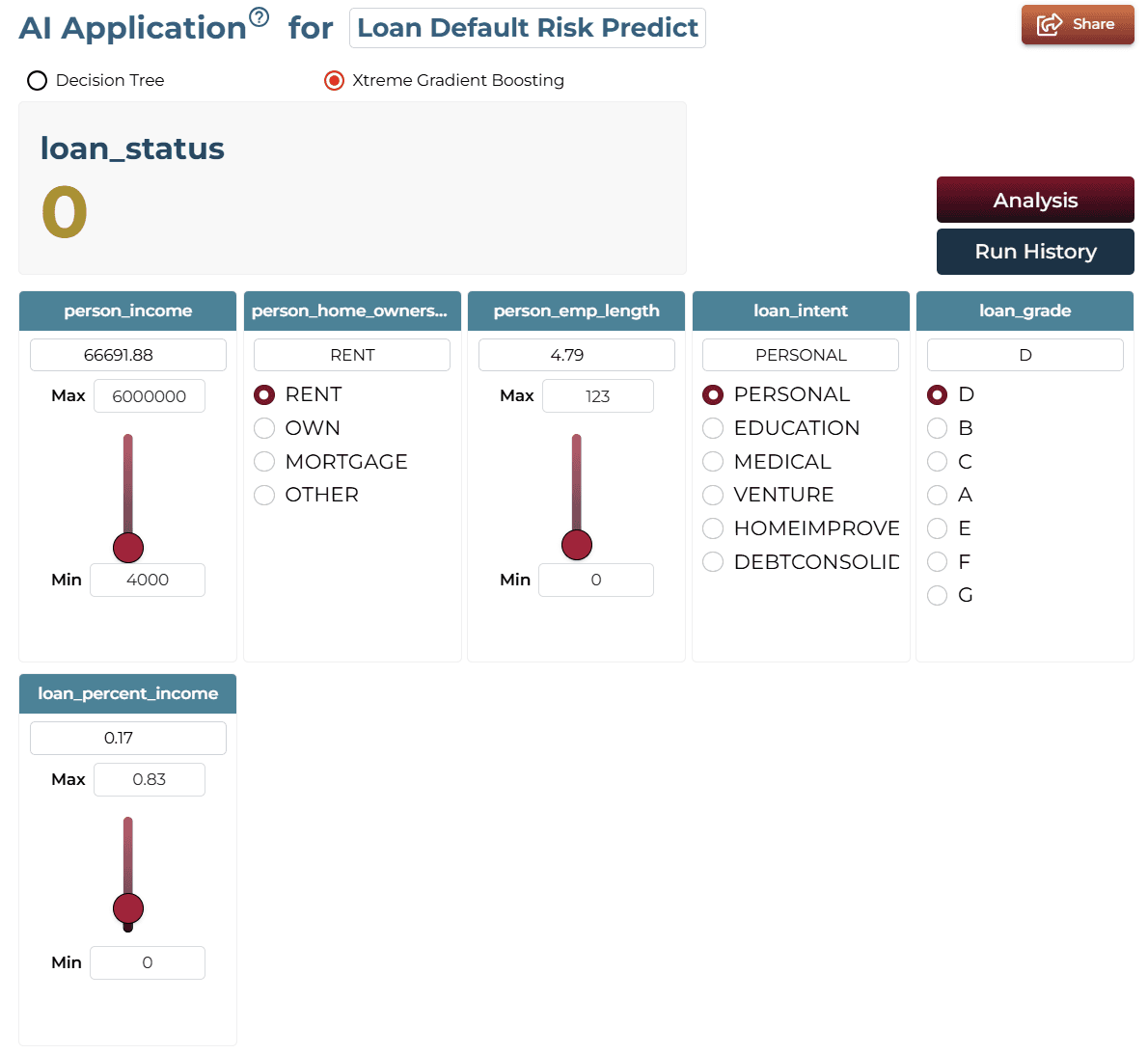
AI Application Demo
- The initial state shows predicted loan default risk based on default values.
- Adjust variables like 'person_income' or 'loan_percent_income'.
- Click "Analysis" to see how the predicted outcome changes.
Saving the Project
Save your project by clicking the icon at the bottom left corner of the textbox.

Sharing the Project
Share the application for single on-demand predictions once the analysis is saved.

Interested in similar AI solutions?
Explore our full suite of AI capabilities designed to transform your business operations.