


Predicting Employee Turnover for Workforce Optimization
Enhancing HR decision-making by predicting employee turnover based on job satisfaction, workload, performance evaluations, and company tenure.
1Overview & Strategic Importance

Problem Statement
Employee turnover is a critical challenge affecting workforce stability and financial performance. High attrition leads to recruitment costs and loss of institutional knowledge. Traditional reports often fail to predict future turnover accurately. A predictive model capable of assessing risk based on workplace factors can help organizations take proactive measures to retain talent and improve workforce management.
Required Solutions
- Analyzing historical employee data to identify key factors influencing turnover.
- Developing a predictive model to classify employees likely to stay or leave.
- Supporting decision-making in employee engagement and HR policy formulation.
Solution Objectives
- Understand the relationship between job satisfaction, workload, and turnover rates.
- Develop classification models to predict turnover based on performance metrics and work conditions.
- Assist HR professionals in proactive talent management and retention strategies.
Understanding the Problem
Dissatisfaction, heavy workloads, and lack of advancement lead to turnover.
Machine learning models identify patterns in behavioral data. Predictive models complement HR best practices to ensure effective retention strategies.
2About the Data
Data Collection
This project analyzes factors contributing to employee turnover at Sailsfort Motors. Leveraging logistic regression and tree-based models, we identified key predictors and developed retention strategies.
Key Workforce Indicators
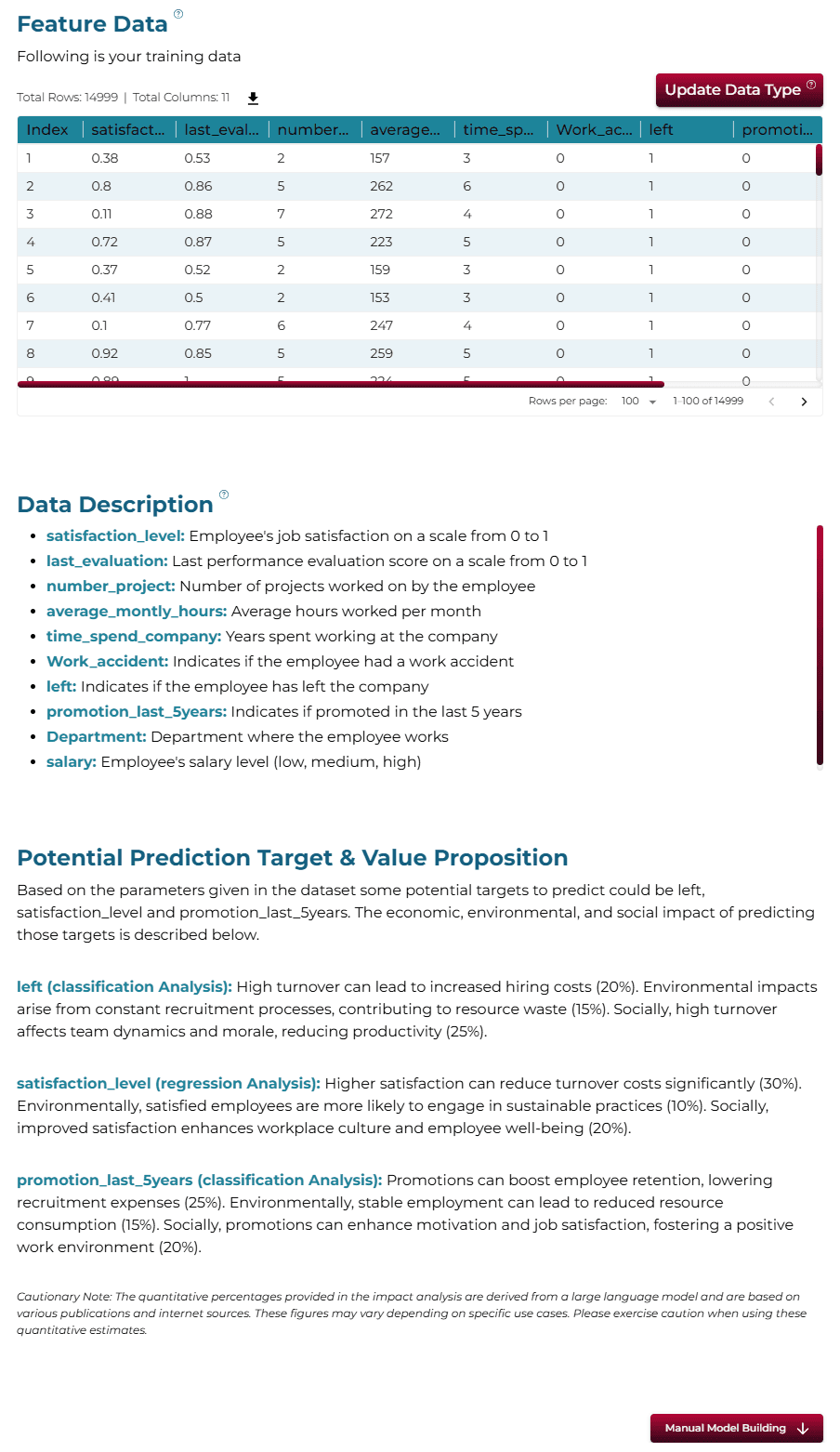
Download Training Datasatisfaction_levelThe level of job satisfaction reported by employees, measured on a scale from 0 to 1.
last_evaluationThe most recent performance evaluation score of an employee, measured on a scale from 0 to 1.
number_projectThe total number of projects an employee has been assigned to during their tenure.
average_montly_hoursThe average number of hours worked per month by an employee.
time_spend_companyThe number of years an employee has spent in the company.
Work_accidentA binary variable (0 or 1) indicating whether an employee has had a work-related accident.
leftA binary variable (0 or 1) indicating whether an employee has left the company.
promotion_last_5yearsA binary variable (0 or 1) indicating whether an employee has been promoted in the last five years.
DepartmentThe department in which the employee works (e.g., Sales, HR, Technical).
3Using iDareAI
Guided Mode Initialization
AUploading Dataset
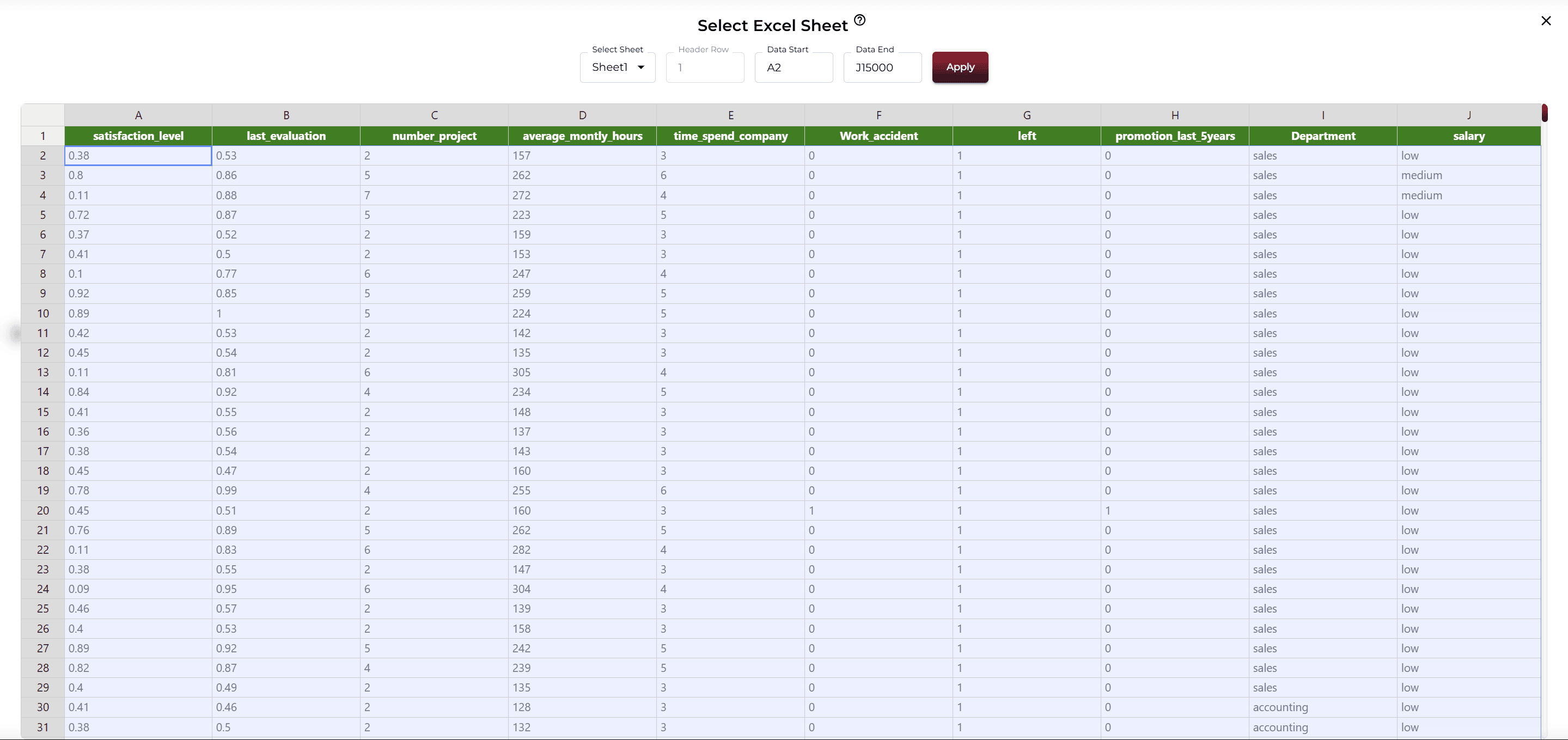
Click on the **'Upload CSV or Excel Data'** button → Select a source for the dataset → Upload `employee_turnover_train.xlsx`. The system automatically extracts workforce features.
BChoosing Analysis Mode
- Which feature plays the most important role in whether or not an employee will leave?
- How does reducing turnover impact the organization?
Operation Using Autonomous Guided Mode
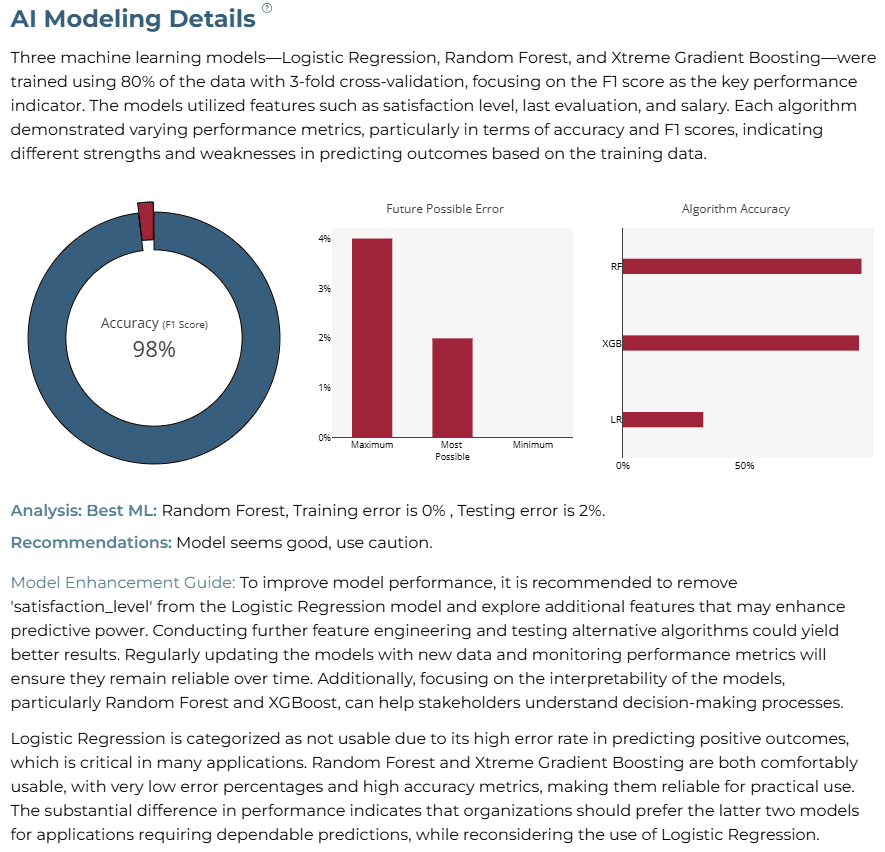
AQuery Response
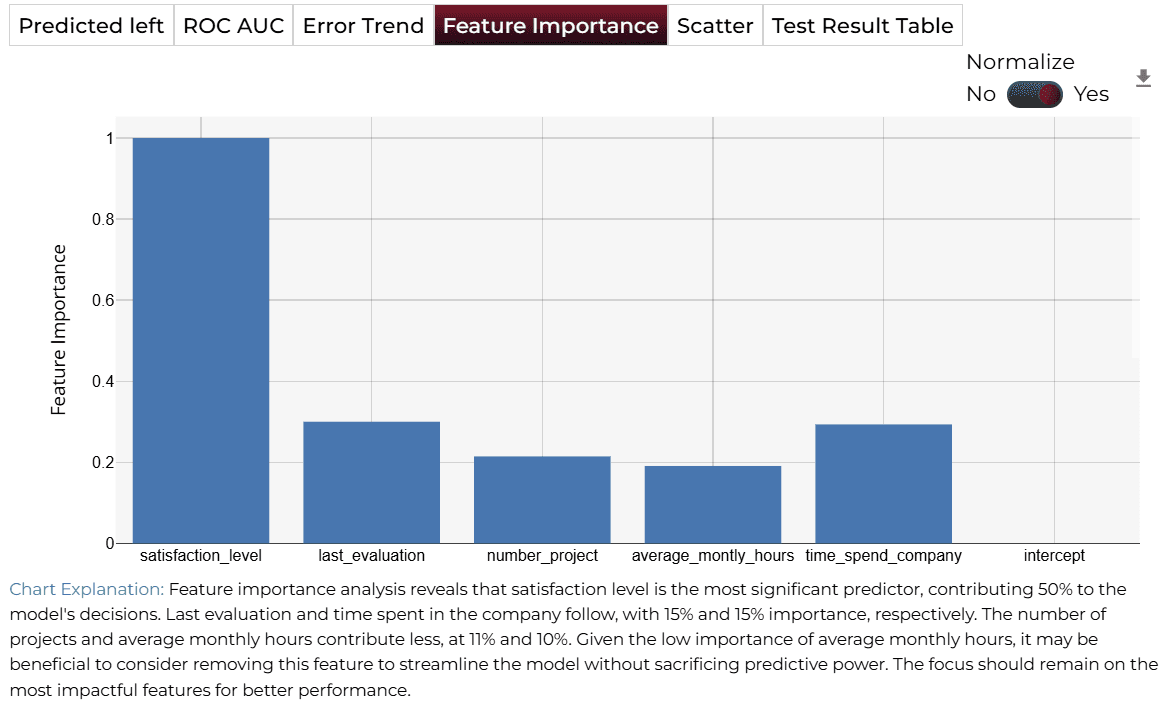
The 'satisfaction_level' metric was identified as the most critical feature. The Random Forest and XGB models demonstrated near 99% accuracy, indicating high reliability for retention forecasting.
BAI Application
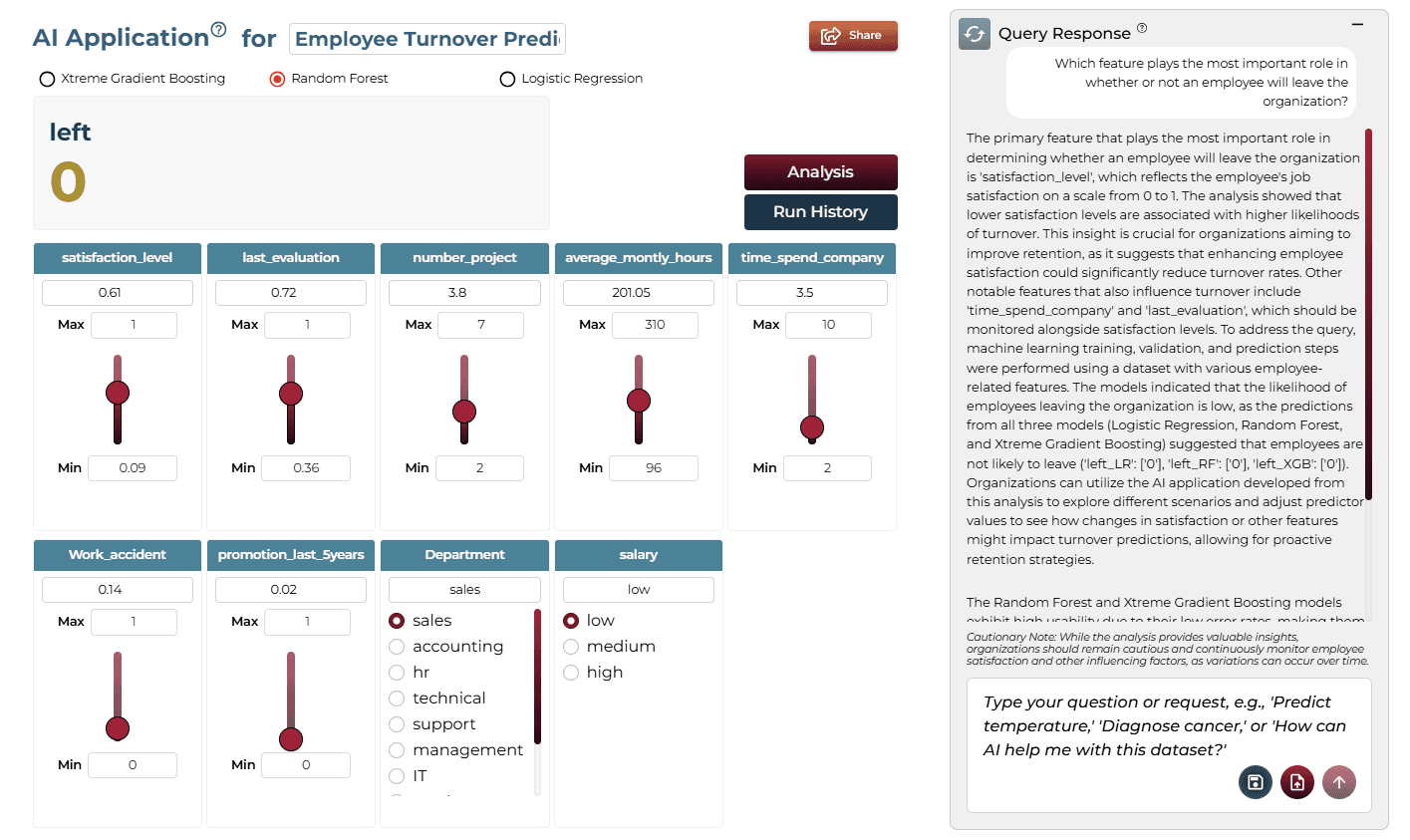
The generated interface includes sliders to simulate workplace changes (e.g. satisfaction or hours) and observe their impact on turnover probability.
Model Fine-Tuning/Manual Model Building
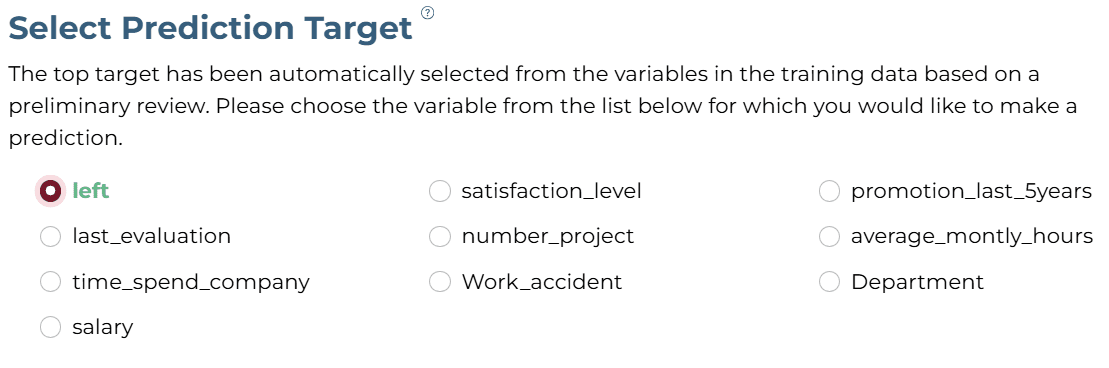
ASelecting Prediction Target
'left' was selected as the target column.
BSelecting Analysis Type
Categorical classification is selected to distinguish between employees who stay (1) and leave (0).

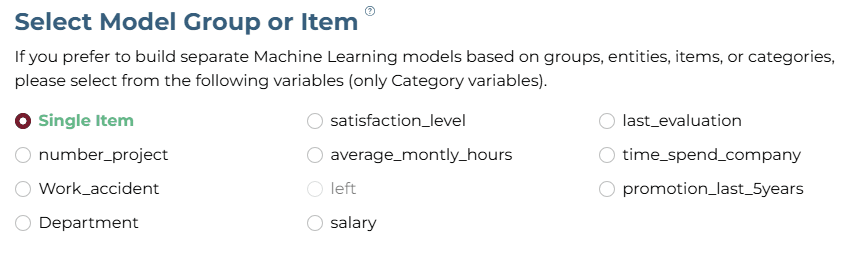
CSelecting Model Group/Item
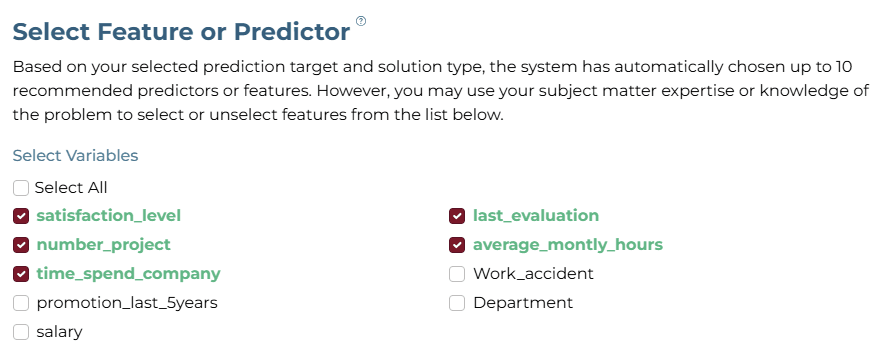
DSelecting Features
Select satisfaction level, last evaluation, and average monthly hours.
ESelecting Training Level

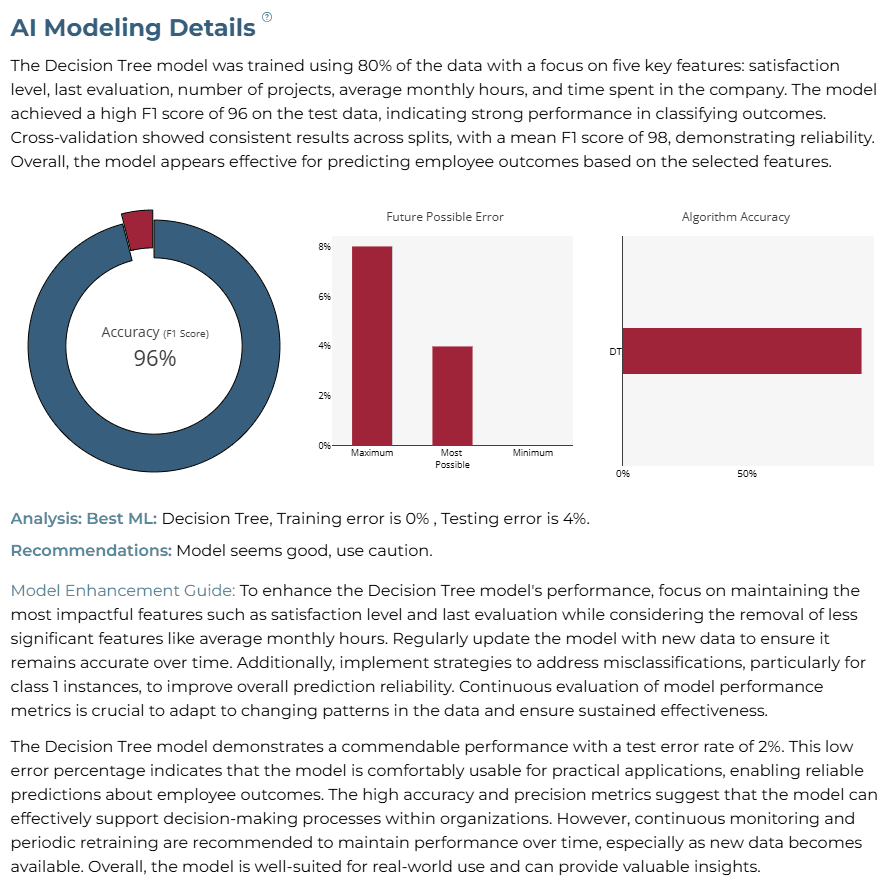
AI Modeling Details
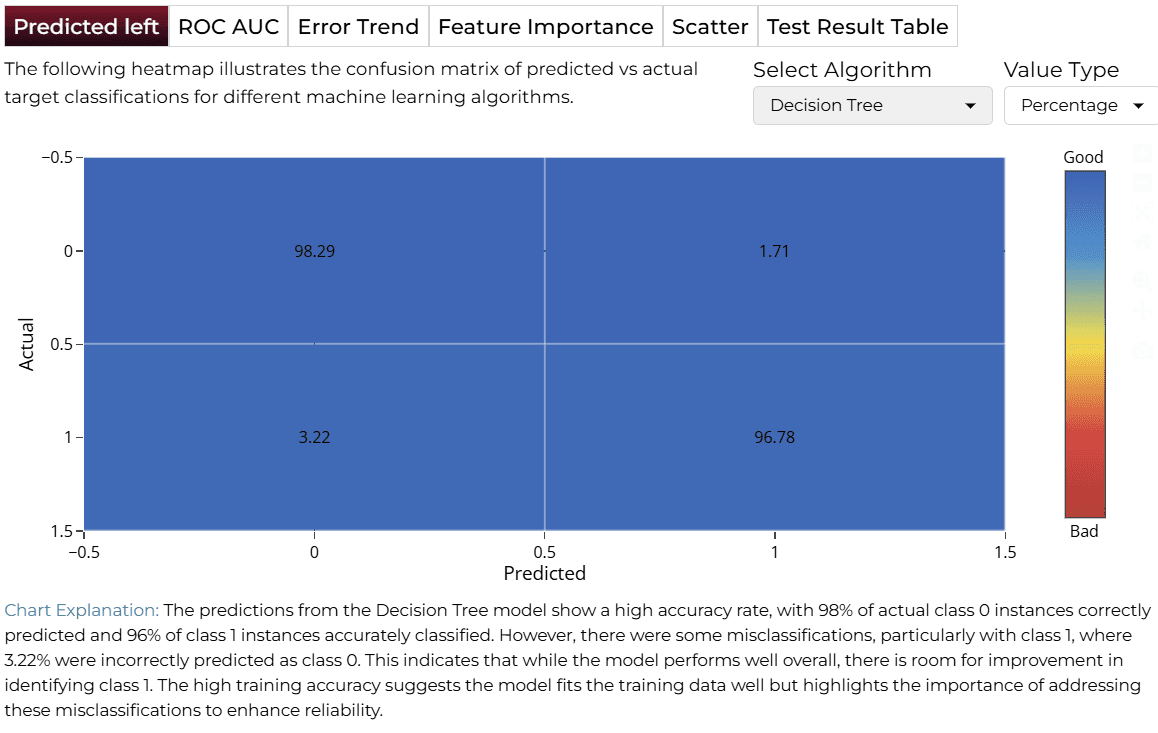
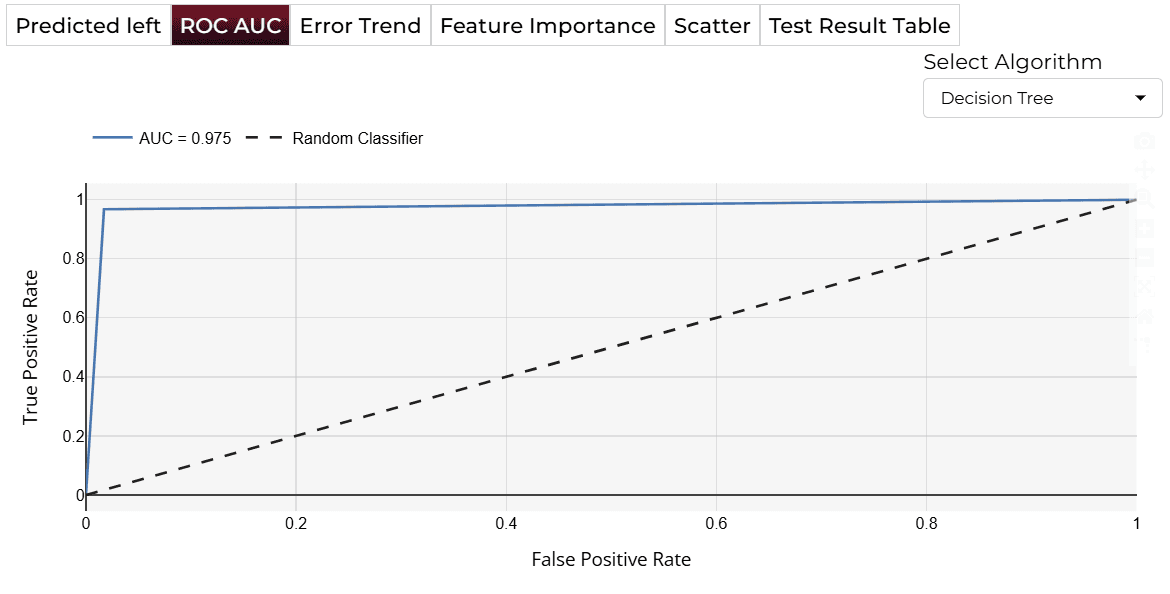
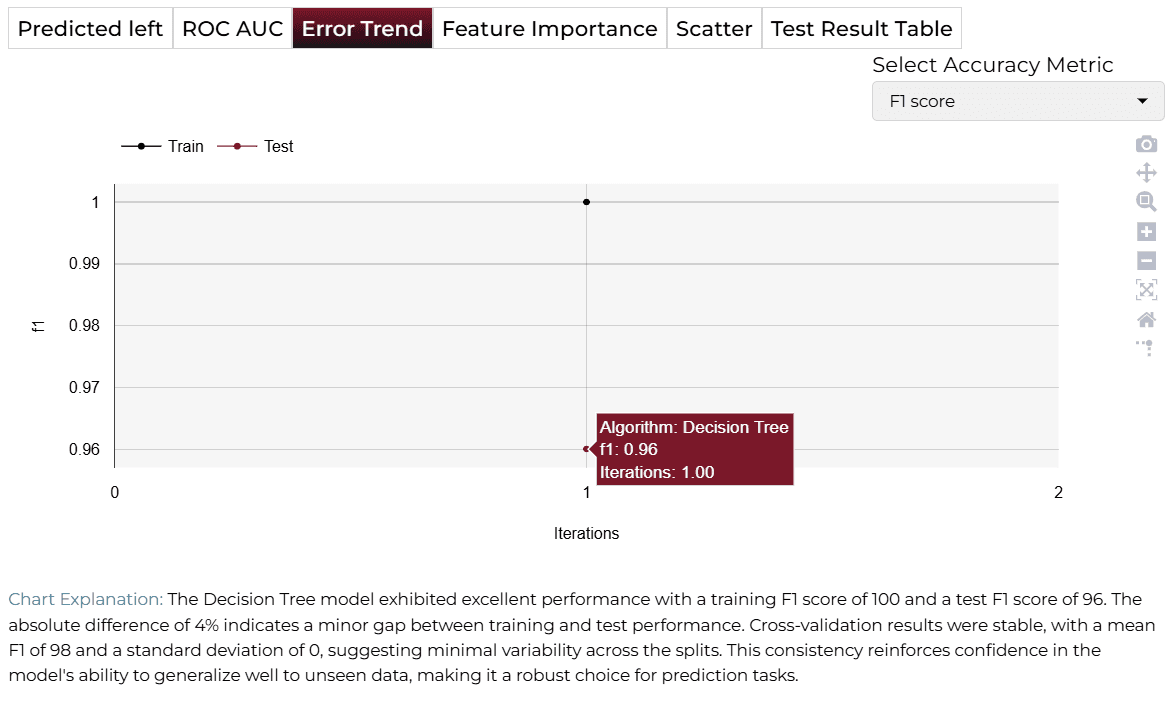
The model utilizes a Decision Tree, achieving an accuracy of 96% with a testing error of 4%. Satisfaction level was confirmed as the most influential predictor.
Training Analysis Details
APredicted Target (Confusion Matrix)
BROC AUC
CError Trend (F1 Score)
DFeature Importance
Finalize Models
Train until accuracy is optimized. Once satisfied, click 'Deploy' to start using your AI retention tool.

4AI APPLICATION
Manual Model Building
In Manual Training Mode, adjust sliders for Satisfaction Level or Monthly Hours. Clicking ‘Get Response’ generates a tailored retention prediction.
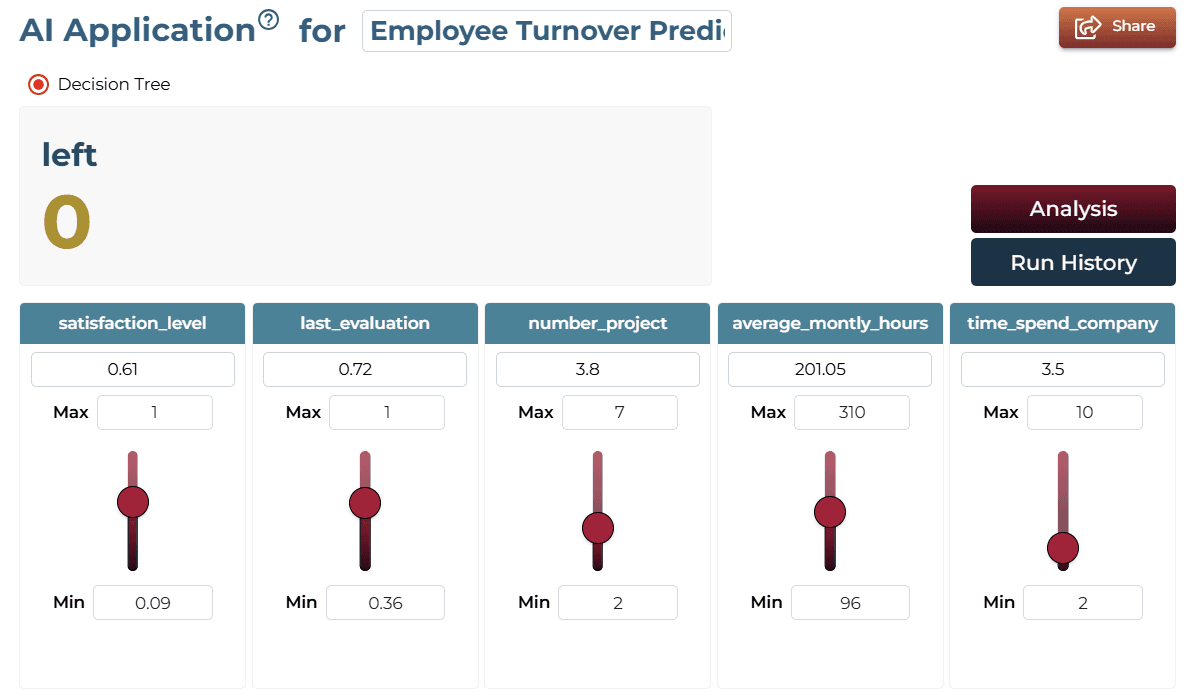
AI Application Demo
- Adjust employee variables like 'satisfaction_level' and 'time_spend_company'.
- Observe how workplace factors influence the likelihood of retention in real-time.
Saving the Project
Save your project by clicking the icon at the bottom left corner of the textbox.

Sharing the Project
Share the application for single on-demand predictions once the analysis is saved.

Interested in similar AI solutions?
Explore our full suite of AI capabilities designed to transform your business operations.