


Detecting Fraudulent Transactions in Financial Systems
Enhancing financial security by detecting fraudulent transactions based on transaction patterns.
1Overview & Strategic Importance

Problem Statement
Detecting fraudulent transactions is a critical challenge in financial security, requiring advanced analytical techniques to identify suspicious activities. Fraudulent activities not only cause financial losses for individuals and institutions but also undermine trust in financial systems. As fraudsters develop more sophisticated techniques, machine learning models can analyze transaction behaviors and detect anomalies, enabling proactive measures.
Required Solutions
- Analyzing transaction histories to identify patterns associated with fraudulent activities.
- Detecting anomalies in transaction behavior using key financial indicators and account metadata.
- Implementing machine learning classification to distinguish between fraudulent and legitimate transactions.
Solution Objectives
- Perform exploratory data analysis to understand key risk factors and common fraud patterns.
- Develop a classification model to identify fraudulent transactions based on behavior.
- Provide insights that help financial institutions enhance fraud prevention strategies.
Understanding the Problem
Fraudulent transactions often exhibit unusual behaviors, such as sudden large withdrawals or deviations from typical spending patterns.
Machine learning techniques can improve detection by continuously learning from new patterns and reducing reliance on predefined rules, balancing security with user experience.
2About the Data
Data Collection
This dataset provides comprehensive information about transactions, with over 6 million entries. It is a rich resource for developing algorithms to detect patterns associated with fraudulent activities in real-time.
Major Transaction Parameters
Download Training DatastepA unit of time representing the transaction sequence, often used as a proxy for time-based analysis.
typeThe type of transaction, such as PAYMENT, CASH_OUT, TRANSFER, or DEBIT, which helps classify financial activity.
amountThe transaction amount, indicating the value transferred in the transaction.
nameOrigAn identifier for the sender’s account, representing the origin of the transaction.
oldbalanceOrgThe sender’s account balance before the transaction, useful for detecting anomalies in fund movements.
newbalanceOrigThe sender’s account balance after the transaction, helping track financial discrepancies.
nameDestAn identifier for the recipient’s account, representing the destination of the transaction.
oldbalanceDestThe recipient’s account balance before the transaction, useful for detecting suspicious fund inflows.
newbalanceDestThe recipient’s account balance after the transaction, aiding in fraud detection by analyzing fund distribution.
3Using iDareAI
Guided Mode Initialization
AUploading Dataset
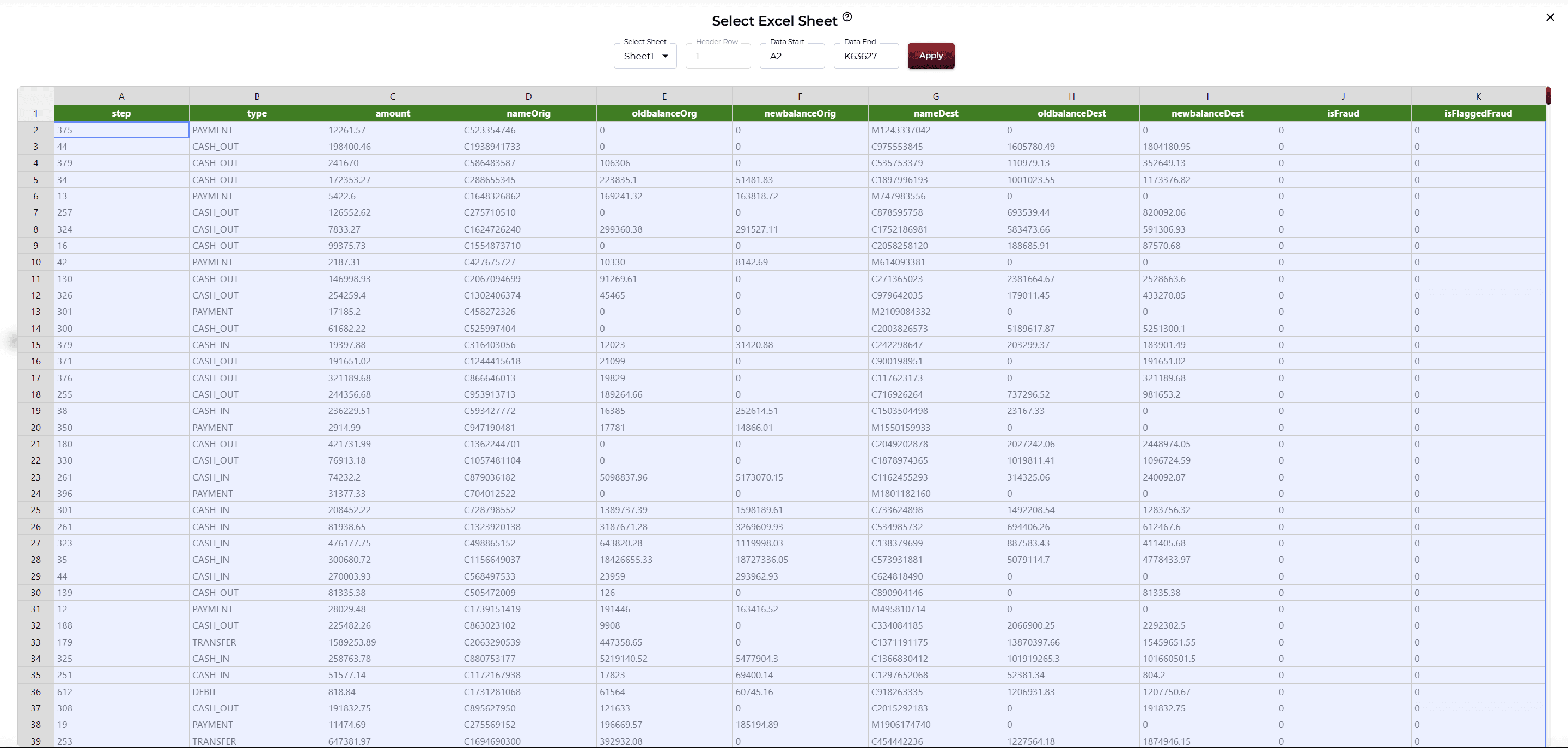
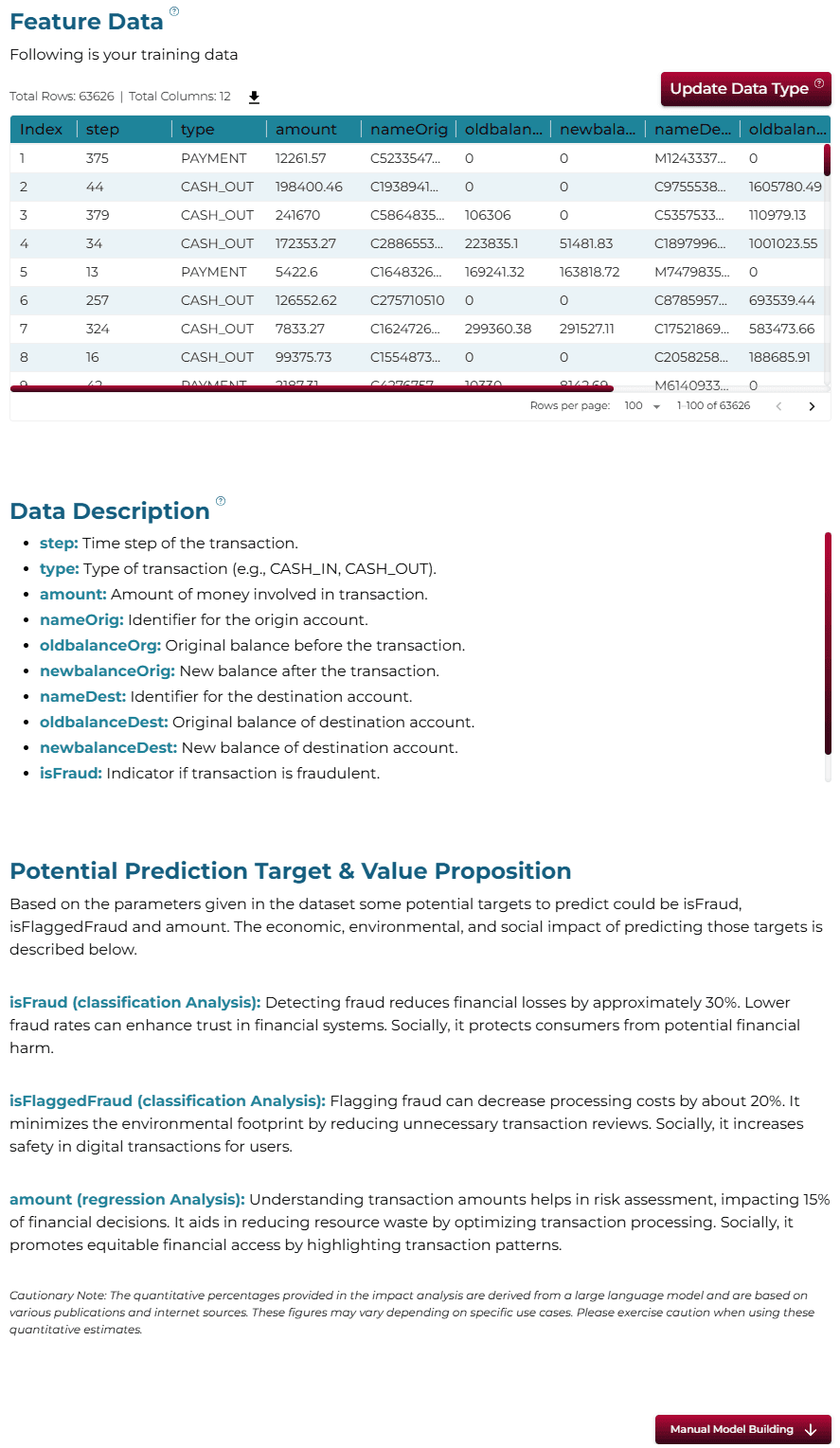
Click on the **'Upload CSV or Excel Data'** button → Select a source for the dataset → Upload `fraud_detection_train.xlsx`. The system automatically analyzes the file for feature extraction.
BChoosing Analysis Mode
- How to detect if a transaction is fraud or not?
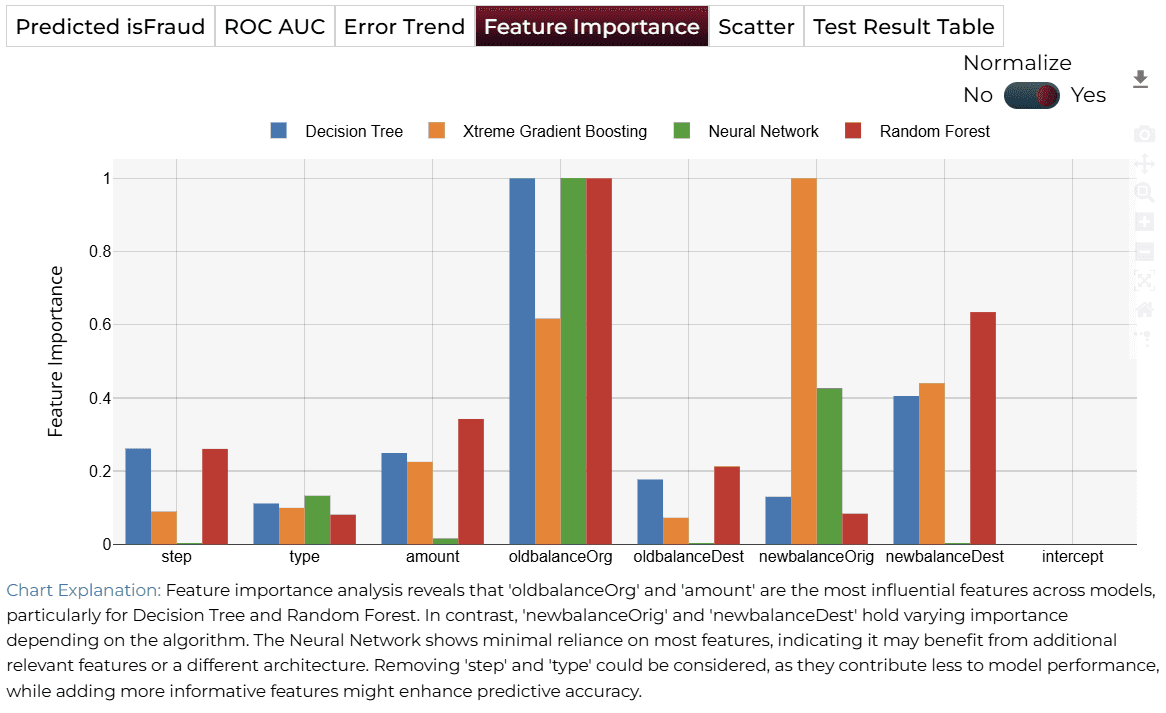
- Which factors play the most important role in the detection of fraud?
Operation Using Autonomous Guided Mode
AQuery Response
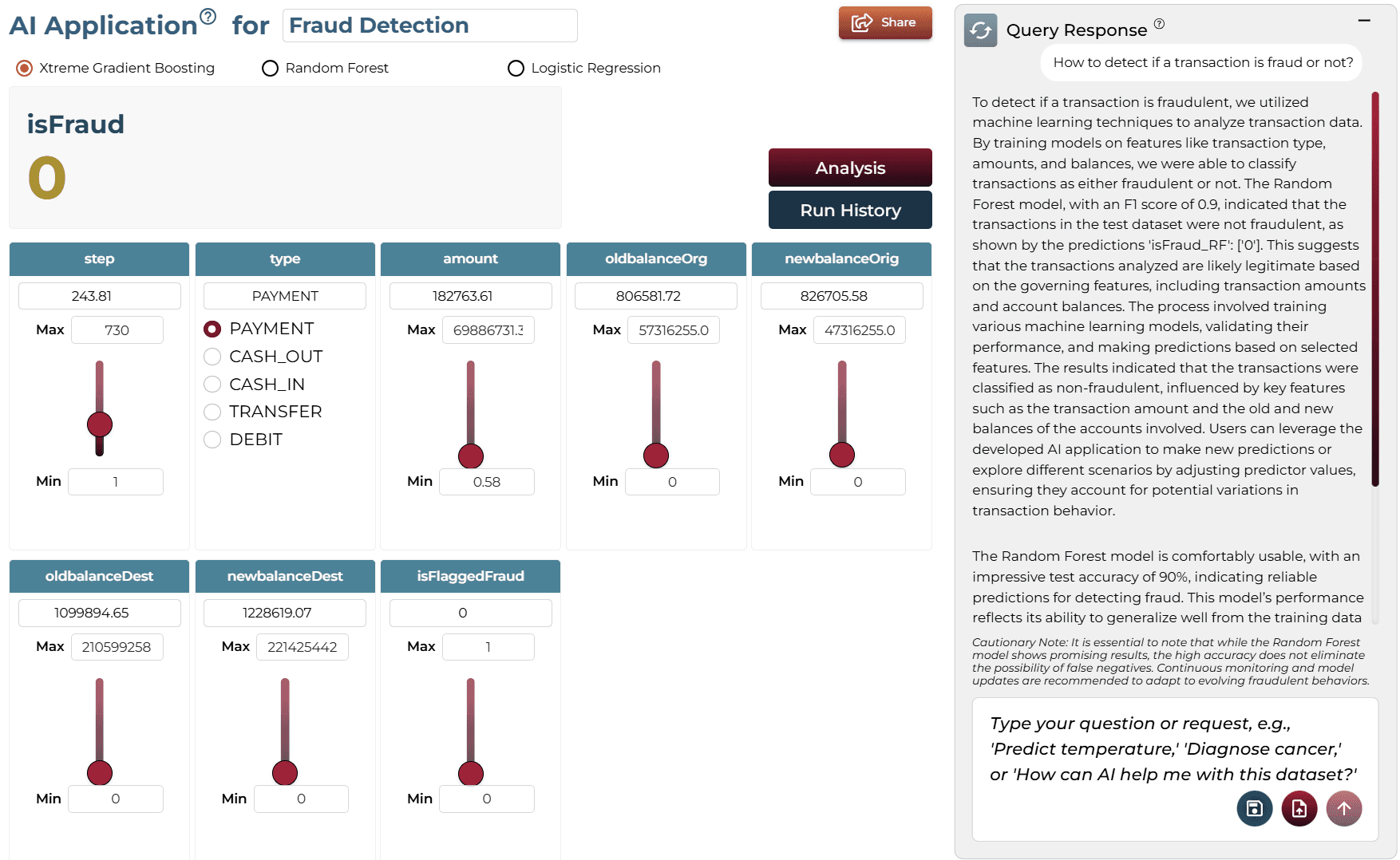
The Random Forest model, with an F1 score of 0.9, indicated that transactions in the test dataset were likely legitimate. Key influencing features included transaction amount and account balances.
BAI Application
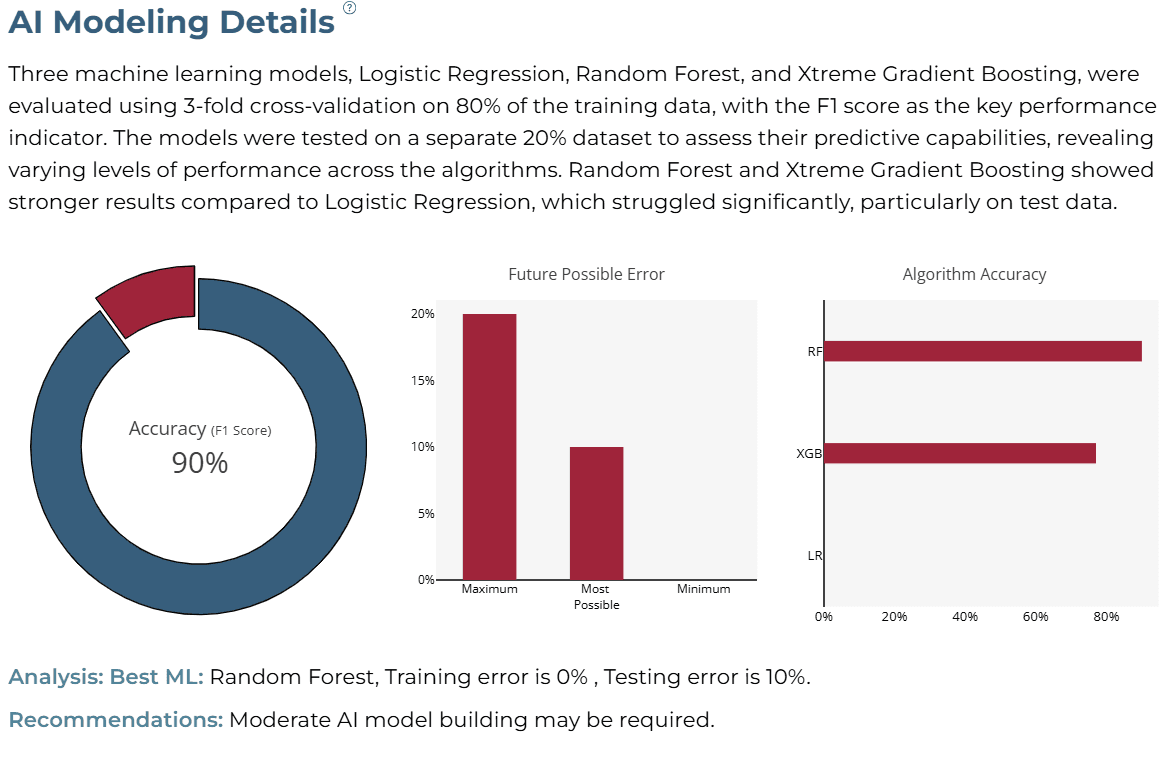
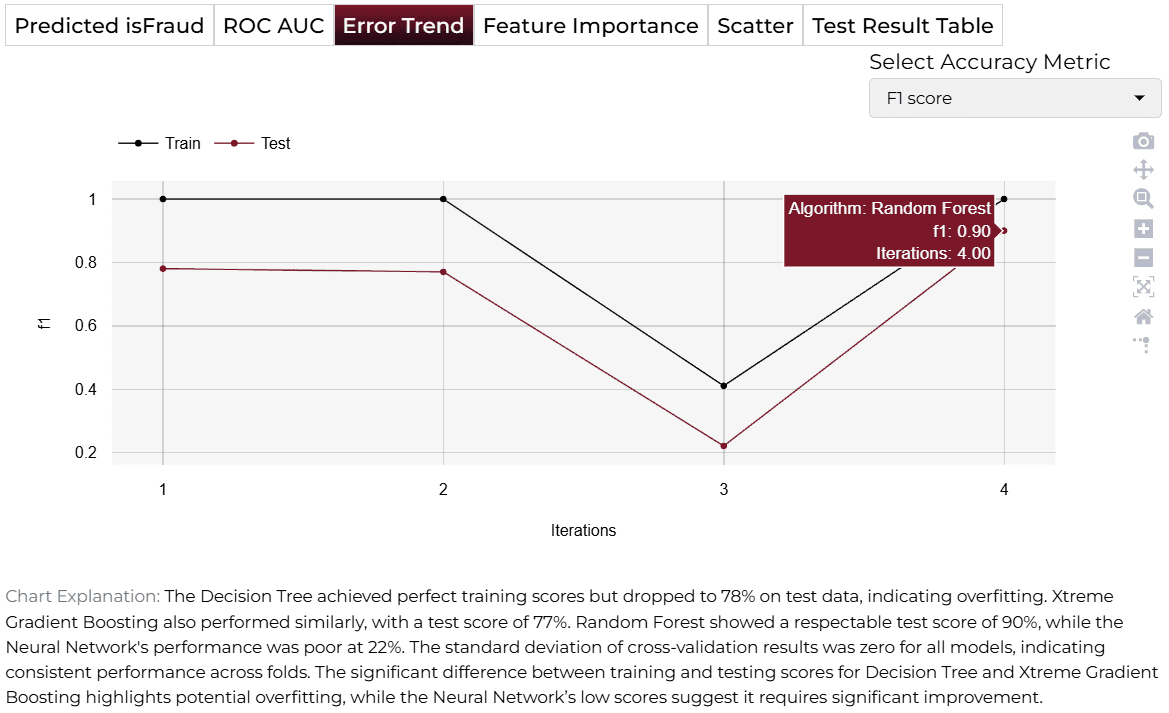
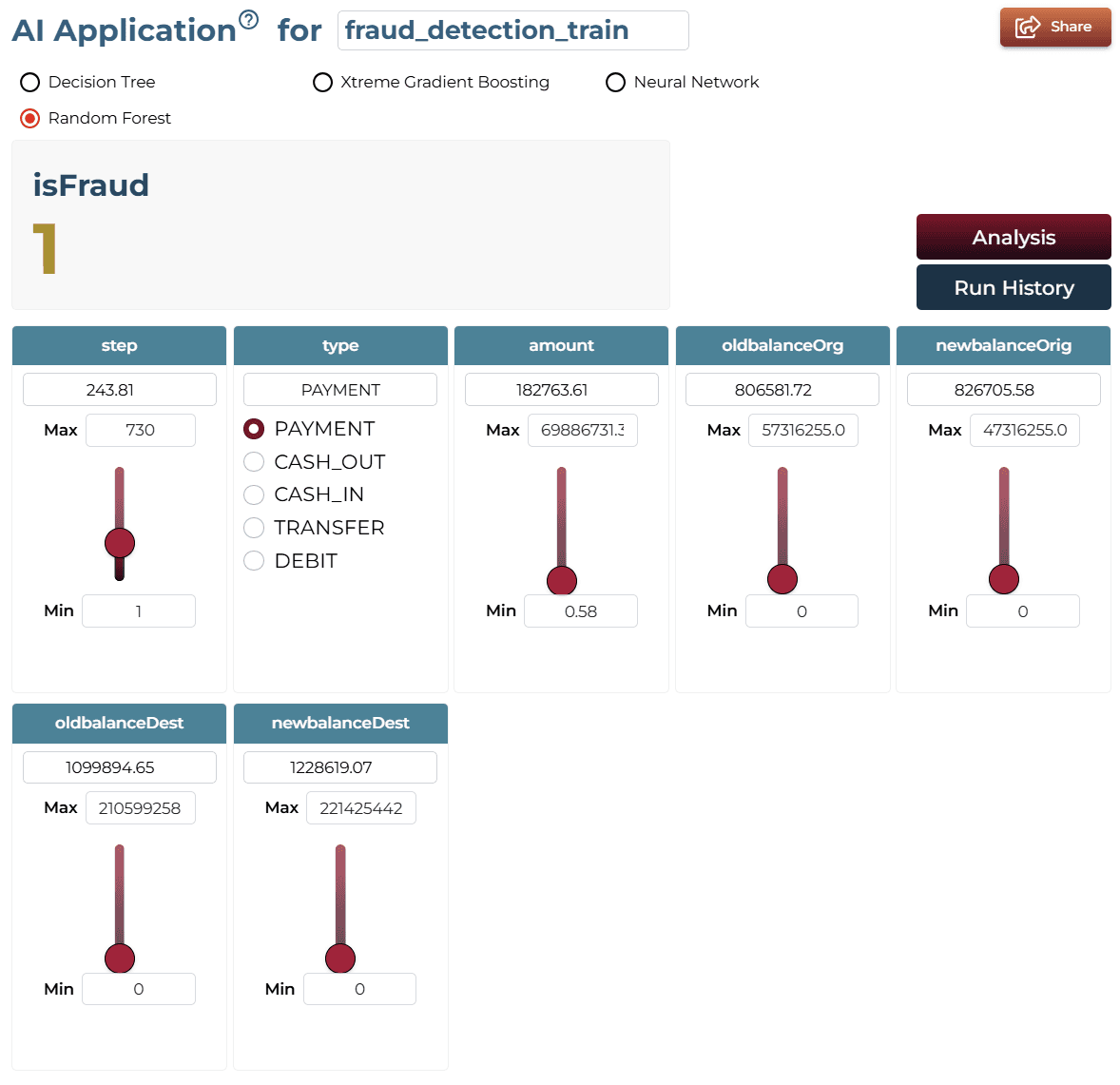
Running the query generates an AI application for real-time predictions. The Random Forest model shows 90% accuracy, while Xtreme Gradient Boosting reached 77%.
Model Fine-Tuning/Manual Model Building
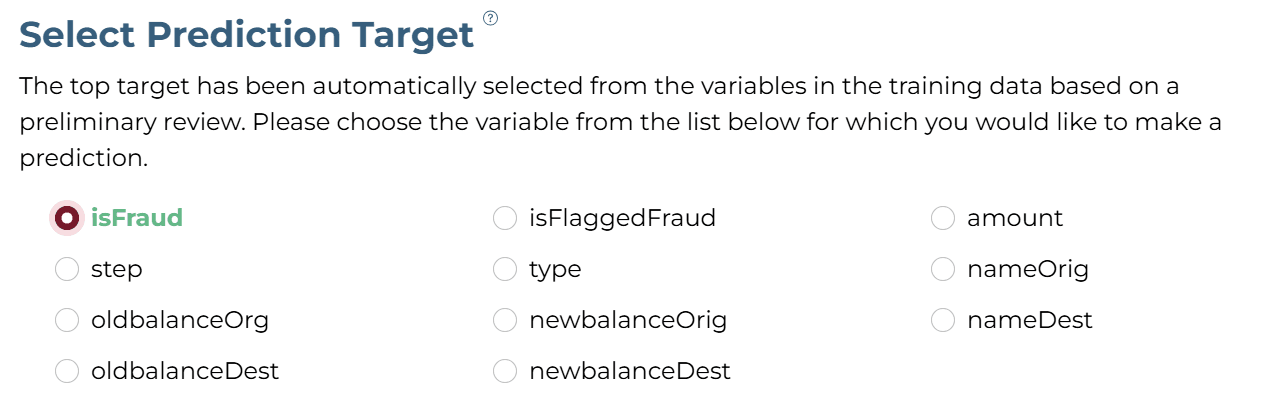
ASelecting Prediction Target
'isFraud' was selected as the target column.
BSelecting Analysis Type
Categorical target (0 or 1) requires 'Classification' analysis type.

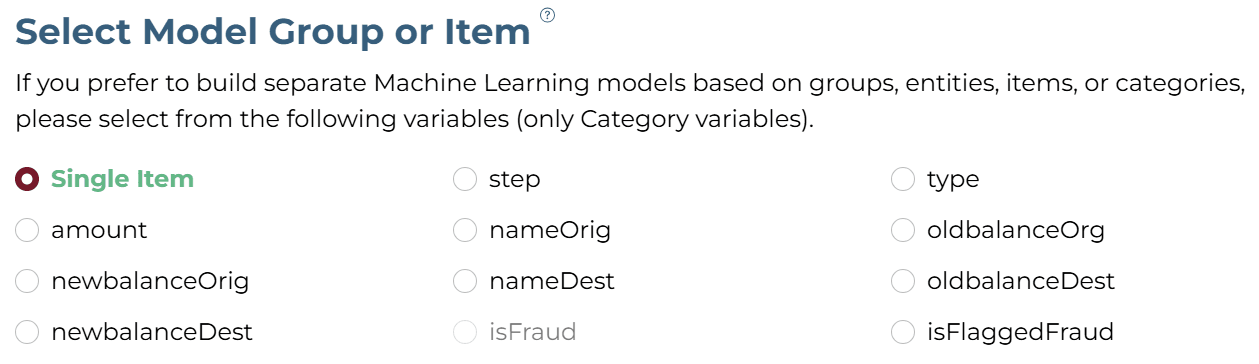
CSelecting Model Group/Item
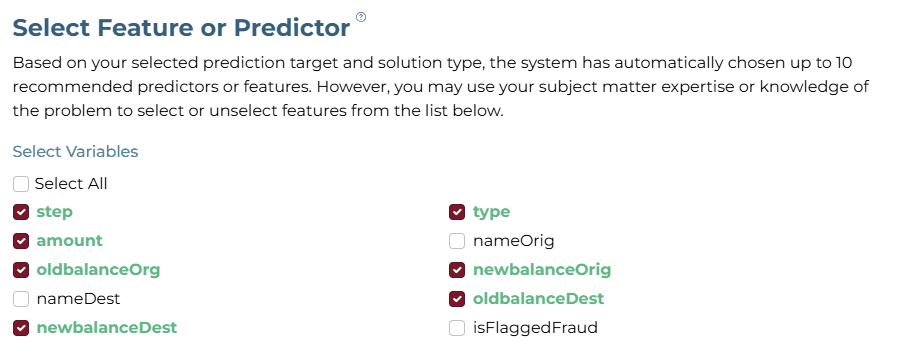
DSelecting Features
Select step, type, amount, oldbalanceOrg, newbalanceOrig, oldbalanceDest, and newbalanceDest.
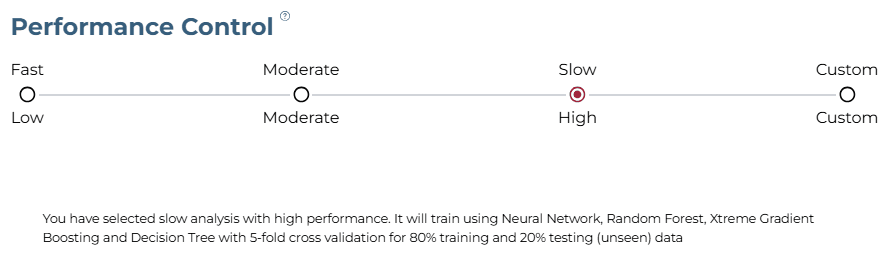
ESelecting Training Level
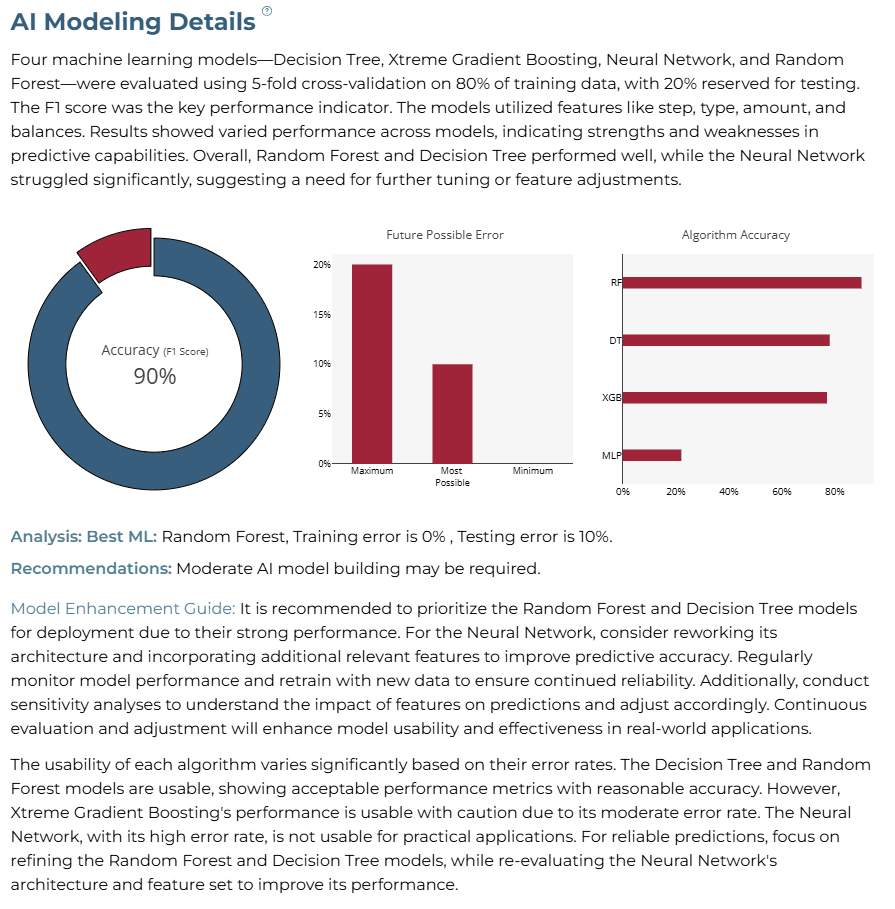
AI Modeling Details
Random Forest achieved 90% accuracy using 5-fold cross-validation. Additional behavioral patterns could further improve reliability against evolving threats.
Training Analysis Details
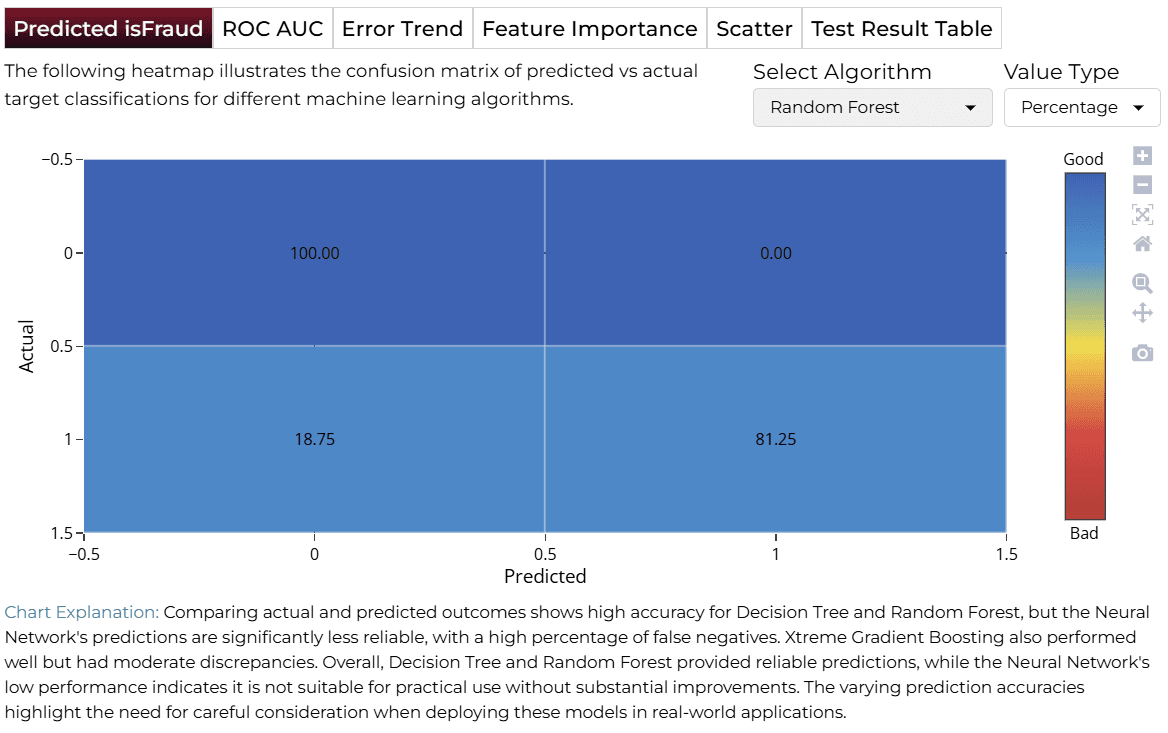
APredicted Target (Confusion Matrix)
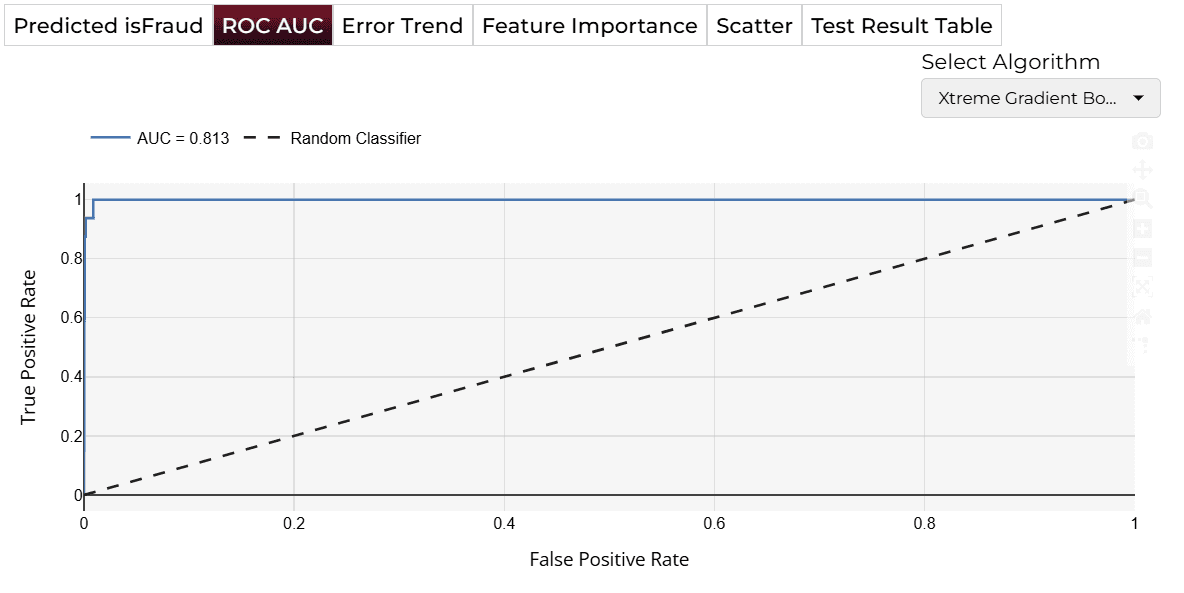
BROC AUC
CError Trend (F1 Score)
DFeature Importance
Finalize Models
Adjust configurations until Accuracy is optimized. Click 'Deploy' to start using your AI fraud detection application.

4AI APPLICATION
Manual Model Building
In Manual Training Mode, users can modify sliders for variables like amount and oldbalanceOrg. Clicking ‘Get Response’ triggers a tailored fraud detection assessment.
AI Application Demo
- Adjust transaction-related variables like 'amount' and 'oldbalanceOrg'.
- Observe how these changes influence fraud detection outcomes in real-time.
Saving the Project
Save your project by clicking the icon at the bottom left corner of the textbox.

Sharing the Project
Share the application for single on-demand predictions once the analysis is saved.

Interested in similar AI solutions?
Explore our full suite of AI capabilities designed to transform your business operations.