


Predicting Air Quality and Pollution Levels
Identifying pollution hotspots to support targeted interventions for improved public health and sustainability.
1Overview & Strategic Importance

Problem Statement
Air pollution is a critical challenge worldwide, with significant implications for public health, environmental sustainability, and urban living conditions. Assessing and predicting air quality levels is essential for policymakers and environmental agencies to implement effective strategies for pollution control. Key factors like temperature, humidity, particulate matter levels (PM2.5 and PM10), and concentrations of gases such as NO2, SO2, and CO contribute to air quality. Additionally, proximity to industrial areas and population density play a significant role in regional pollution levels. Accurate prediction of air quality levels can help identify pollution hotspots, plan interventions, and protect vulnerable populations from the adverse effects of air pollution.
Required Solutions
- Developing an automated system using machine learning models to predict air quality levels based on historical environmental and demographic data.
- Analyzing critical factors such as particulate matter (PM2.5 and PM10), NO2, SO2, CO levels, temperature, humidity, proximity to industrial zones, and population density.
- Providing actionable insights to optimize urban planning, enforce environmental regulations, and issue timely public health advisories.
Solution Objectives
- Perform exploratory data analysis to understand the relationships between environmental and demographic factors and air quality levels.
- Build an ML classification model to predict air quality levels (Good, Moderate, Poor, Hazardous).
- Conduct scenario analysis to evaluate the impact of changing environmental conditions on air quality.
- Identify critical factors influencing air quality for targeted interventions.
Understanding the Problem
The complexity of air pollution arises from the interplay of various environmental and demographic factors. Fine particulate matter (PM2.5) and coarse particulate matter (PM10) are known to have severe health impacts.
Gaseous pollutants such as NO2, SO2, and CO further exacerbate air quality issues, especially in densely populated or industrial regions. Machine learning models can integrate these diverse factors to provide accurate and actionable predictions of air quality levels.
2About the Data
Data Collection
The dataset comprises 5000 samples collected from multiple regions, capturing key environmental and demographic metrics affecting air quality. Data was gathered through a combination of automated sensors, satellite observations, and manual validation by environmental experts.
Major Parameters Description
Download Training DataTemperatureAverage temperature of the region in °C
HumidityRelative humidity recorded in the region (%)
PM2.5Fine particulate matter (PM2.5) concentration in µg/m³
PM10Coarse particulate matter (PM10) concentration in µg/m³
NO2Nitrogen dioxide (NO2) concentration in ppb
SO2Sulfur dioxide (SO2) concentration in ppb
COCarbon monoxide (CO) concentration in ppm
Proximity_to_Industrial_AreasDistance to the nearest industrial zone in km
Population_DensityNumber of people per square kilometer in the region
3Using iDareAI
Guided Mode Initialization
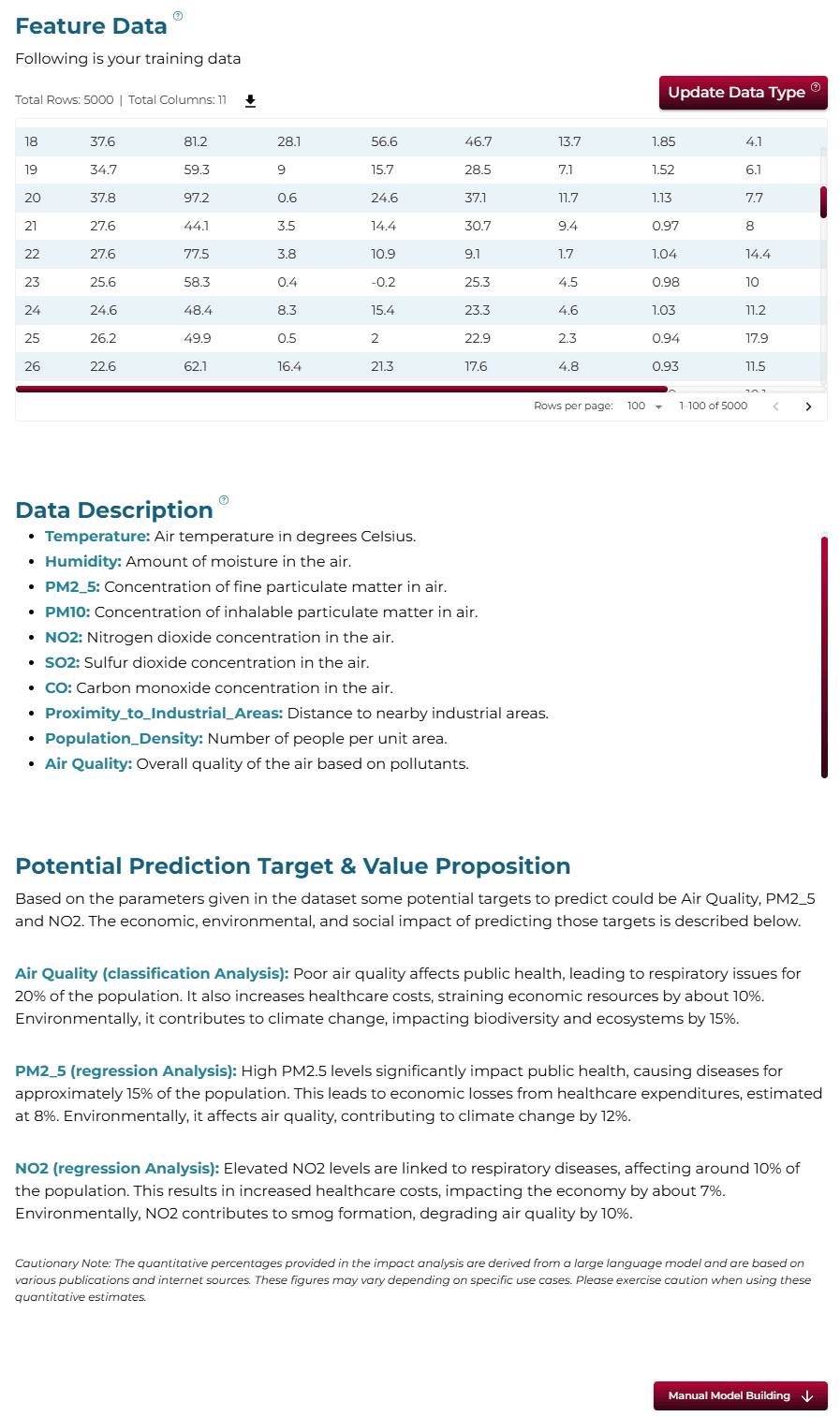
AUploading Dataset
Click on the **'Upload CSV or Excel Data'** button → Select a source for the dataset → Upload `air_quality_train.csv`. The system automatically analyzes the file, extracts column descriptions, and identifies the top value-adding targets for prediction.
BChoosing Analysis Mode
- What changes can improve air quality based on the patterns in this data?
- Which factors in the data have the biggest impact on air quality?
Operation Using Autonomous Guided Mode
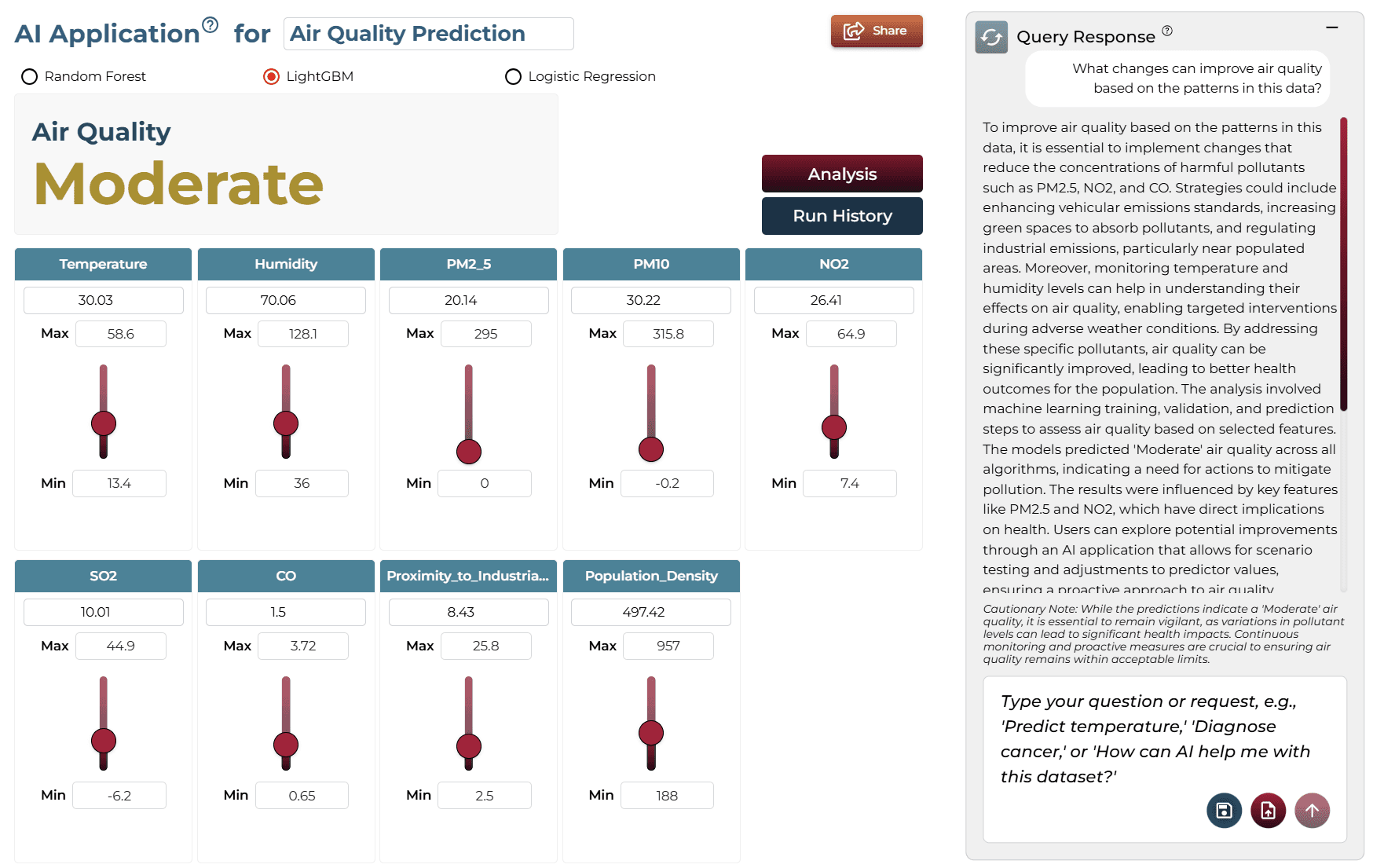
AQuery Response
To improve air quality based on the patterns in this data, it is essential to implement changes that reduce the concentrations of harmful pollutants such as PM2.5, NO2, and CO. Strategies could include enhancing vehicular emissions standards, increasing green spaces, and regulating industrial emissions. The Random Forest model demonstrated exceptional accuracy of 95%.
BAI Application
In automated mode, running the query solves the problem for you step by step and generates the AI application. Users can adjust sliders for key variables and see how changes impact the predicted outcome in real-time.
Model Fine-Tuning/Manual Model Building
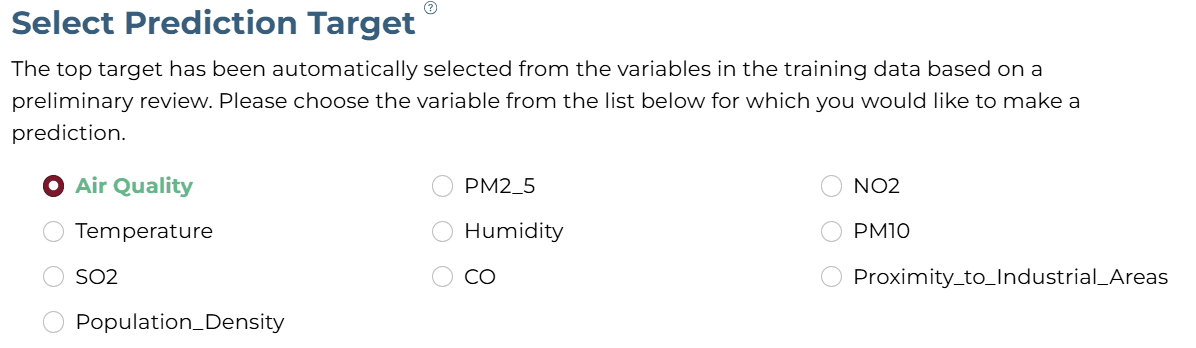
ASelecting Prediction Target
Analyzing the automated response to the query generated from the problem statement, the 'Target' column was selected as the target.
BSelecting Analysis Type
The analysis target is a categorical column. Hence, the 'Classification' analysis type is selected.

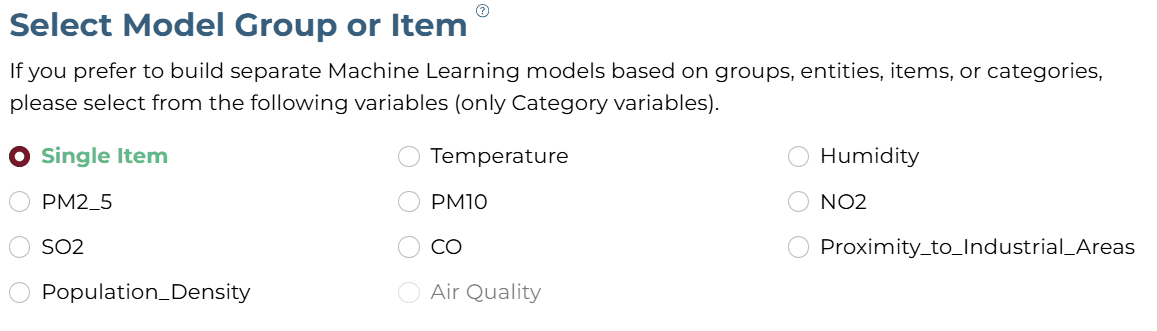
CSelecting Model Group/Item
DSelecting Features
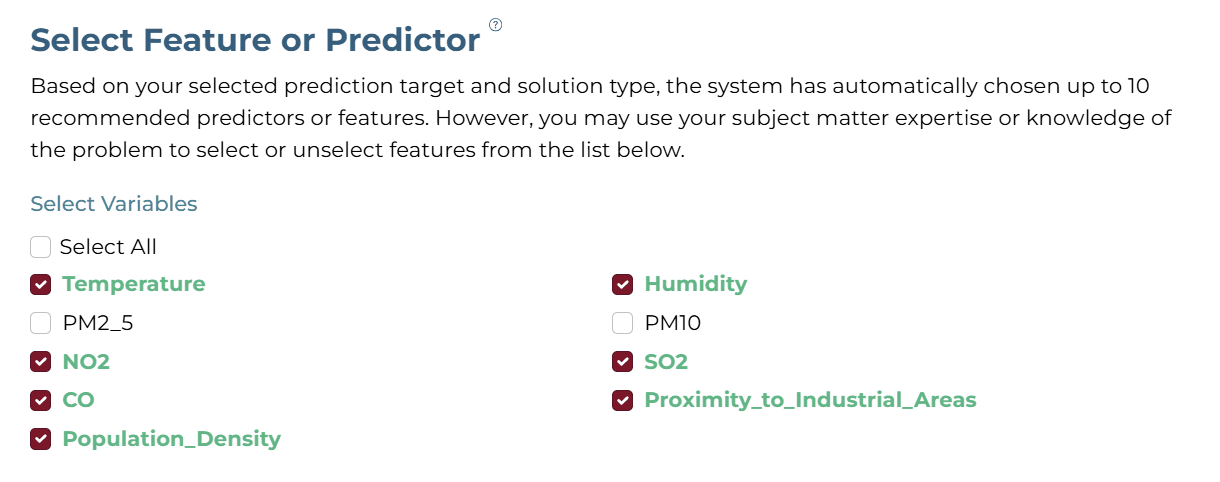
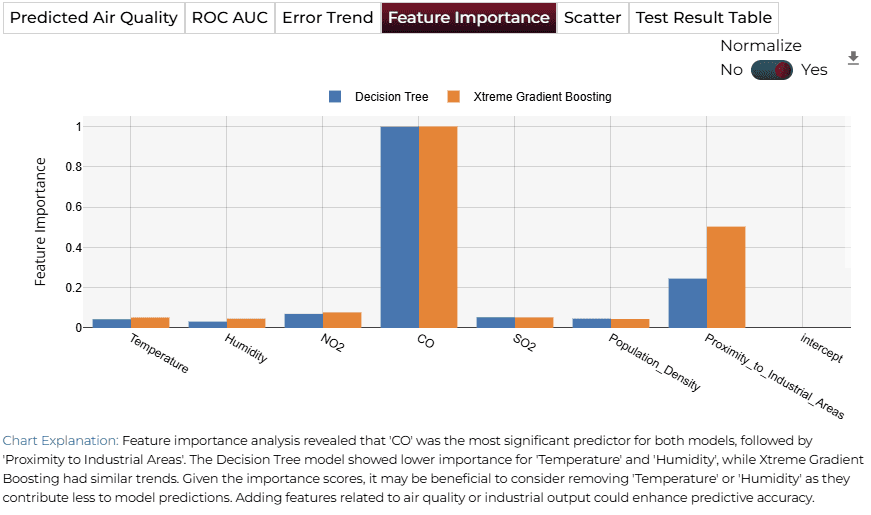
Select the following features: Temperature, Humidity, NO2, CO, SO2, Population_Density, and Proximity_to_Industrial_Areas.
ESelecting Training Level

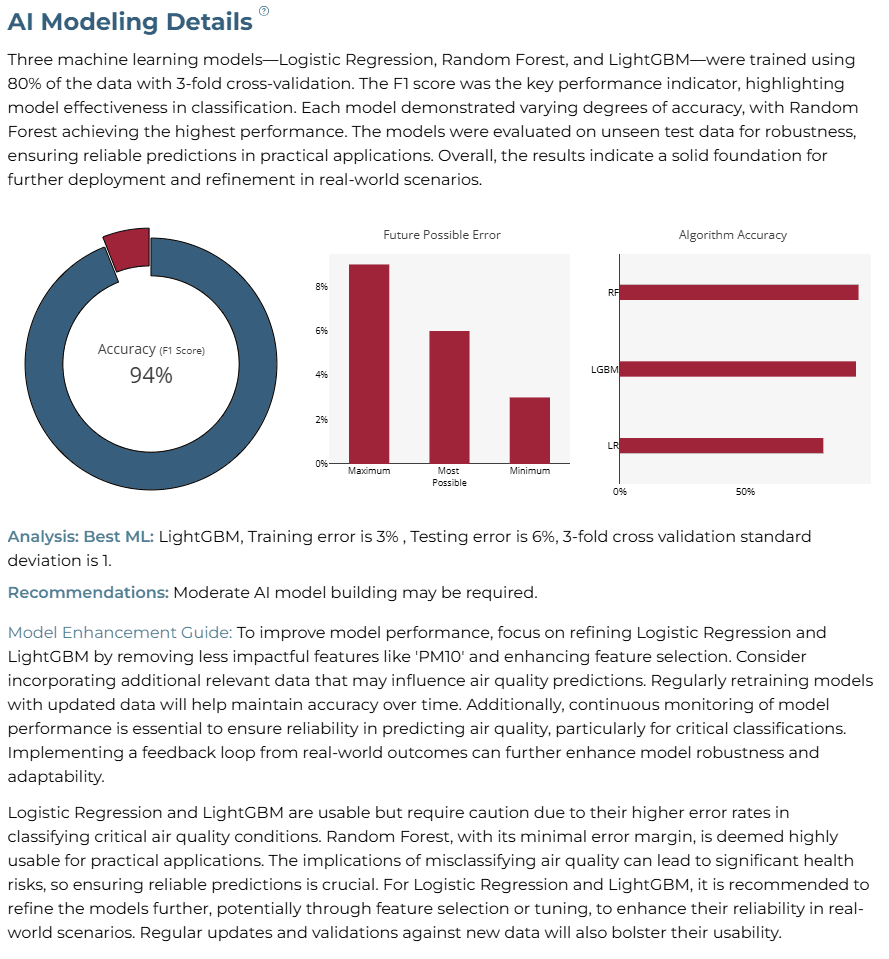
AI Modeling Details
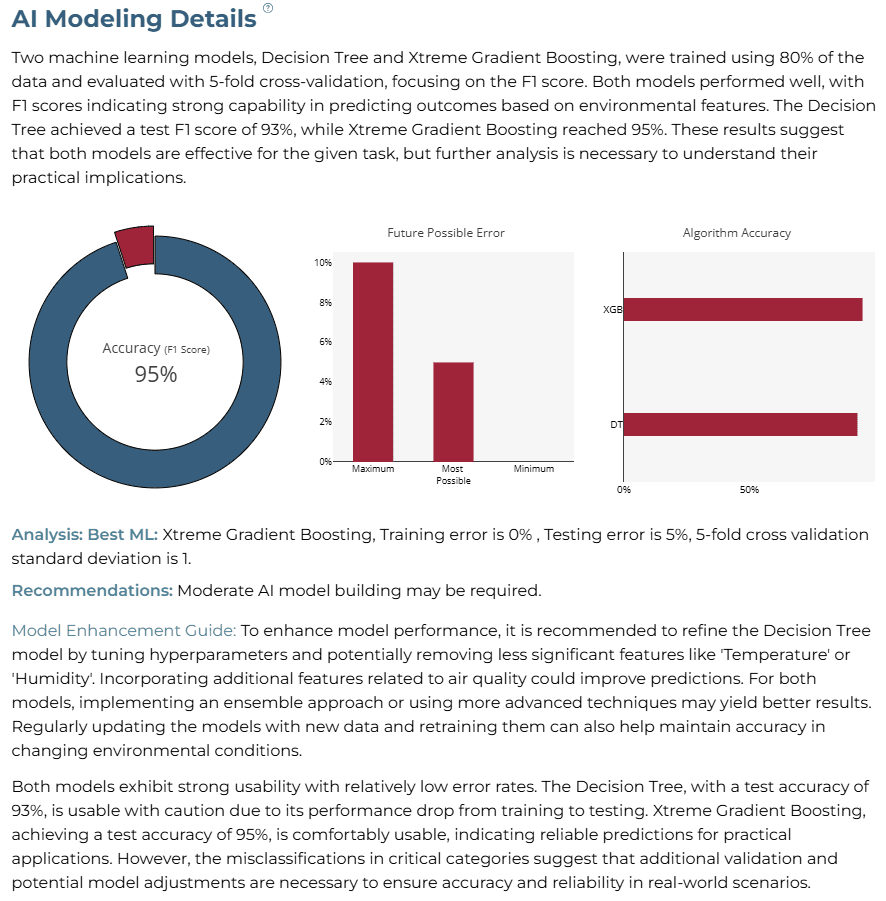
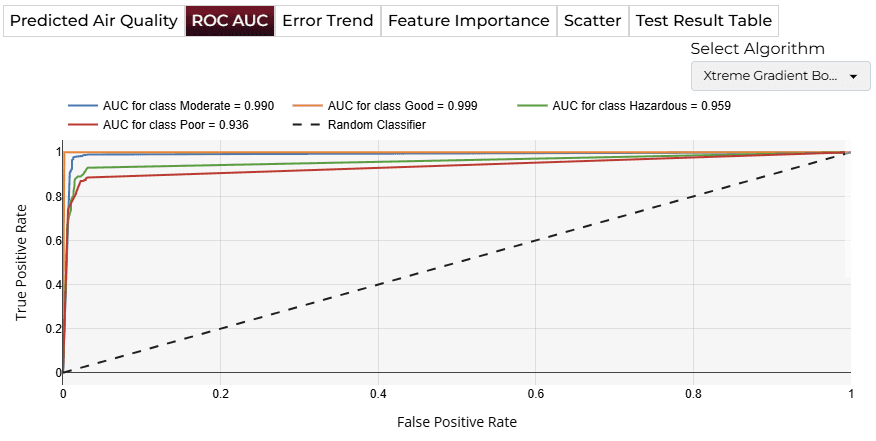
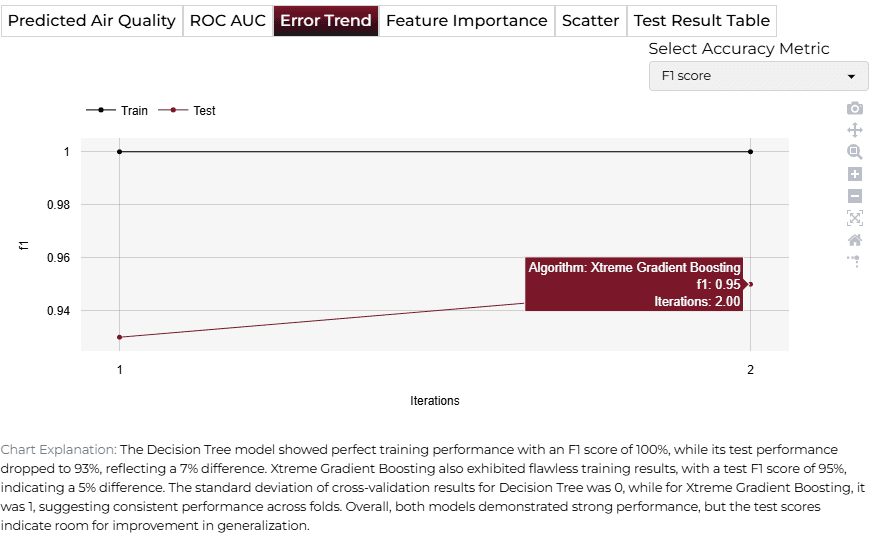
The automated model selection process identified Decision Tree (DT) and Xtreme Gradient Boosting (XGB) as the most suitable machine learning models. XGB was determined to be the best-performing model, achieving the highest F1 score of 95%.
Training Analysis Details
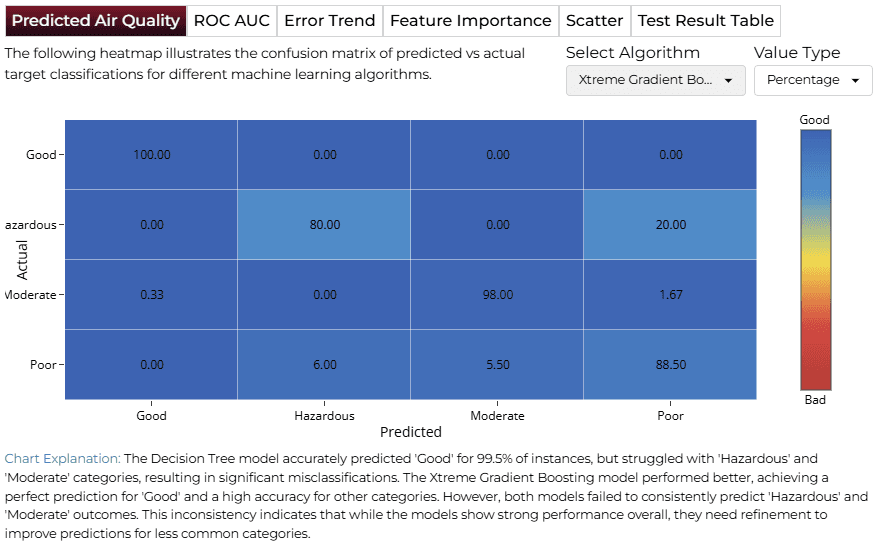
APredicted Air Quality
BROC AUC
CError Trend
DFeature Importance
Finalize Models
Once satisfied with performance, click 'Deploy'. The system saves and deploys models for future demand analysis or production environment.

4AI APPLICATION
Manual Model Building
In Manual Training Mode, users can modify sliders for variables like CO, NO2, and Proximity to Industrial Areas. Clicking ‘Update Response’ triggers an updated analysis tailored to the selected feature values.
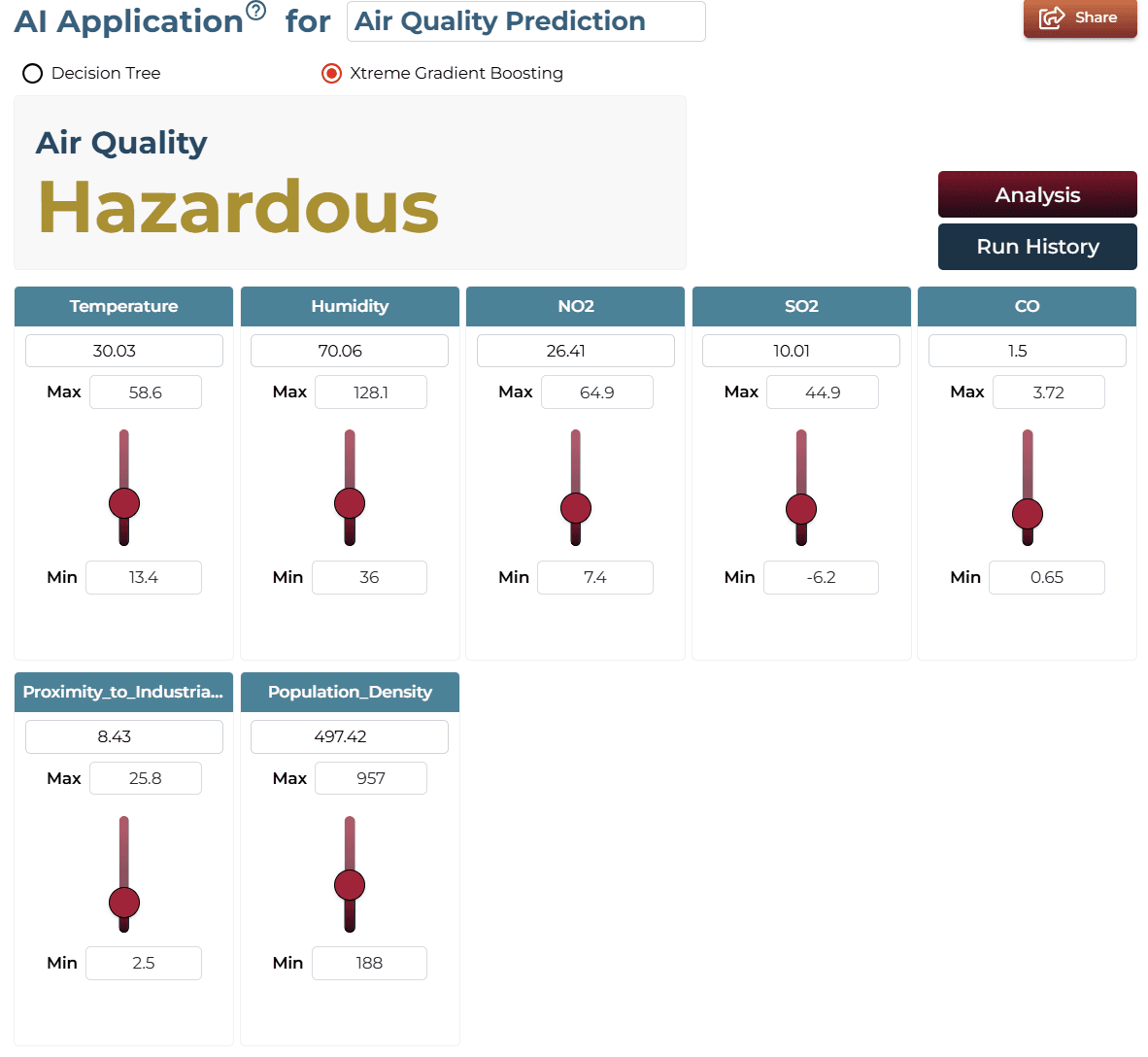
AI Application Demo
By adjusting the sliders or entering custom values, lower levels of "CO" and "SO2," along with increased distance from industrial areas, tend to result in a "Good" air quality prediction, whereas higher concentrations yield "Hazardous" outcomes.
Saving the Project
Save your project by clicking the icon at the bottom left corner of the textbox.

Sharing the Project
Share the application for single on-demand predictions once the analysis is saved.

Interested in similar AI solutions?
Explore our full suite of AI capabilities designed to transform your business operations.