


Predicting CO2 Emissions in an Industrial Process
Accurately forecasting CO2 emissions in industrial processes is crucial for regulatory compliance, sustainability, and process optimization.
1Overview & Strategic Importance

Problem Statement
Predicting CO₂ emissions is crucial for environmental sustainability, regulatory compliance, and industrial efficiency. Industries must monitor emissions to reduce impact and meet carbon footprint regulations. Emission levels are influenced by fuel composition, temperature, pressure, and process efficiency. Addressing this supports greener industrial transition.
Required Solutions
- Developing ML models for CO₂ forecasting.
- Identifying contributors like temperature and pressure.
- Optimizing process efficiency for compliance.
Solution Objectives
- Identify patterns and key contributors via EDA.
- Develop models to estimate emissions based on variables.
- Conduct scenario analysis for impactful factors.
- Assist industries in monitoring and reducing footprint.
Understanding the Problem
Emissions are affected by fuel composition, chemical reaction efficiency, and system pressure.
AI models analyze historical trends to implement proactive measures to minimize industrial carbon footprints and ensure regulatory compliance.
2About the Data
Data Collection
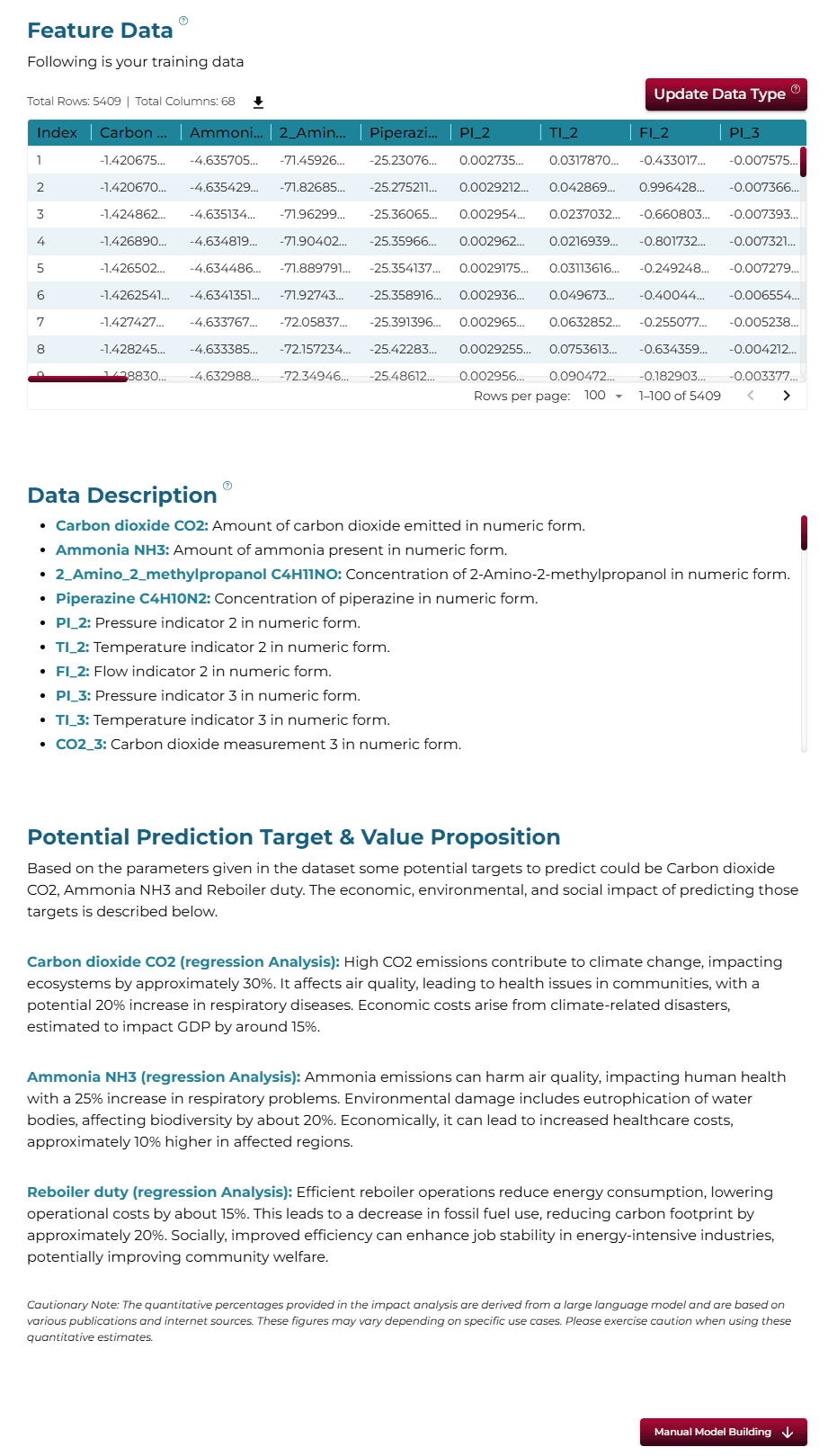
The dataset includes operational parameters from plant units, measuring chemical concentrations, temperatures, and flow rates.
Major Parameters Description
Download Training DataCarbon dioxide CO2Measured CO2 emission level in the plant.
Ammonia NH3Ammonia concentration in the process.
C4H11NO2-Amino-2-methylpropanol used in capture.
Piperazine C4H10N2Absorption promoter in CO2 capture.
PI-2Process indicator for stage 2.
TI-2Temperature at stage 2.
FI-2Flow rate at stage 2.
PI-3Process indicator for stage 3.
TI-3Temperature at stage 3.
3Using iDareAI
Guided Mode Initialization
AUploading Dataset
Click on the **'Upload CSV or Excel Data'** button → Select a source for the dataset → Upload `co2_emission_train.csv`. The system automatically analyzes the file, extracts column descriptions, and identifies the top value-adding targets for prediction.
BChoosing Analysis Mode
- What is the maximum amount of CO2 emitted according to this dataset?
- Which factors impact the emitted amount of CO2?
Operation Using Autonomous Guided Mode
AQuery Response
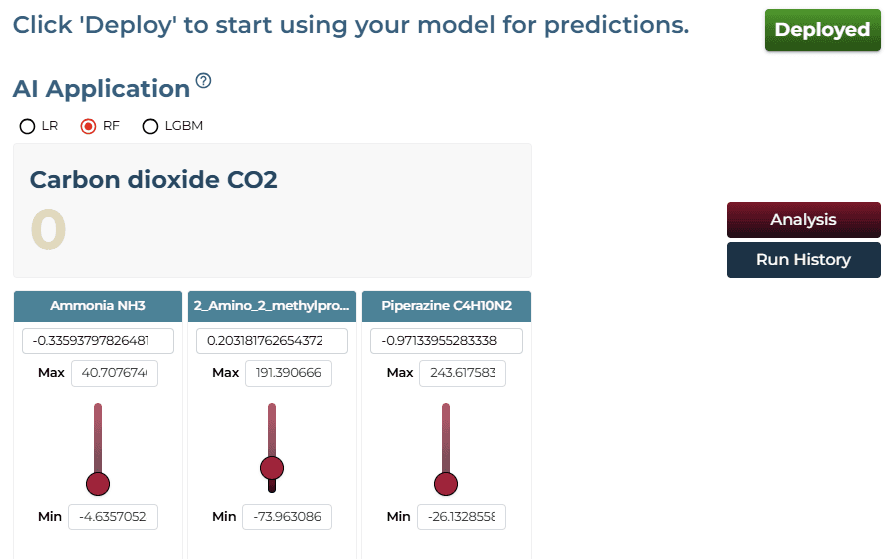
Maximum CO2 emitted is predicted to be 0.13 based on LightGBM. Random Forest model provided a more reliable prediction with relatively lower error rates.
BAI Application
Model Fine-Tuning/Manual Model Building
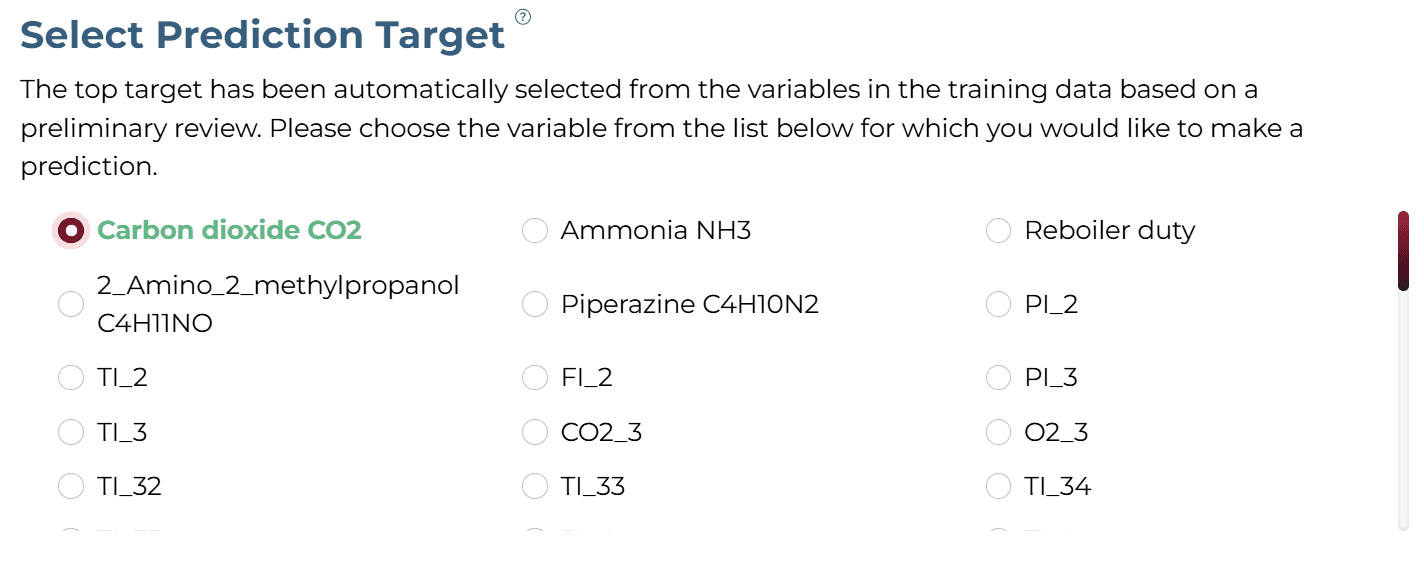
ASelecting Prediction Target
'Carbon dioxide CO2' column was selected as the target.
BSelecting Analysis Type
The analysis target is a numeric column. Hence, the 'Regression' analysis type is selected.

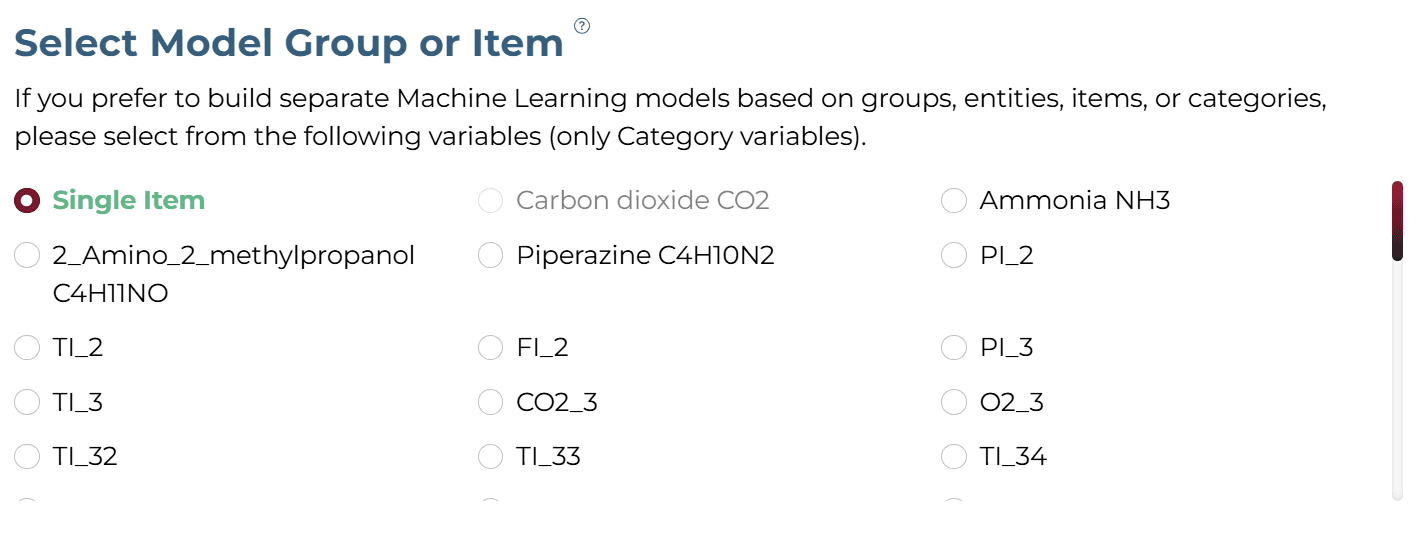
CSelecting Model Group/Item
DSelecting Features
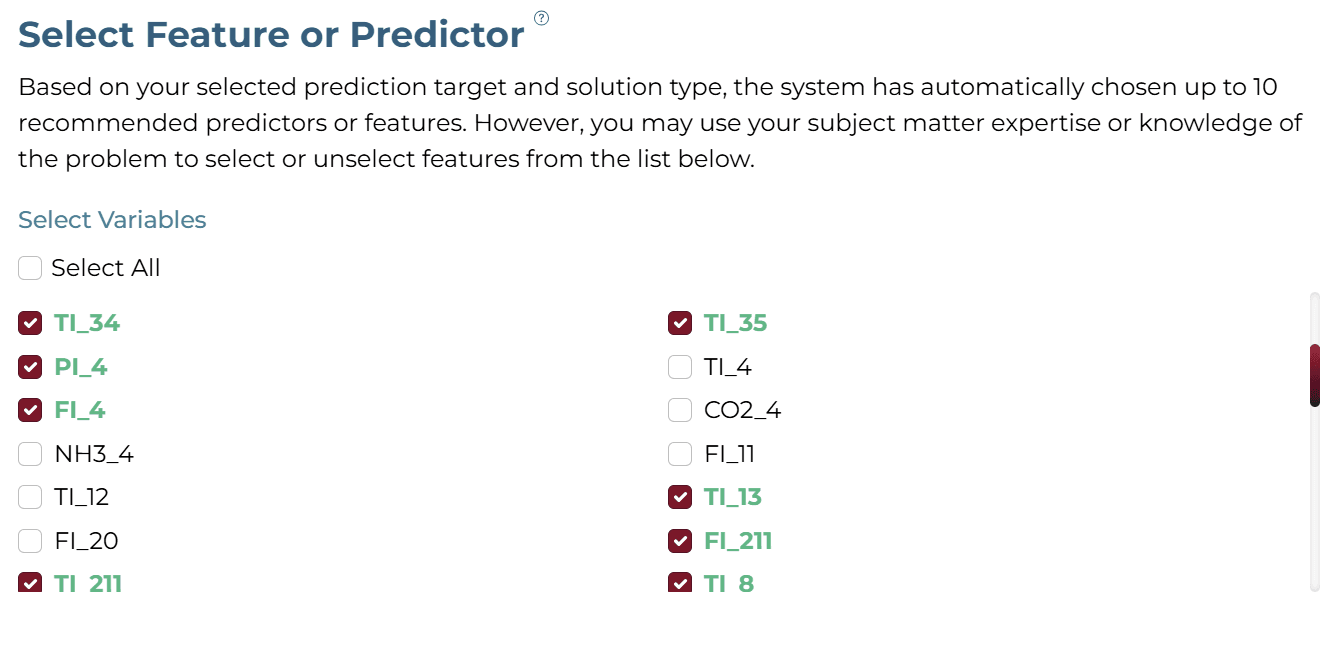
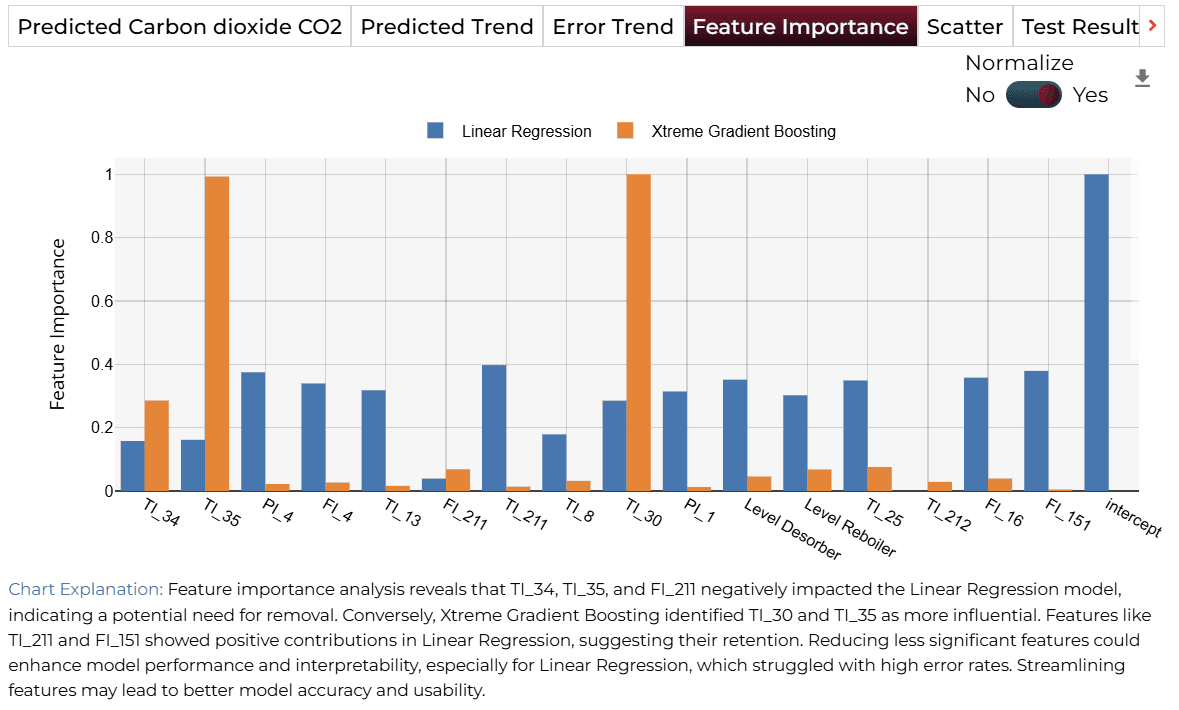
Selected 18 specific process indicators (TI_34, TI_35, PI_4, FI_4, etc.).
ESelecting Training Level
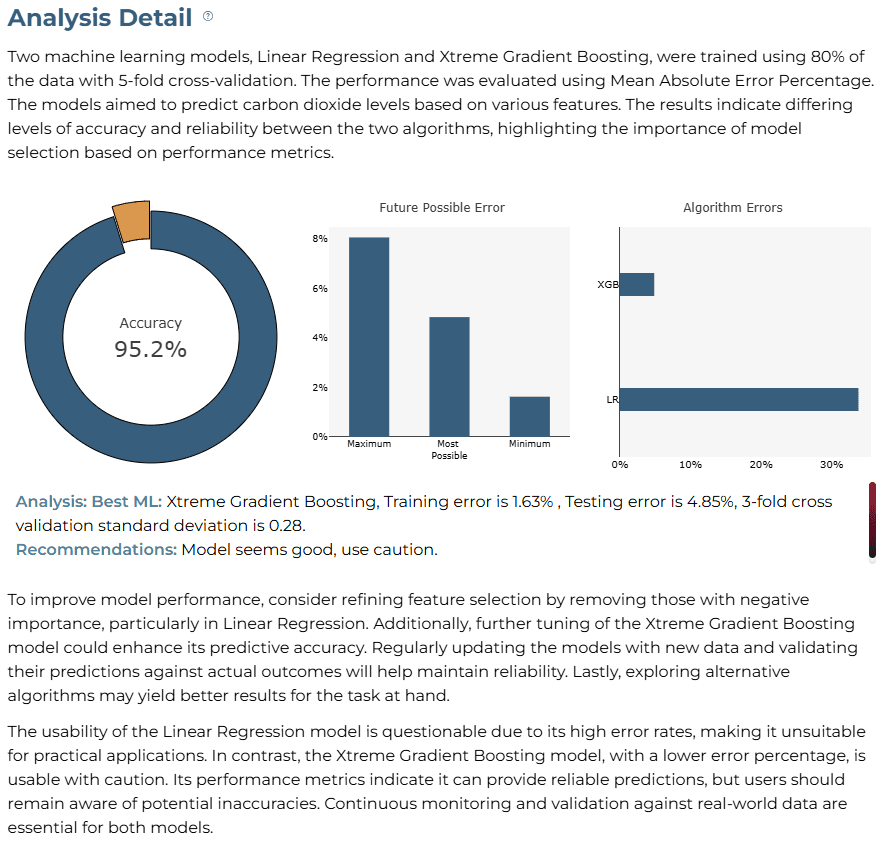
Moderate training level with XGBoost and Linear Regression.

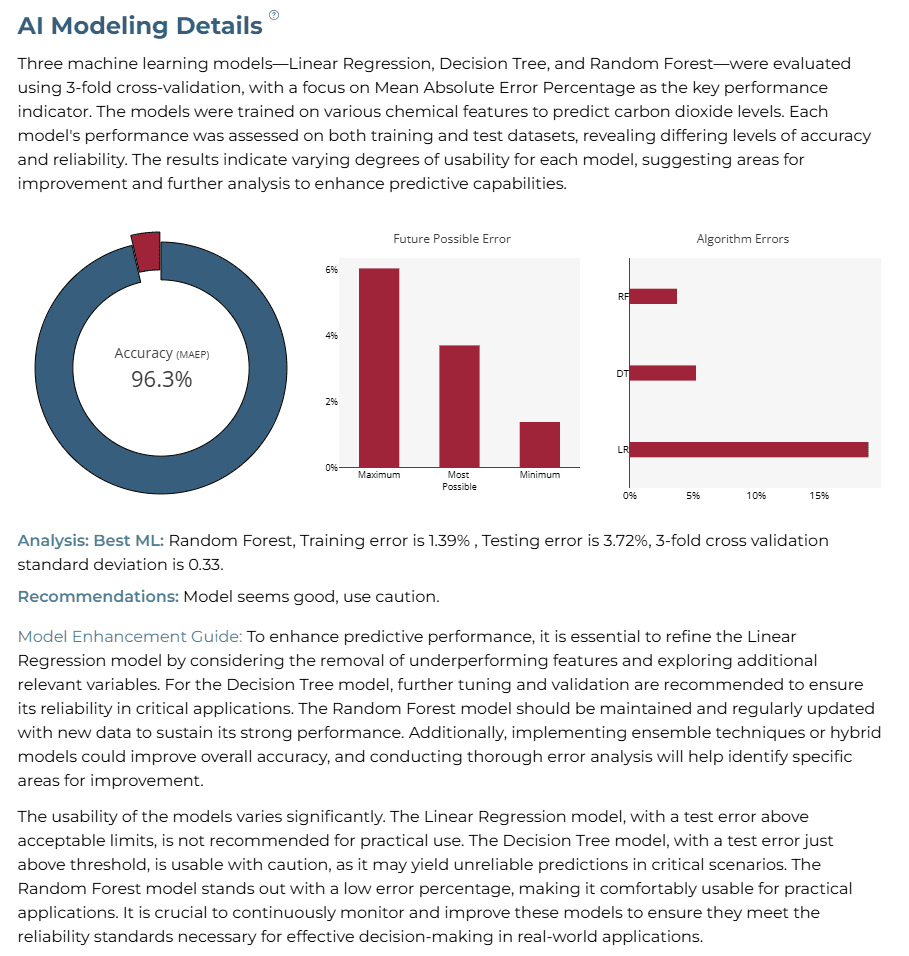
AI Modeling Details
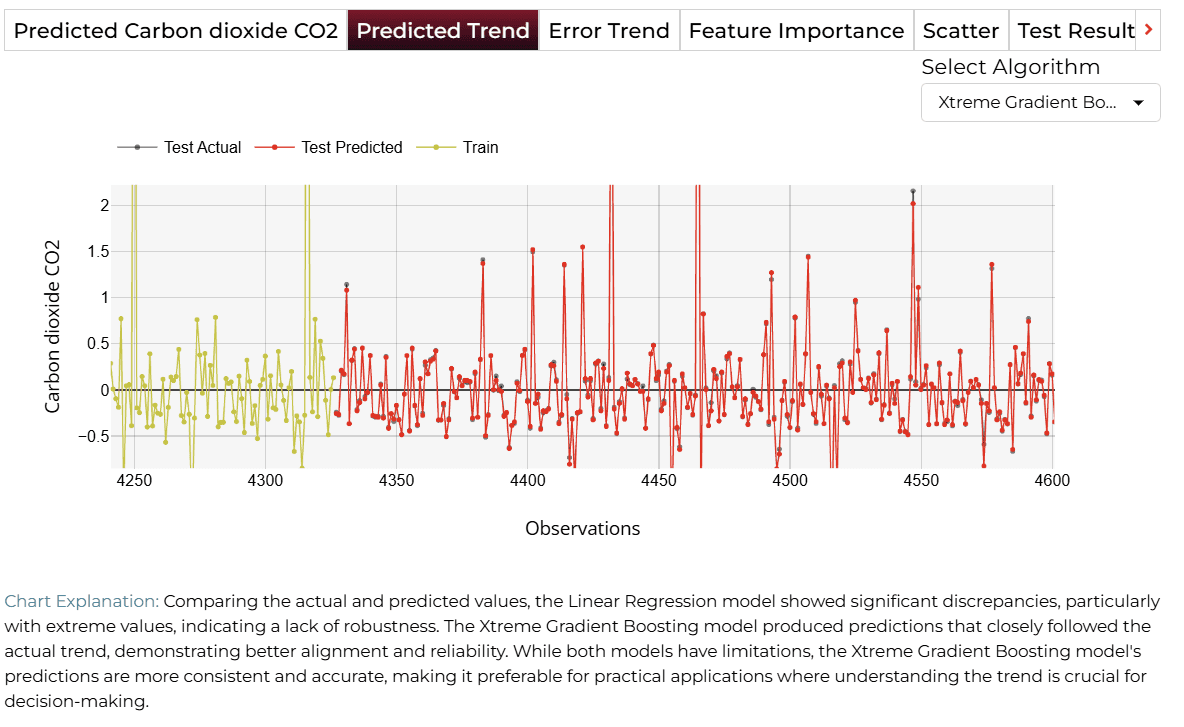
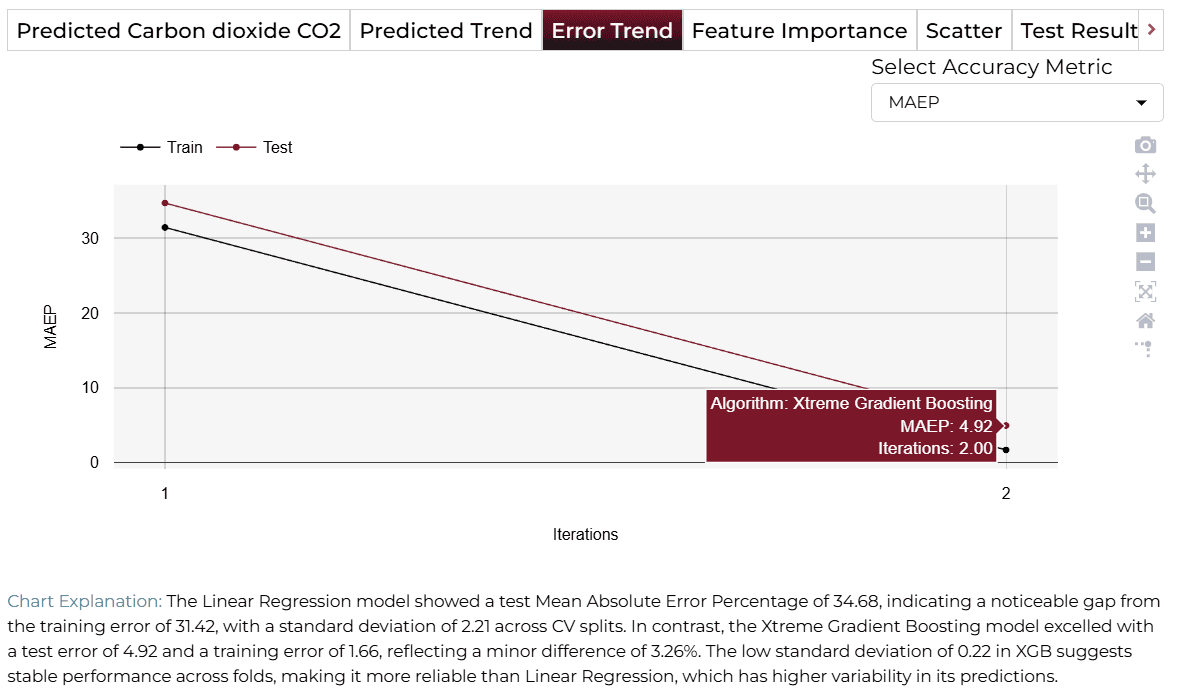
XGBoost achieved superior performance with a testing error of 4.85%.
Training Analysis Details
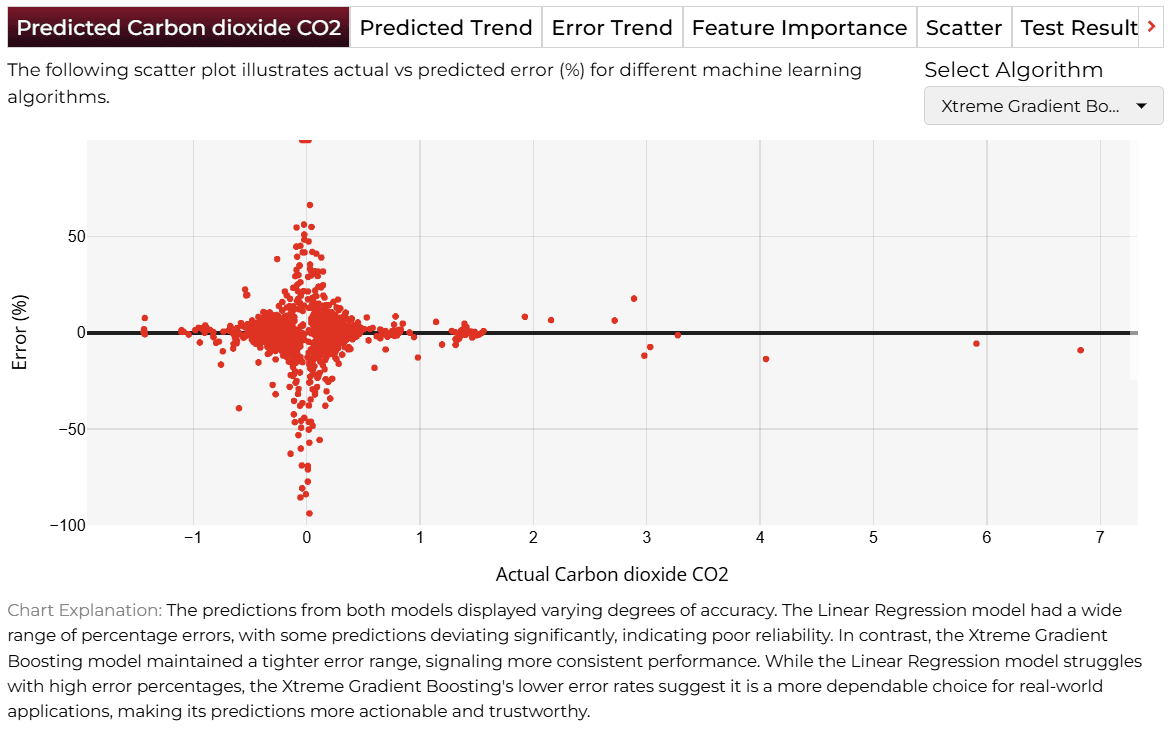
APredicted Target
BPredicted Trend
CError Trend
DFeature Importance
Finalize Models
Customize training configurations and deploy your application once performance metrics are met.

4AI APPLICATION
Manual Model Building
Modify input sliders for features like TL_34, TL_35, and FL_211 to explore different prediction scenarios.
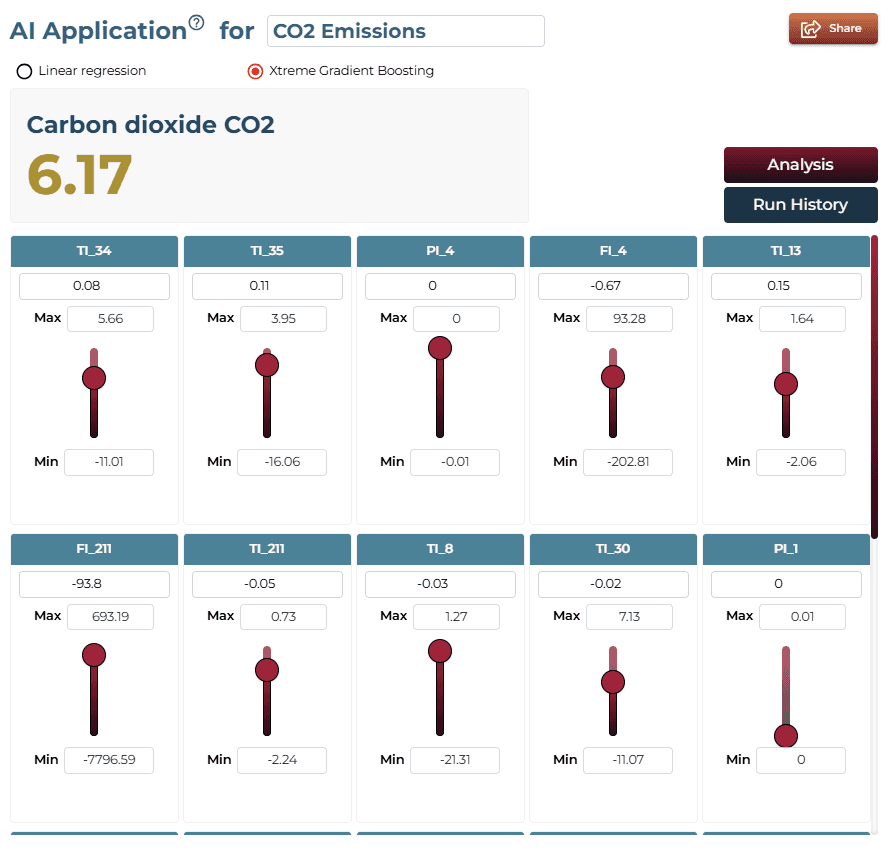
AI Application Demo
Observe real-time emission impacts by adjusting key process indicators.
Saving the Project
Save your CO₂ emission analysis by clicking the icon at the bottom left corner of the interface.

Sharing the Project
Generate shareable links once the project is saved for on-demand predictions.

Interested in similar AI solutions?
Explore our full suite of AI capabilities designed to transform your business operations.