


Predicting Purchase Intent in Consumer Electronics
Optimizing market strategies and customer satisfaction in the consumer electronics market by predicting purchase intent.
1Overview & Strategic Importance

Problem Statement
The consumer electronics industry is highly competitive, with customer purchase intent and satisfaction playing a critical role in driving sales. Predicting purchase intent can help businesses identify potential customers, understand market trends, and tailor marketing strategies to maximize revenue. Challenges include understanding diverse customer preferences, price sensitivity, and the impact of product categories and brands on purchase decisions. Customer satisfaction, demographics, and purchasing behavior are additional factors influencing market dynamics. Solving this problem is vital for improving targeting strategies, optimizing product offerings, and enhancing the overall customer experience, ensuring competitiveness in the consumer electronics market.
Required Solutions
- Developing a predictive model to determine purchase intent based on product details, customer demographics, and satisfaction metrics.
- Analyzing the relationship between product categories, prices, and purchase decisions.
- Identifying the impact of customer demographics and satisfaction on intent to buy.
- Providing actionable insights to refine marketing campaigns and product positioning.
Solution Objectives
- Perform exploratory data analysis to uncover patterns in customer purchasing behavior.
- Build a classification model to predict purchase intent based on key features.
- Conduct scenario analysis to understand the impact of product pricing and satisfaction levels.
- Optimize pricing and marketing strategies to boost sales and satisfaction.
Understanding the Problem
Purchase intent is influenced by various interconnected factors, including product attributes, customer demographics, and satisfaction levels. For instance, higher satisfaction ratings may increase repeat purchases, while premium product pricing could limit affordability for some customer segments.
Challenges in understanding purchase intent include identifying significant patterns in customer preferences, balancing affordability with quality, and catering to diverse demographics. Predictive models can provide valuable insights into these dynamics, enabling businesses to forecast demand, personalize marketing efforts, and improve customer retention.
2About the Data
Data Collection
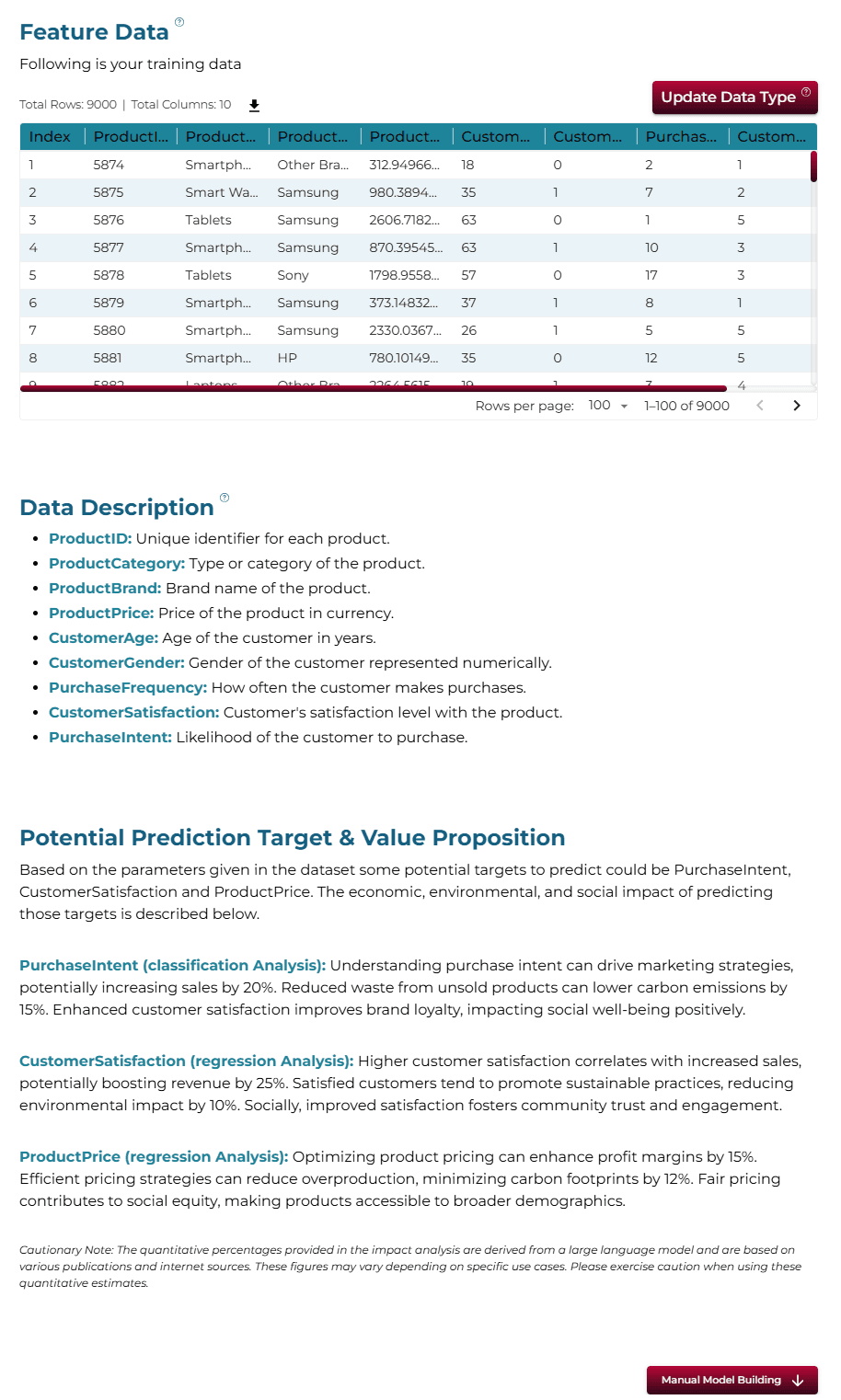
This dataset aggregates data from retail and e-commerce platforms, capturing product details and customer interactions. The data likely comes from purchase records, customer feedback surveys, and transaction logs. Validation processes ensure data accuracy, consistency, and relevance to market conditions.
Major Parameters Description
Download Training DataProductIDUnique identifier for each product
ProductCategoryCategory of the consumer electronics product (e.g., Smartphones, Laptops)
ProductBrandBrand of the product (e.g., Apple, Samsung)
ProductPricePrice of the product in dollars
CustomerAgeAge of the customer
CustomerGenderGender of the customer (0 - Male, 1 - Female)
PurchaseFrequencyAverage number of purchases per year by the customer
CustomerSatisfactionCustomer satisfaction rating on a scale from 1 (lowest) to 5 (highest)
3Using iDareAI
Guided Mode Initialization
AUploading Dataset
Click on the **'Upload CSV or Excel Data'** button → Select a source for the dataset → Upload `purchase_intent_train.csv`. The system automatically analyzes the file, extracts column descriptions, and identifies the top value-adding targets for prediction.
BChoosing Analysis Mode
- What changes can improve customer purchase intent based on the patterns in this data?
- Which factors in the data have the biggest impact on whether a customer will purchase a product or not?
Operation Using Autonomous Guided Mode
AQuery Response
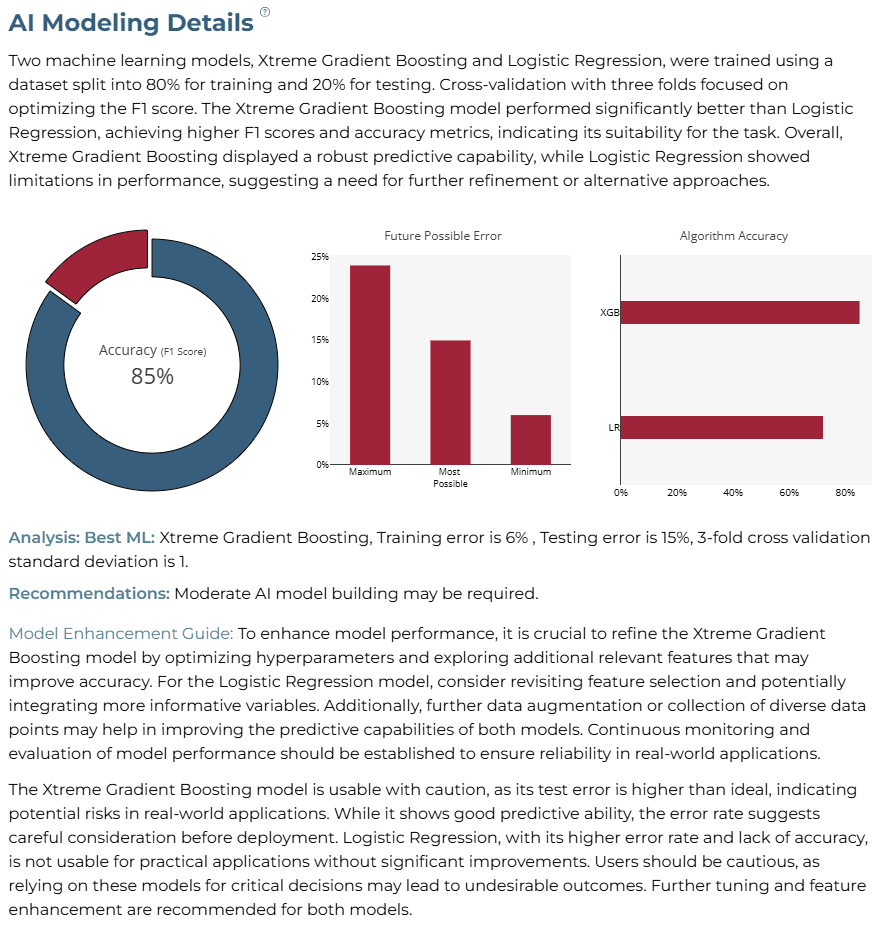
The analysis involved machine learning training, validation, and prediction to assess PurchaseIntent based on selected features. The XGB model demonstrated strong performance, achieving a test accuracy of 82% and an F1 score of 85%. The discrepancy between models highlights the importance of CustomerGender and CustomerSatisfaction in influencing purchase decisions.
BAI Application
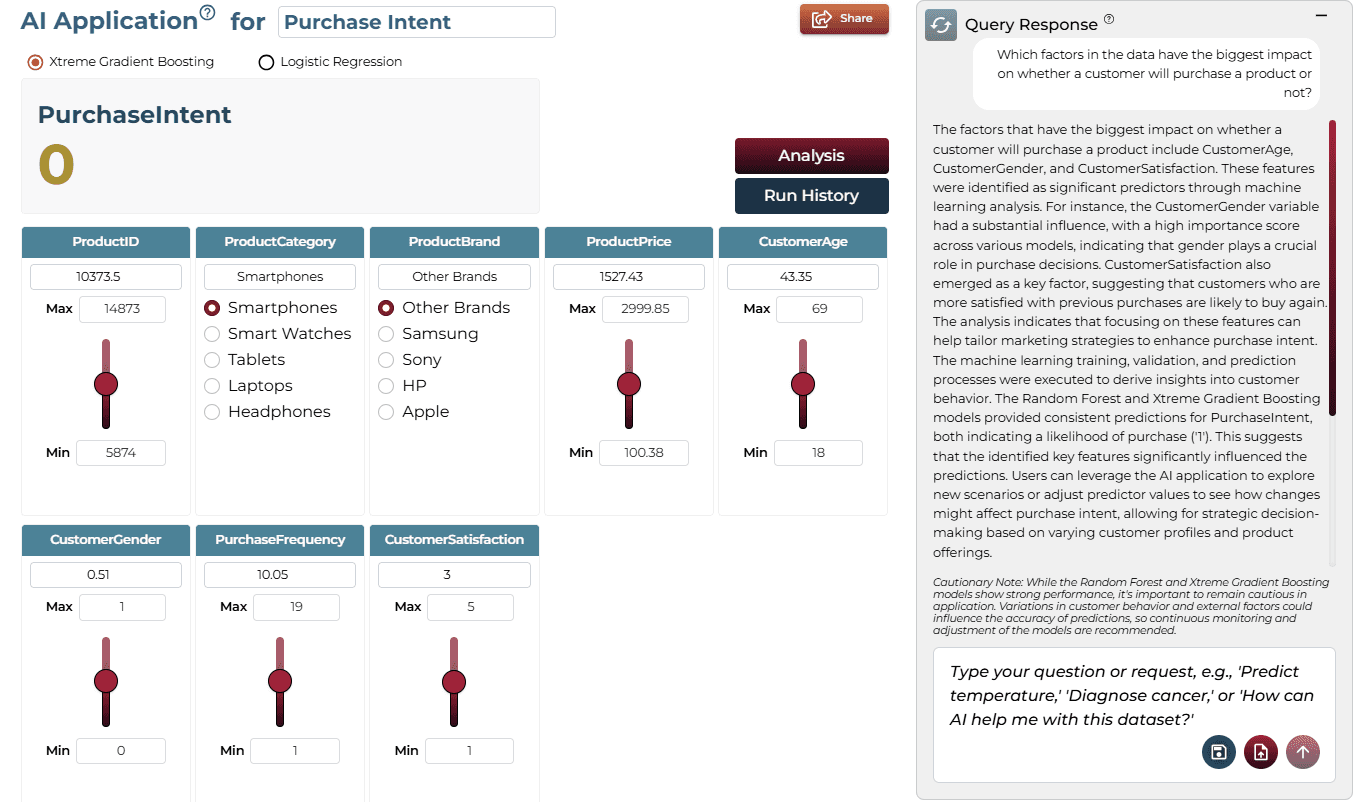
In automated mode, running the query solves the problem for you step by step and generates the AI application. Users can adjust sliders for key variables and see how changes impact the predicted outcome in real-time.
Model Fine-Tuning/Manual Model Building
ASelecting Prediction Target
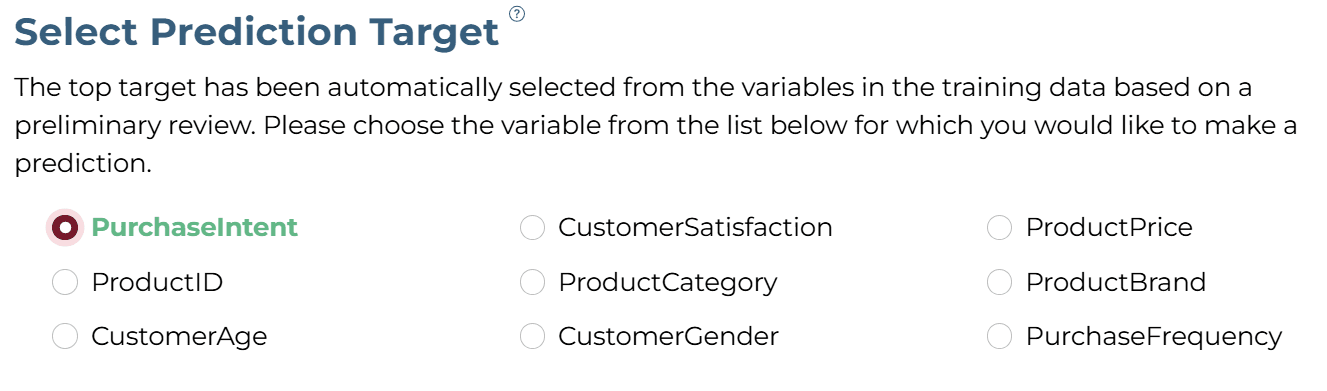
Analyzing the automated response to the query generated from the problem statement, the 'PurchaseIntent' column was selected as the target.
BSelecting Analysis Type
The analysis target is a categorical column. Hence, the 'Classification' analysis type is selected.

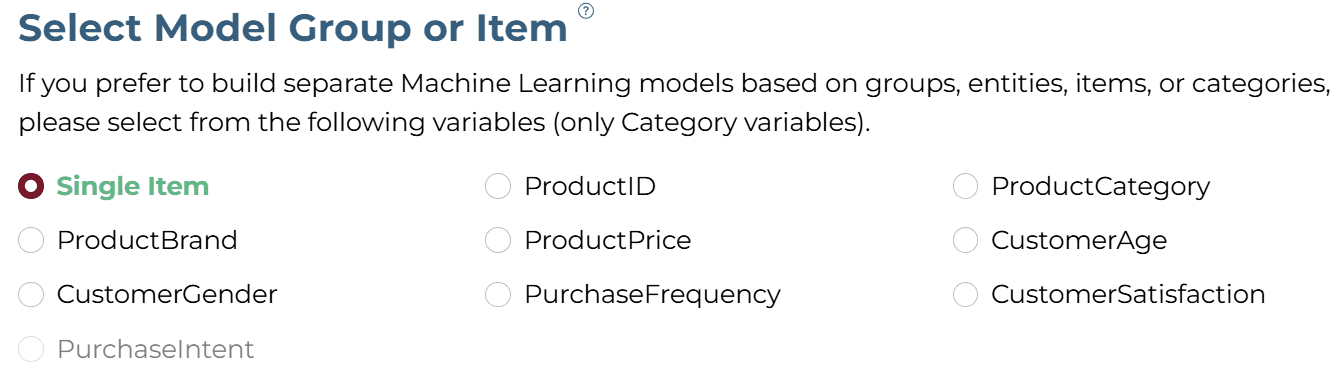
CSelecting Model Group/Item
DSelecting Features
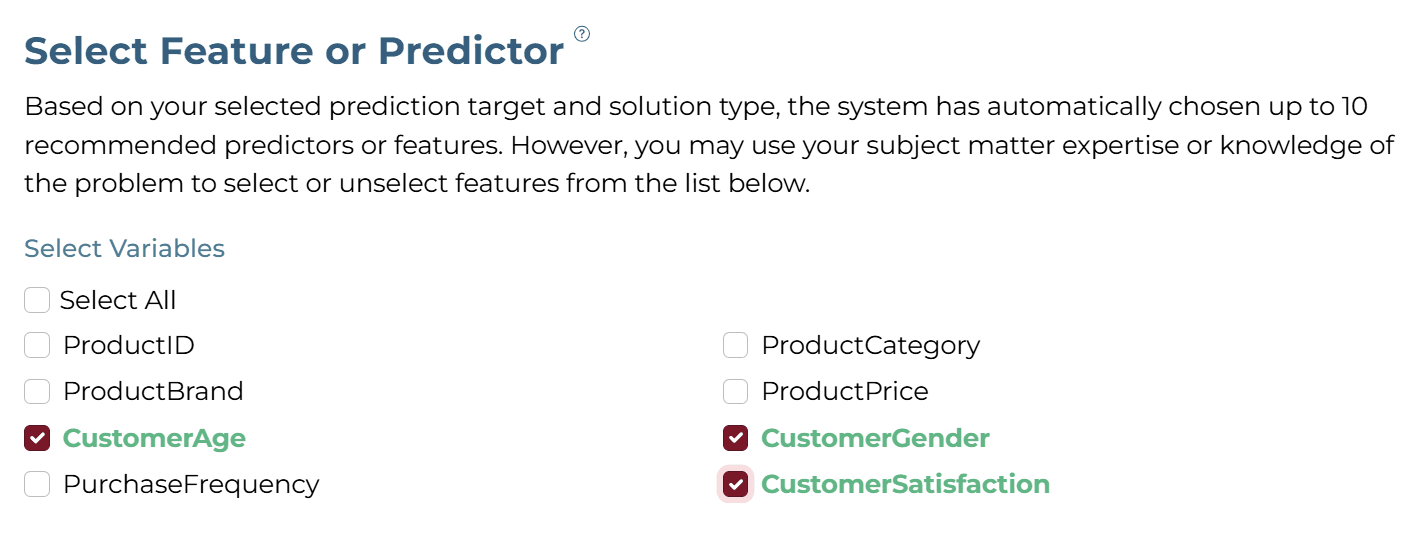
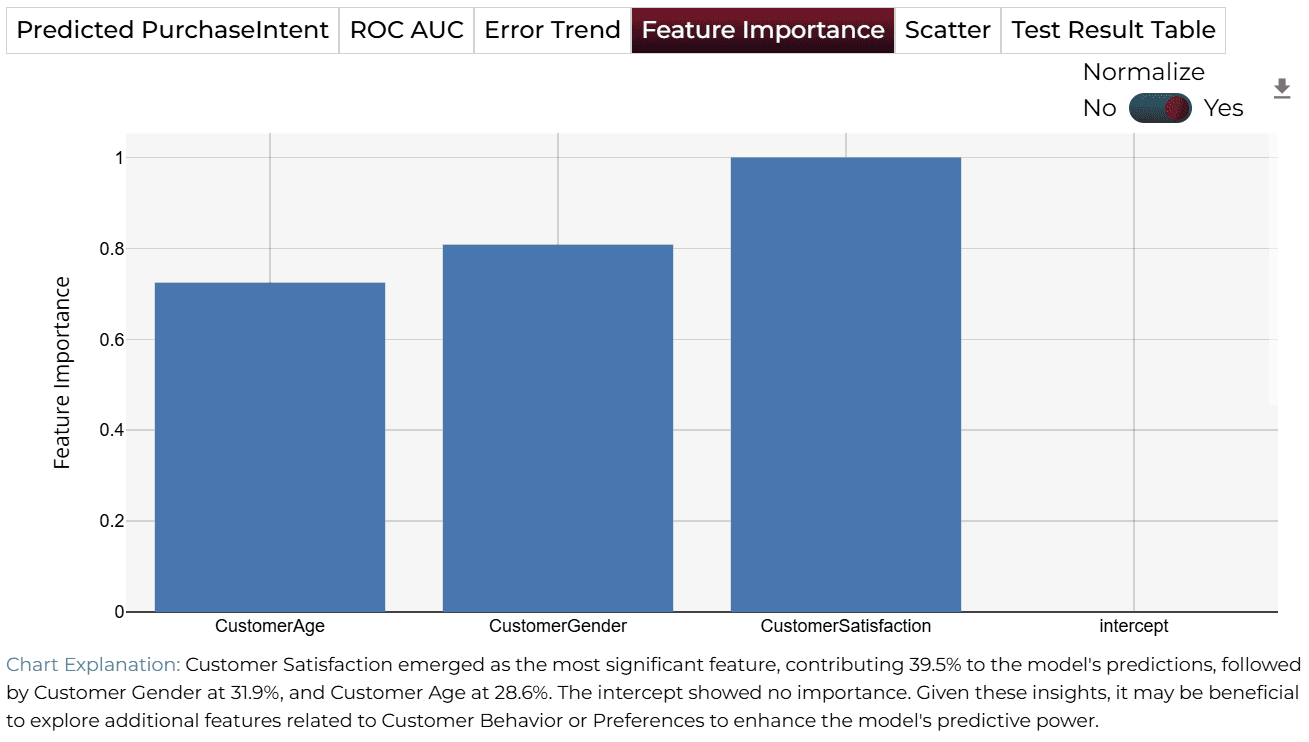
Select the following features: CustomerAge, CustomerGender, and CustomerSatisfaction.
ESelecting Training Level

AI Modeling Details
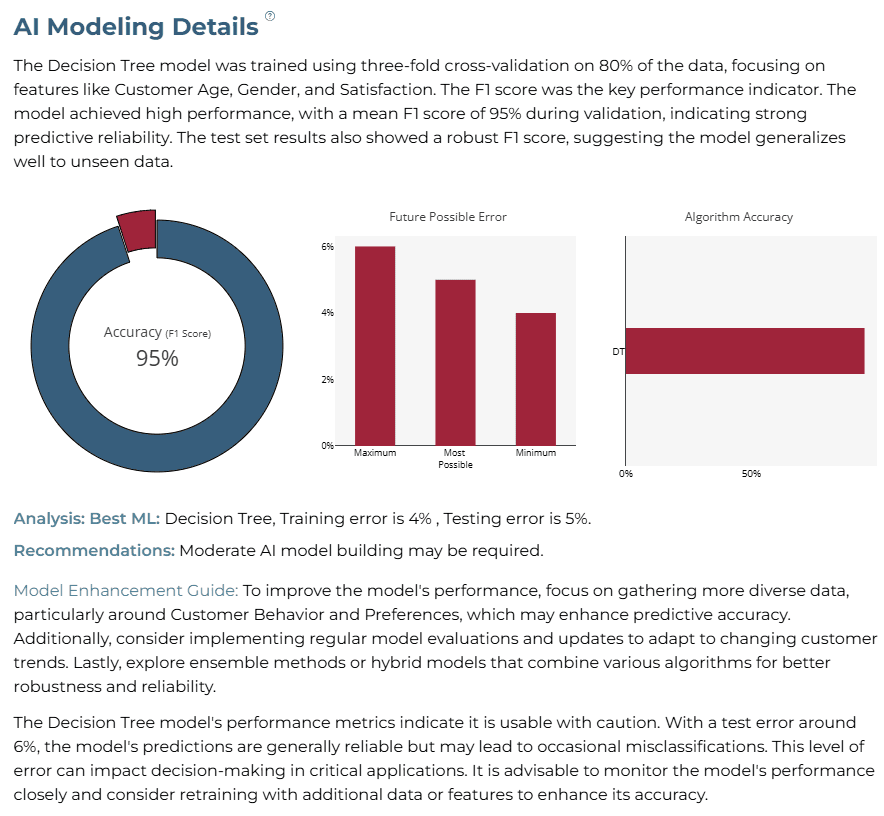
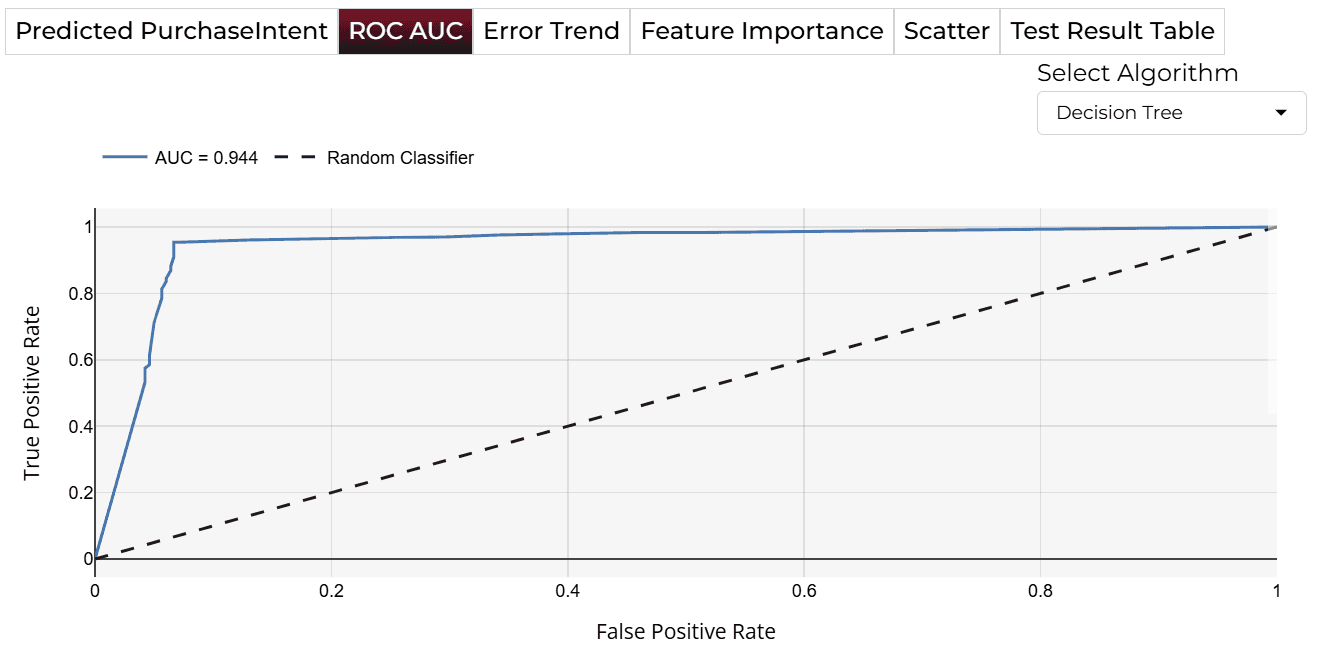
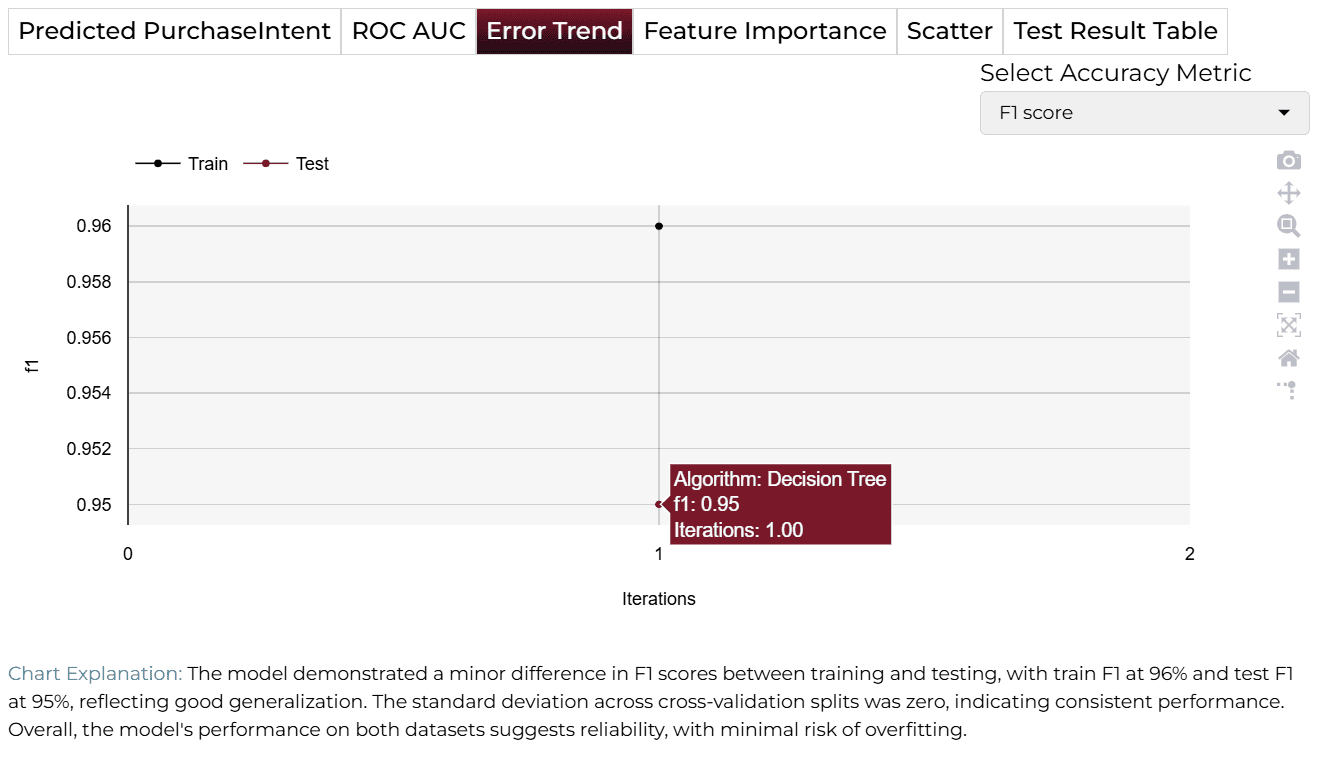
A Decision Tree model was selected and trained using three-fold cross-validation. The model achieved an F1 score of 96% on training data and 95% on test data, demonstrating strong predictive performance.
Training Analysis Details
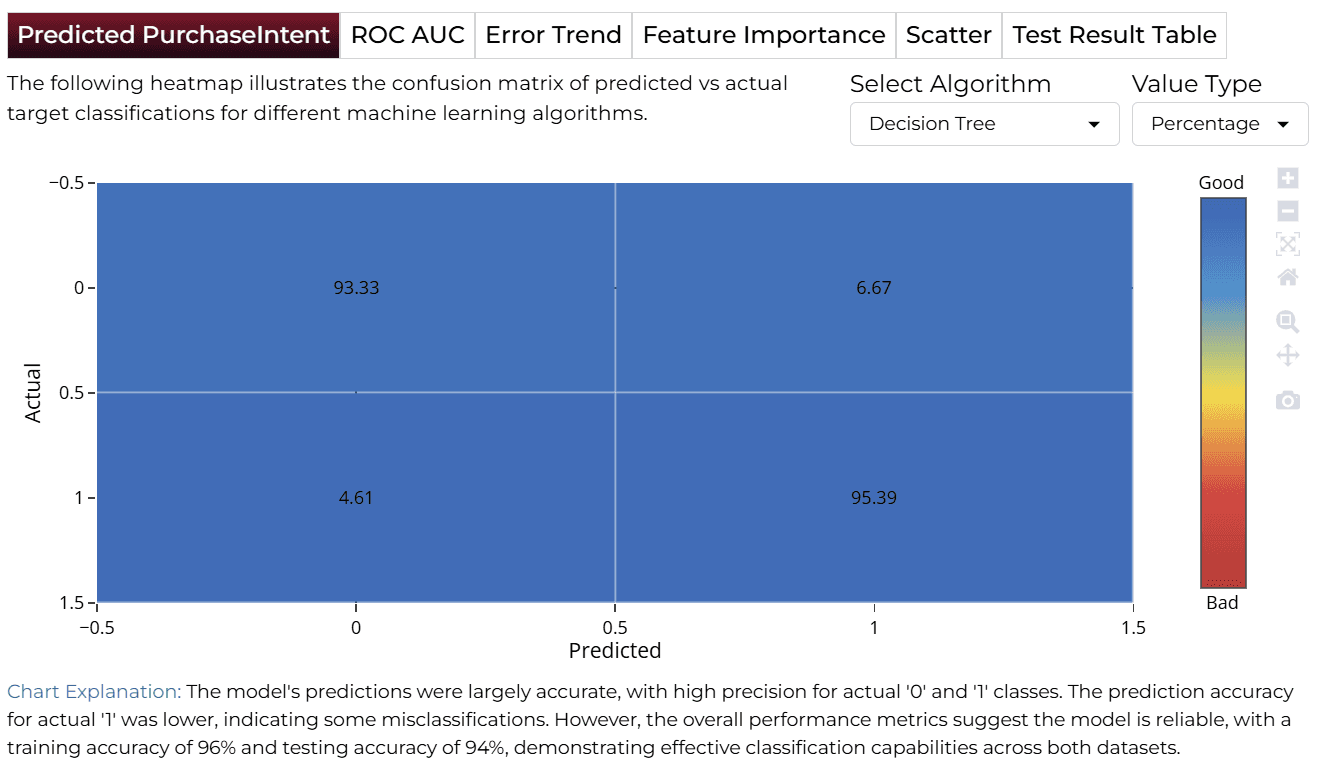
APredicted Target
BROC AUC
CError Trend
DFeature Importance
Finalize Models
Once satisfied with performance, click 'Deploy'. The system saves and deploys models for future demand analysis or production environment.

4AI APPLICATION
Manual Model Building
In Manual Training Mode, users can modify sliders for variables like CustomerSatisfaction, CustomerGender, and CustomerAge. Clicking ‘Update Response’ triggers an updated analysis tailored to the selected feature values.
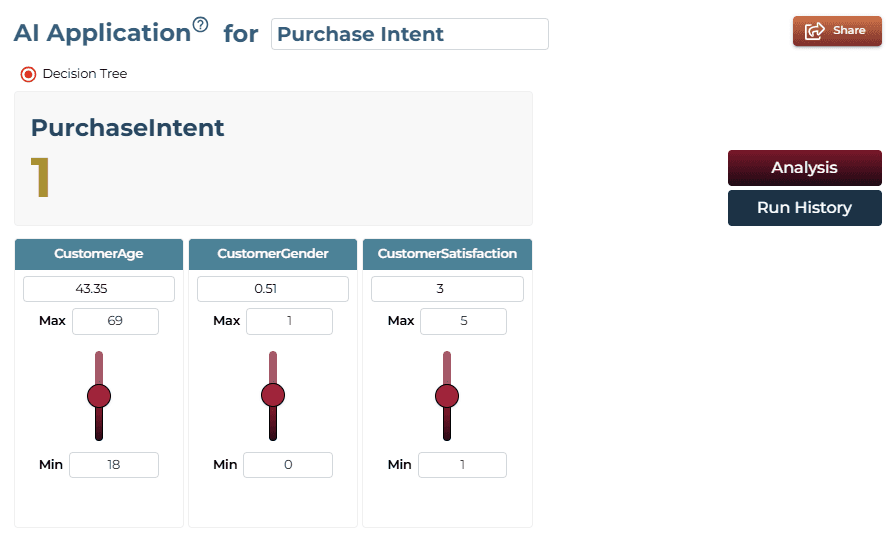
AI Application Demo
By adjusting the sliders or entering custom values, higher values of CustomerSatisfaction and moderate CustomerAge tend to yield higher Purchase Intent, while lower values may decrease intent.
Saving the Project
Save your project by clicking the icon at the bottom left corner of the textbox.

Sharing the Project
Share the application for single on-demand predictions once the analysis is saved.

Interested in similar AI solutions?
Explore our full suite of AI capabilities designed to transform your business operations.