


Predicting Crop Yield for Precision Agriculture
Optimizing agricultural productivity by predicting crop yield based on environmental, soil, and weather conditions.
1Overview & Strategic Importance

Problem Statement
Predicting crop yield is essential for optimizing agricultural production, ensuring food security, and improving resource management. Farmers and agribusinesses often face uncertainties due to factors such as weather conditions, soil quality, irrigation levels, and fertilizer use. Without accurate predictions, inefficient resource allocation and unexpected yield variations can lead to financial losses and food shortages. By leveraging data-driven insights, stakeholders can enhance crop planning, improve sustainability, and maximize agricultural efficiency.
Required Solutions
- Developing a predictive model to estimate crop yield based on weather, soil, and farming techniques.
- Identifying influential factors to provide actionable insights for optimizing irrigation and planting schedules.
- Enhancing farming efficiency and sustainability through data-driven recommendations.
Solution Objectives
- Perform exploratory data analysis to identify key variables affecting crop yield.
- Develop a regression model to predict yield based on environmental and farming parameters.
- Evaluate scenarios to optimize decisions and improve overall agricultural output.
Understanding the Problem
Crop yield is influenced by numerous variables, including climate, soil composition, irrigation levels, and pest control measures. Temperature fluctuations and inconsistent rainfall can impact plant growth, while excessive fertilizer use may lead to soil degradation.
By leveraging predictive analytics, farmers can minimize risks, optimize resource allocation, and enhance overall productivity. Implementing data-driven strategies contributes to greater resilience against climate change.
2About the Data
Data Collection
This dataset contains agricultural data for 1,000,000 samples aimed at predicting crop yield (in tons per hectare). It includes environmental factors, soil parameters, and farming practices essential for precision agriculture.
Major Parameters Description
Download Training DataSoil TypeThe type of soil in which the crops are grown, influencing water retention and nutrient availability.
Soil pHThe acidity or alkalinity of the soil, affecting nutrient absorption and crop growth.
RainfallTotal rainfall received in the growing season, impacting soil moisture and crop health.
TemperatureAverage temperature during the growing period, which influences crop development and yield.
HumidityRelative humidity in the atmosphere, affecting transpiration and plant growth.
Sunlight HoursTotal hours of sunlight exposure per day, crucial for photosynthesis and plant health.
Fertilizer UsageAmount and type of fertilizers applied to improve soil fertility and crop productivity.
Pesticide UsageAmount and type of pesticides used to prevent pests and diseases affecting yield.
Crop TypeThe type of crop being cultivated, influencing its growth requirements and potential yield.
3Using iDareAI
Guided Mode Initialization
AUploading Dataset
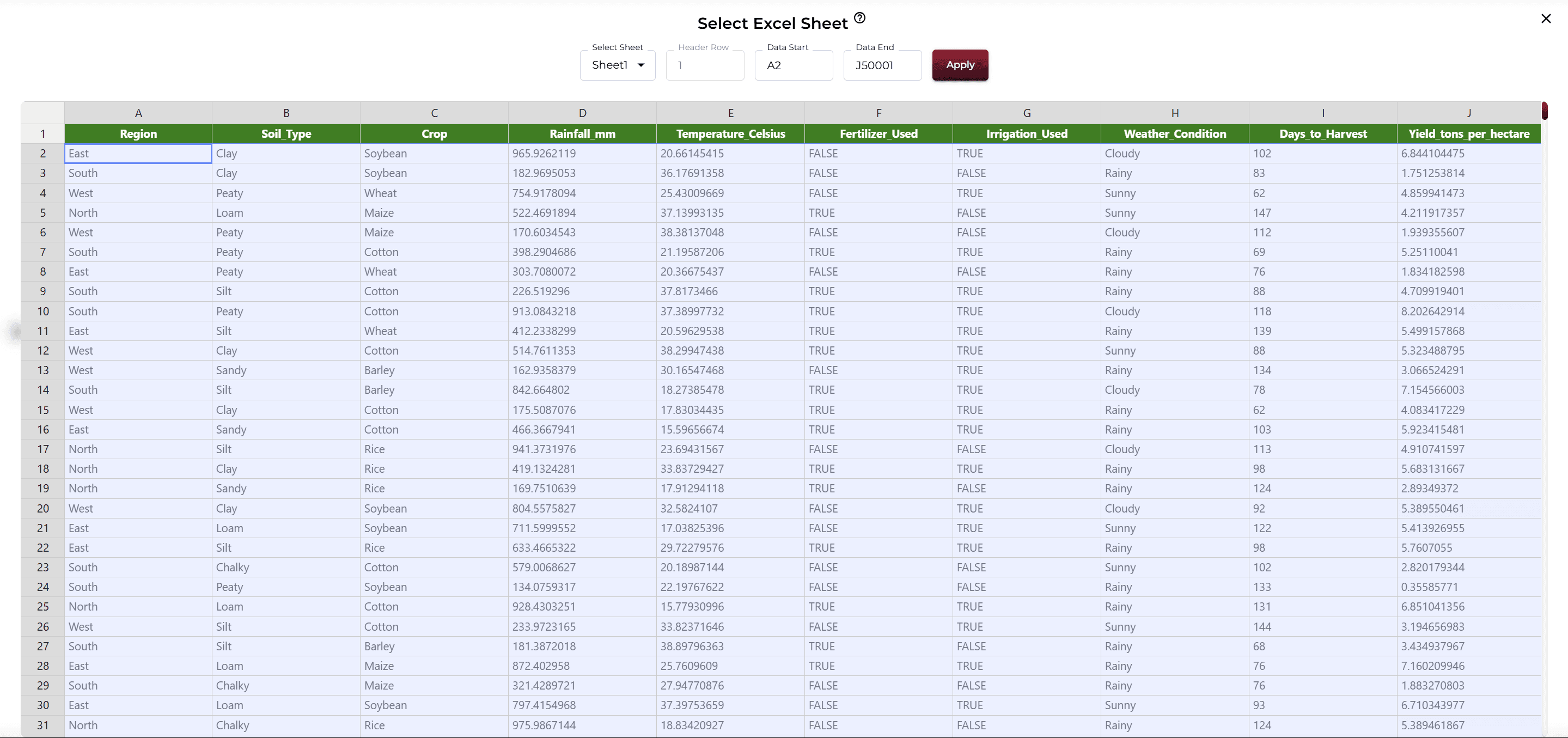
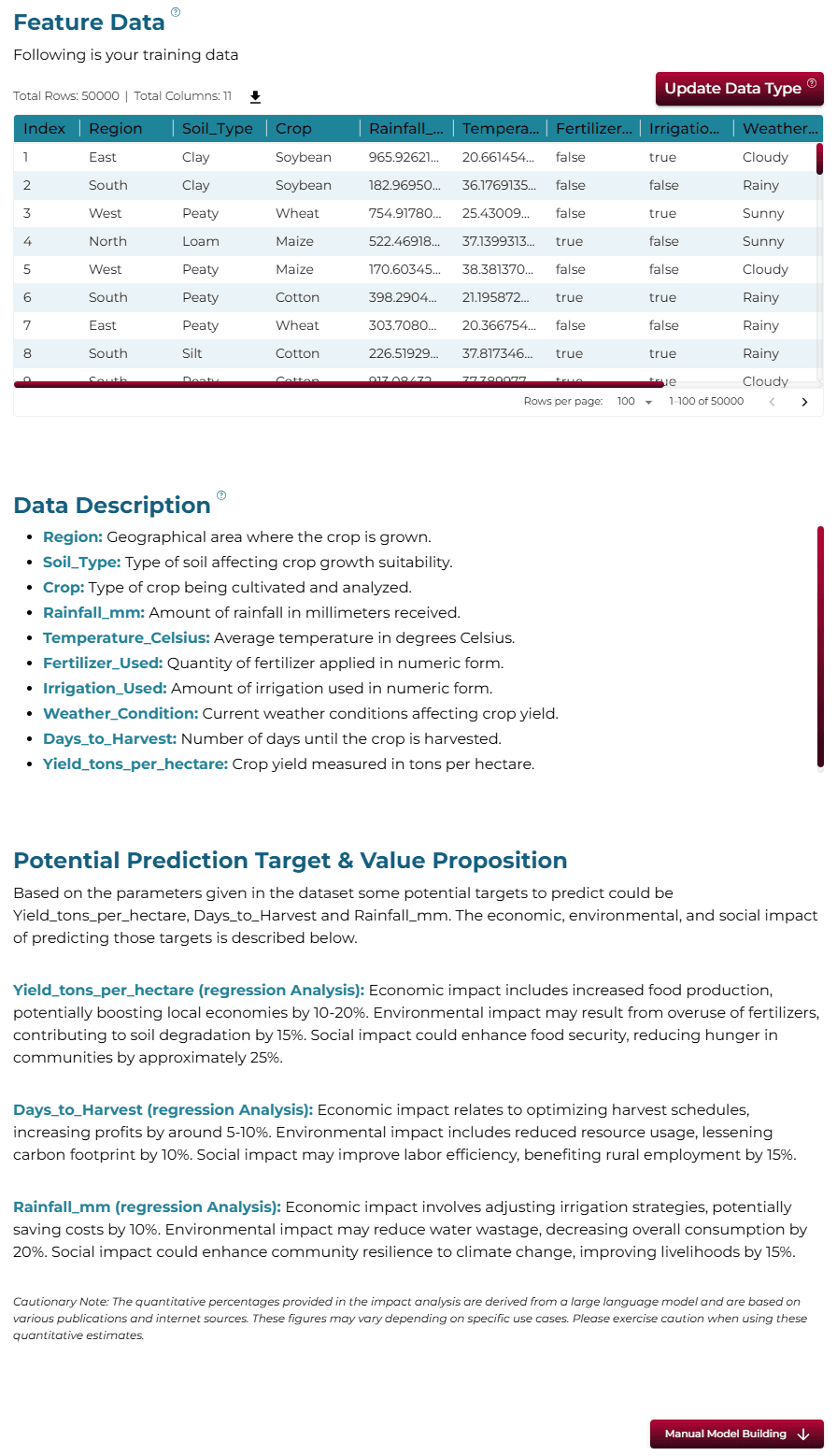
Click on the **'Upload CSV or Excel Data'** button → Select a source for the dataset → Upload `crop_yield_train.xlsx`. The system automatically analyzes the file, identifies targets, and highlights impacts.
BChoosing Analysis Mode
- Which factors have the most impact on maximizing crop yield?
- How can production be optimized using this dataset?
Operation Using Autonomous Guided Mode
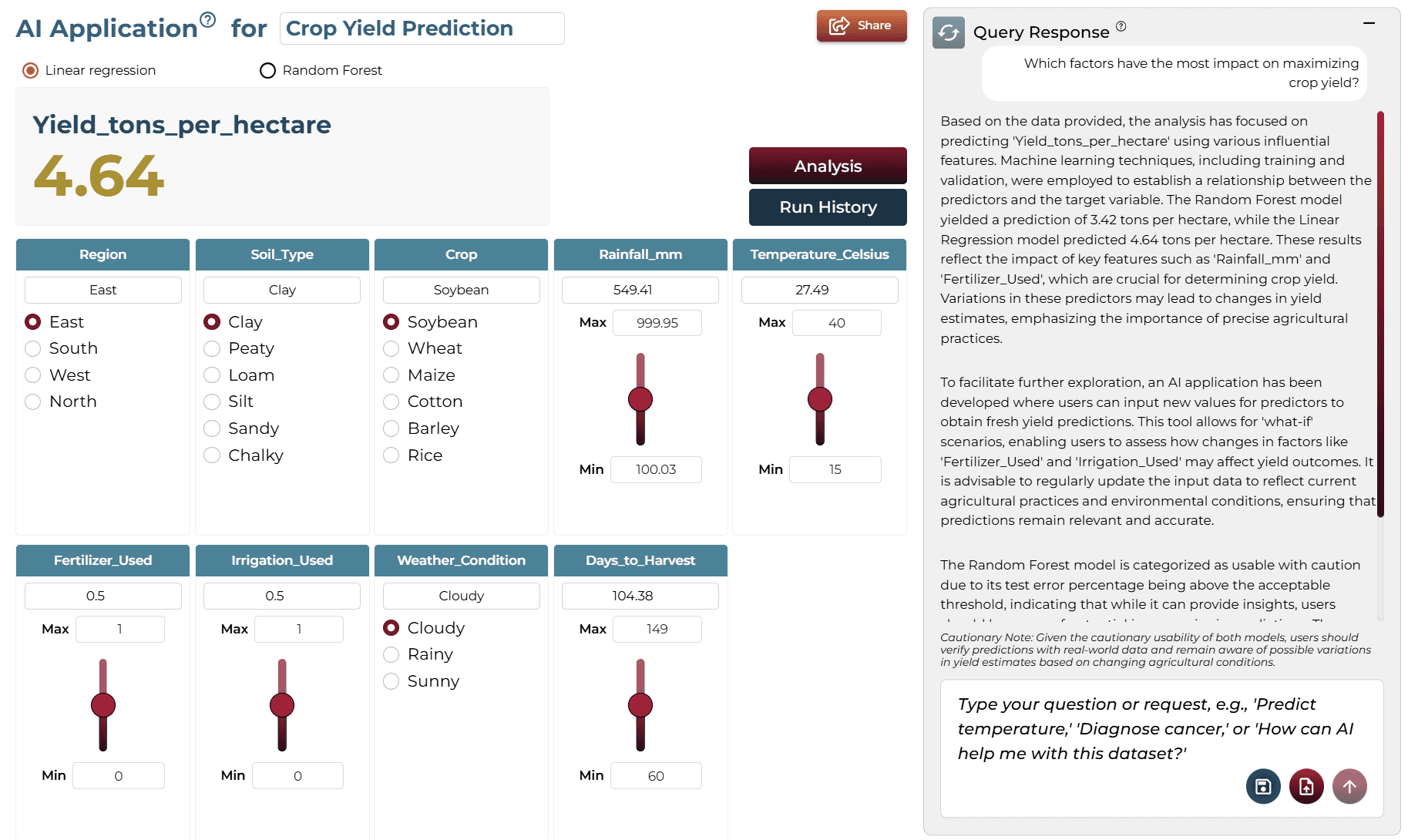
AQuery Response
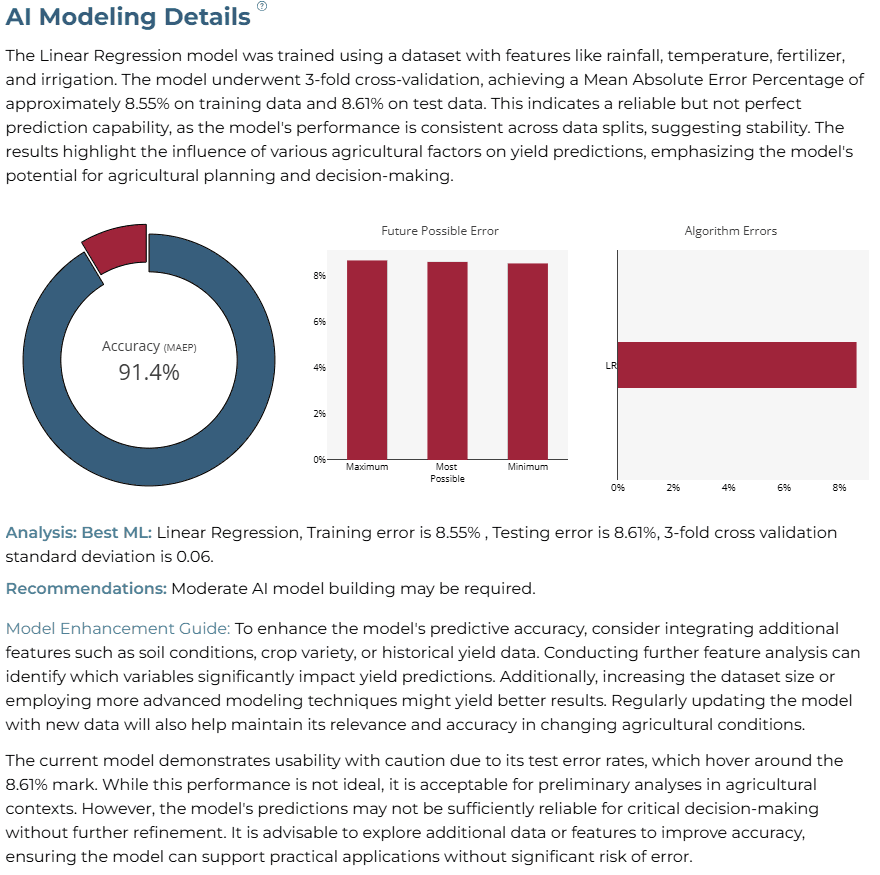
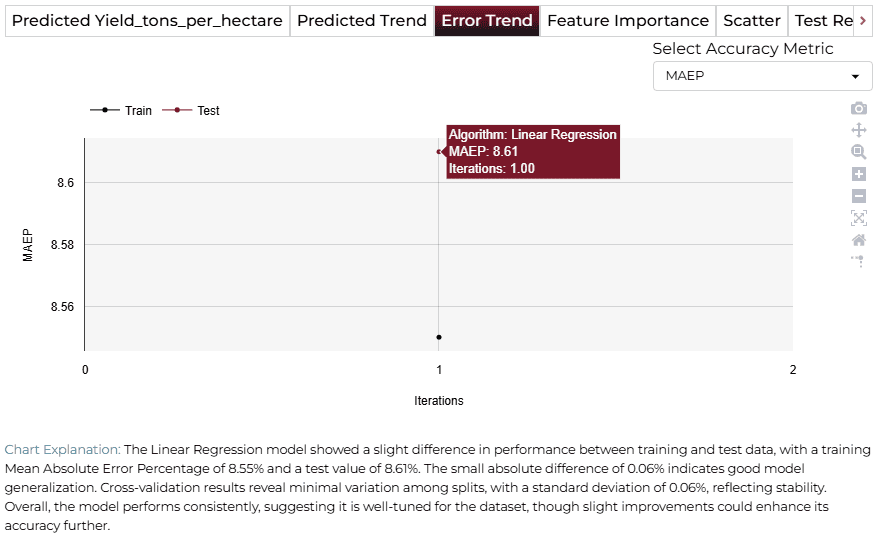
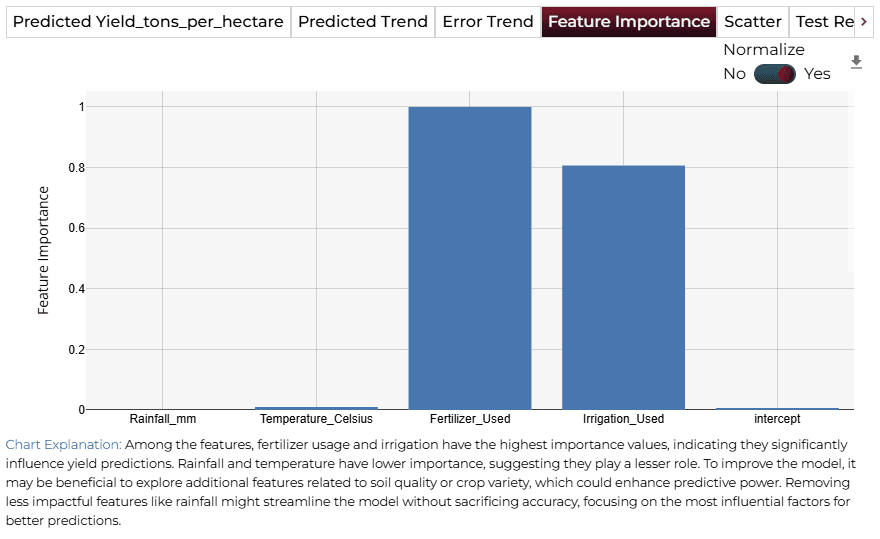
The model predicts a yield of 4.64 tons per hectare, influenced primarily by fertilizer and irrigation usage. The Linear Regression model demonstrates a test error of 8.61%, making it usable with caution.
BAI Application
Running the query generates an on-demand AI application where users can adjust sliders to test scenarios without technical knowledge.
Model Fine-Tuning/Manual Model Building
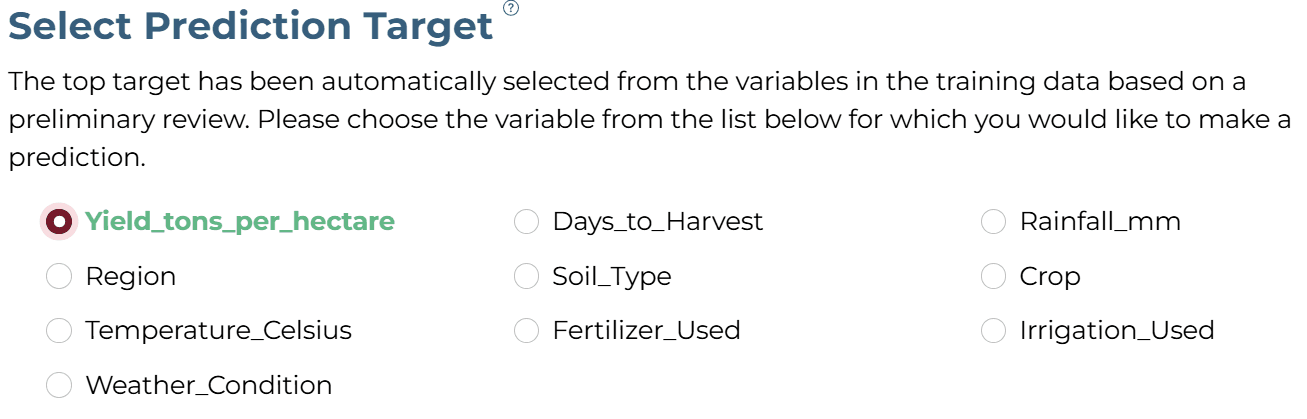
ASelecting Prediction Target
'Yield_tons_per_hectare' was selected as the target column.
BSelecting Analysis Type
'Regression' analysis type is selected for numerical continuous data.

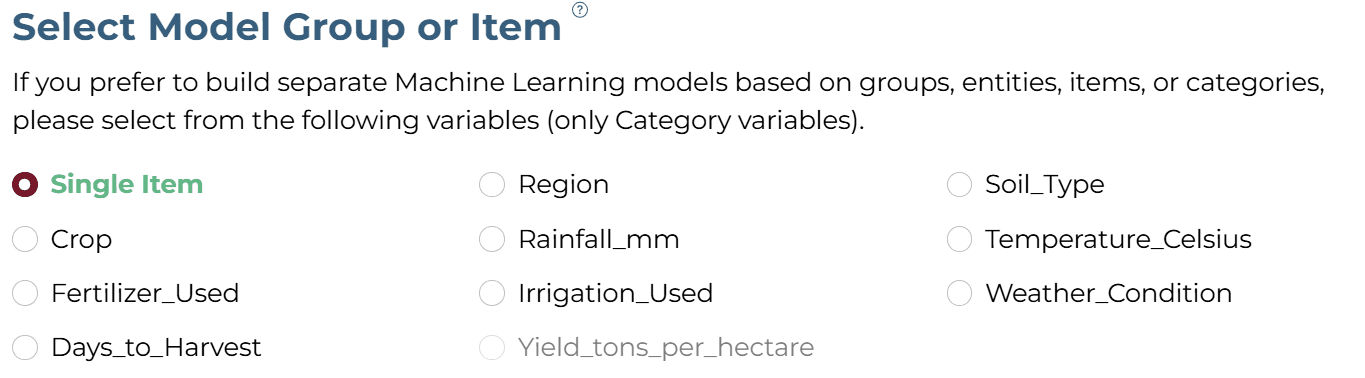
CSelecting Model Group/Item
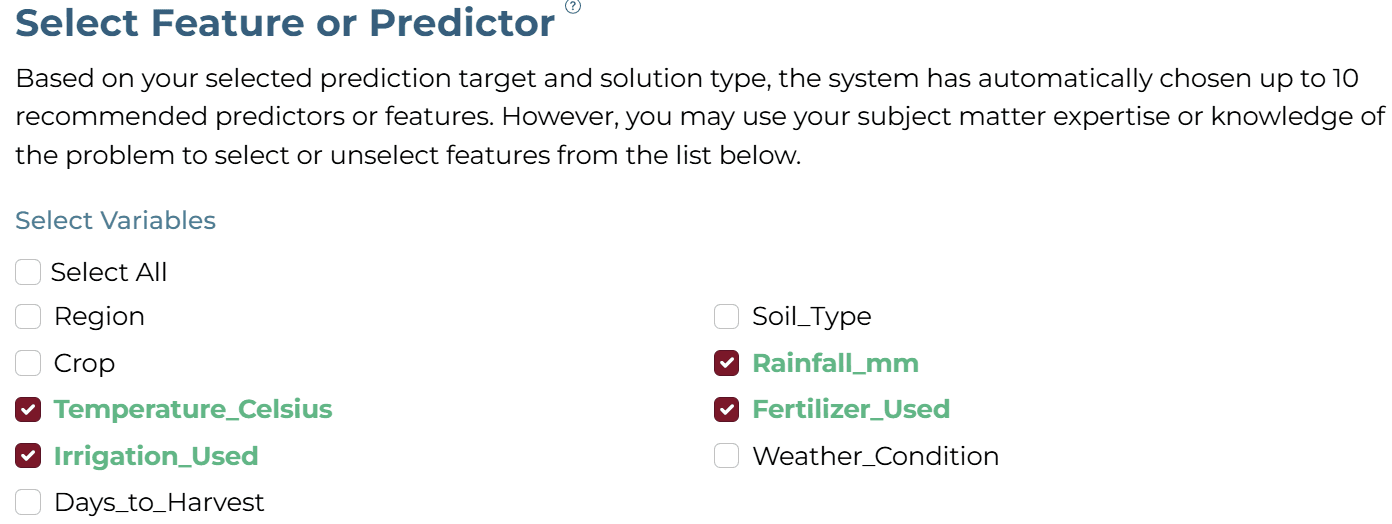
DSelecting Features
Select Rainfall_mm, Temperature_Celsius, Fertilizer_Used, and Irrigation_Used.
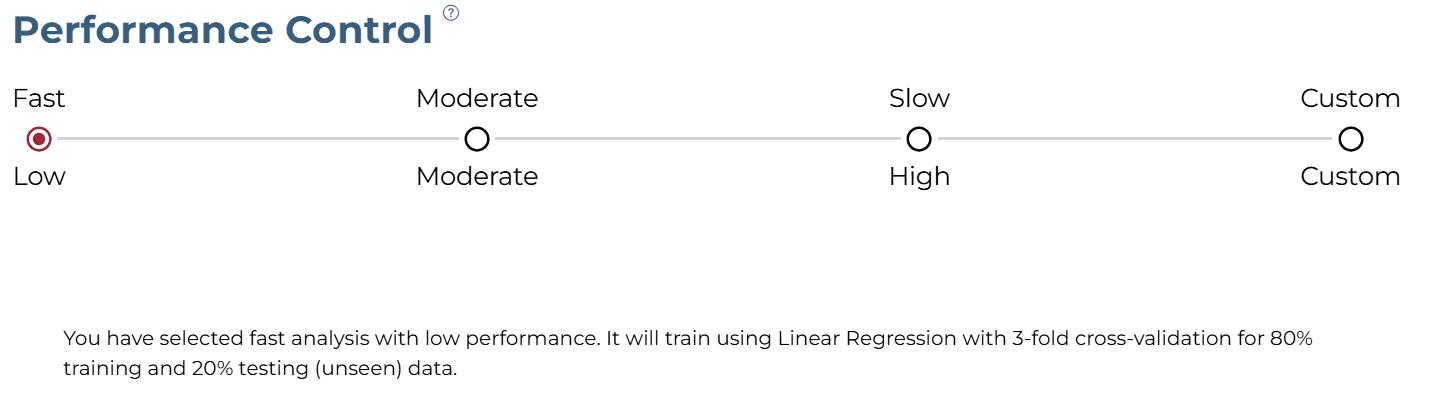
ESelecting Training Level
AI Modeling Details
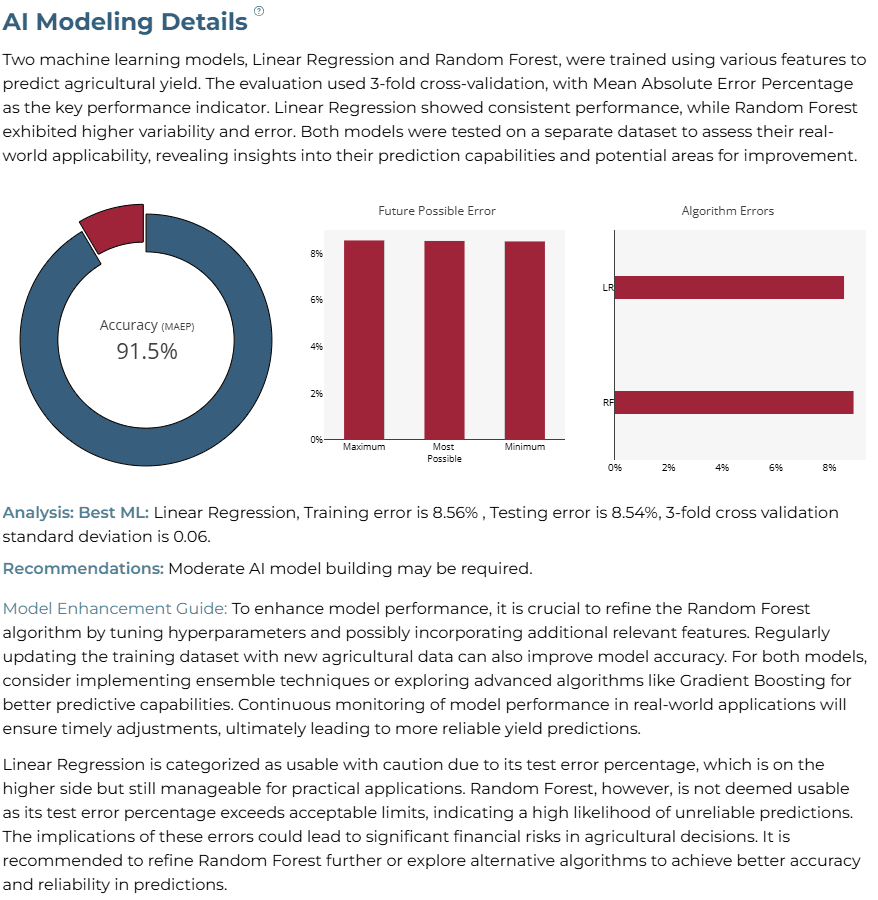
The model uses Linear Regression and achieved an accuracy of 91.4%. The average prediction difference is about 8.6%.
Training Analysis Details
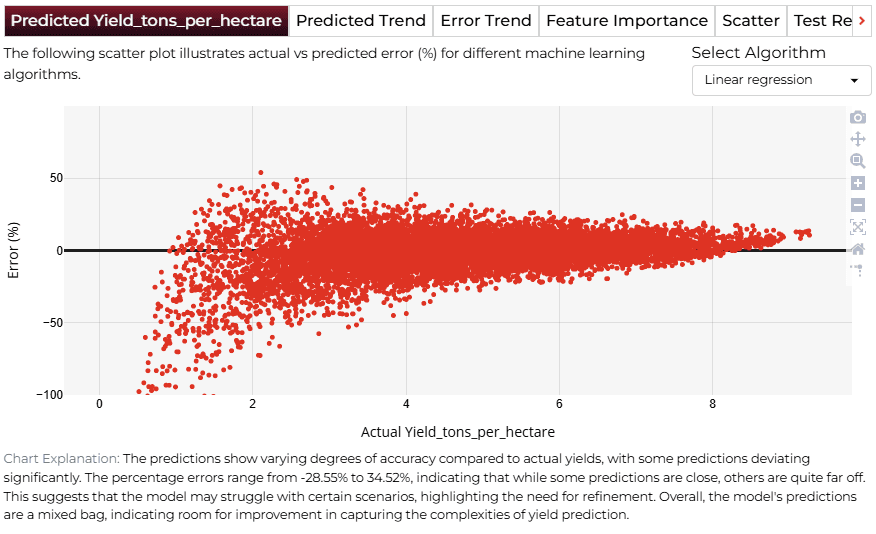
APredicted Crop Yield
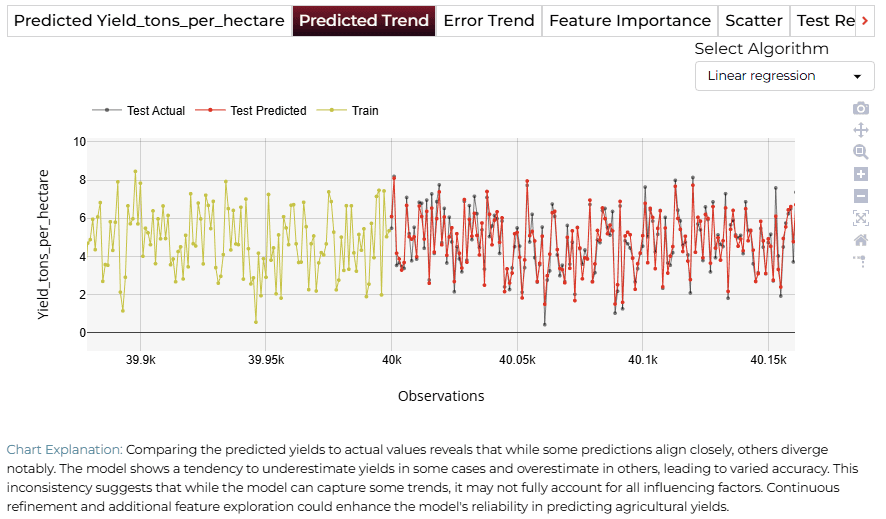
BPredicted Trend
CError Trend
DFeature Importance
Finalize Models
Once satisfied with performance, click 'Deploy'. The system saves and deploys models for future demand analysis or production environment.

4AI APPLICATION
Manual Model Building
In Manual Training Mode, users can modify sliders for variables like Fertilizer Used, Irrigation Applied, Temperature, and Rainfall. Clicking ‘Get Response’ triggers an updated yield prediction.
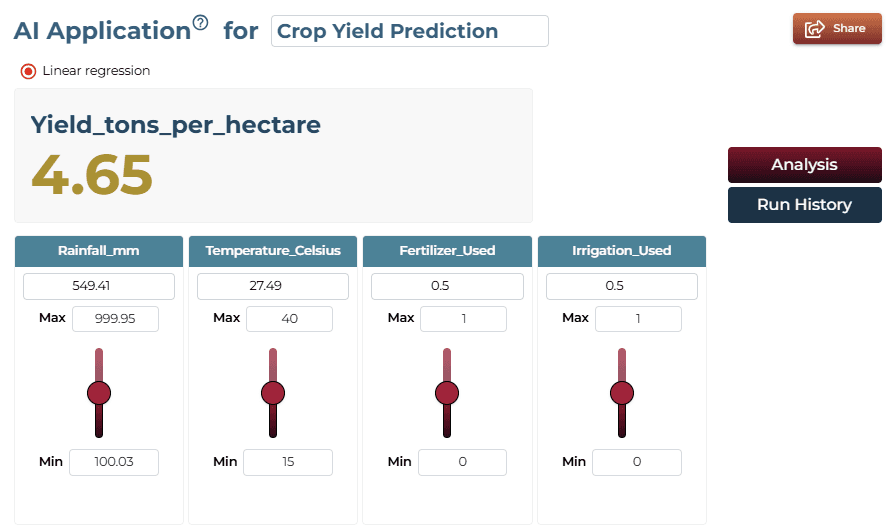
AI Application Demo
- Adjust agricultural factors like Rainfall and Fertilizer Use.
- Observe how these changes impact the predicted yield in real-time.
Saving the Project
Save your project by clicking the icon at the bottom left corner of the textbox.

Sharing the Project
Share the application for single on-demand predictions once the analysis is saved.

Interested in similar AI solutions?
Explore our full suite of AI capabilities designed to transform your business operations.