


Predicting Electricity Demand in the Energy Grid
Accurately forecasting electricity demand is essential for grid stability, energy resource planning, and efficient power distribution.
1Overview & Strategic Importance

Problem Statement
Predicting electricity demand is crucial for ensuring grid stability, optimizing energy distribution, and enhancing power system efficiency. However, forecasting demand accurately is challenging due to the influence of various factors, including weather conditions, renewable energy generation, and cross-border electricity flows. Addressing this challenge enables better resource management, prevents supply shortages, and supports the transition to a more resilient and sustainable energy infrastructure.
Required Solutions
- Developing a machine learning model capable of predicting electricity demand based on factors such as embedded renewable generation and interconnector flows.
- Providing insights into demand fluctuations to help energy providers optimize power distribution.
- Enabling better load balancing, efficient energy allocation, and improved grid stability through a data-driven approach.
Solution Objectives
- Perform exploratory data analysis to identify trends and relationships in electricity demand patterns.
- Develop a regression model to forecast electricity demand accurately based on renewable generation, weather conditions, and grid activity.
- Optimize the model for real-time applications to enhance demand forecasting, load balancing, and energy distribution efficiency.
Understanding the Problem
Electricity demand is influenced by multiple dynamic factors, including weather conditions, renewable energy production, and international electricity transfers. Key variables such as embedded wind and solar generation, interconnector flows (IFA, BritNed, ElecLink), and pumped storage operations significantly affect grid stability and energy distribution.
By leveraging machine learning models, energy providers can analyze historical data, predict demand accurately, and make informed decisions to improve energy management and grid operations.
2About the Data
Data Collection
National Grid ESO is the electricity system operator for Great Britain. They have gathered information of the electricity demand in Great Britain from 2009. The is updated twice an hour, which means 48 entries per day. This makes this dataset ideal for time series forecasting. The dataset used in this example consists of the electricity demand of the country in 2024.
Major Parameters Description
Download Training Datasettlement_dateThe date corresponding to the electricity demand data.
settlement_periodThe specific time interval within the day for electricity demand measurement.
ndTotal electricity demand at a national level, including all grid sources.
tsdElectricity demand measured at the transmission system level, excluding embedded generation.
england_wales_demandElectricity demand specifically for England and Wales, excluding Scotland and Northern Ireland.
embedded_wind_generationThe electricity generated from embedded wind turbines within the grid.
embedded_wind_capacityThe total installed capacity of embedded wind power sources.
embedded_solar_generationThe electricity generated from embedded solar panels within the grid.
embedded_solar_capacityThe total installed capacity of embedded solar power sources.
3Using iDareAI
Guided Mode Initialization
AUploading Dataset
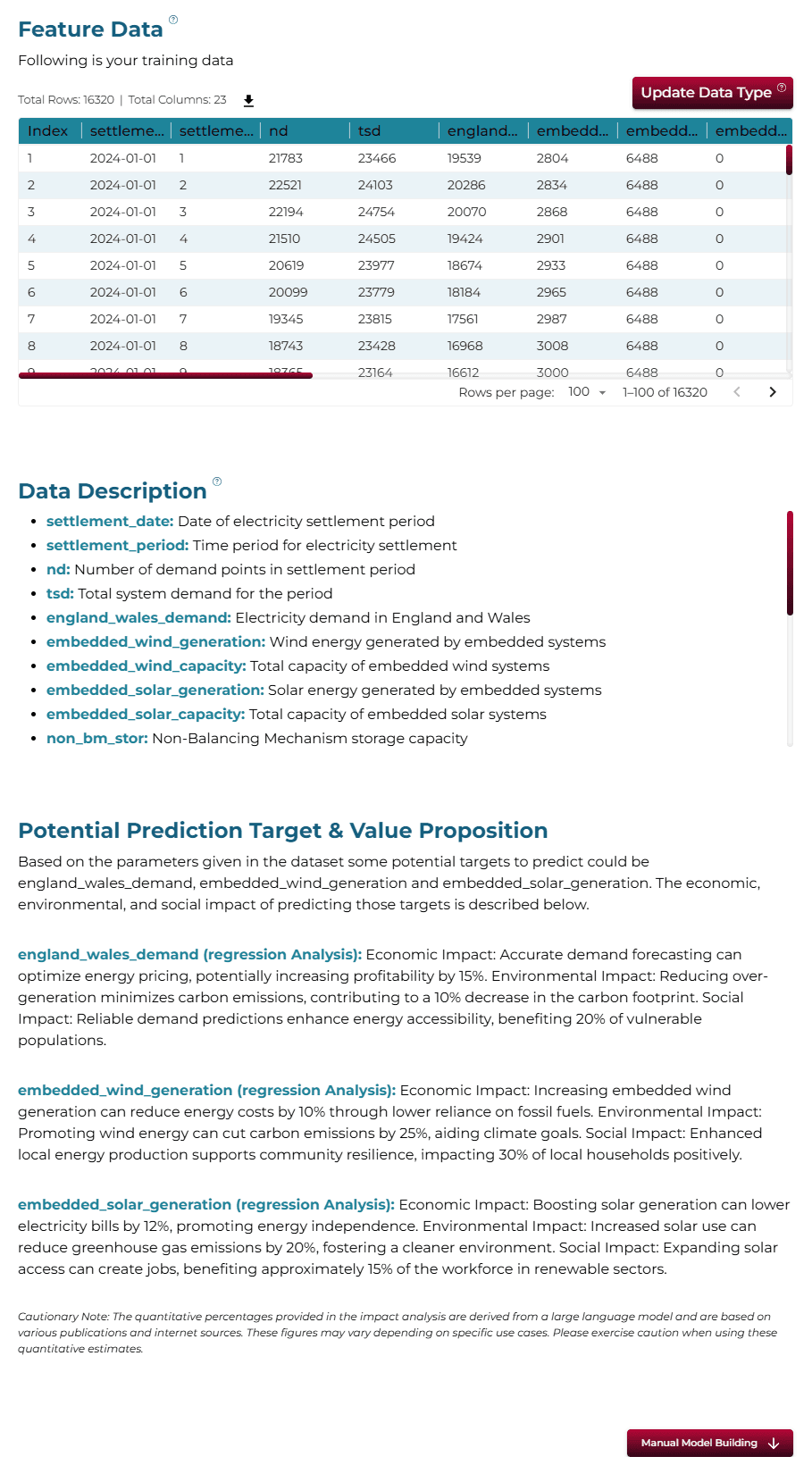
Click on the **'Upload CSV or Excel Data'** button → Select a source for the dataset → Upload `electricity_demand_train.csv`. The system automatically analyzes the file, converting it into feature data, extracts column descriptions, and identifies the top value-adding targets for prediction.
BChoosing Analysis Mode
- What are the factors impacting the electricity demand in England and Wales?
- What was the maximum electricity production in 2024?
The autonomous system processes the query, analyzes the data, and automatically generates a model. Manual mode provides full control over the process, suited for users with technical knowledge.
Operation Using Autonomous Guided Mode
AQuery Response
The factors impacting electricity demand in England and Wales include the settlement period, network demand (nd), total system demand (tsd), and various forms of embedded generation such as wind and solar. In the conducted analysis, machine learning methods were employed yielding estimates of approximately 23,921.29 MW (Linear Regression).
The Linear Regression model shows a very low test error, making it highly reliable for practical use. The Random Forest model should be used with caution, and LightGBM model exhibits a significantly higher error rate.
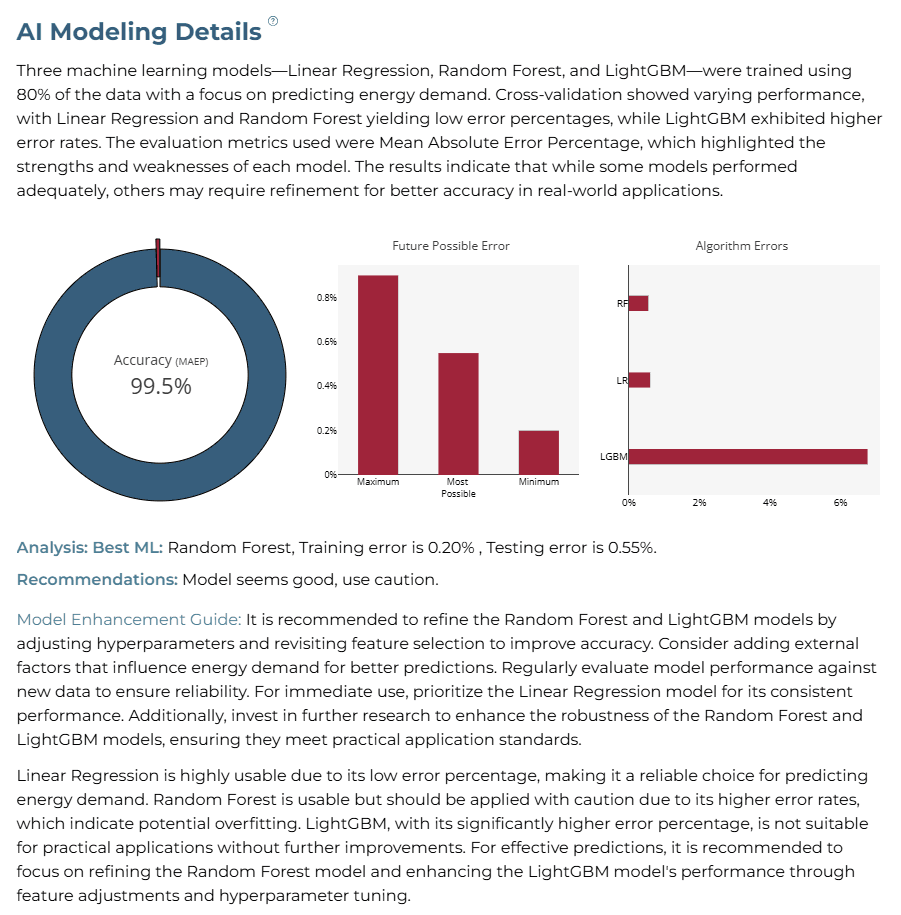
Although the autonomous guided mode achieves an amazing accuracy of 99.5%, it is likely overfitted to some extent. Manual model building and fine-tuning have to be done to solve this issue.
BAI Application
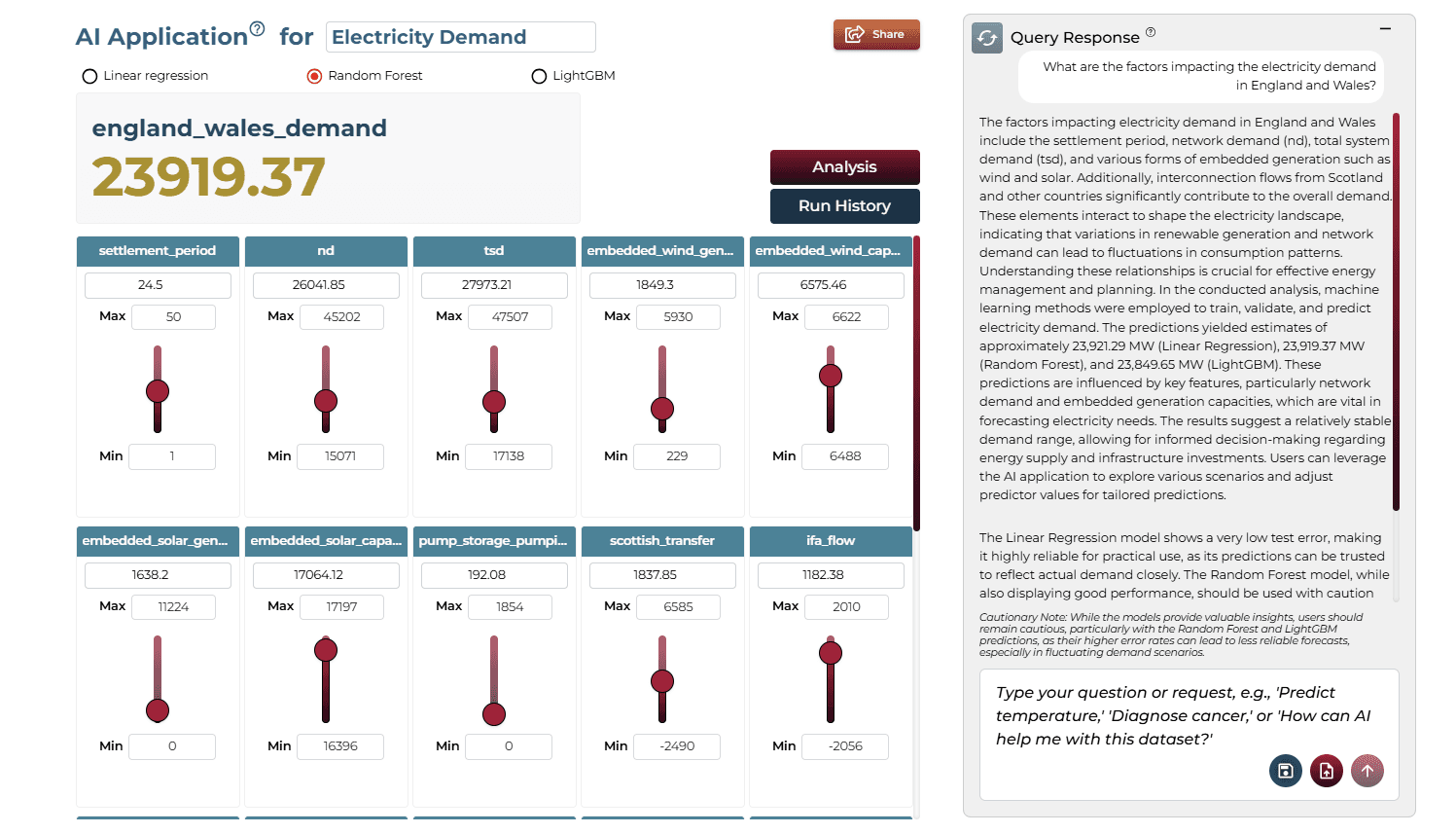
In automated mode, running the query generates the AI application where users can adjust key variables and see how changes impact the predicted outcome.
Model Fine-Tuning/Manual Model Building
Manual model building allows users to take full control of the model creation process by guiding them step-by-step through data preparation, feature selection, algorithm configuration, model training, and validation.
ASelecting Prediction Target
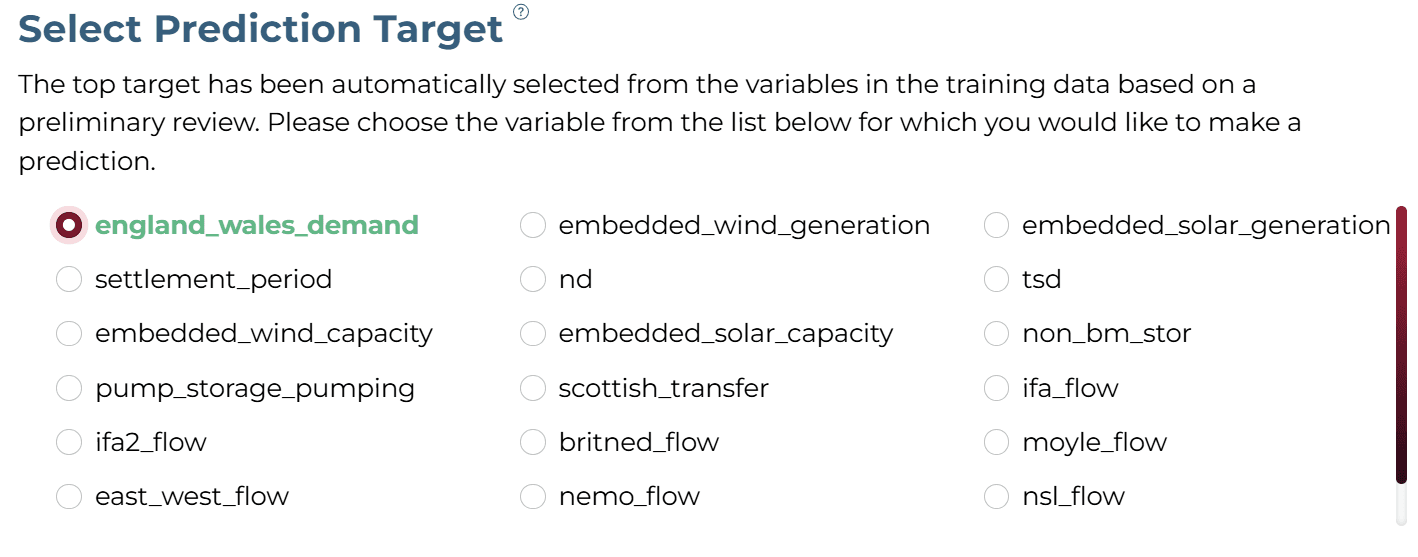
The 'england_wales_demand' column was selected as the target.
BSelecting Analysis Type
The analysis target is a numeric column. Hence, the 'Regression' analysis type is selected.

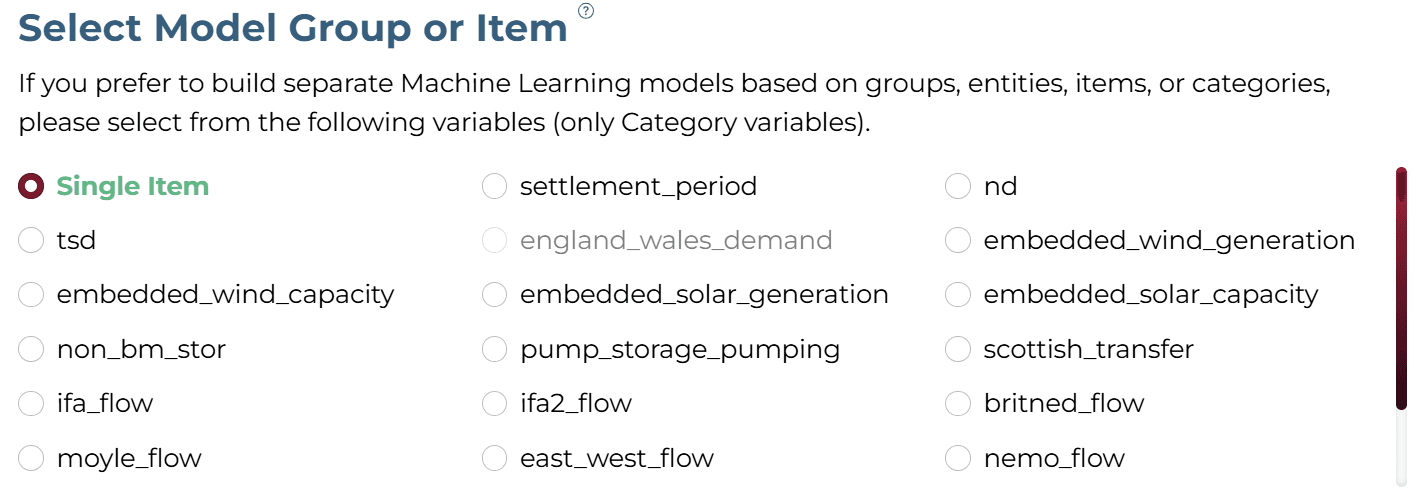
CSelecting Model Group/Item
No item/group is required for this dataset (single item).
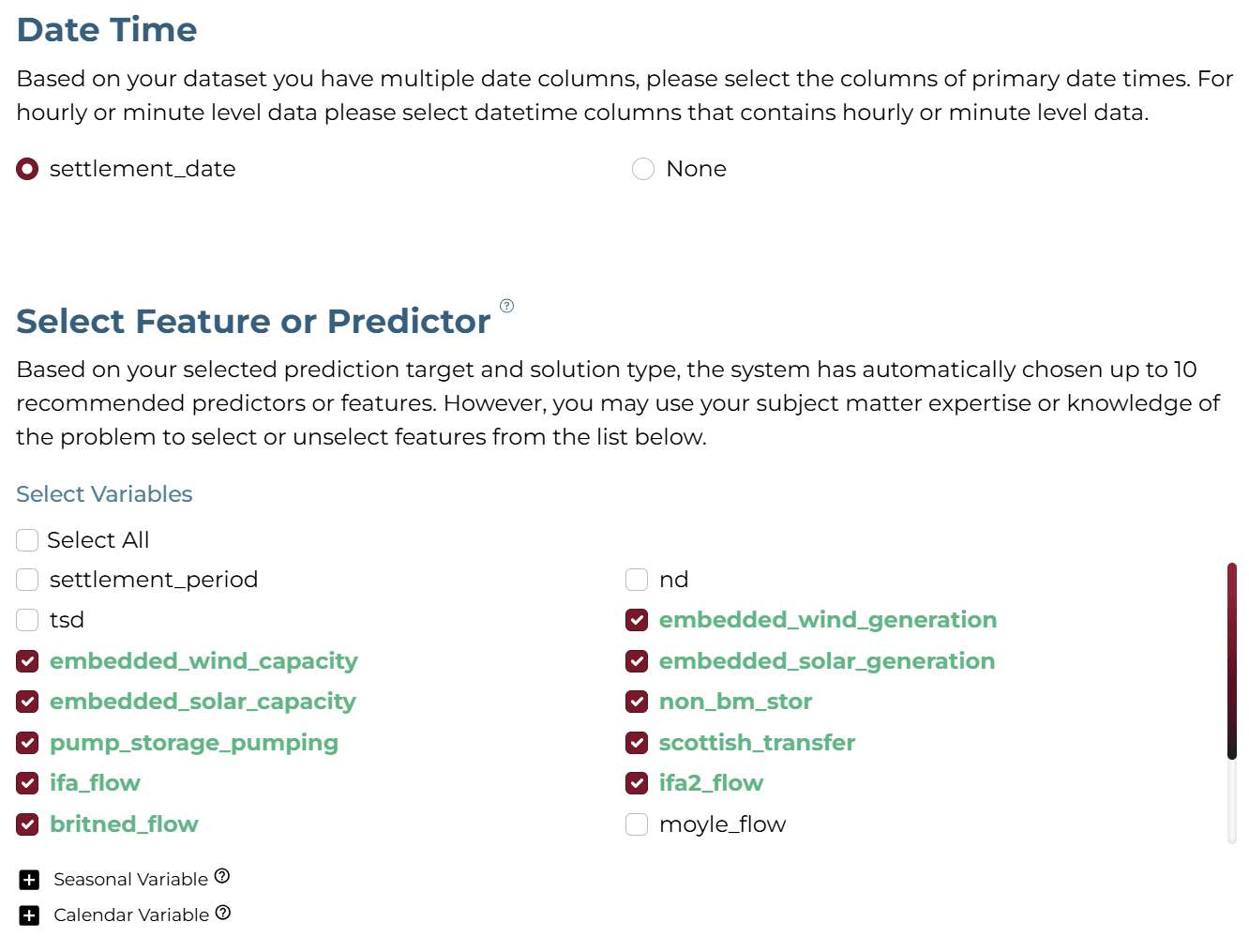
DSelecting Features
Select the following features: embedded_wind_generation, embedded_wind_capacity, embedded_solar_generation, embedded_solar_capacity, pump_storage_pumping, ifa2_flow, east_west_flow, nsl_flow, eleclink_flow.
ESelecting Training Level
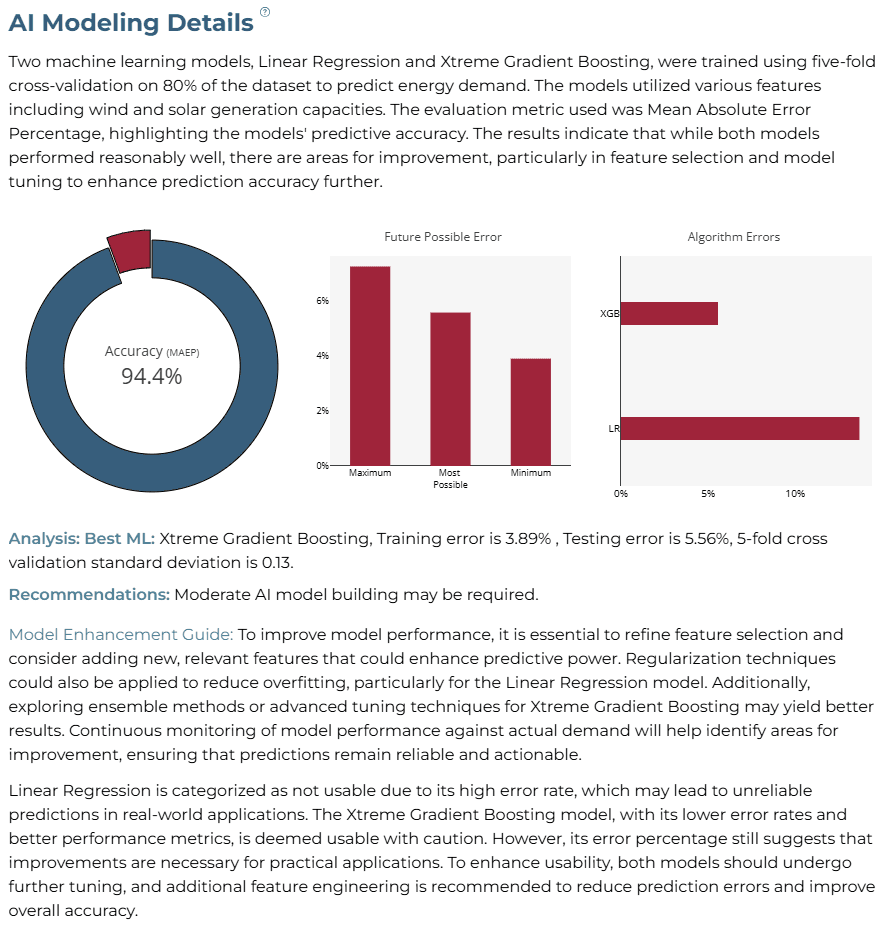
Select the "Moderate" training level. It trains Linear Regression and Xtreme Gradient Boosting with 5-fold cross-validation and 20% test data. Click 'Train'.

AI Modeling Details
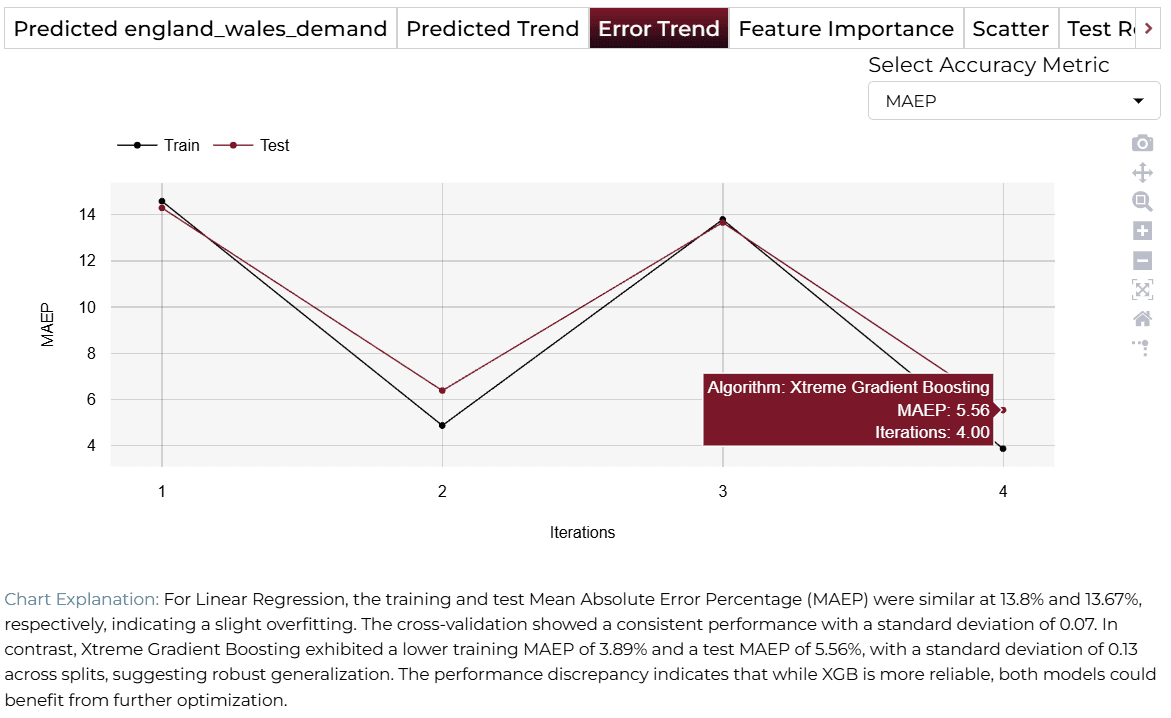
The best-performing model was Xtreme Gradient Boosting, with a training error of 3.89% and a testing error of 5.57%. Linear Regression had a higher test error of 13.67%, making it less reliable for real-world applications.
Training Analysis Details
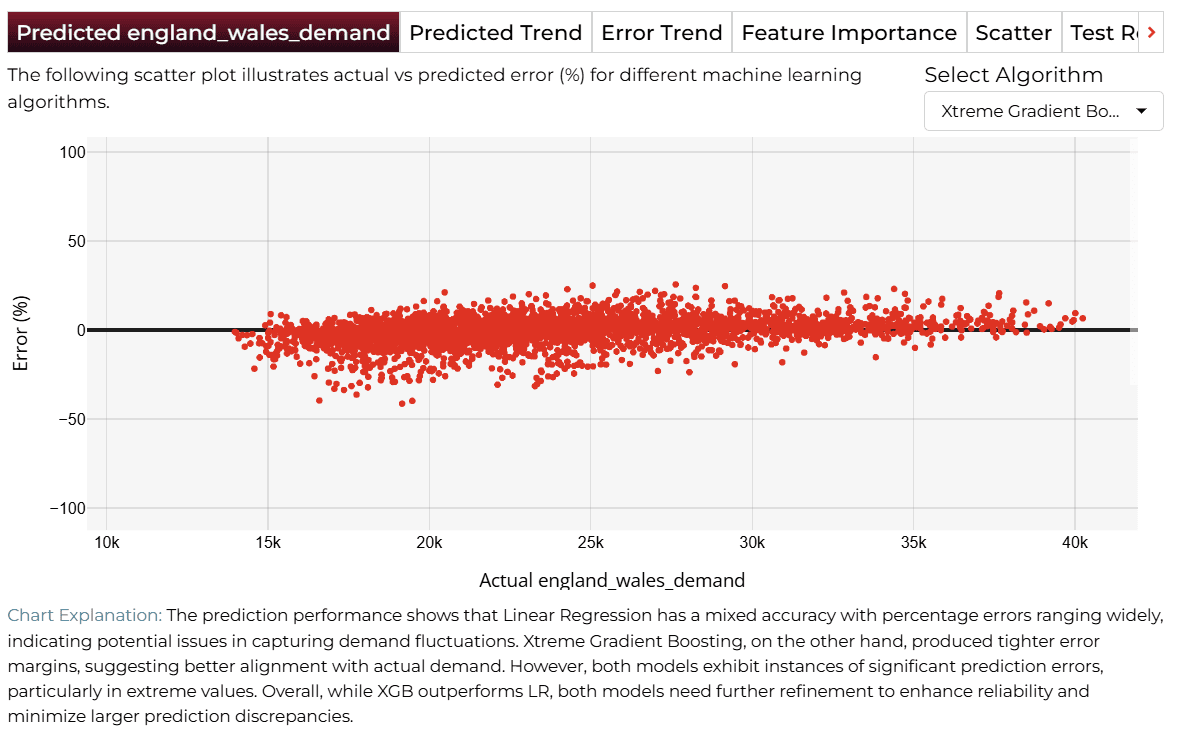
APredicted Target
The scatter plot illustrates predicted vs. actual energy demand values for different models.
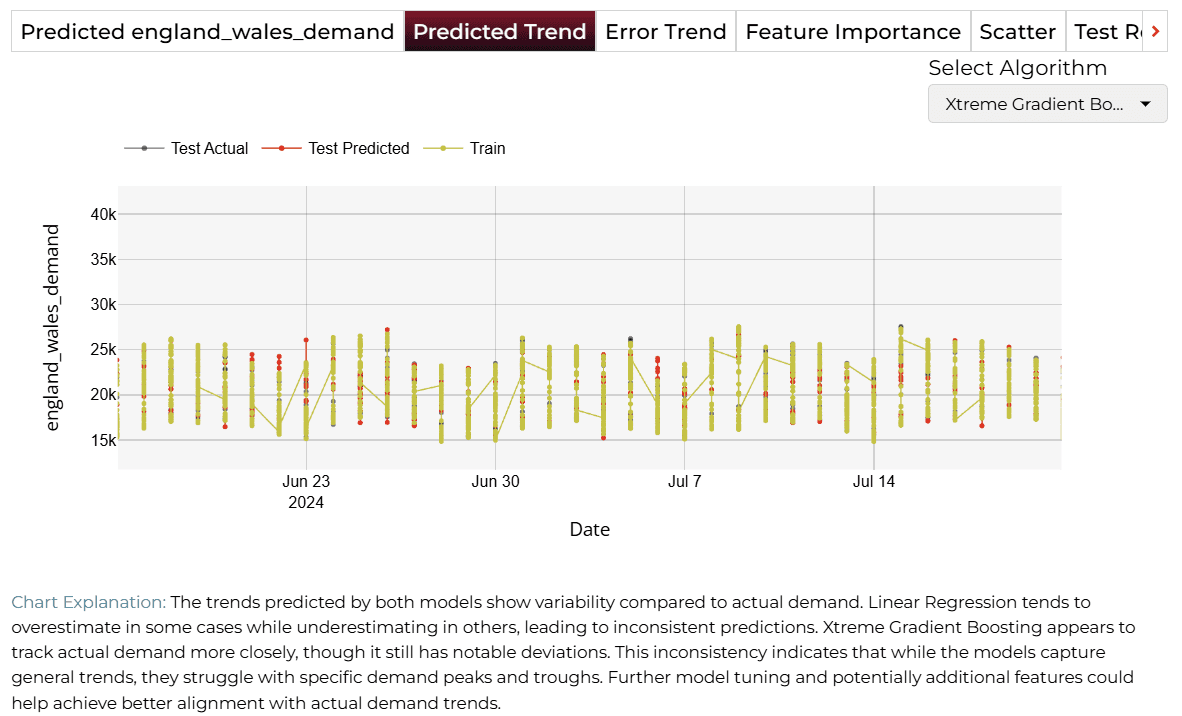
BPredicted Trend
The predicted energy demand trends from both models closely followed actual demand values, but some discrepancies were evident.
CError Trend
Linear Regression had a training MAEP of 13.80% and a testing error of 13.67%. Xtreme Gradient Boosting achieved a training error of 3.89% and a test error of 5.57%.
DFeature Importance
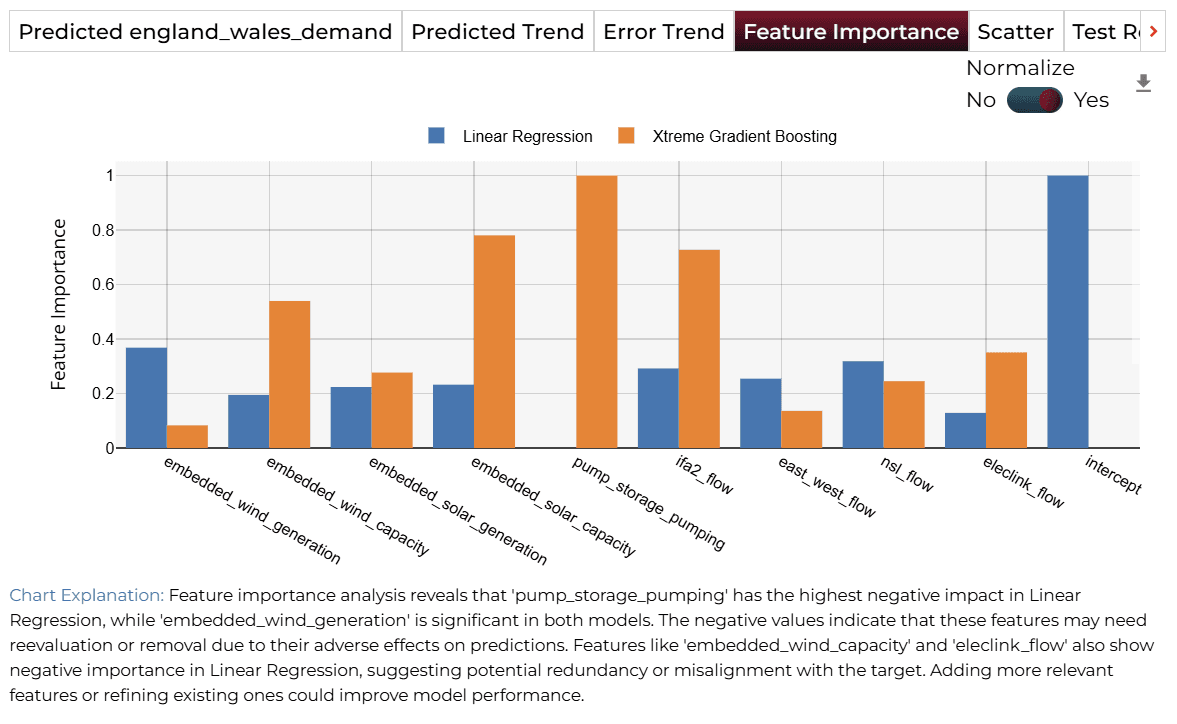
Feature importance analysis revealed that variables like 'pump_storage_pumping' and 'embedded_solar_capacity' significantly influenced the models.
Finalize Models
Once satisfied with performance, click 'Deploy'. The system saves and deploys models for future demand analysis or production environment.

4AI APPLICATION
Manual Model Building
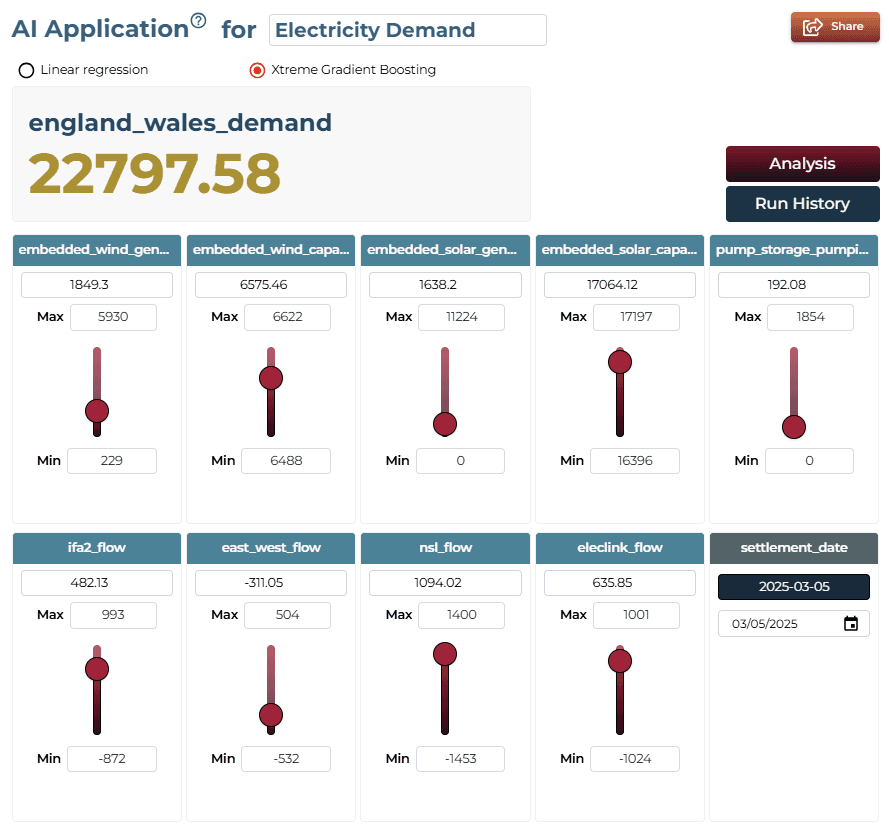
This AI application enables users to predict electricity demand in England and Wales. Users can manually adjust input sliders for features such as 'pump_storage_pumping,' 'embedded_solar_capacity,' and various interconnector flows to explore different prediction scenarios.
AI Application Demo
- Adjust key variables using the sliders.
- Observe how these changes impact the predicted electric demand in real-time.
Saving the Project
Save your project by clicking the icon at the bottom left corner of the textbox.

Sharing the Project
Share the application for single on-demand predictions once the analysis is saved.

Interested in similar AI solutions?
Explore our full suite of AI capabilities designed to transform your business operations.