


Predicting Flaring Emissions for Environmental Compliance
Accurately predicting flaring emissions is crucial for monitoring environmental impact, ensuring regulatory compliance, and optimizing emission reduction strategies in industrial operations.
1Overview & Strategic Importance

Problem Statement
Predicting flaring emissions is essential for monitoring environmental impact, ensuring regulatory compliance, and optimizing industrial operations. Flaring, a byproduct of oil and gas extraction, contributes significantly to greenhouse gas emissions, making accurate forecasting a priority for sustainability efforts. However, predicting emissions accurately is challenging due to various influencing factors, including fuel type, energy consumption, and industrial activities. Addressing this challenge enables industries to minimize environmental harm, comply with emissions regulations, and enhance operational efficiency.
Required Solutions
- Developing a machine learning model capable of predicting flaring emissions based on variables such as coal, oil, and gas usage.
- Analyzing factors like cement production and energy consumption trends to provide insights into emission trends.
- Enabling proactive emission management and optimizing energy usage through a data-driven approach.
Solution Objectives
- Perform exploratory data analysis to identify trends and relationships in flaring emissions data.
- Develop a regression model to predict flaring emissions based on energy consumption and industrial activities.
- Analyze the impact of different fuel sources and processes on emission levels to support reduction strategies.
Understanding the Problem
Flaring emissions are influenced by multiple factors, including fuel consumption patterns, industrial production activities, and regulatory enforcement. Key variables such as coal, oil, and gas usage significantly impact emission levels, while cement and other industrial activities contribute additional complexity.
By leveraging machine learning models, industries can analyze historical data, predict flaring emissions accurately, and implement data-driven strategies to reduce environmental impact and comply with global emission standards.
2About the Data
Data Collection
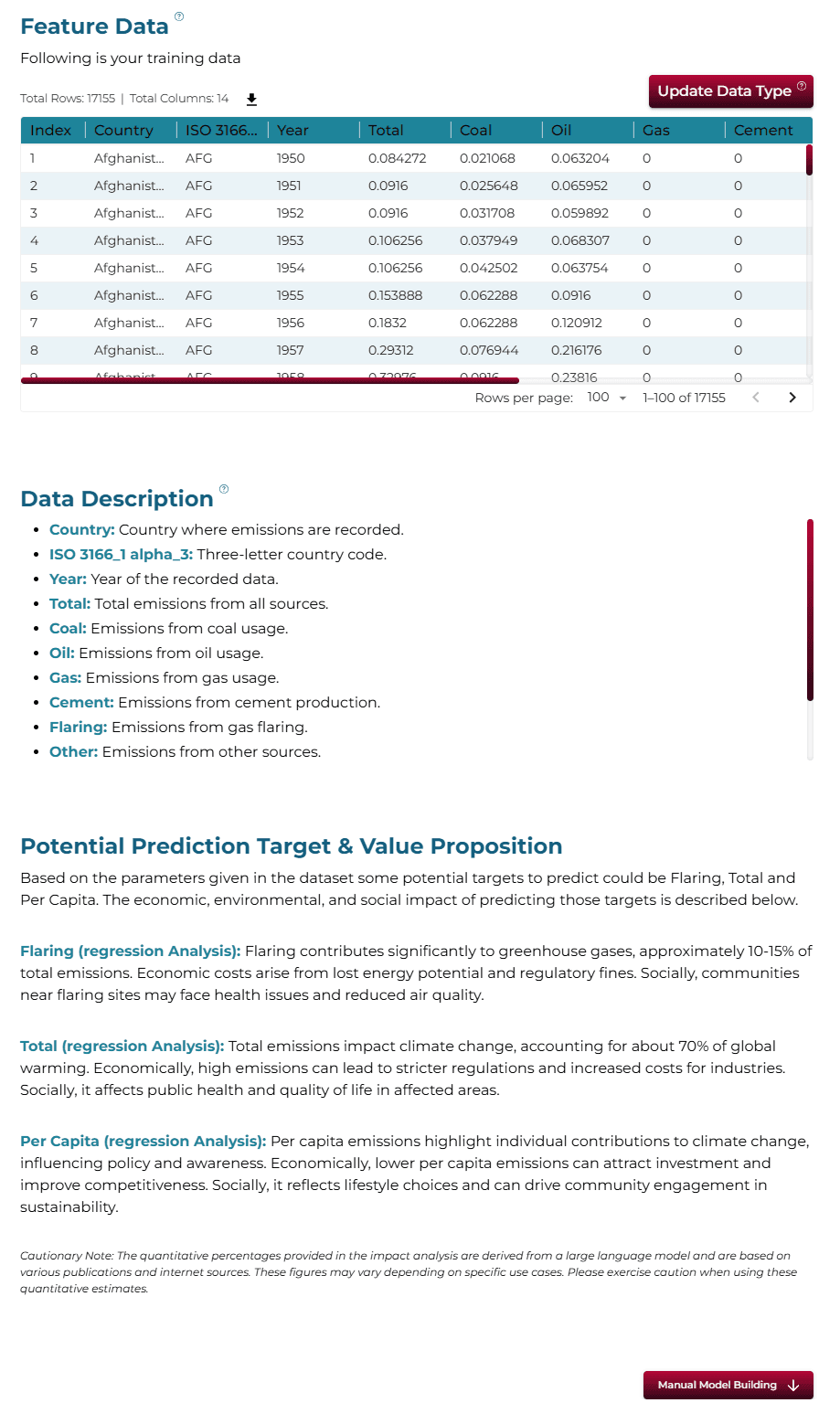
The dataset provides comprehensive CO₂ emissions data across various sectors and countries. It includes measurements for coal, oil, gas, cement, and flaring activities, along with per capita calculations to monitor environmental impact over time.
Major Parameters Description
Download Training DataCountryThe name of the country where the emissions data is recorded.
ISO 3166-1 alpha-3The three-letter country code representing the respective country.
YearThe year in which the emission data was recorded.
TotalThe total CO₂ emissions (in million metric tons) from all sources.
CoalCO₂ emissions (in million metric tons) from coal combustion.
OilCO₂ emissions (in million metric tons) from oil combustion.
GasCO₂ emissions (in million metric tons) from natural gas combustion.
CementCO₂ emissions (in million metric tons) from cement production.
FlaringCO₂ emissions (in million metric tons) from gas flaring activities.
3Using iDareAI
Guided Mode Initialization
AUploading Dataset
Click on the **'Upload CSV or Excel Data'** button → Select a source for the dataset → Upload `flaring_emission_train.csv`. The system automatically analyzes the file, extracts column descriptions, and identifies the top value-adding targets for prediction.
BChoosing Analysis Mode
- What are the factors impacting the flaring emissions?
- What is the maximum amount of flaring emissions?
Operation Using Autonomous Guided Mode
AQuery Response
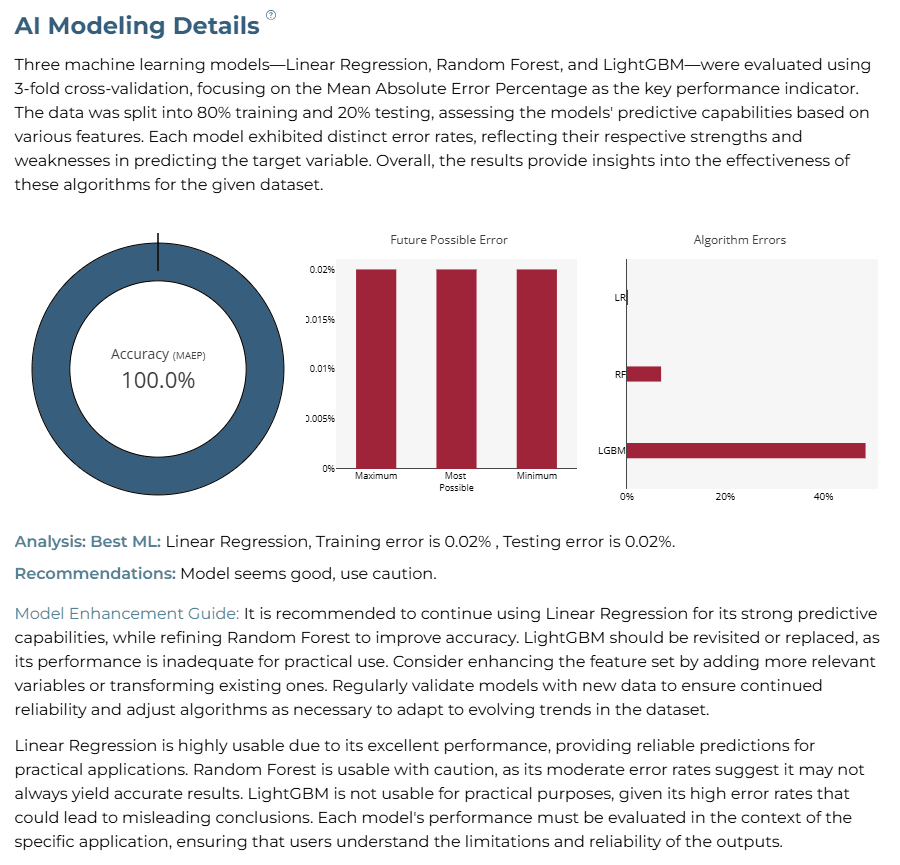
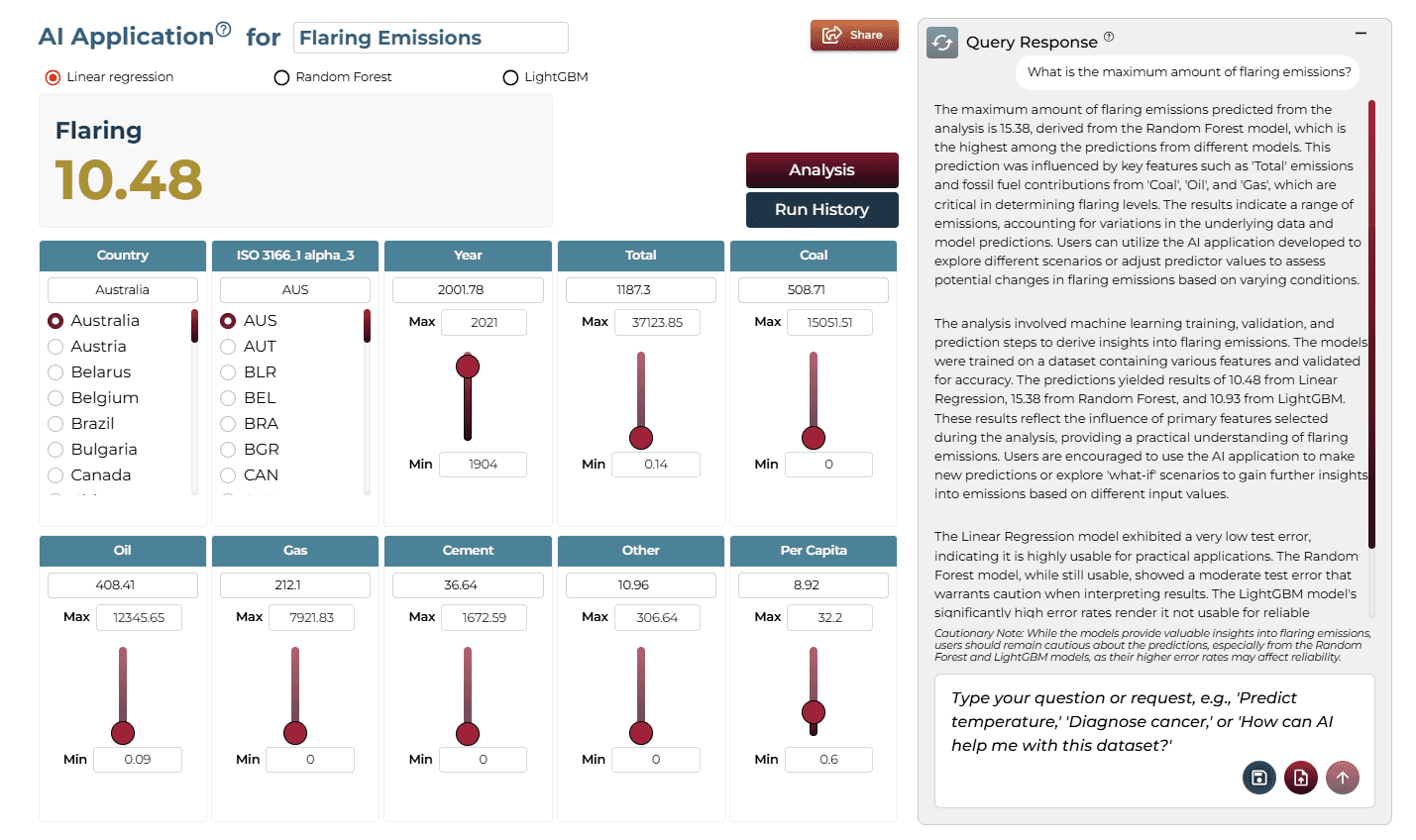
The system automatically performed the predictive analysis, returned the query response, and built an automated AI application. The maximum amount of flaring emissions predicted was approximately 15.38 units based on the Random Forest model, reflecting the influence of key features like Total emissions and fossil fuel contributions.
BAI Application
Running the query generates an on-demand AI application. Users can adjust sliders to test different scenarios and see real-time updates to flaring emission predictions without technical knowledge.
Model Fine-Tuning/Manual Model Building
ASelecting Prediction Target
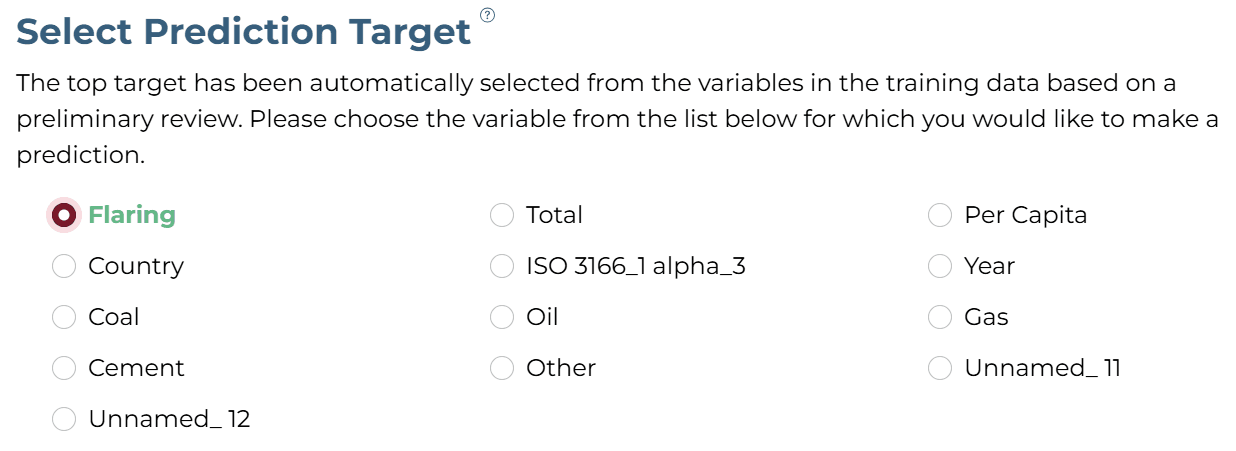
'Flaring' was selected as the target column based on the problem statement analysis.
BSelecting Analysis Type
Since the target is numeric, 'Regression' is selected.

CSelecting Model Group/Item

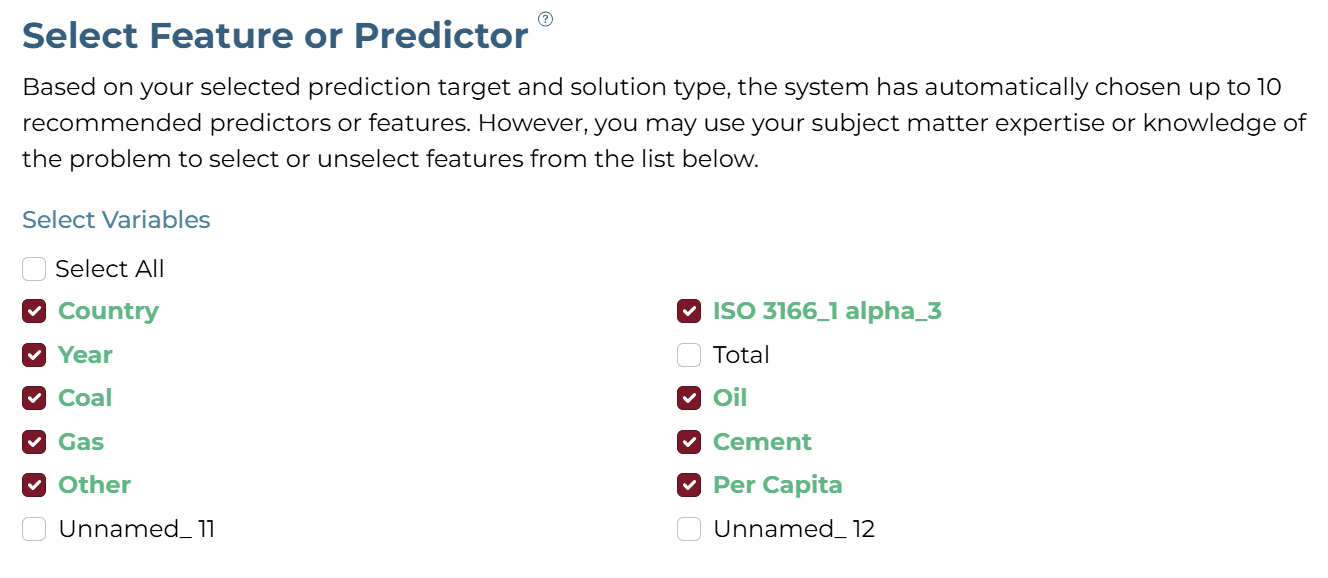
DSelecting Features
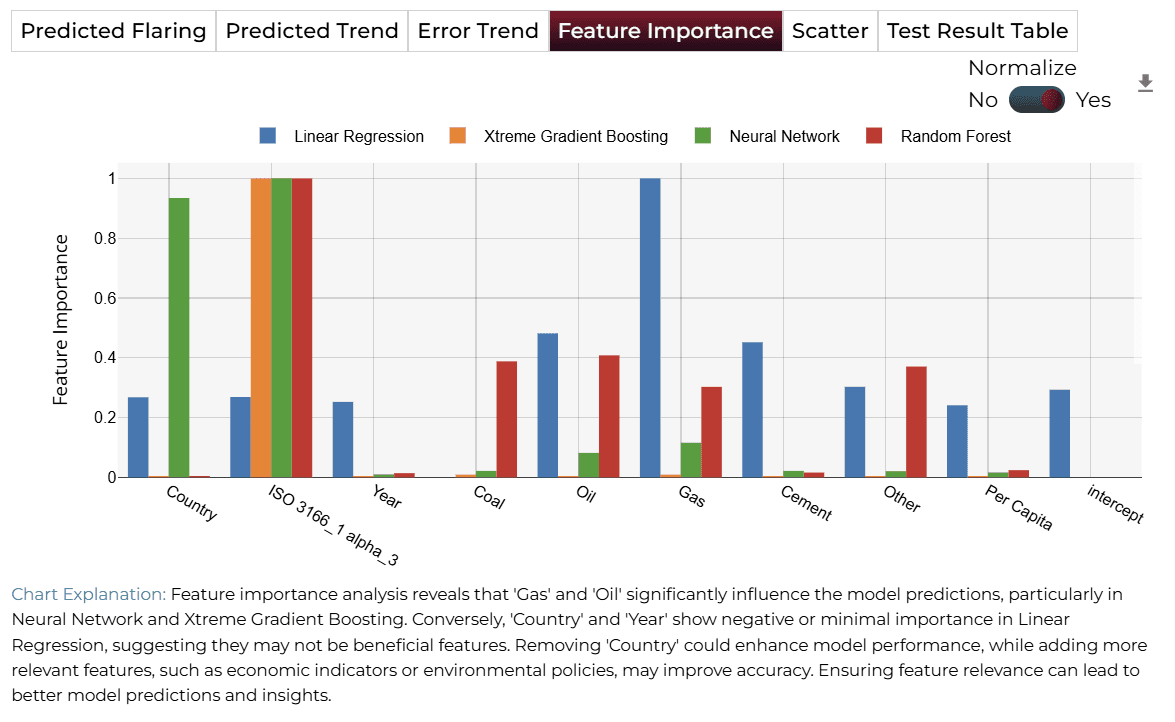
Customize the features used in the predictive analysis by selecting relevant variables like Gas, Oil, Coal, and Cement.
ESelecting Training Level

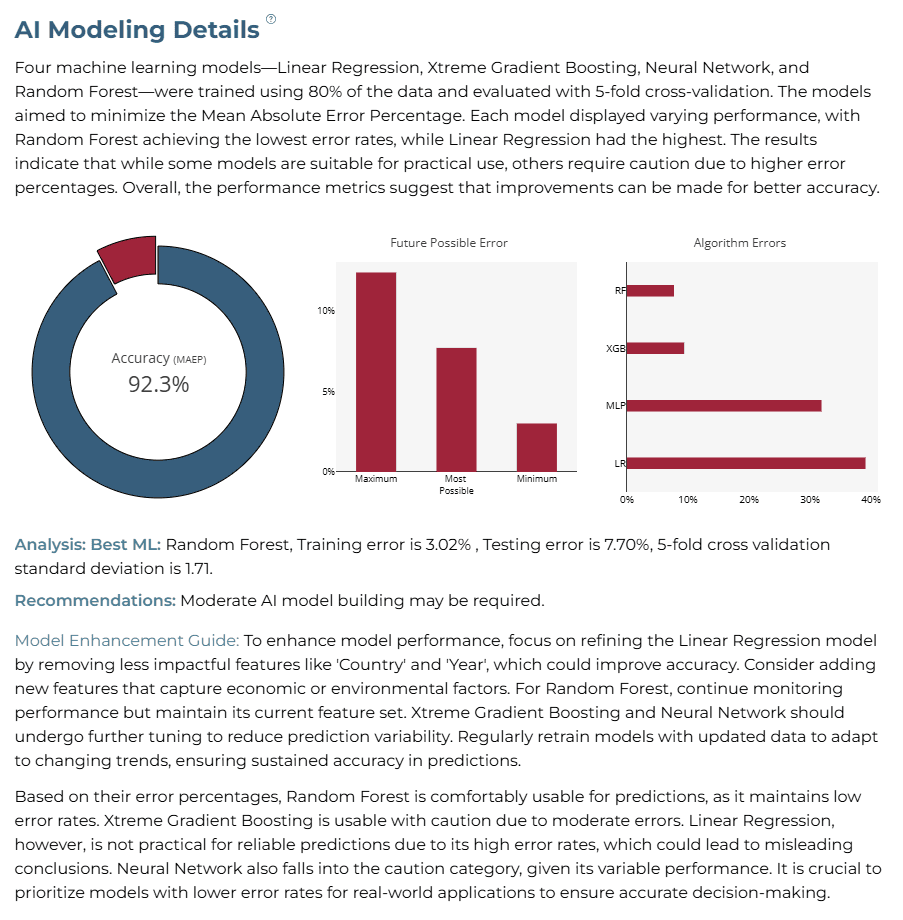
AI Modeling Details
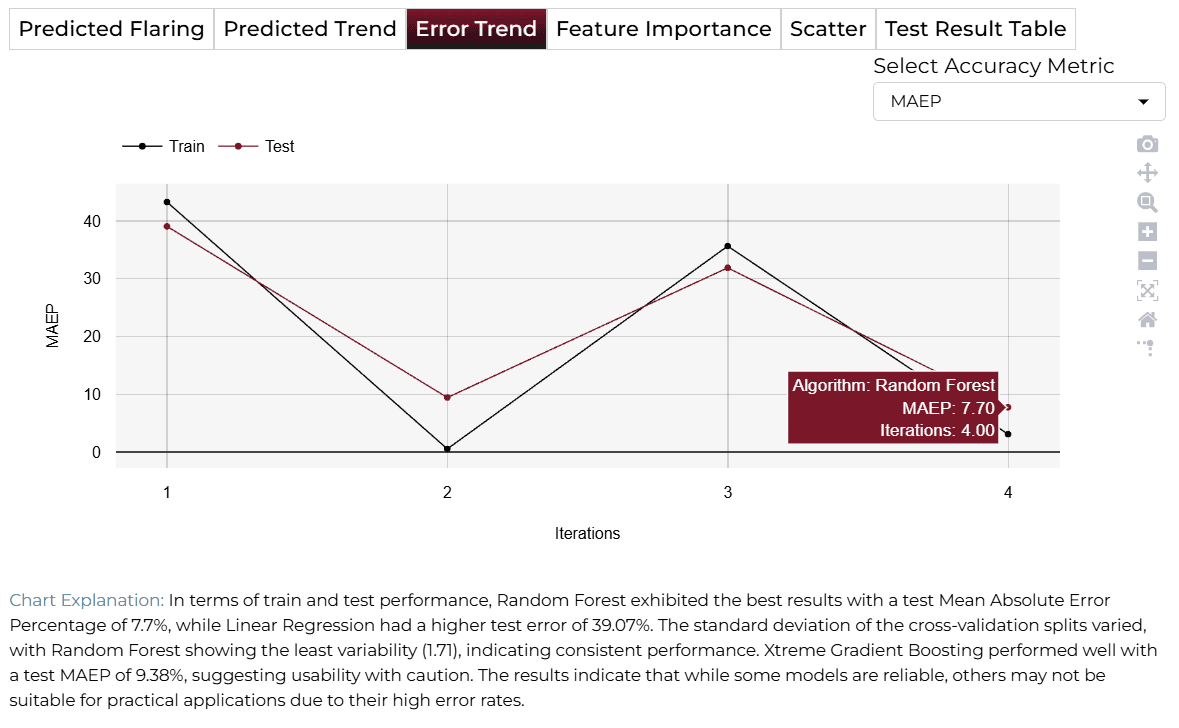
Four models were trained: Linear Regression, Xtreme Gradient Boosting, Neural Network, and Random Forest. Random Forest was the best-performing model, achieving a testing error of 7.58%.
Training Analysis Details
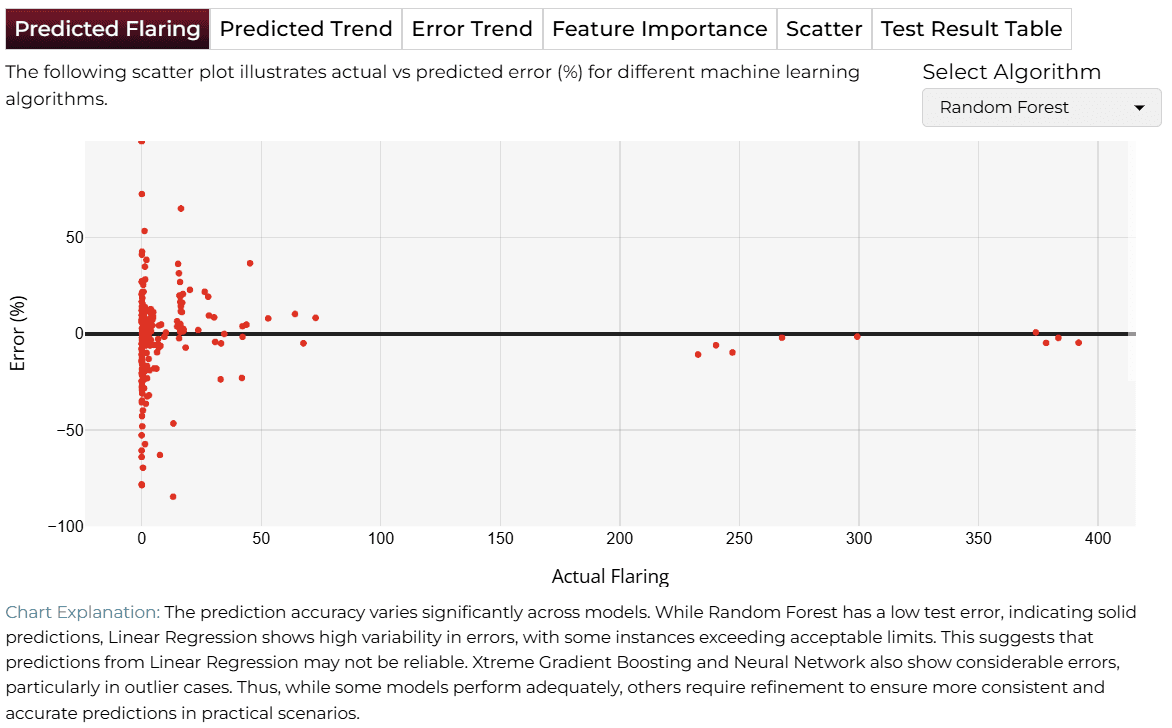
APredicted Flaring Emissions
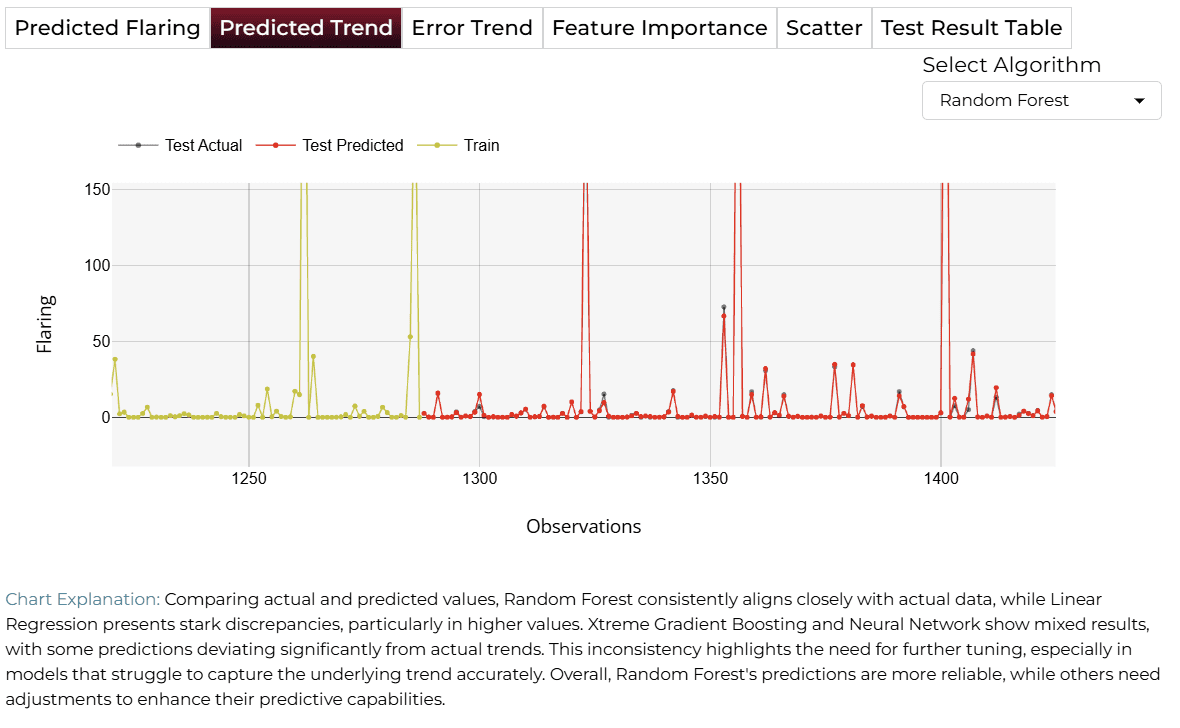
BPredicted Trend
CError Trend
DFeature Importance
Finalize Models
Once satisfied with performance, click 'Deploy'. The system saves and deploys models for future demand analysis or production environment.

4AI APPLICATION
Manual Model Building
In Manual Training Mode, users can modify sliders for variables like Coal, Oil, Gas, Cement, and Per Capita. Clicking ‘Get Response’ triggers an updated analysis.
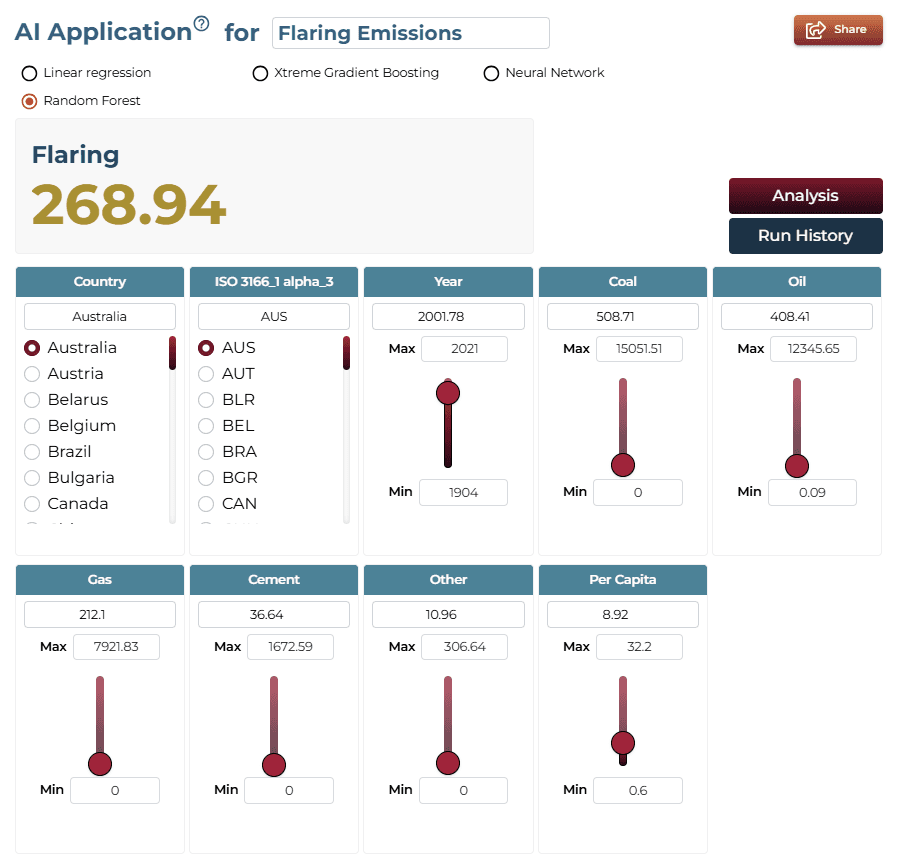
AI Application Demo
- Adjust key variables using the sliders.
- Observe how these changes impact the predicted flaring emission in real-time.
Saving the Project
Save your project by clicking the icon at the bottom left corner of the textbox.

Sharing the Project
Share the application for single on-demand predictions once the analysis is saved.

Interested in similar AI solutions?
Explore our full suite of AI capabilities designed to transform your business operations.