


Predicting Grid Stability for Power Systems
Ensuring grid stability is essential for reliable electricity distribution and power system resilience.
1Overview & Strategic Importance

Problem Statement
Ensuring grid stability is a critical challenge in modern power systems. Power fluctuations, load variations, and external disturbances can significantly impact the stability of electrical grids, leading to potential blackouts and inefficiencies. Accurately predicting grid stability is essential for enhancing energy management, preventing failures, and improving the resilience of the power network.
Required Solutions
- Developing a machine learning model capable of predicting grid stability based on time constants, power factors, and gain coefficients.
- Analyzing variables to assess stability conditions and identify potential risks in real-time.
- Helping grid operators make informed decisions, implement corrective actions, and optimize power distribution.
Solution Objectives
- Perform exploratory data analysis to uncover trends and correlations affecting grid stability.
- Develop a regression model to predict stability scores under different conditions.
- Optimize the model for real-time applications, enabling predictive maintenance and adaptive energy management.
Understanding the Problem
Grid stability is influenced by multiple interconnected factors, including system inertia, power loads, and external disturbances. Key parameters such as time constants (tau values) define the response time of the system, while power coefficients (p values) affect load distribution.
Gain coefficients (g values) help in regulating the system's dynamic behavior. Variations in these parameters can result in instability, causing power failures or inefficiencies in energy transmission.
2About the Data
Data Collection
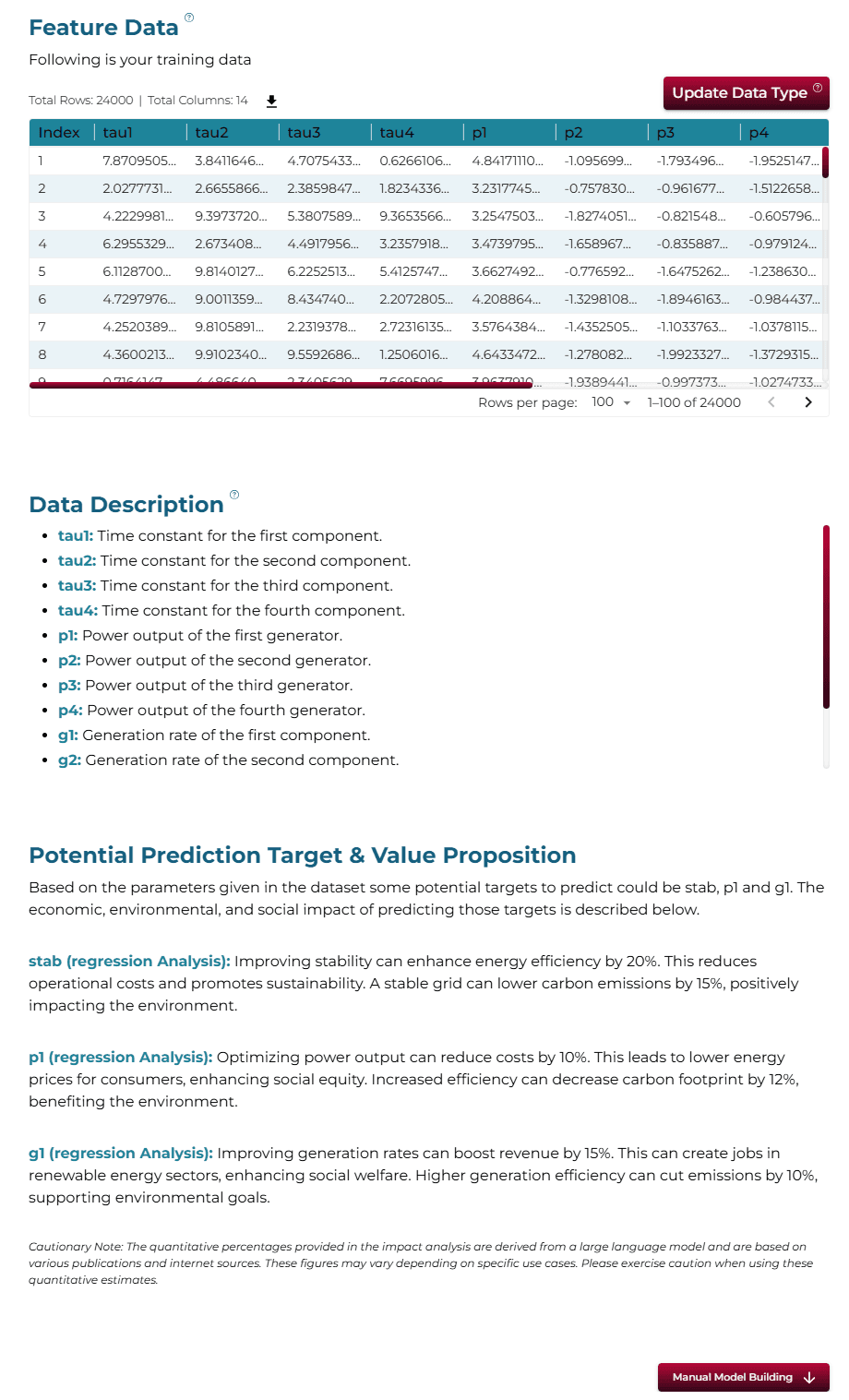
The dataset for smart grid stability prediction includes various parameters like time constants, power factors, and gain coefficients. These variables are crucial for determining the system's overall stability and dynamic behavior.
Major Parameters Description
Download Training Datatau1Primary time constant influencing the system's stability dynamics.
tau2Secondary time constant affecting transient responses in the grid.
tau3Third time constant related to inertia and damping effects.
tau4Fourth time constant capturing additional grid behavior patterns.
p1First power-related factor impacting grid stability.
p2Second power parameter influencing grid fluctuations.
p3Third power metric contributing to transient stability.
p4Fourth power variable affecting load balancing and stability.
g1First gain factor regulating grid response to disturbances.
3Using iDareAI
Guided Mode Initialization
AUploading Dataset
Click on the **'Upload CSV or Excel Data'** button → Select a source for the dataset → Upload `grid_stability_train.csv`. The system automatically analyzes the file, extracts column descriptions, and identifies the top value-adding targets for prediction.
BChoosing Analysis Mode
- What is the predicted smart grid stability trend according to this data?
- Which features impact the stability of a power grid the most?
Operation Using Autonomous Guided Mode
AQuery Response
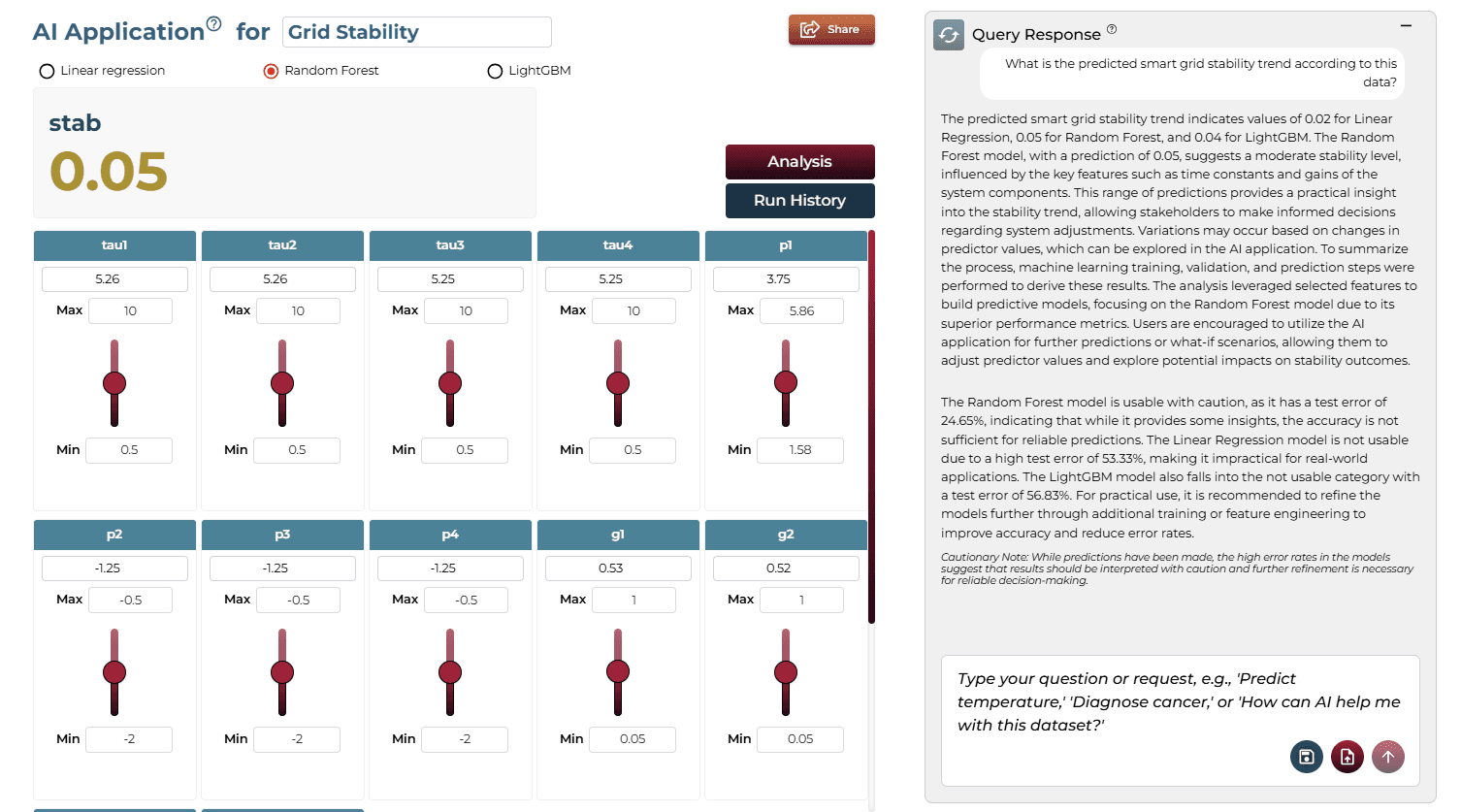
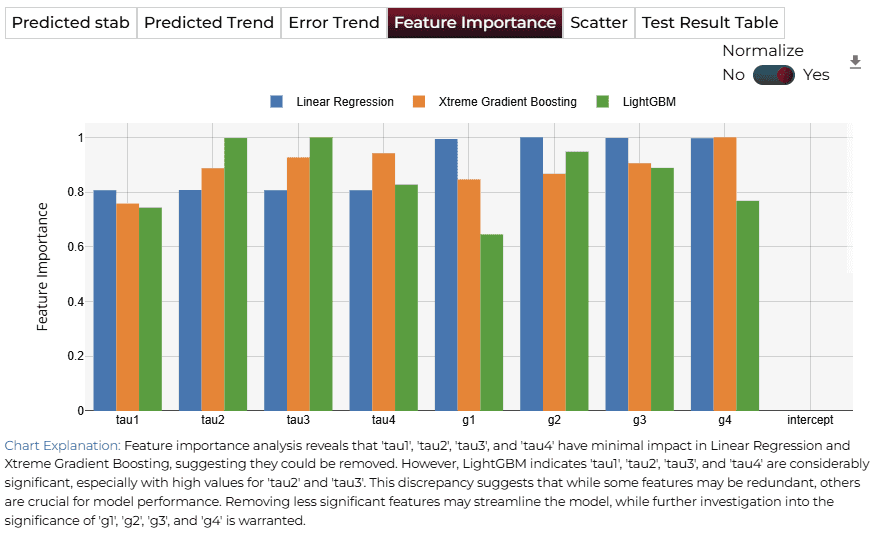
The predicted smart grid stability trend indicates a range of stability values from models like Linear Regression (0.02), Random Forest (0.05), and LightGBM (0.04). Random Forest provides the highest stability prediction, influenced significantly by time constants (tau1-tau4) and generation outputs (g1-g4).
BAI Application
Running the query generates an on-demand AI application. Users can adjust sliders to test different scenarios and see real-time updates to stability predictions without technical knowledge.
Model Fine-Tuning/Manual Model Building
ASelecting Prediction Target
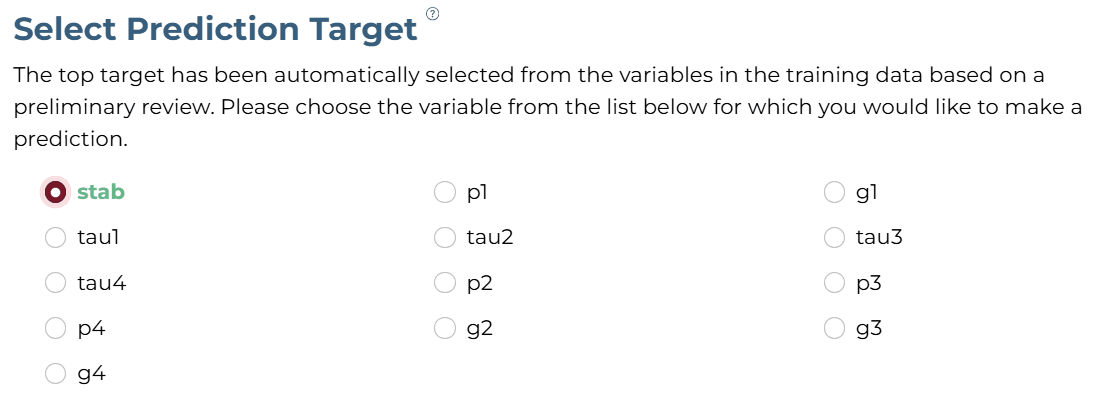
'stab' (Stability) was selected as the target column.
BSelecting Analysis Type
Since the target is numeric, 'Regression' is selected.

CSelecting Model Group/Item

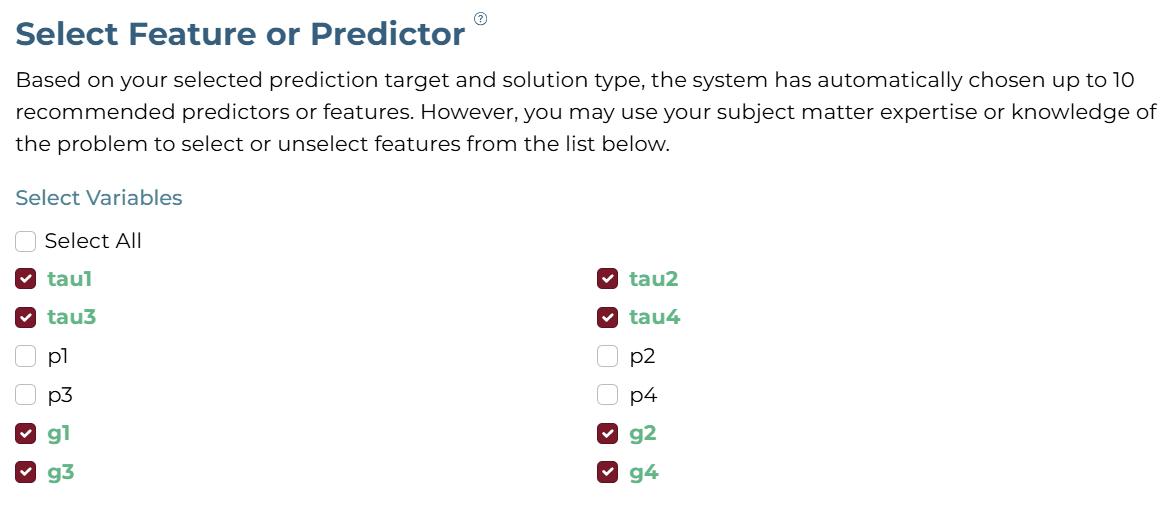
DSelecting Features
Customize the features used in the predictive analysis by selecting tau1, tau2, tau3, tau4, g1, g2, g3, and g4.
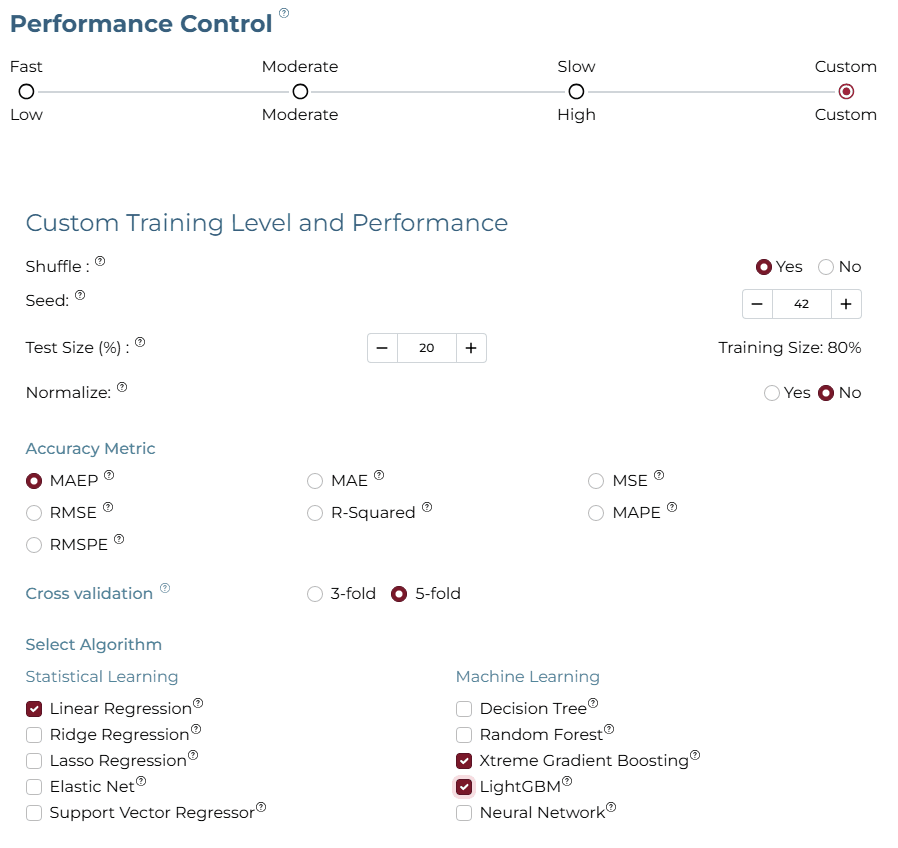
ESelecting Training Level
AI Modeling Details
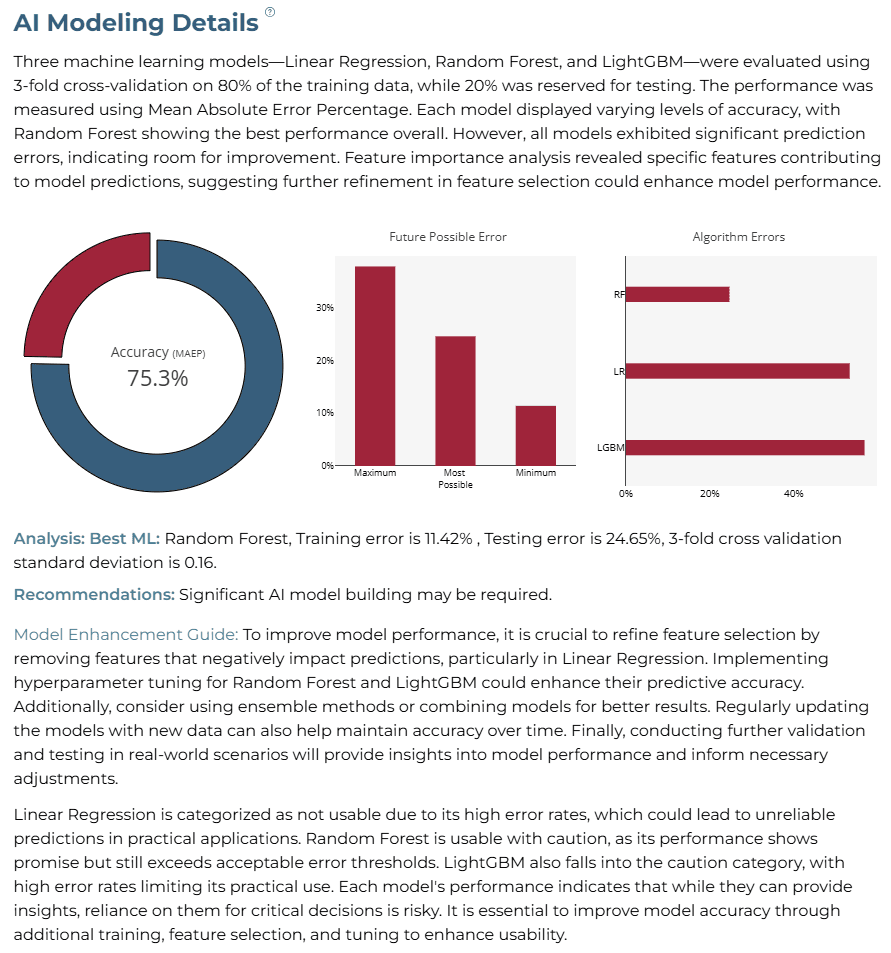
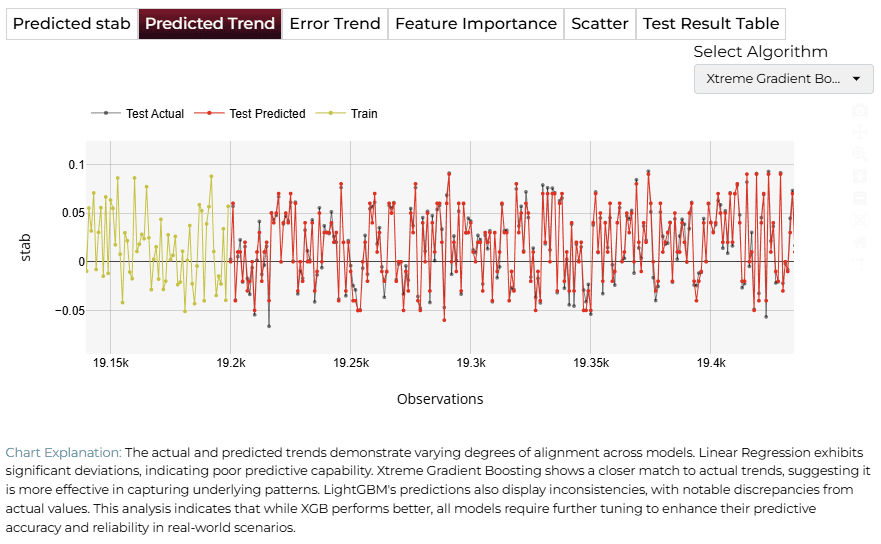
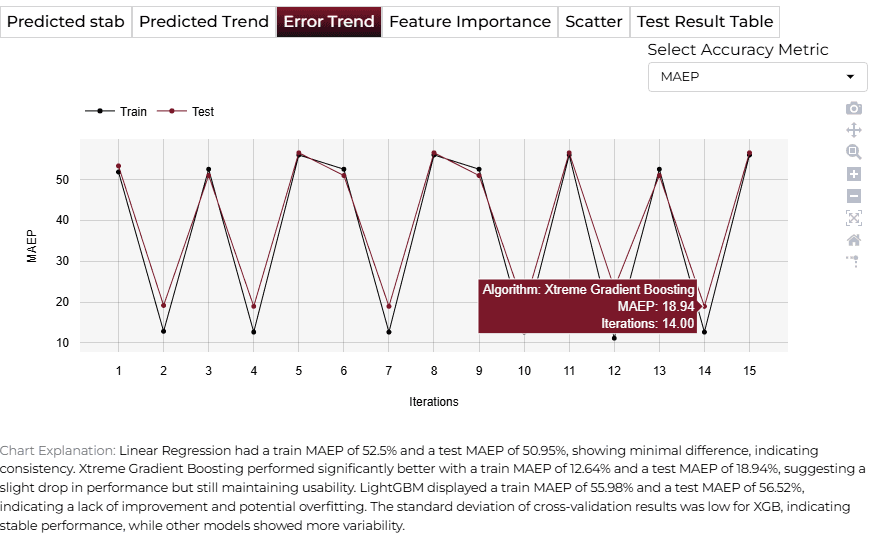
Xtreme Gradient Boosting was the best-performing model, achieving a testing error of 17.37%. Performance was evaluated using Mean Absolute Error Percentage (MAEP) with five-fold cross-validation.
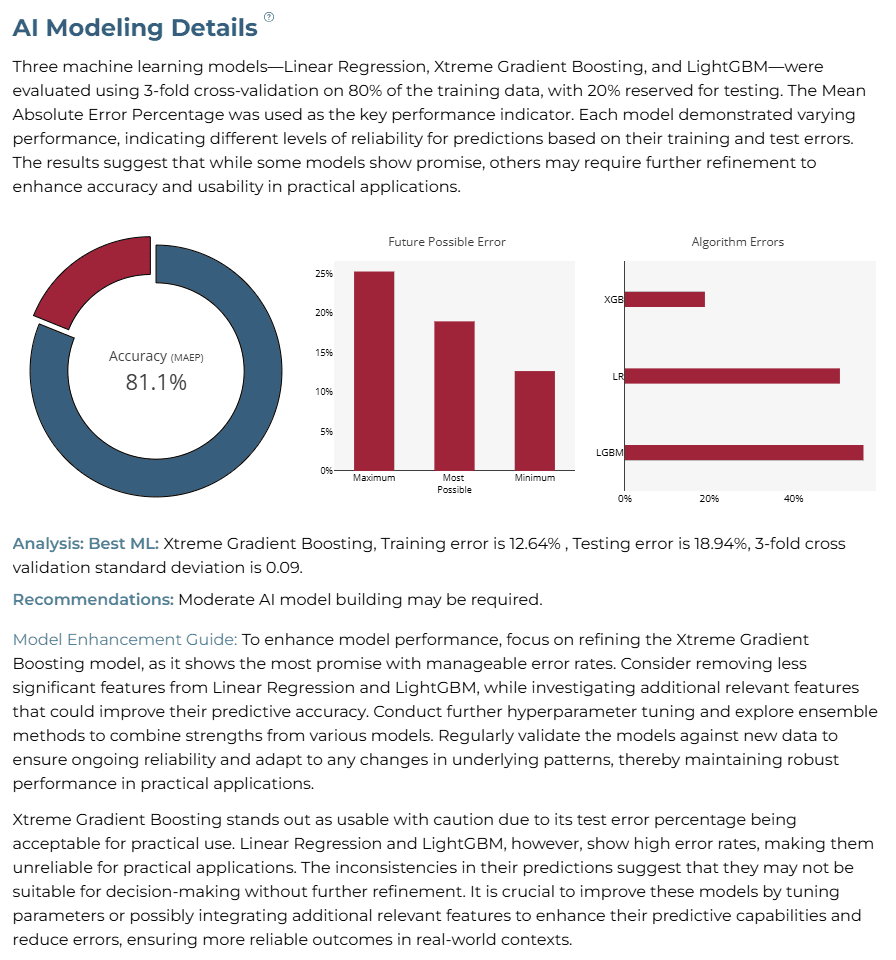
Training Analysis Details
APredicted Grid Stability
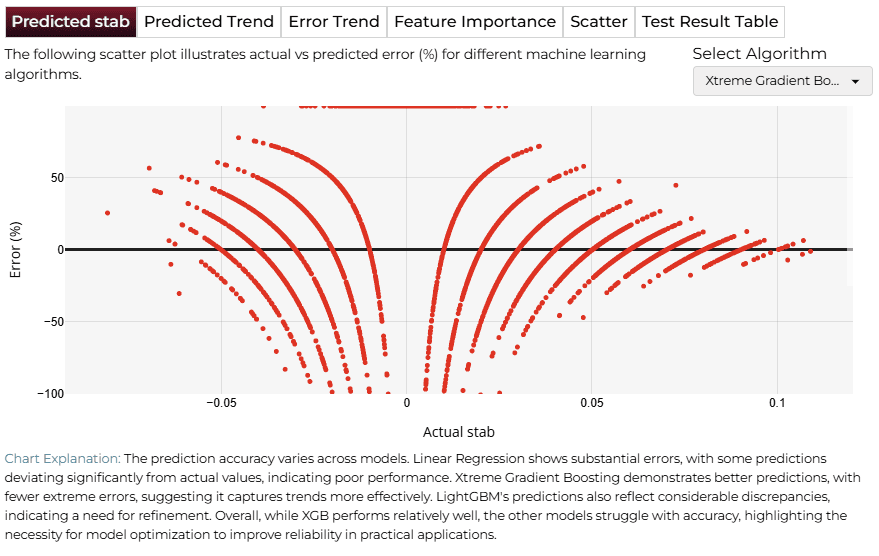
BPredicted Trend
CError Trend
DFeature Importance
Finalize Models
Once satisfied with performance, click 'Deploy'. The system saves and deploys models for future demand analysis or production environment.

4AI APPLICATION
Manual Model Building
In Manual Training Mode, users can modify sliders for variables like time constants and gauge measurements. Clicking ‘Get Response’ triggers an updated stability assessment.
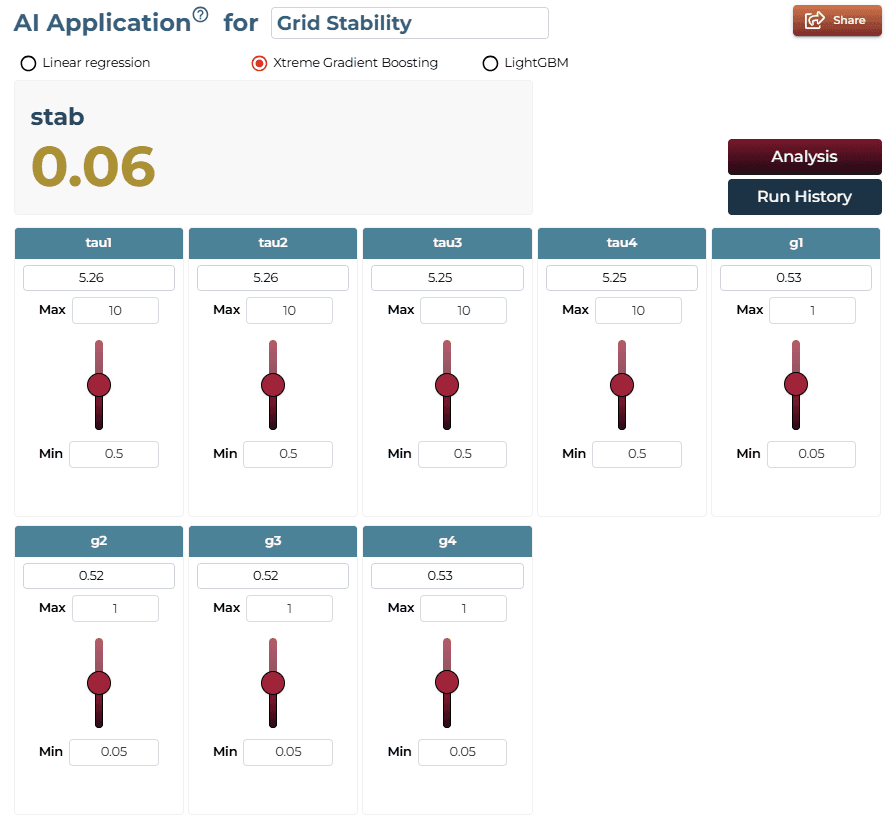
AI Application Demo
- Adjust key variables using the sliders.
- Observe how these changes impact the predicted stability score in real-time.
Saving the Project
Save your project by clicking the icon at the bottom left corner of the textbox.

Sharing the Project
Share the application for single on-demand predictions once the analysis is saved.

Interested in similar AI solutions?
Explore our full suite of AI capabilities designed to transform your business operations.