


Predicting Insurance Charges for Health Policyholders
Predicting insurance charges for policyholders to optimize premium pricing and improve cost management strategies.
1Overview & Strategic Importance

Problem Statement
Predicting insurance charges is essential for health insurance providers to assess risks, optimize premiums, and manage costs effectively. Predicting charges is complex due to the interplay of factors such as age, BMI, smoking status, and family size. Solving this allows companies to design data-driven policies and improve risk assessment.
Required Solutions
- Developing a regression model to predict charges.
- Understanding cost drivers like demographics and metrics.
- Optimizing pricing strategies for insurance providers.
Solution Objectives
- Uncover patterns and correlations in policyholder data.
- Develop accurate regression models for charge prediction.
- Identify key factors influencing insurance costs.
- Optimize model for real-world risk management.
Understanding the Problem
Charges are influenced by age, BMI, and lifestyle choices.
Smokers and older individuals typically incur higher charges. Machine learning models analyze these relationships to predict future charges and implement targeted interventions.
2About the Data
Data Collection
Dataset contains 1,338 rows of insured data including Age, Sex, BMI, Smoker status, and Region.
Major Parameters Description
Download Training DataageAge of the policyholder (in years).
sexGender of the policyholder (male or female).
bmiBody Mass Index, a measure of body fat.
childrenNumber of dependent children covered.
smokerWhether the policyholder is a smoker (yes/no).
regionGeographic region of the policyholder.
chargesInsurance charges billed (target variable).
3Using iDareAI
Guided Mode Initialization
AUploading Dataset
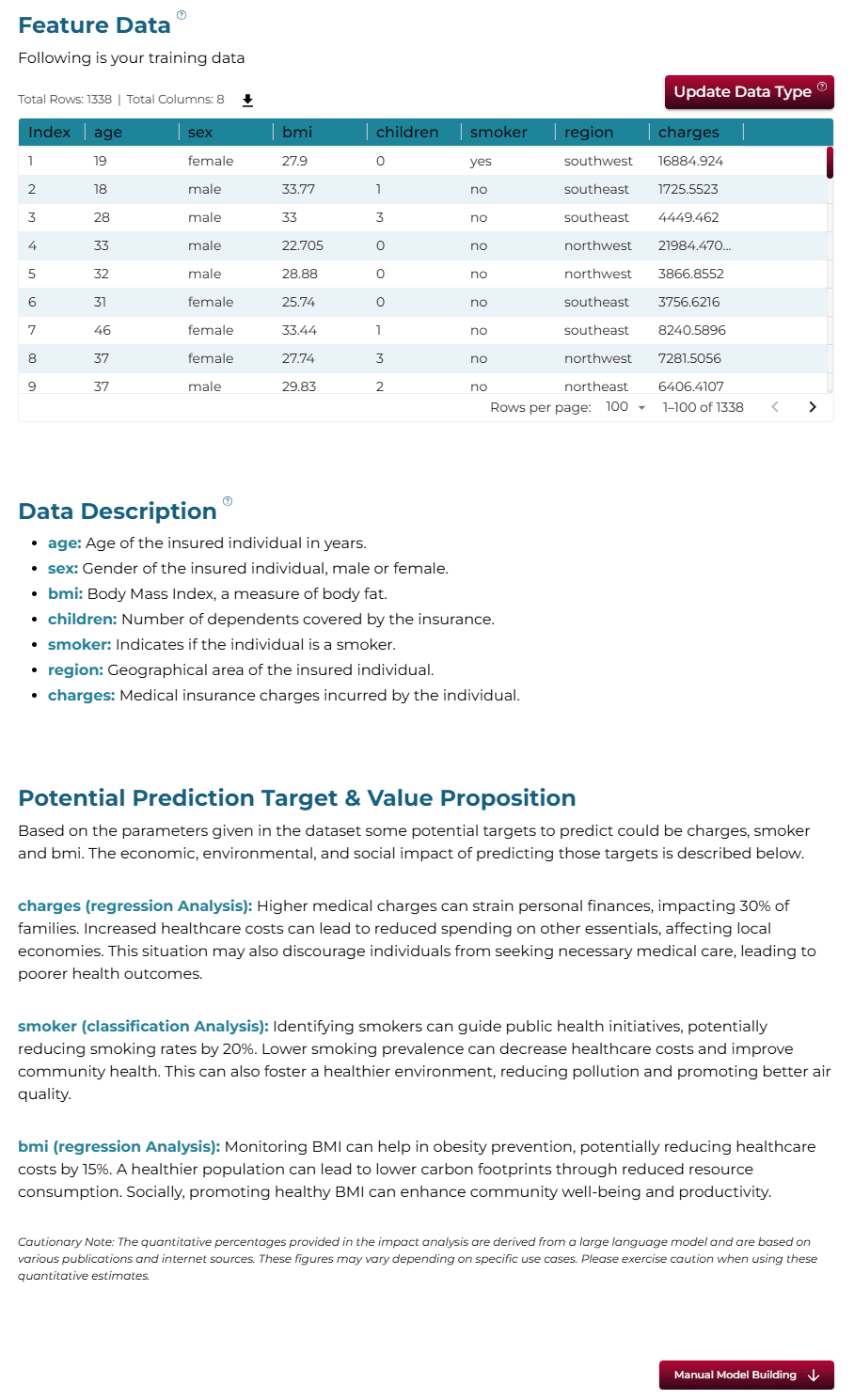
Click on the **'Upload CSV or Excel Data'** button → Select a source for the dataset → Upload `health_insurance_train.csv`. The system automatically analyzes the file, extracts column descriptions, and identifies the top value-adding targets for prediction.
BChoosing Analysis Mode
- Which factors have the greatest impact on predicting insurance charges in the dataset?
- Do individuals with more children tend to have higher or lower insurance charges?
Operation Using Autonomous Guided Mode
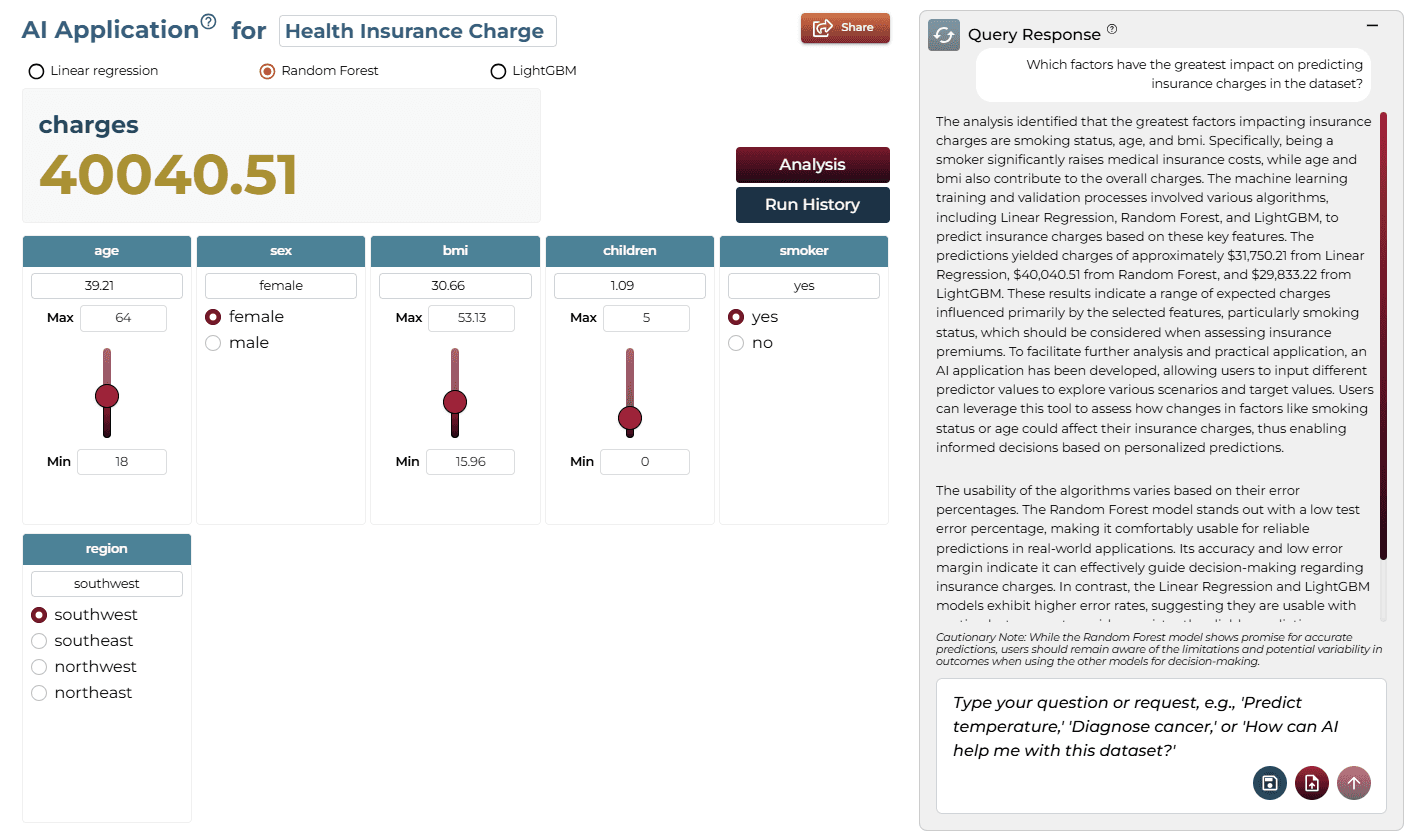
AQuery Response
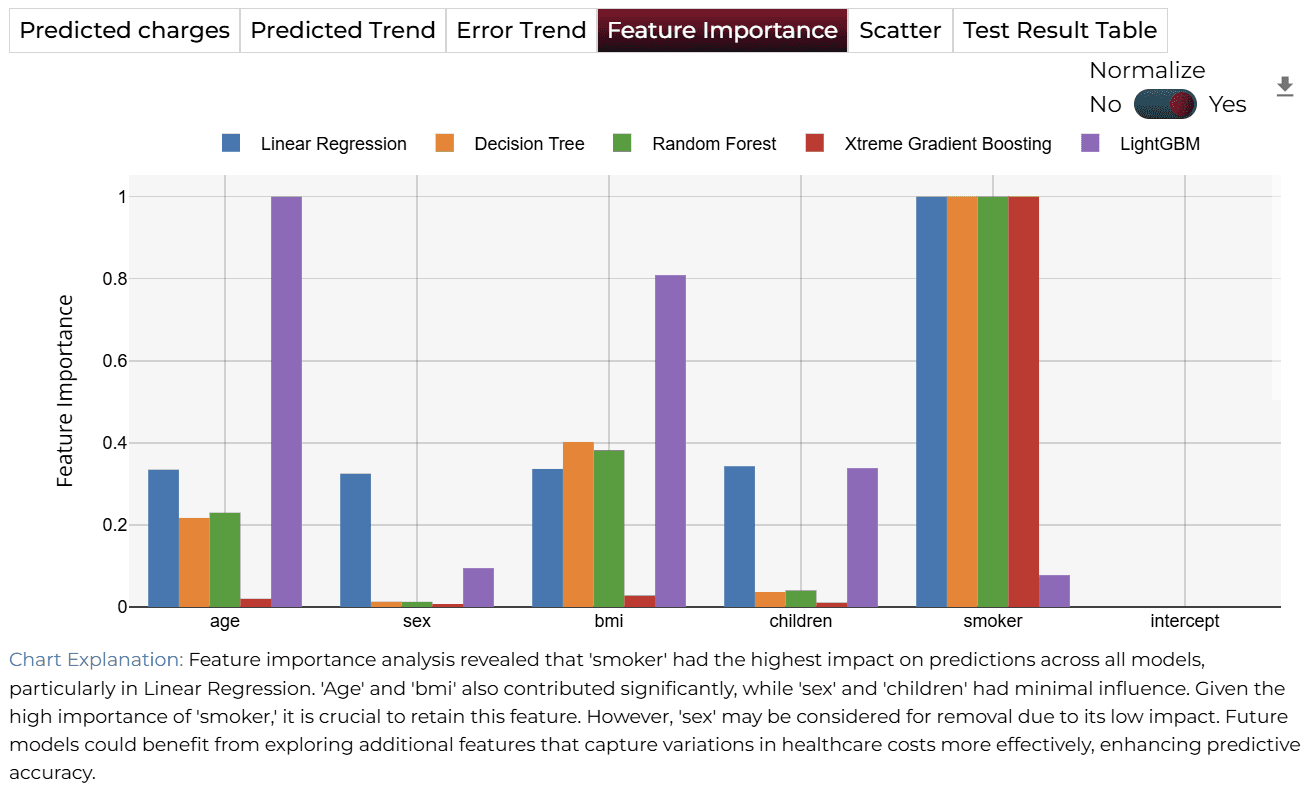
The analysis identified that the greatest factors impacting insurance charges are smoking status, age, and BMI. Specifically, being a smoker significantly raises medical insurance costs. Random Forest provided the most reliable predictions with a low test error margin.
BAutonomous Guided Mode Performance
CAI Application
Model Fine-Tuning/Manual Model Building
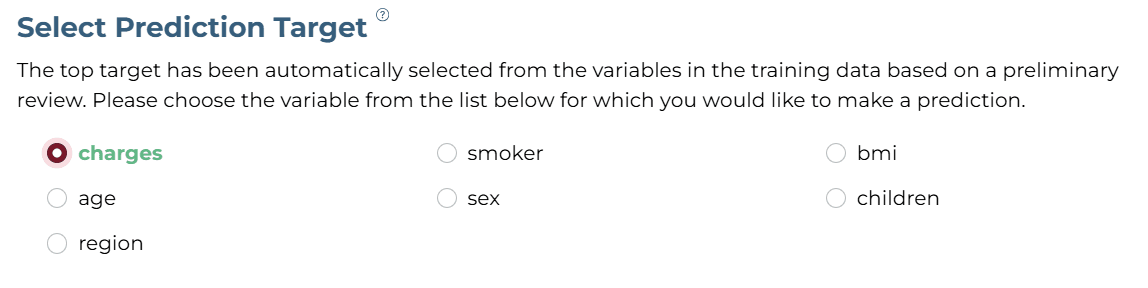
ASelecting Prediction Target
'charges' column was selected as the target.
BSelecting Analysis Type
The analysis target is a numerical column. Hence, the 'Regression' analysis type is selected.

CSelecting Model Group/Item
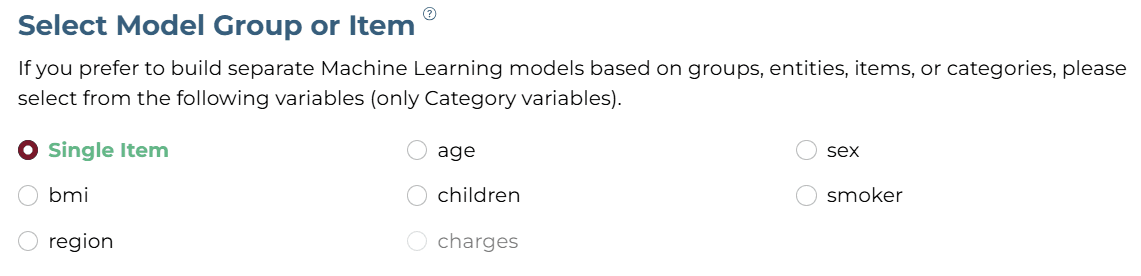
DSelecting Features
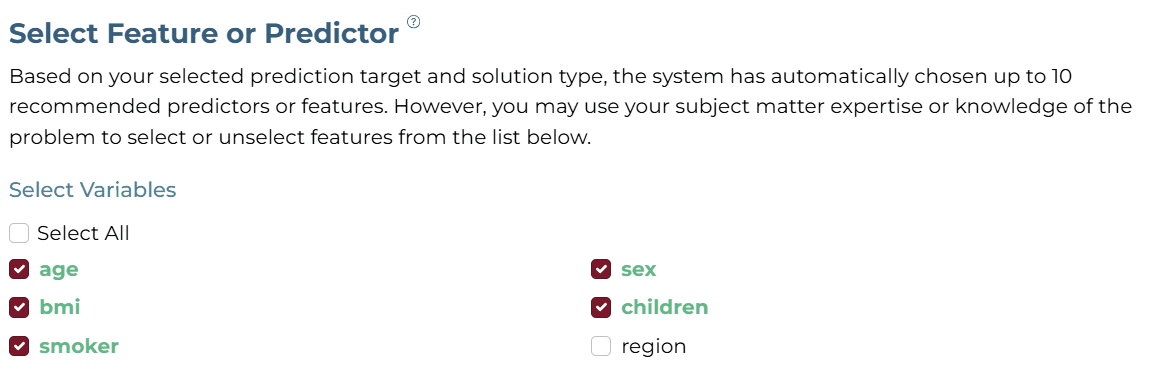
Select features: age, bmi, smoker, sex, and children.
ESelecting Training Level
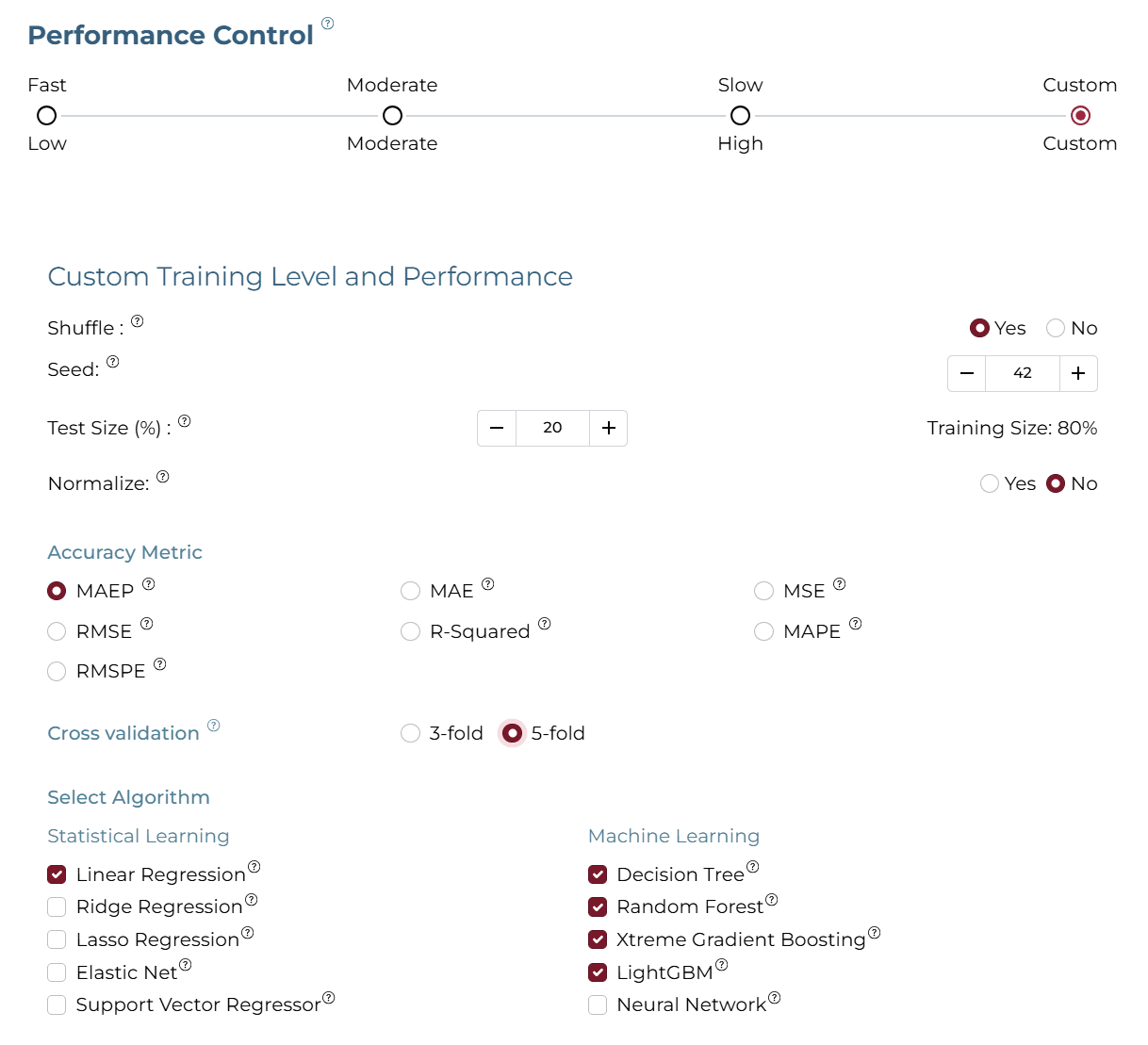
The "Custom" training level allows for algorithm selection and 5-fold cross-validation.
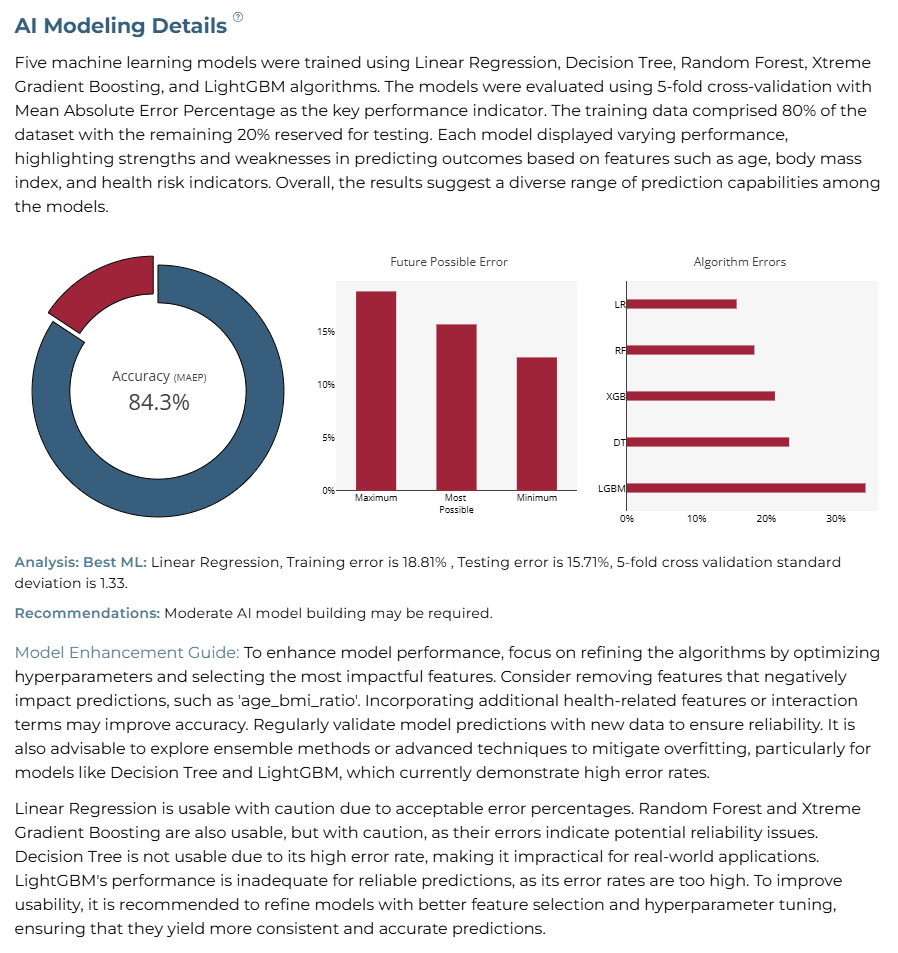
AI Modeling Details
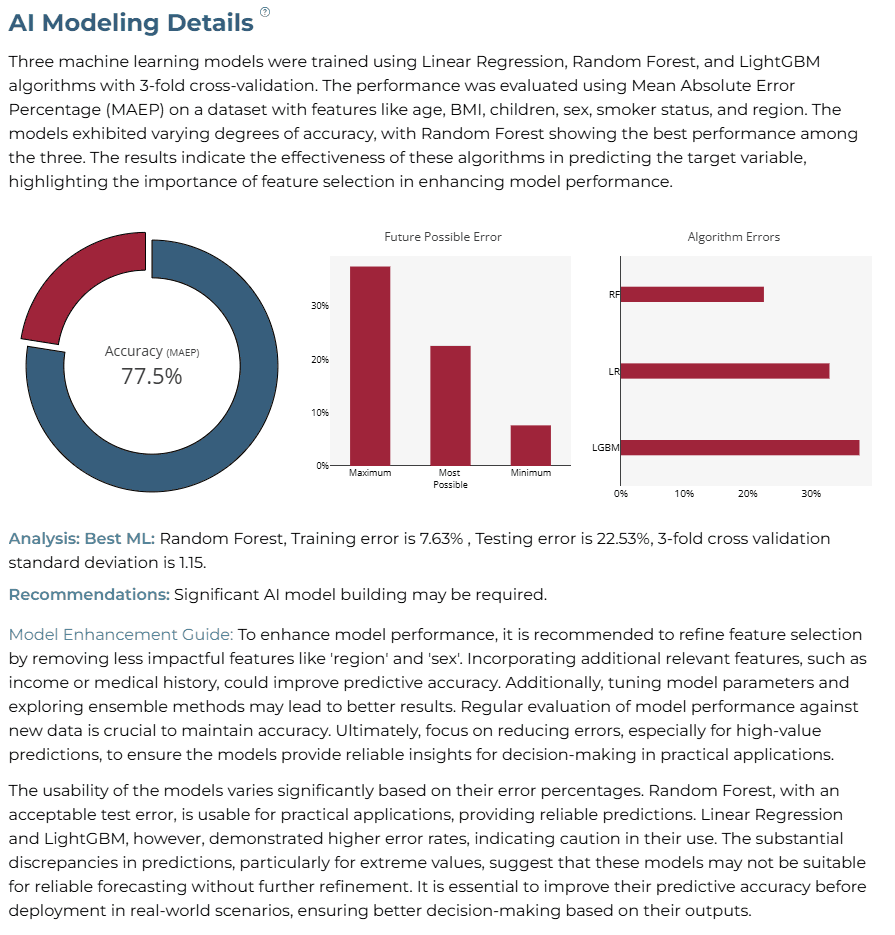
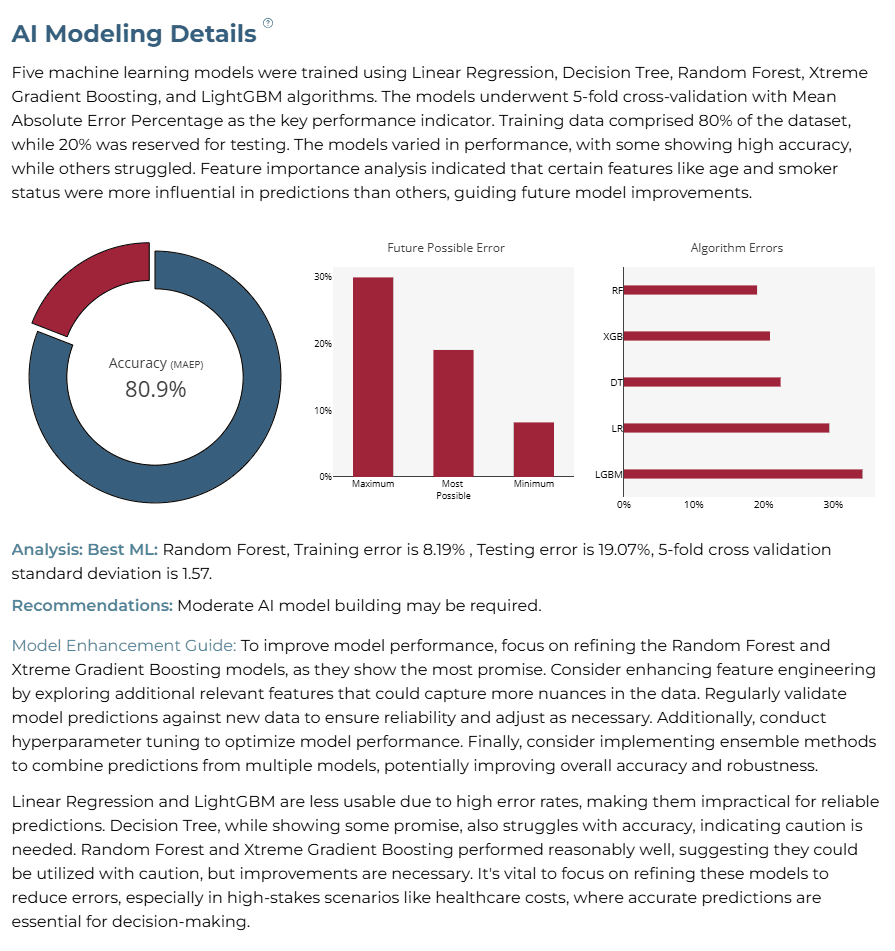
Random Forest achieved the best baseline accuracy of 80.9%.
Training Analysis Details
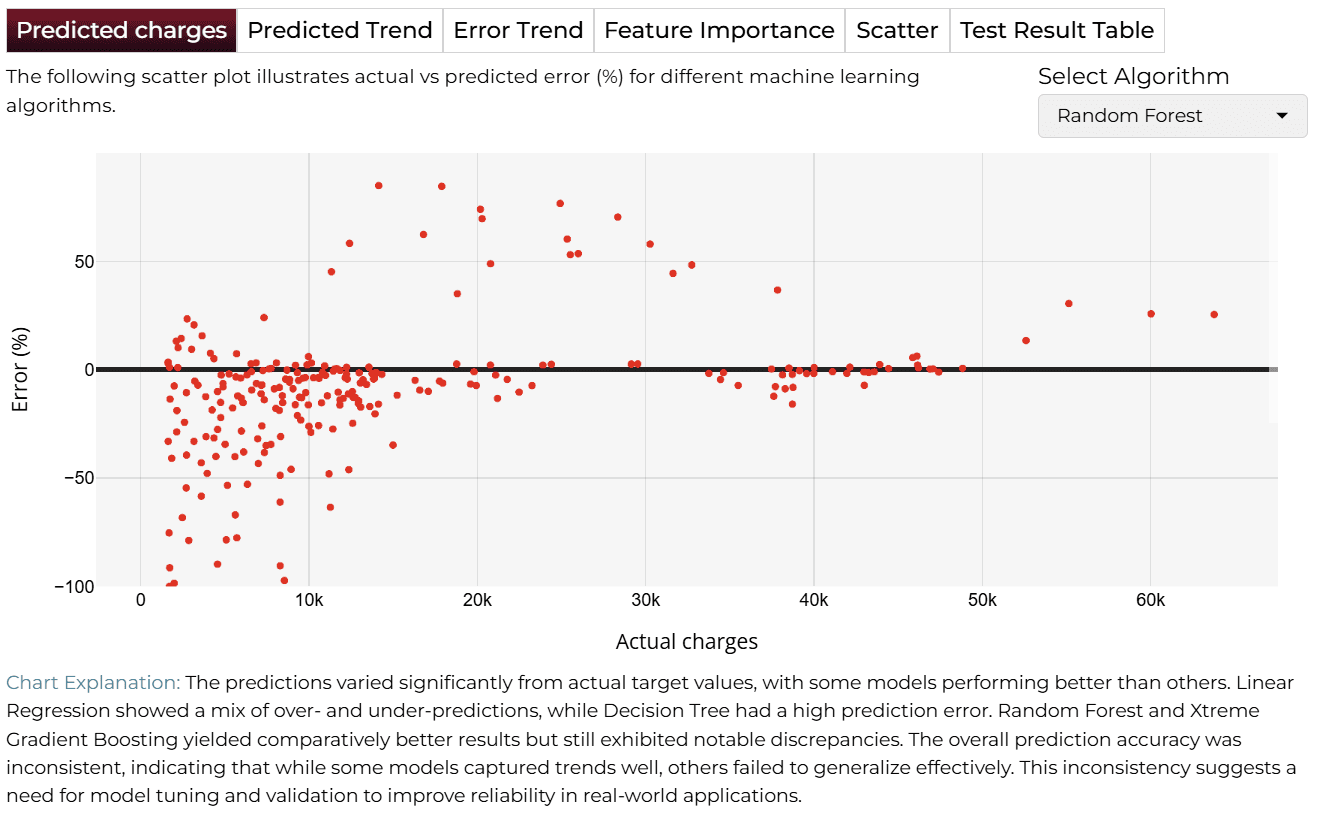
APredicted Target
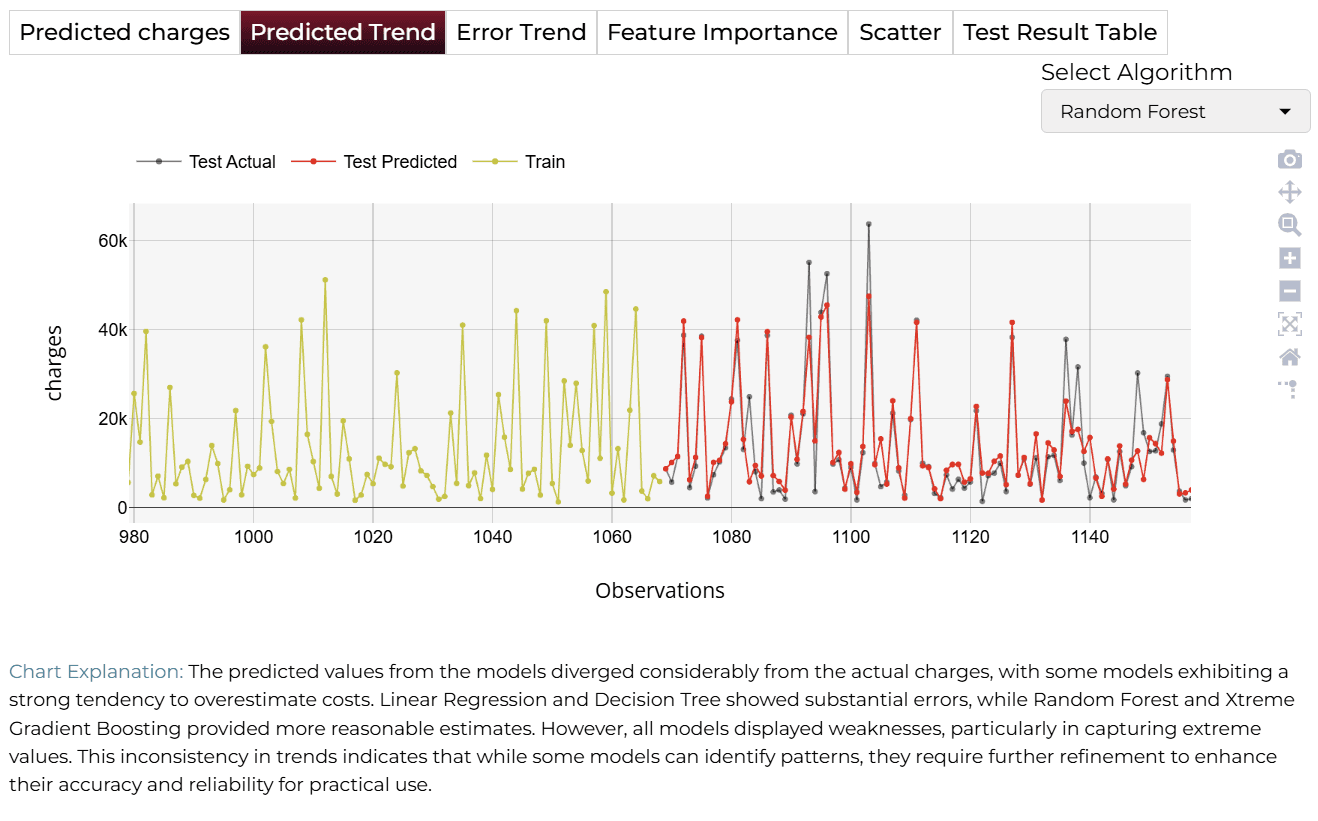
BPredicted Trend
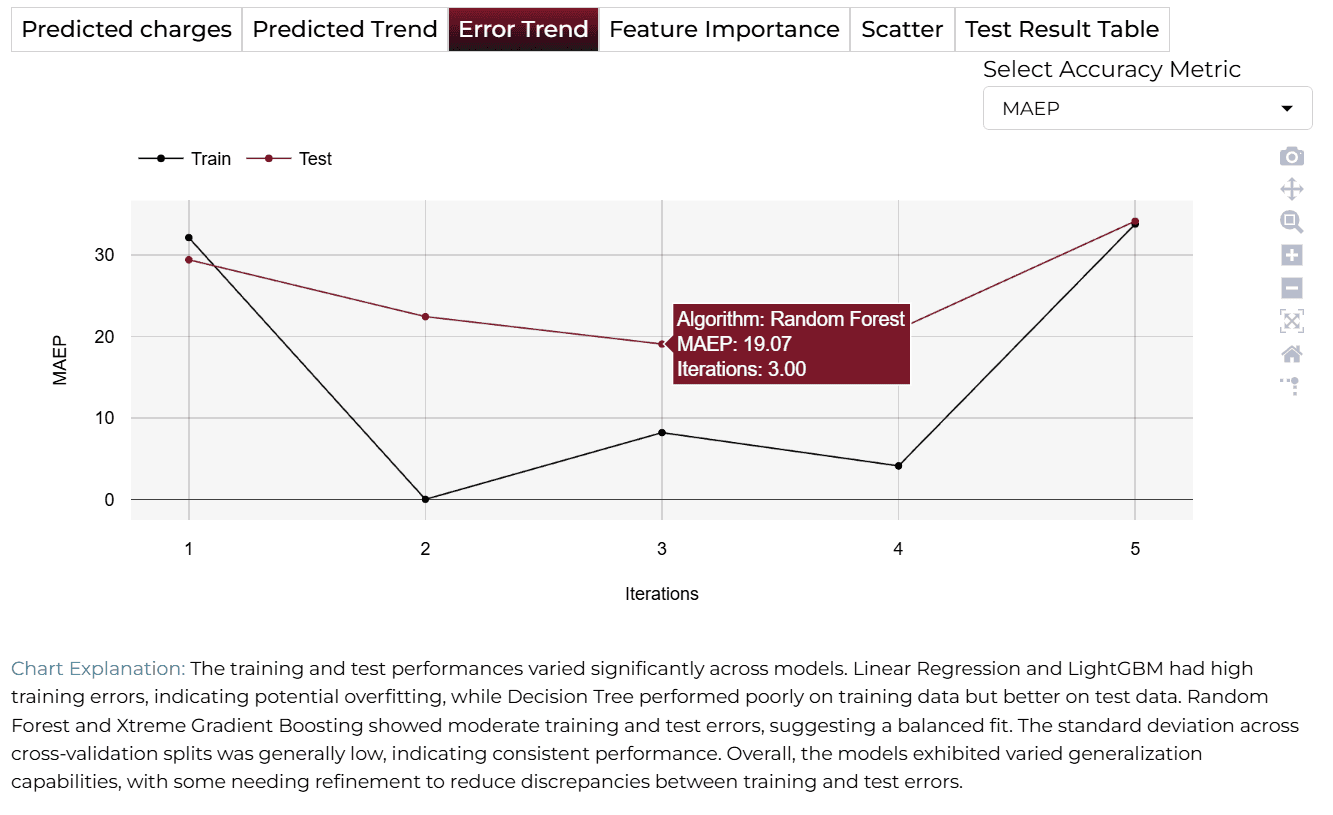
CError Trend
DFeature Importance
Improving Model Accuracy
ACustom Variable Creation
Interaction terms and derived features help the model capture hidden patterns.
| Variable Name | Formula |
|---|---|
| age group | =IF(A2<25, 'Young', IF(A2<50, 'Middle-aged', 'Senior')) |
| bmi category | =IF(C2<18.5, 'Underweight', IF(C2<25, 'Normal', IF(C2<30, 'Overweight', 'Obese'))) |
| smoker-age interaction | =A2*IF(E2='yes', 1, 0) |
| smoker-bmi interaction | =C2*IF(E2='yes', 1, 0) |
| children category | =IF(D2=0, 'No children', IF(D2<=2, 'Few children', 'Many children')) |
BAnalysis Details (Improved)
Accuracy increased to 84.3% after feature engineering.
4AI APPLICATION
Manual Model Building
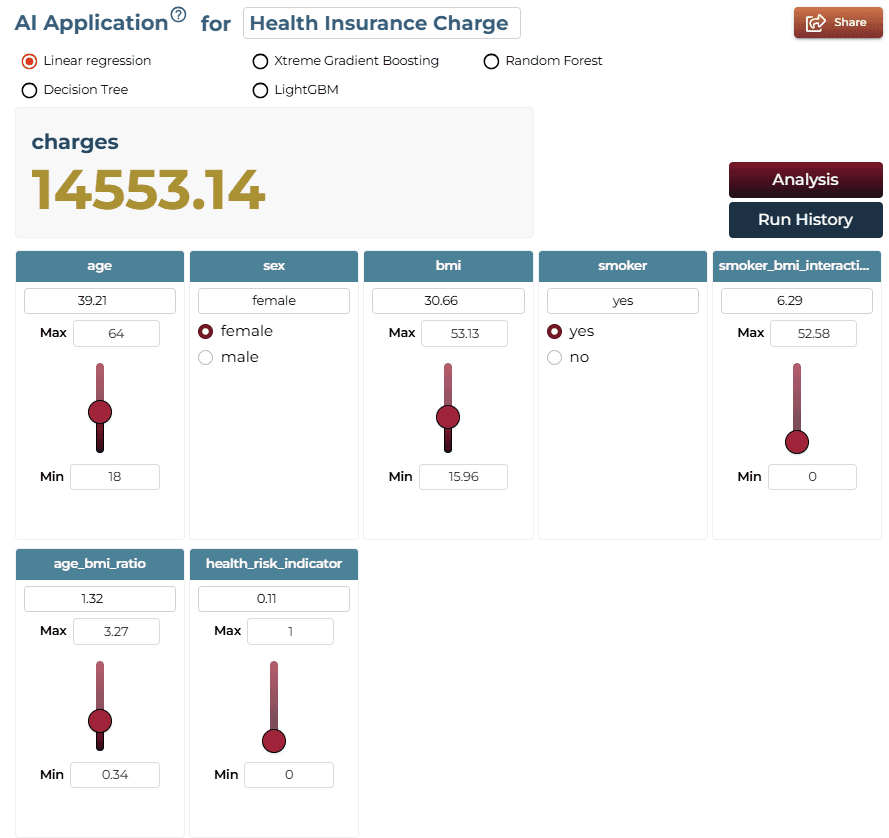
Modify sliders for Age, BMI, and Smoker status to see real-time impact on predicted insurance charges. Feature engineering allows for more granular predictions.
AI Application Demo
Adjusting the 'Smoker' status and 'BMI' sliders shows how these risk factors directly correlate with significant increases in predicted charges.
Saving the Project
Save your insurance charge analysis by clicking the icon at the bottom left corner of the interface.

Sharing the Project
Share the application once the analysis is saved to enable on-demand predictions for clients.

Interested in similar AI solutions?
Explore our full suite of AI capabilities designed to transform your business operations.