


Predicting Customer Purchase Behavior in Online Marketplaces
Analyzing customer purchase behavior trends to optimize sales strategies in online marketplaces.
1Overview & Strategic Importance

Problem Statement
Understanding customer purchase behavior is critical for retail and e-commerce businesses to enhance sales, improve customer retention, and optimize marketing strategies. The factors influencing purchase decisions include customer demographics, purchasing habits, and engagement with loyalty programs or discounts. Businesses need predictive tools to target the right audience, reduce churn, and improve conversion rates. This problem is crucial for refining customer experiences, boosting sales, and maintaining a competitive edge in the retail and e-commerce sector.
Required Solutions
- Analyzing relationships between customer demographics, purchasing habits, and purchase likelihood.
- Evaluating the impact of loyalty programs and discounts on purchase decisions.
- Providing actionable insights to tailor marketing campaigns and promotional strategies.
Solution Objectives
- Perform exploratory data analysis to uncover patterns influencing purchase behavior.
- Build a classification model to predict the likelihood of purchase (PurchaseStatus).
- Conduct scenario analysis to understand the impact of discounts and loyalty programs.
- Optimize marketing and engagement strategies based on predictive insights.
Understanding the Problem
Customer purchase behavior is driven by various interconnected factors such as age, gender, income, and purchasing habits.
Predictive models can provide valuable insights into these dynamics, helping businesses enhance targeting strategies and improve decision-making to drive higher sales and profitability.
2About the Data
Data Collection
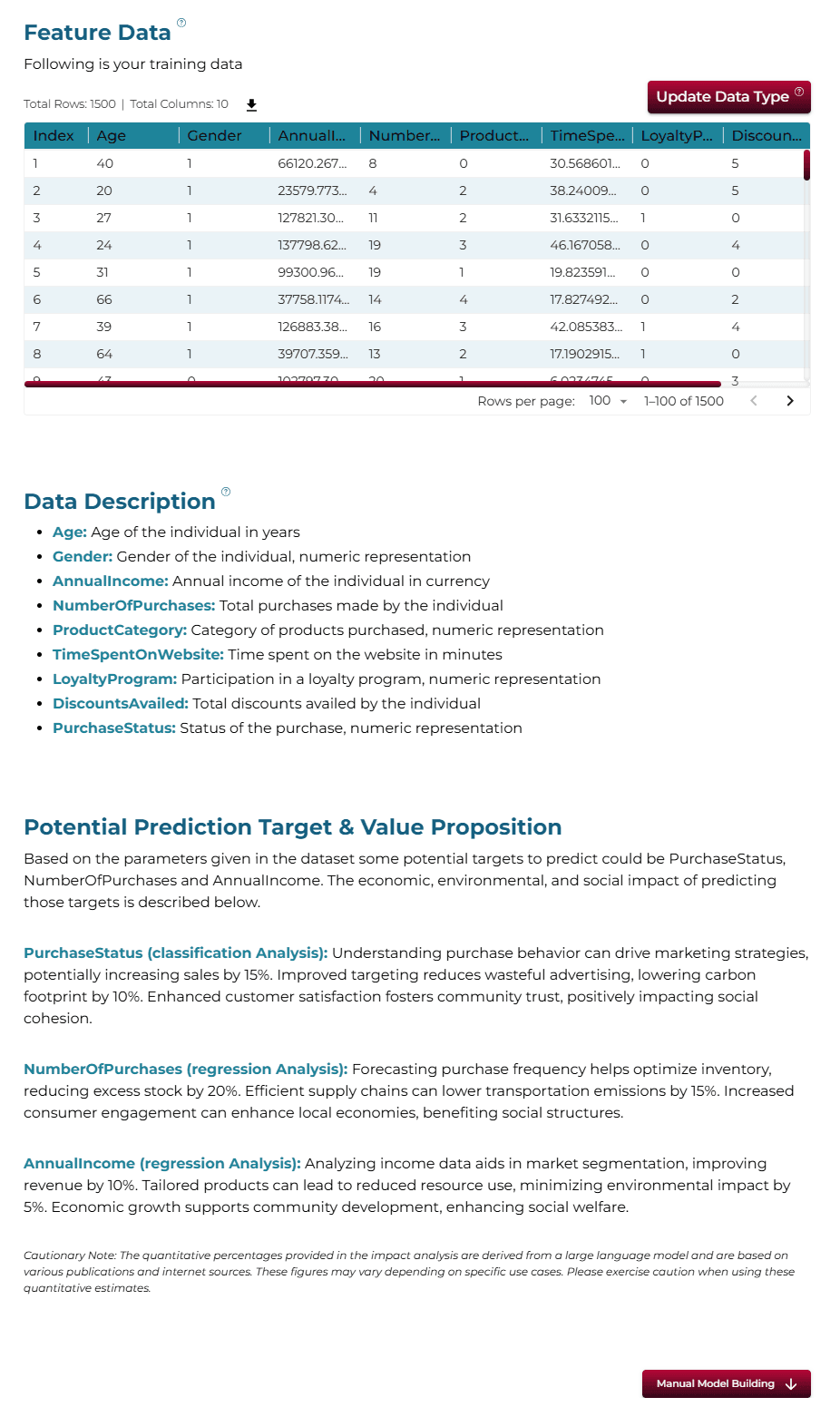
The dataset was aggregated from e-commerce platforms, capturing customer interactions, purchase histories, and engagement metrics. The data may come from transaction records, website analytics, and customer surveys.
Major Parameters Description
Download Training DataAgeCustomer's age.
GenderCustomer's gender (0 = Male, 1 = Female).
Annual IncomeCustomer's annual income in dollars.
Number of PurchasesTotal purchases made by the customer.
Product CategoryCategory of purchased products (0 = Electronics, 1 = Clothing, 2 = Home Goods, 3 = Beauty, 4 = Sports).
Time Spent on WebsiteAverage time spent on the website in minutes.
Loyalty ProgramMembership status in a loyalty program (0 = No, 1 = Yes).
Discounts AvailedNumber of discounts availed by the customer (0 to 5).
PurchaseStatusTarget variable indicating purchase likelihood (0 = No, 1 = Yes).
3Using iDareAI
Guided Mode Initialization
AUploading Dataset
Click on the **'Upload CSV or Excel Data'** button → Select a source for the dataset → Upload `purchase_behavior_train.csv`. The system automatically analyzes the file, extracts column descriptions, and identifies the top value-adding targets for prediction.
BChoosing Analysis Mode
- What changes can improve customer purchase status based on the patterns in this data?
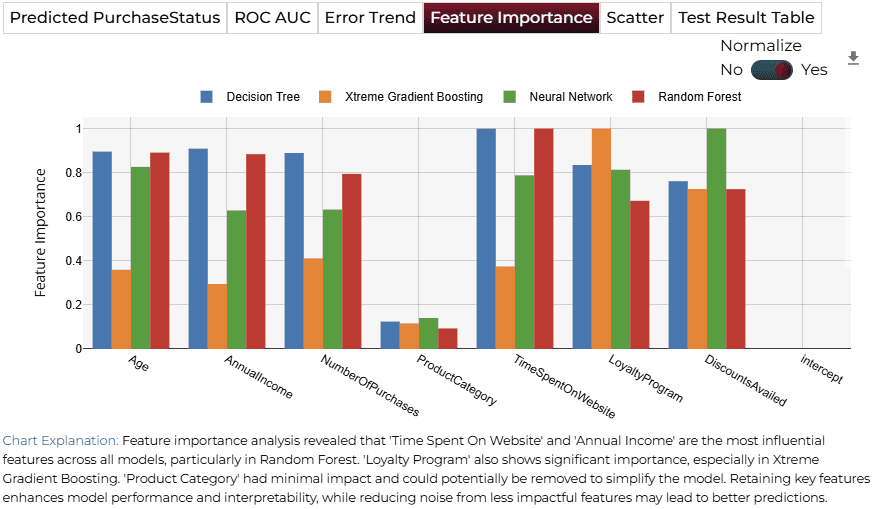
- Which factors in the data have the biggest impact on customer purchase status?
Operation Using Autonomous Guided Mode
AQuery Response
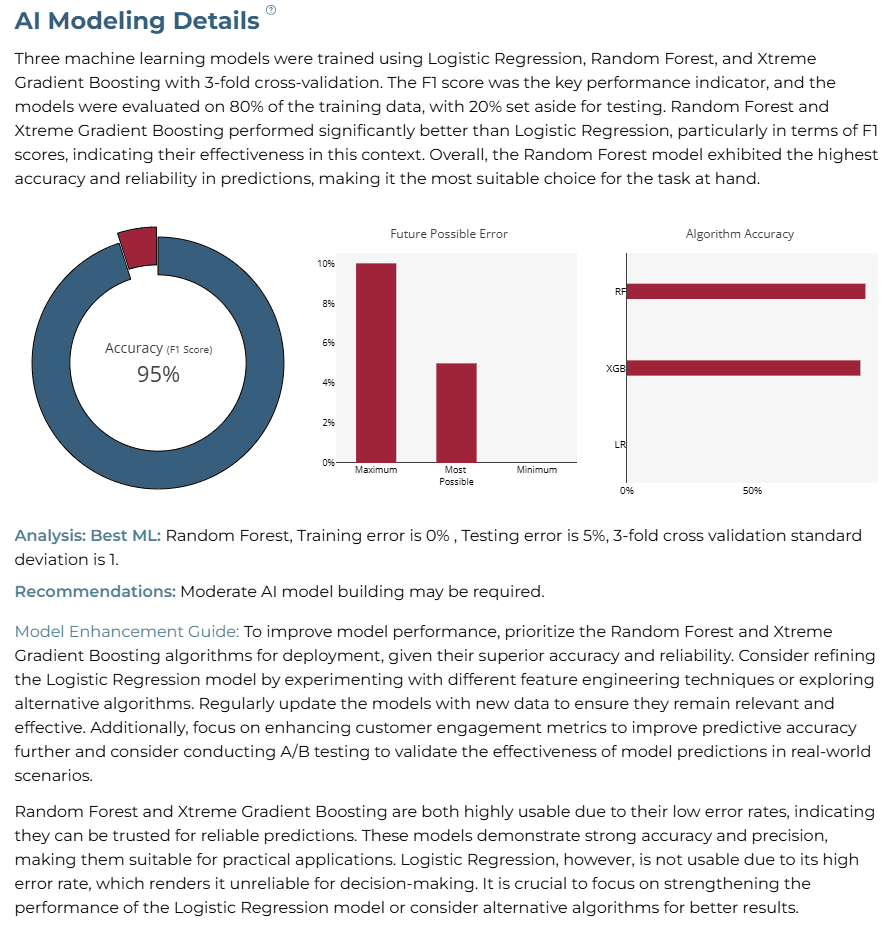
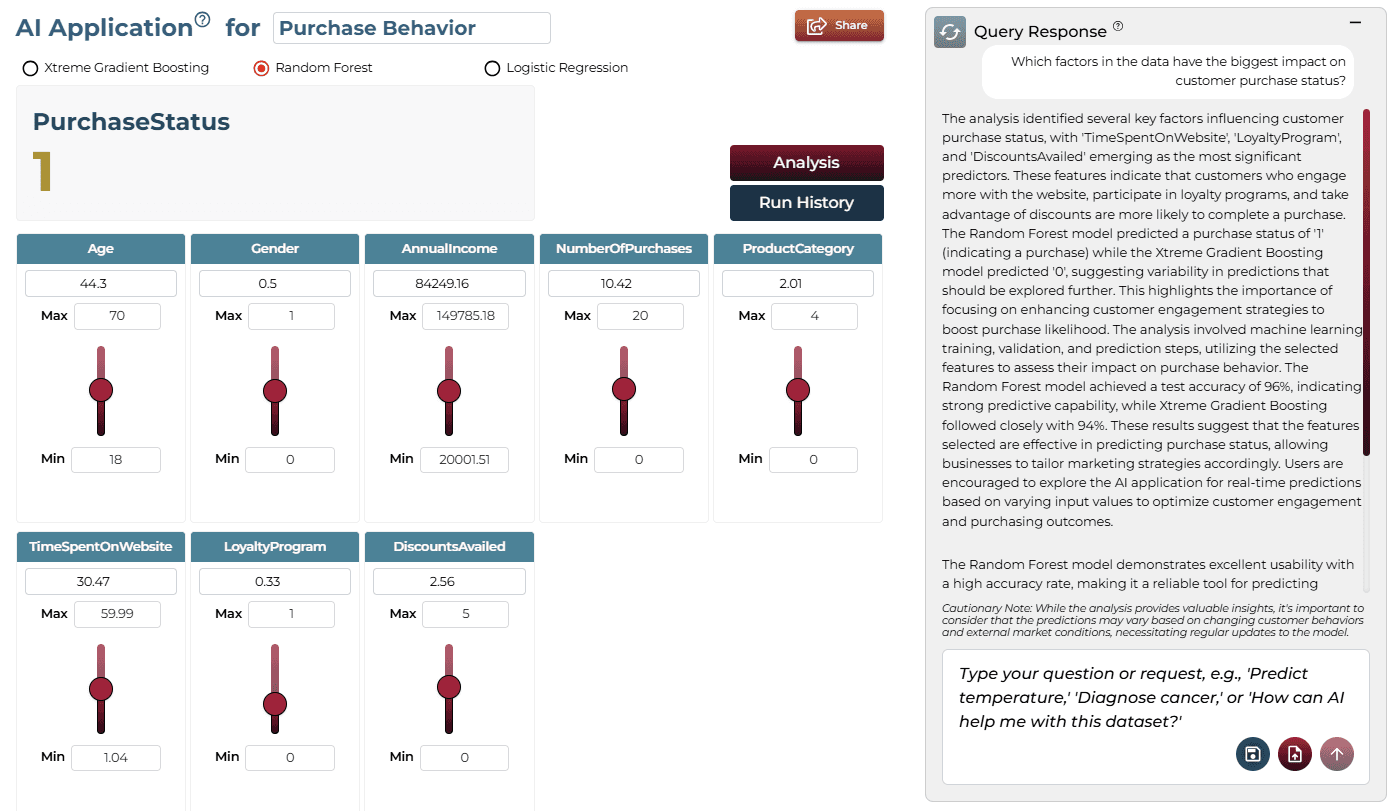
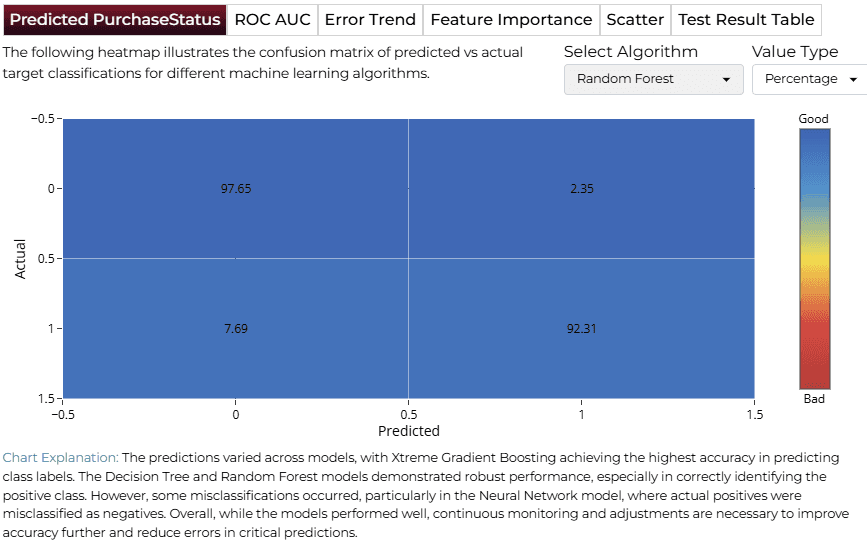
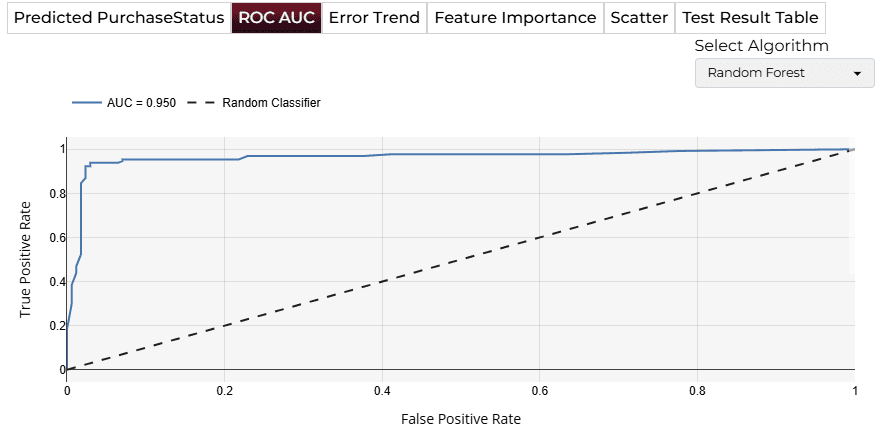
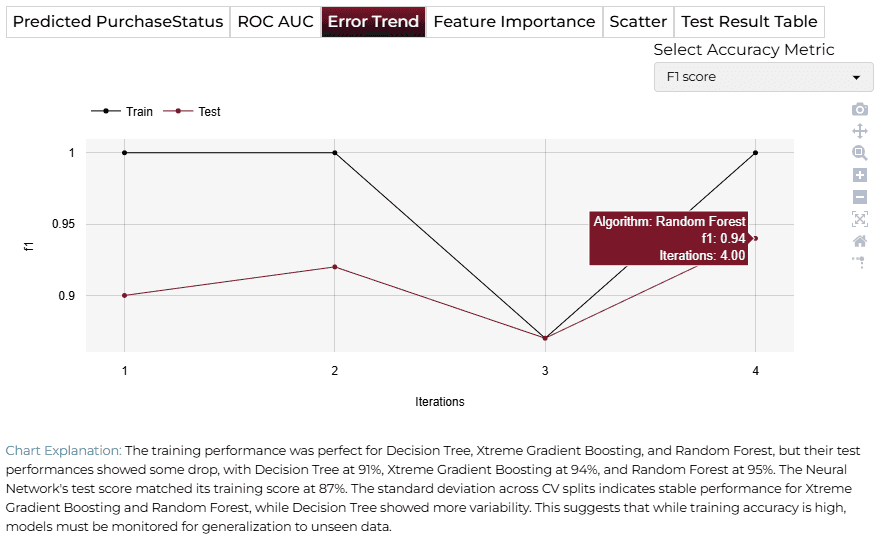
'TimeSpentOnWebsite', 'LoyaltyProgram', and 'DiscountsAvailed' emerged as the most significant predictors. The Random Forest model achieved a test accuracy of 96%, indicating strong predictive capability for purchase status.
BAI Application
The generated AI application allows users to choose between models and use sliders to test different scenarios, seeing how changes in engagement metrics impact purchase probability.
Model Fine-Tuning/Manual Model Building
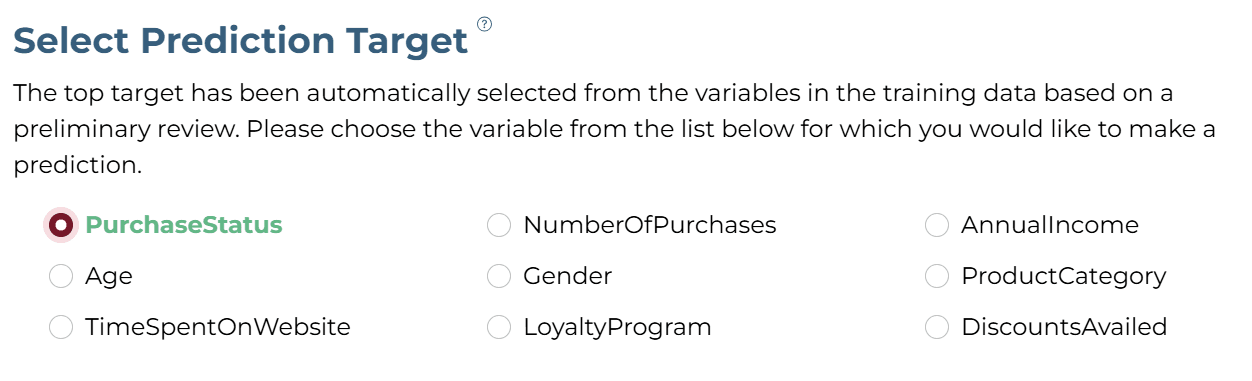
ASelecting Prediction Target
'PurchaseStatus' column was selected as the target.
BSelecting Analysis Type
The analysis target is a categorical column. Hence, the 'Classification' analysis type is selected.

CSelecting Model Group/Item
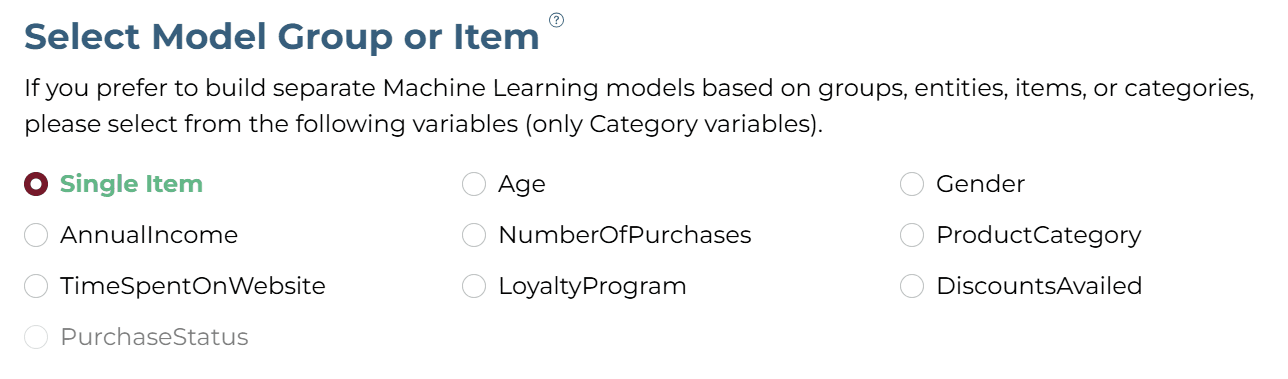
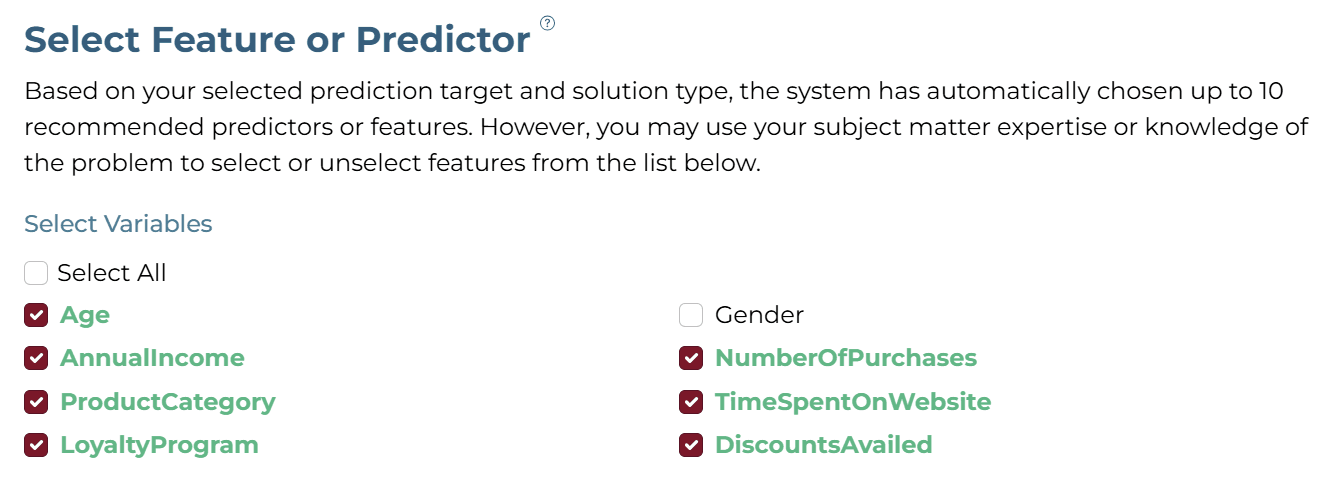
DSelecting Features
Select the most relevant demographic and engagement features.
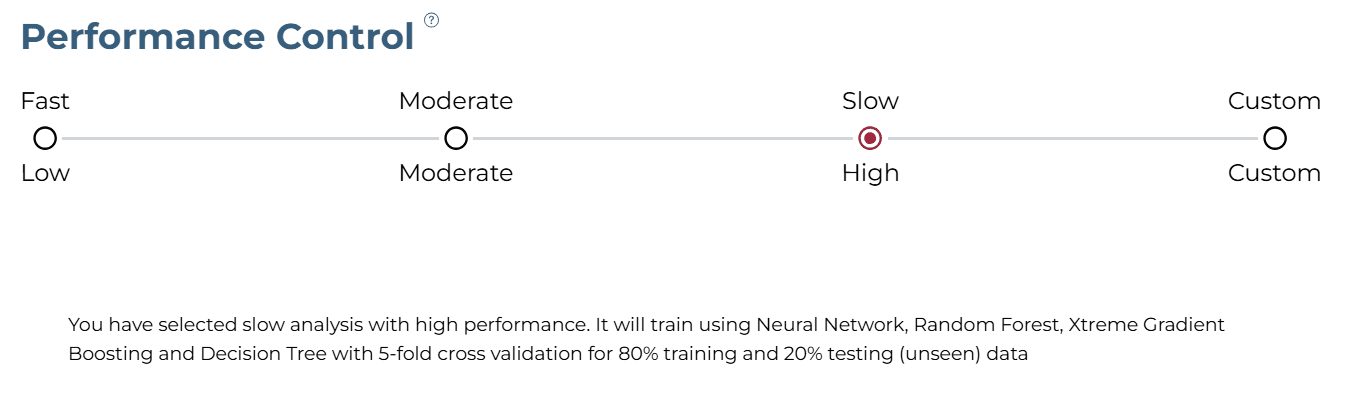
ESelecting Training Level
The "Slow" training level with "High Performance" configuration was selected for thorough analysis.
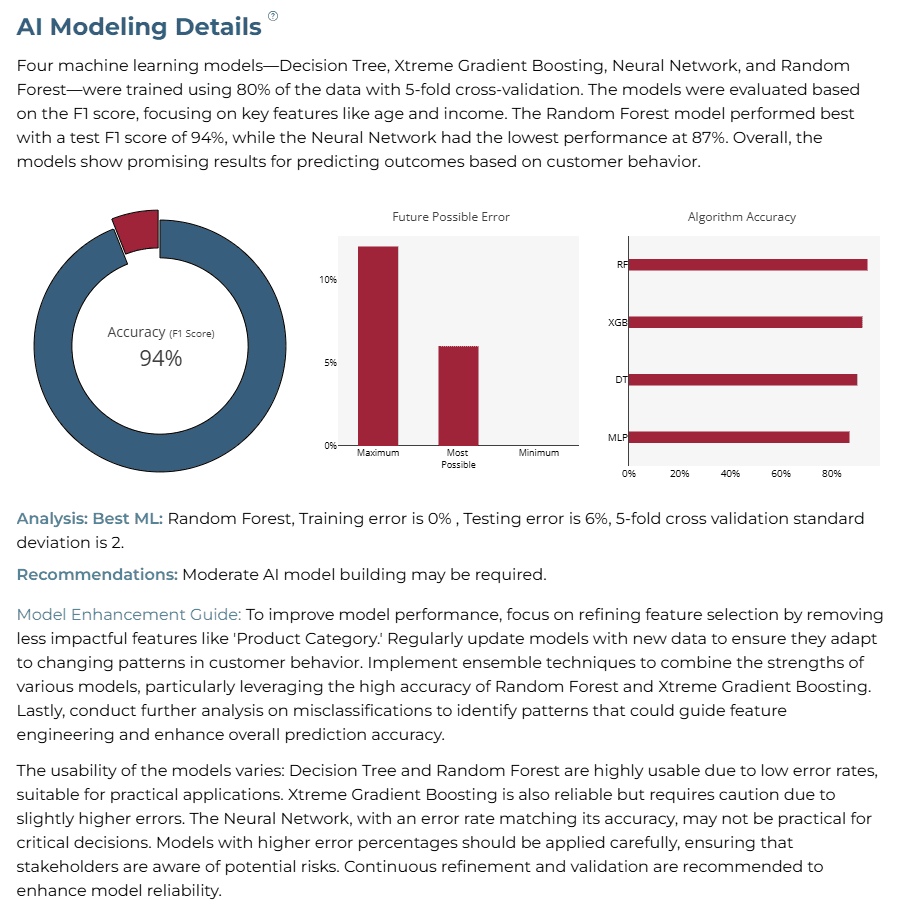
AI Modeling Details
Among the four algorithms, Random Forest is considered the best ML for having the highest accuracy and lowest possible error percentages.
Training Analysis Details
APredicted Target
BROC AUC
CError Trend
DFeature Importance
Finalize Models
Once satisfied with performance, click 'Deploy'. The system saves and deploys models for future demand analysis or production environment.

4AI APPLICATION
Manual Model Building
In Manual Training Mode, users can modify sliders for variables like TimeSpentOnWebsite, NumberOfPurchases, DiscountsAvailed, and LoyaltyProgram. Clicking ‘Get Response’ triggers a tailored output that directly corresponds to the selected feature values.
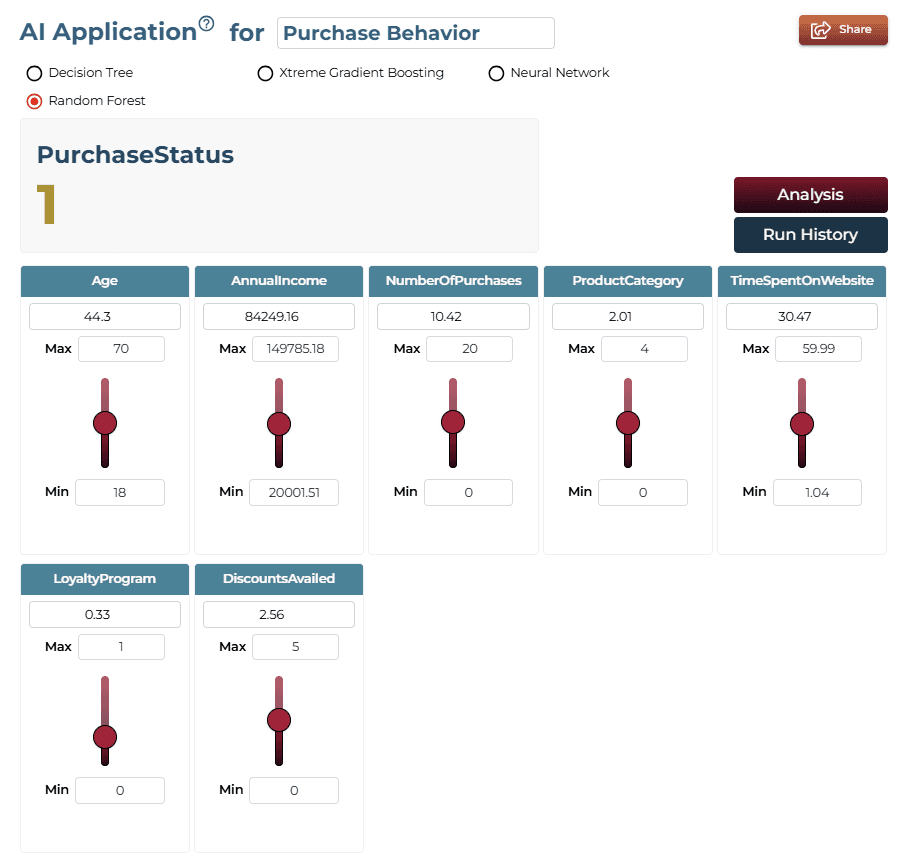
AI Application Demo
Variables like TimeSpentOnWebsite, NumberOfPurchases, DiscountsAvailed, and LoyaltyProgram affect the result significantly. High values for these features yield positive purchase status predictions.
Saving the Project
Save your project by clicking the icon at the bottom left corner of the textbox.

Sharing the Project
Share the application for single on-demand predictions once the analysis is saved.

Interested in similar AI solutions?
Explore our full suite of AI capabilities designed to transform your business operations.