


Predicting Efficiency of Smart Home Devices
Optimizing home energy efficiency through data-driven analysis of energy consumption and environmental factors.
1Overview & Strategic Importance
Problem Statement
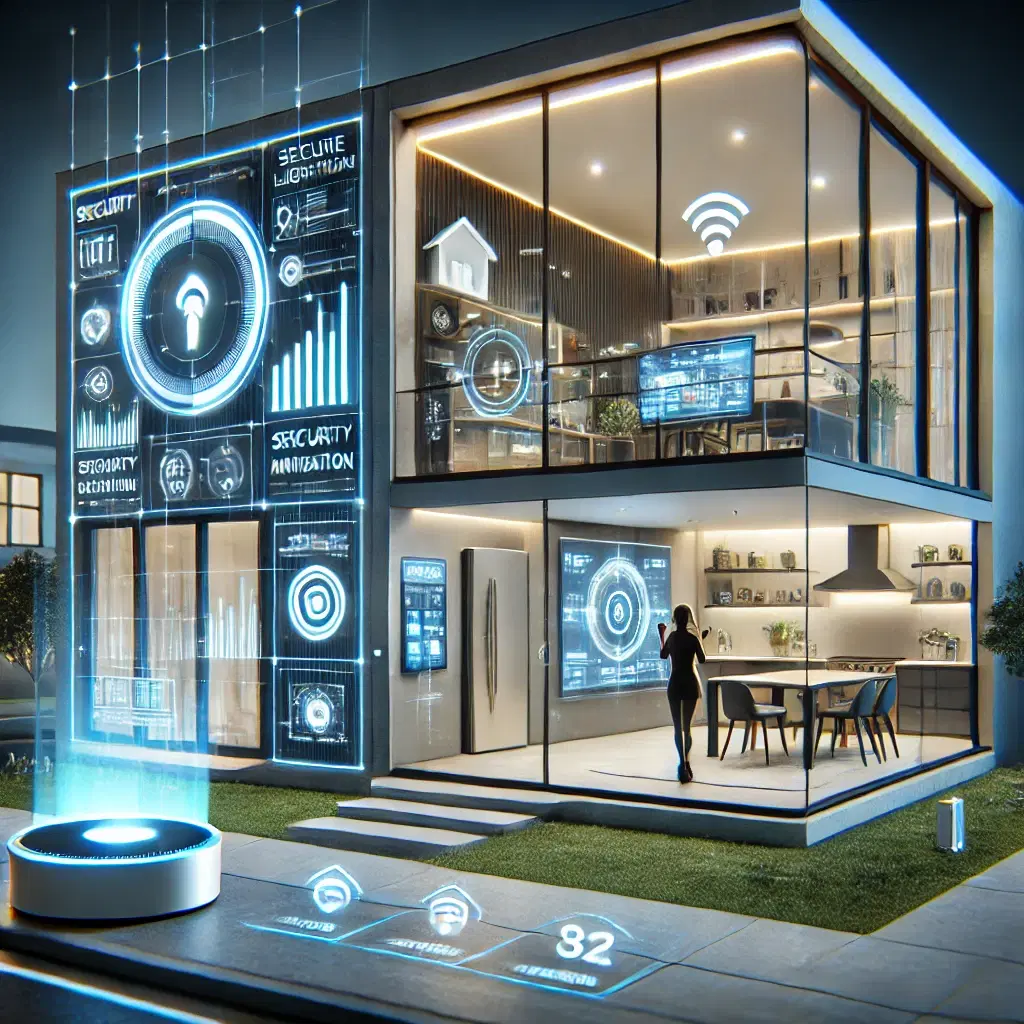
The adoption of smart home devices is rising as users rely on them for convenience and energy savings. However, ensuring the efficiency and reliability of these devices remains a challenge. Factors like energy consumption, usage patterns, and device malfunctions significantly affect user satisfaction. Predicting device efficiency is critical for manufacturers to improve product performance and for users to optimize their energy management.
Required Solutions
- Developing a classification model for device efficiency.
- Identifying factors contributing to device inefficiency.
- Providing actionable insights to optimize usage and maintenance.
- Enhancing user satisfaction by reducing malfunctions.
Solution Objectives
- Perform exploratory data analysis to identify usage trends.
- Build a machine learning model to predict efficiency status.
- Analyze scenarios to maximize home efficiency.
- Optimize the model for real-world IoT application.
Understanding the Problem
IoT devices like thermostats and smart lights offer convenience but their efficiency is influenced by age and malfunctions.
Predictive models help identify inefficiencies early, enabling proactive upgrades and better user guidance for sustainable energy management.
2About the Data
Data Collection
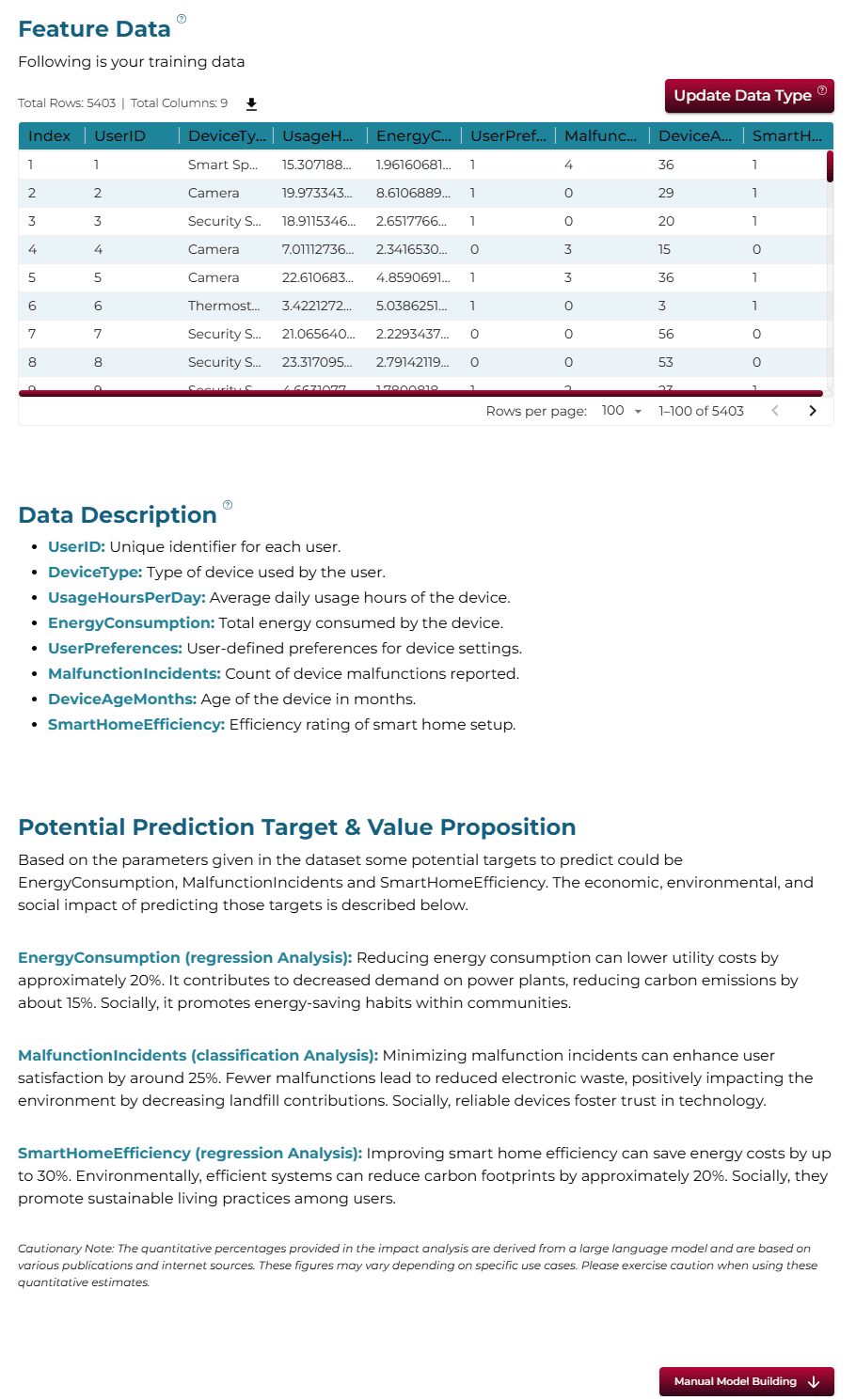
This dataset aggregates smart home metrics including usage patterns, energy consumption rates, and malfunction incidents collected via device logs and energy monitoring systems.
Major Parameters Description
Download Training DataUserIDA unique identifier for each user.
DeviceTypeThe type of smart home device (e.g., Lights, Thermostat).
UsageHoursPerDayAverage hours per day the device is used.
EnergyConsumptionDaily energy consumption of the device (measured in kWh).
UserPreferencesUser preference for device usage (0: Low, 1: High).
MalfunctionIncidentsNumber of malfunction incidents reported for the device.
DeviceAgeMonthsAge of the device in months.
SmartHomeEfficiencyEfficiency status of the device (0: Inefficient, 1: Efficient).
3Using iDareAI
Guided Mode Initialization
AUploading Dataset
Click on the **'Upload CSV or Excel Data'** button → Select a source for the dataset → Upload `home_efficiency_train.csv`. The system automatically analyzes the file, extracts column descriptions, and identifies the top value-adding targets for prediction.
BChoosing Analysis Mode
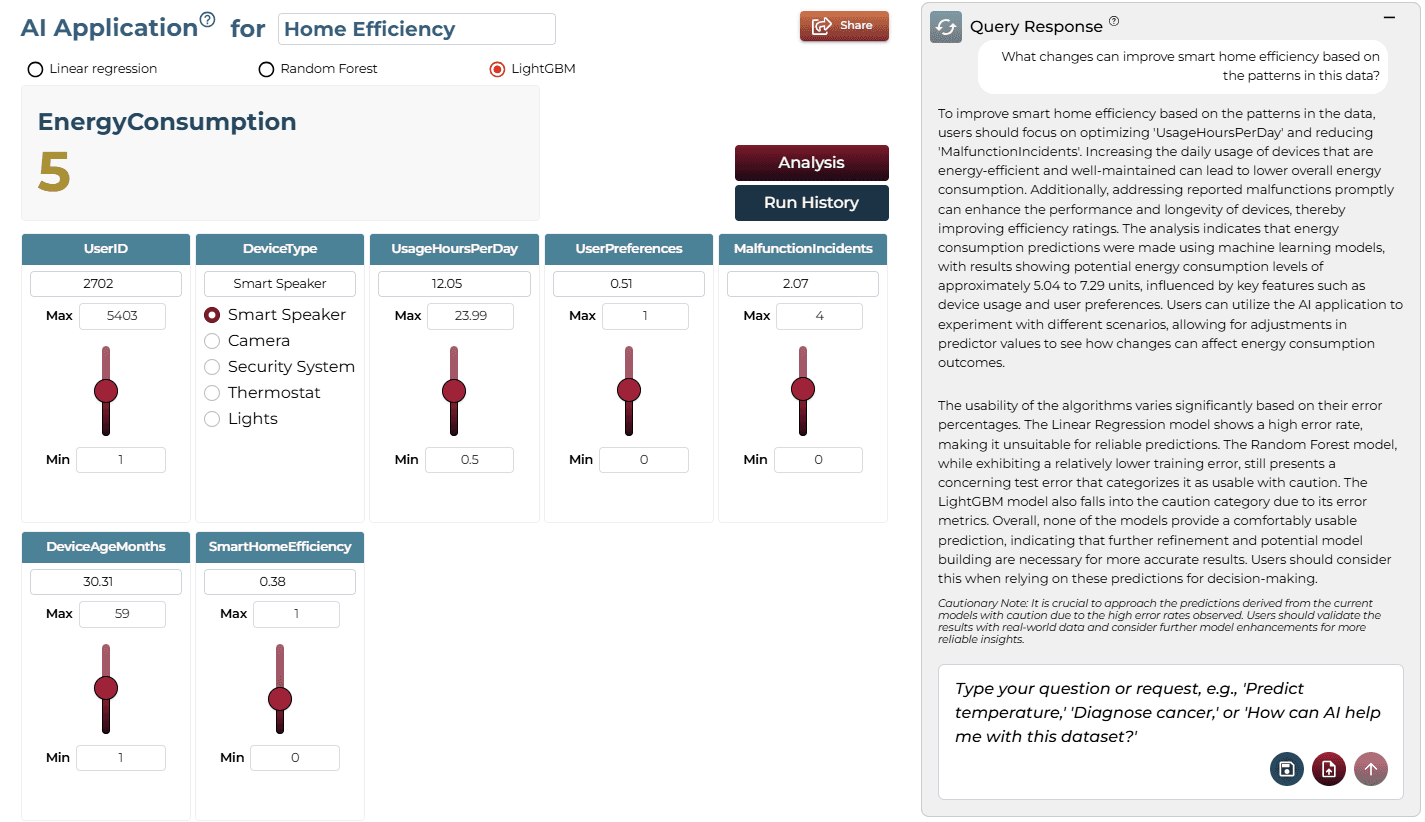
- What changes can improve smart home efficiency based on the patterns in this data?
- Which factors in the data have the biggest impact on smart home efficiency?
Operation Using Autonomous Guided Mode
AQuery Response
Optimizing `UserPreferences` and reducing `EnergyConsumption` are key. Customizing device settings to align with personal habits can significantly increase efficiency ratings.
BAI Application
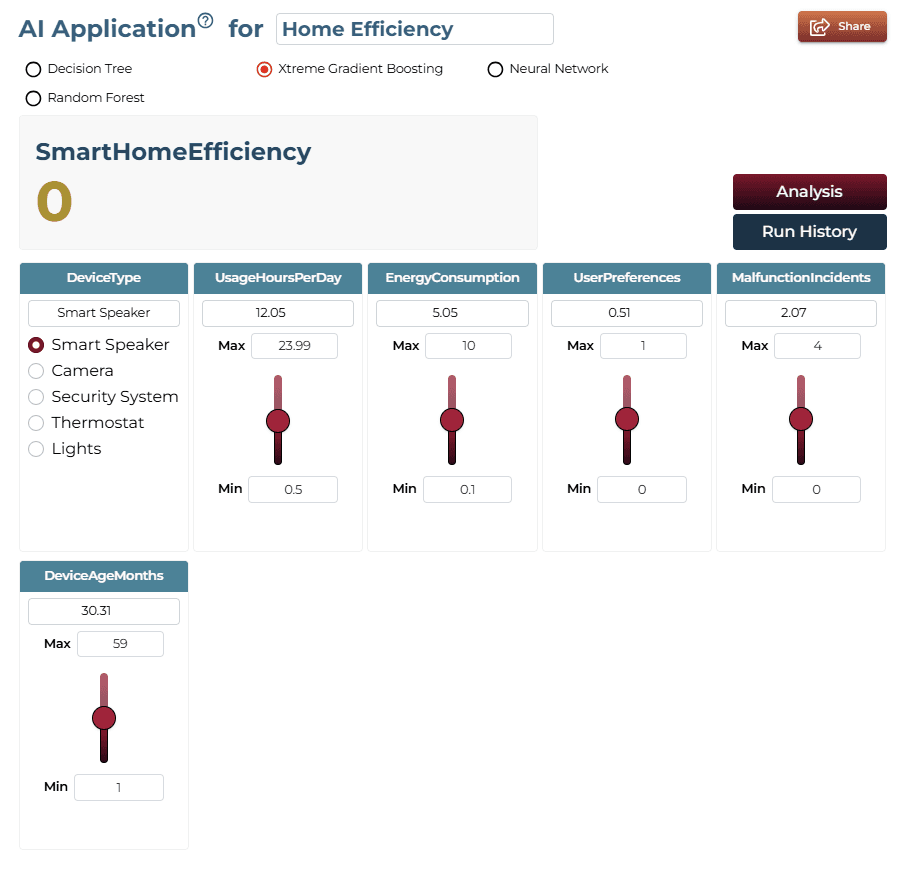
The dynamic system lets users test different scenarios by adjusting variables like energy consumption and see how it impacts efficiency without technical expertise.
Model Fine-Tuning/Manual Model Building
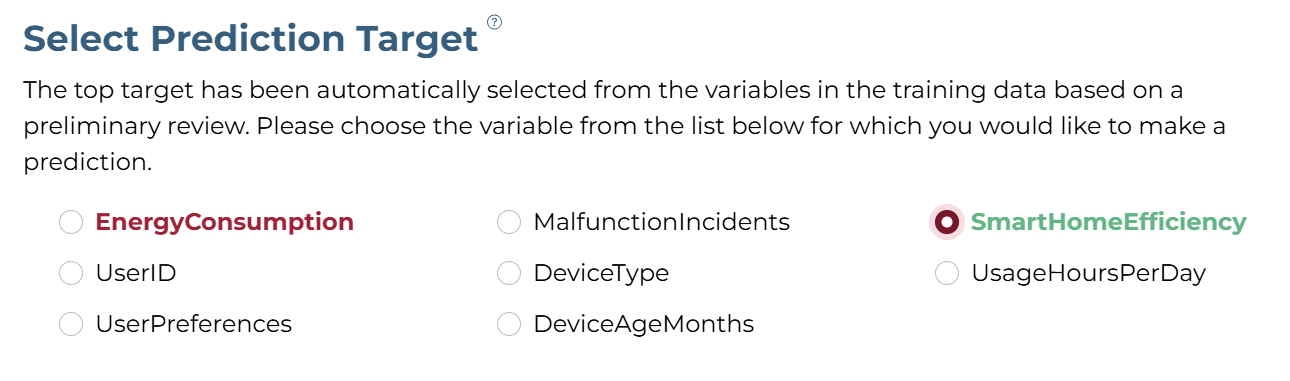
ASelecting Prediction Target
'SmartHomeEfficiency' column was selected as the target.
BSelecting Analysis Type
The analysis target is a categorical column. Hence, the 'Classification' analysis type is selected.

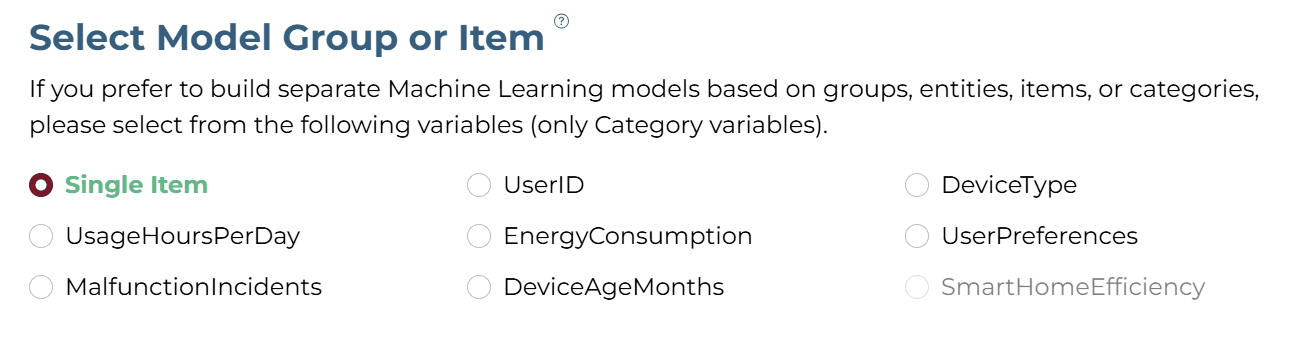
CSelecting Model Group/Item
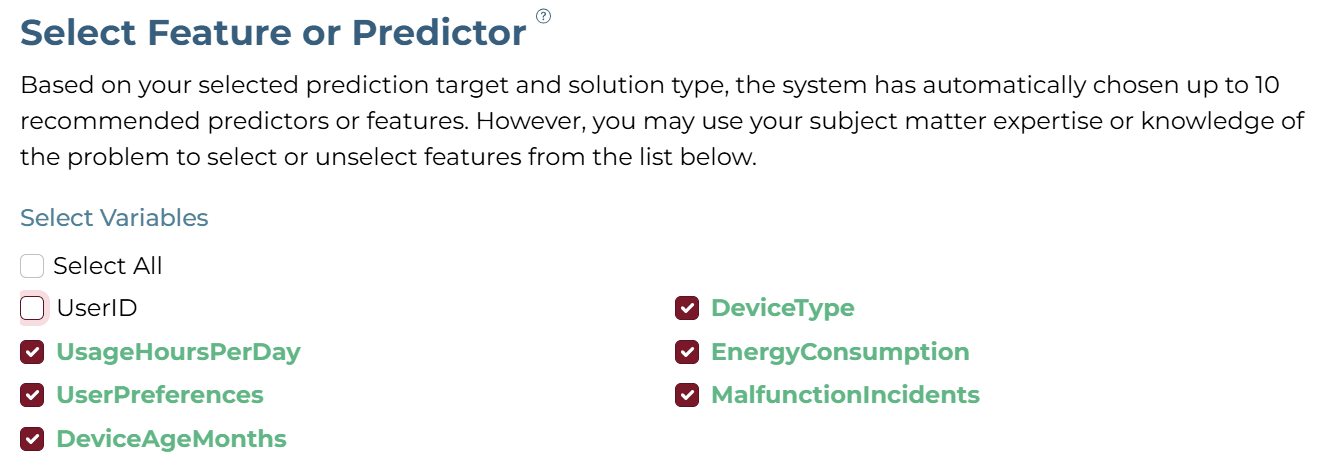
DSelecting Features
Select relevant features from the device logs.
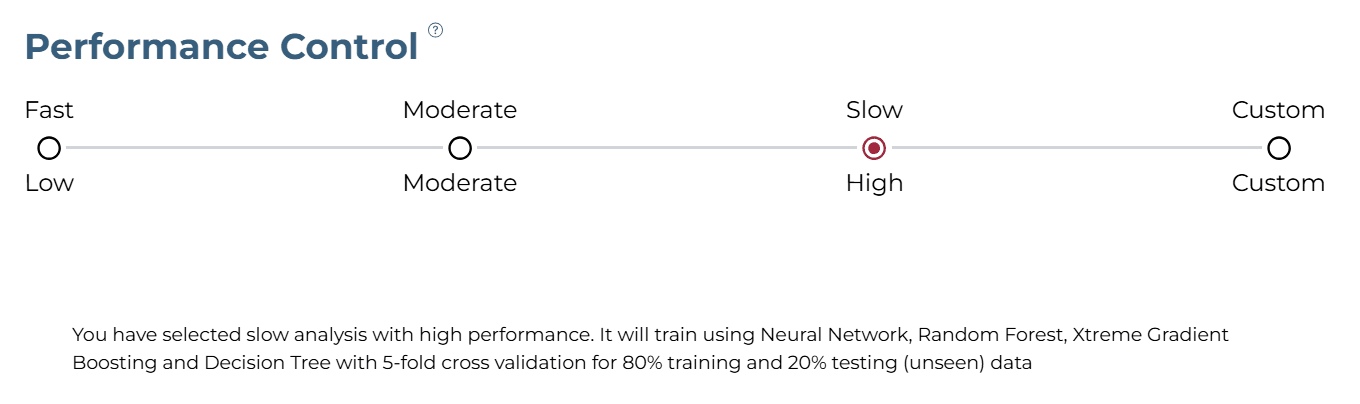
ESelecting Training Level
The "Slow" training level with "High Performance" configuration ensures accurate analysis of IoT patterns.
AI Modeling Details
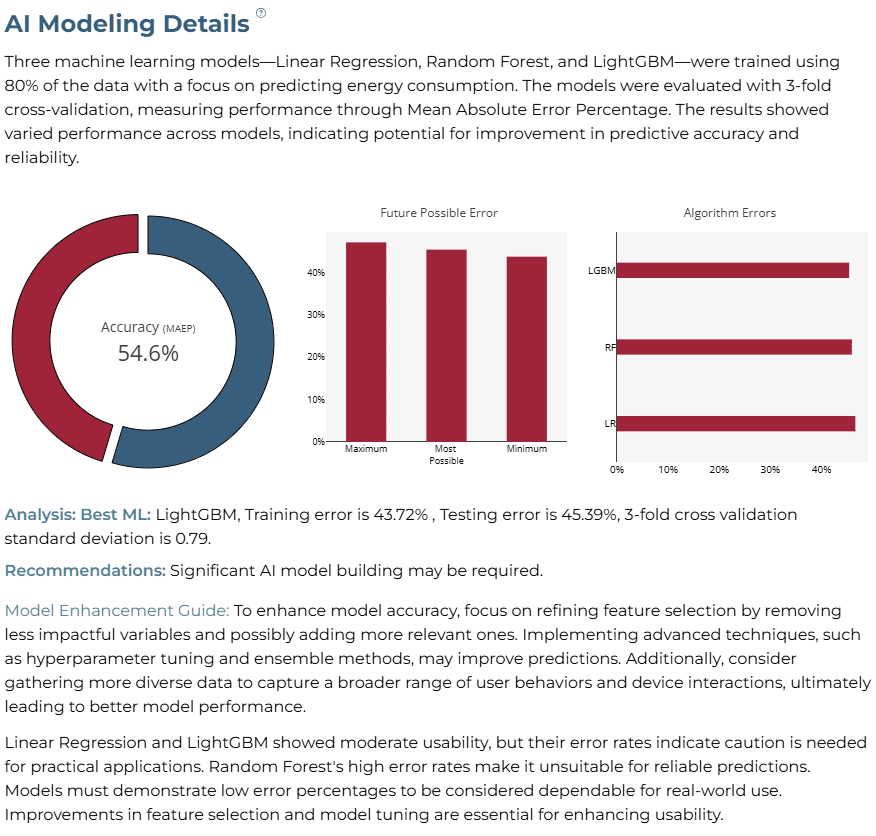
Random Forest is considered the best ML model for predicting device efficiency with the highest accuracy.
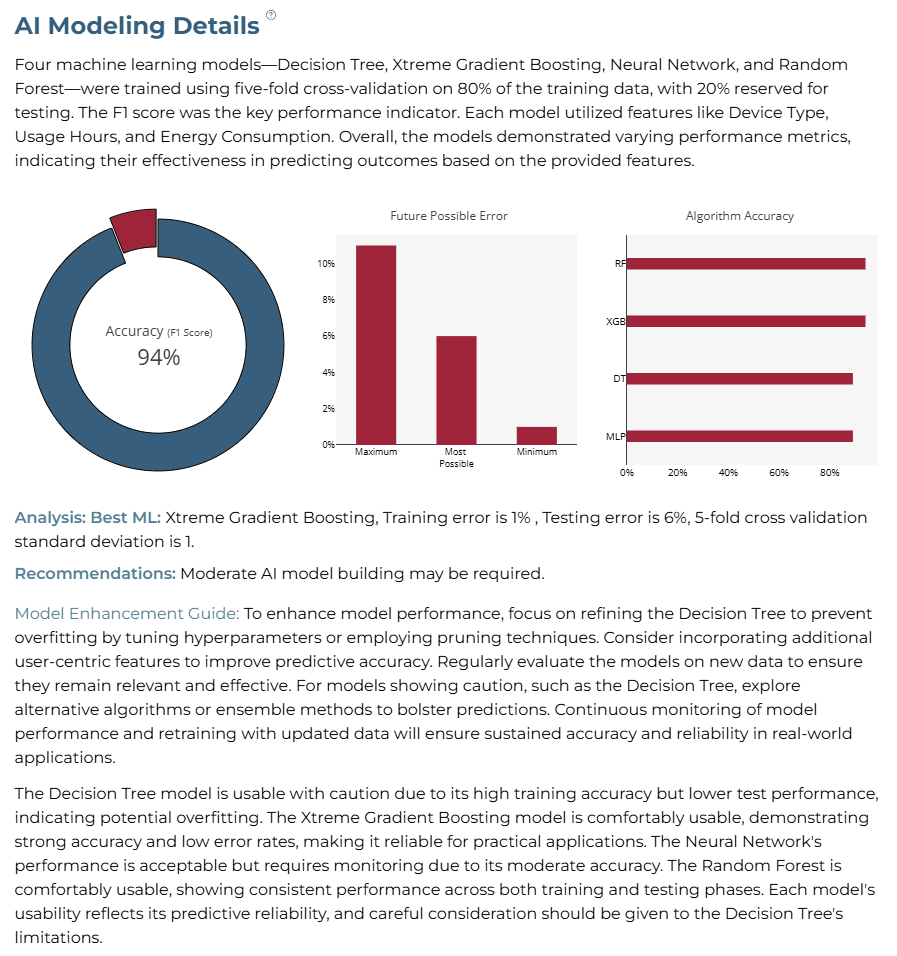
Training Analysis Details
APredicted Target
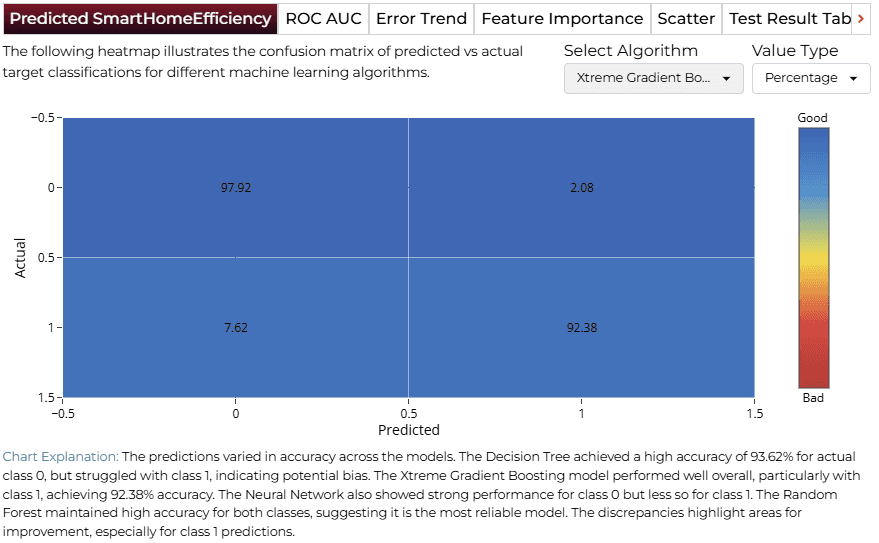
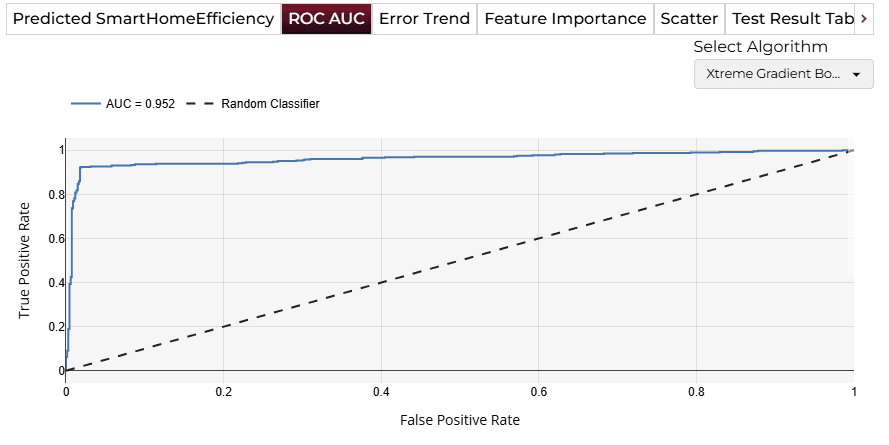
BROC AUC
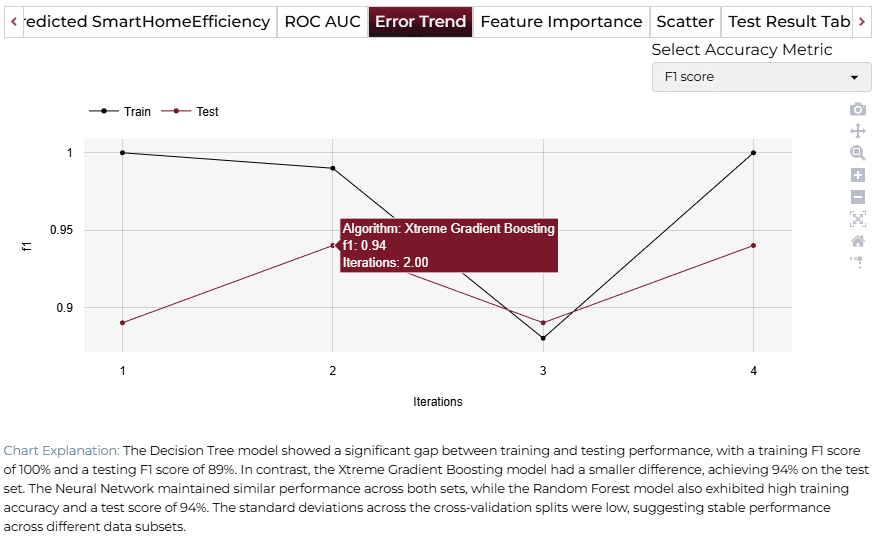
CError Trend
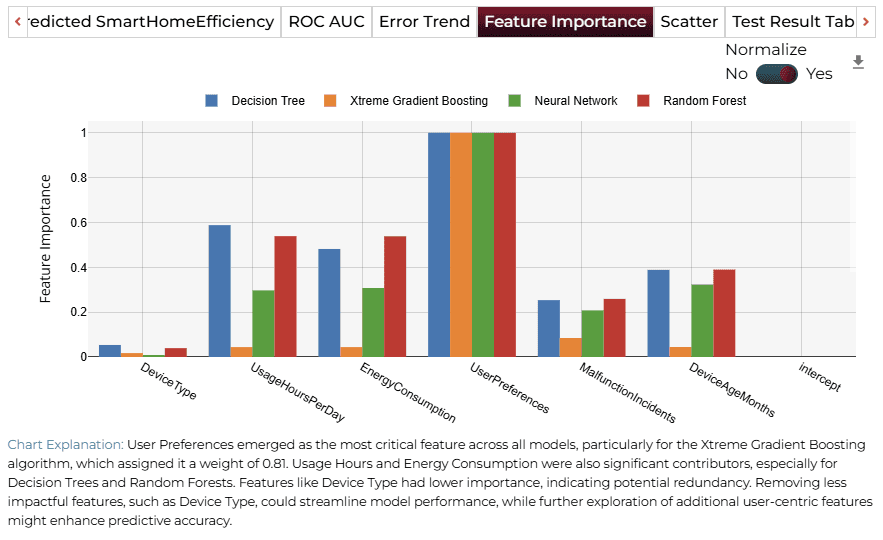
DFeature Importance
Finalize Models
Train until accuracy is optimal and then click 'Deploy'.

4AI APPLICATION
Manual Model Building
Modify sliders for `UserPreferences`, `UsageHoursPerDay`, `EnergyConsumption`, and `DeviceAgeMonths` to see real-time impact on predicted efficiency.
AI Application Demo
High values of UserPreferences and low values of EnergyConsumption generally yield to efficient smart home status.
Saving the Project
Save your project by clicking the icon at the bottom left corner of the textbox.

Sharing the Project
Share the application for single on-demand predictions once the analysis is saved.

Interested in similar AI solutions?
Explore our full suite of AI capabilities designed to transform your business operations.