


Predicting Wind Turbine Failures for Proactive Maintenance
Accurately predicting wind turbine failures is crucial for minimizing downtime, optimizing maintenance schedules, and ensuring efficient energy production in renewable power systems.
1Overview & Strategic Importance

Problem Statement
Predicting wind turbine failures is crucial for ensuring operational efficiency, reducing maintenance costs, and preventing unexpected downtimes in wind farms. Forecasting failures accurately is challenging due to mechanical stress, environmental conditions, and sensor anomalies. Addressing this allows for proactive maintenance and enhances turbine longevity.
Required Solutions
- ML models to predict failures based on sensor data.
- Detecting early signs of vibrations and torque stress.
- Optimizing maintenance scheduling for wind farm operators.
Solution Objectives
- Identify failure trends via exploratory data analysis.
- Develop classification models for real-time sensor data.
- Pinpoint factors like overheating and mechanical wear.
- Reduce operational risks and downtime.
Understanding the Problem
Complex environments make turbines susceptible to failure. Key variables like rotor speed and blade stress are critical.
AI allows for predictive maintenance, reducing costs and extending the lifespan of wind energy systems through proactive anomaly detection.
2About the Data
Data Collection
Predictive maintenance uses sensor information to measure degradation. The U.S. Department of Energy guide emphasizes that failure patterns are predictable. This dataset collects data on environmental factors (temp, humidity, wind) and additional features (gearbox, blades, tower).
Major Parameters Description
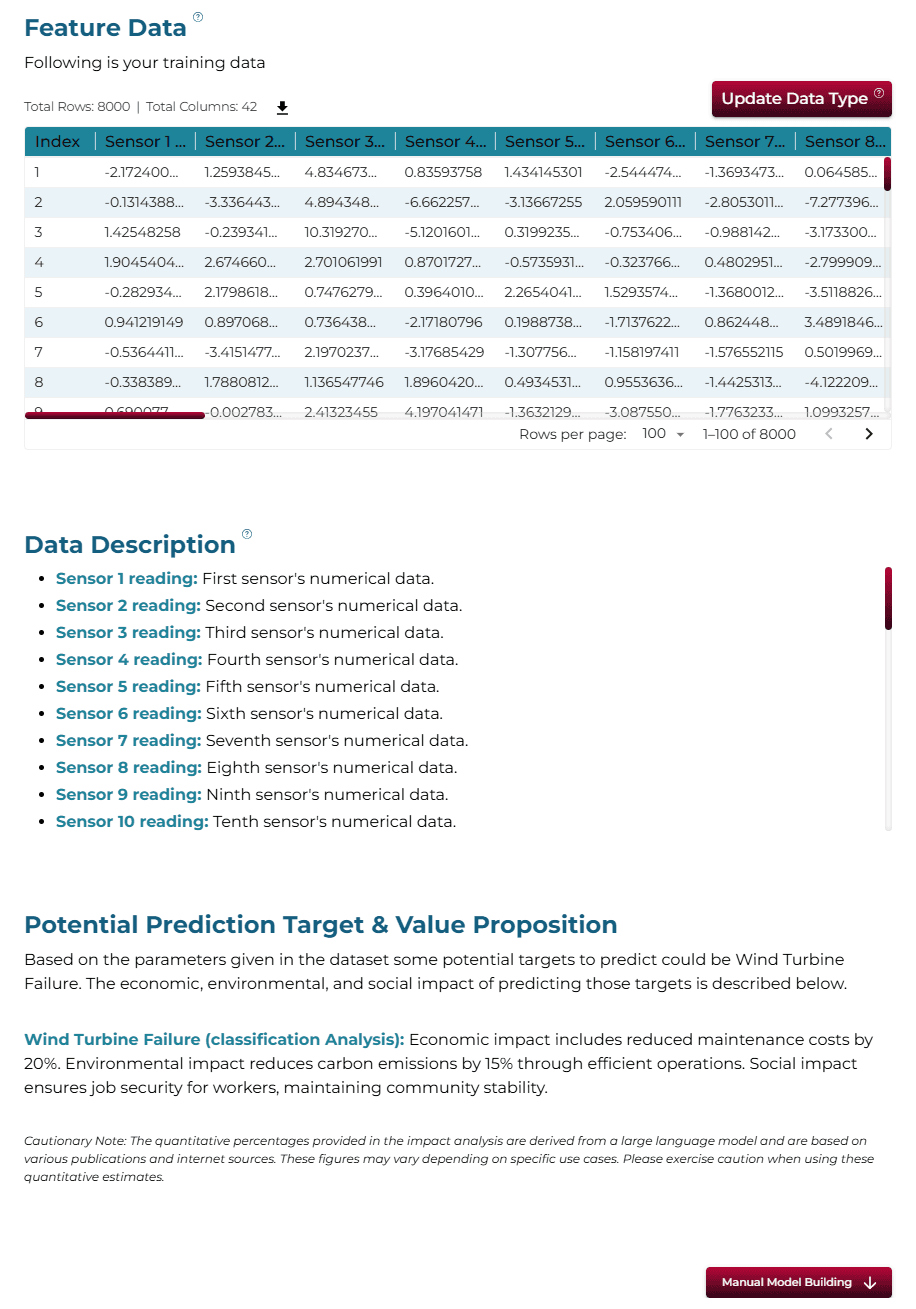
Download Training DataSensor 1 readingReal-time sensor data capturing operational metrics.
Sensor 2 readingMonitoring vibration levels in component 2.
Sensor 3 readingWind speed variations impacting efficiency.
Sensor 4 readingTemperature fluctuations in components.
Sensor 5 readingMechanical stress indicators on blades.
Sensor 6 readingGearbox torque and rotational speed.
Sensor 7 readingGenerator output efficiency monitoring.
Sensor 8 readingPower generation and load balancing.
Sensor 9 readingOil temperature and lubrication system health.
3Using iDareAI
Guided Mode Initialization
AUploading Dataset
Click on the **'Upload CSV or Excel Data'** button → Select a source for the dataset → Upload `turbine_failure_train.csv`. The system automatically identifies the top value-adding targets and highlights economic and operational impacts.
BChoosing Analysis Mode
- What are the most important factors in wind turbine failure prediction?
- How can turbine failures be accurately predicted ahead of time?
Operation Using Autonomous Guided Mode
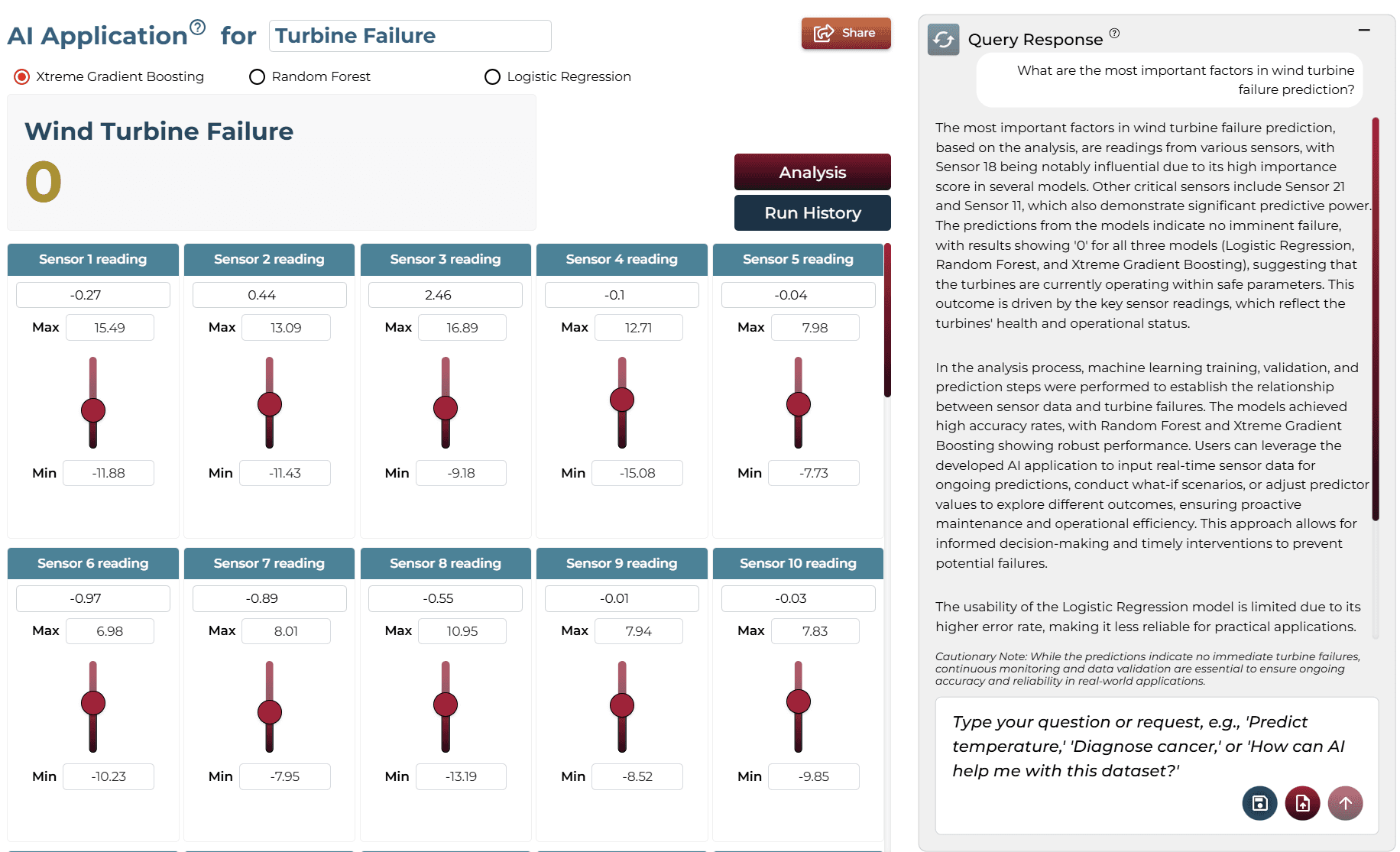
AQuery Response
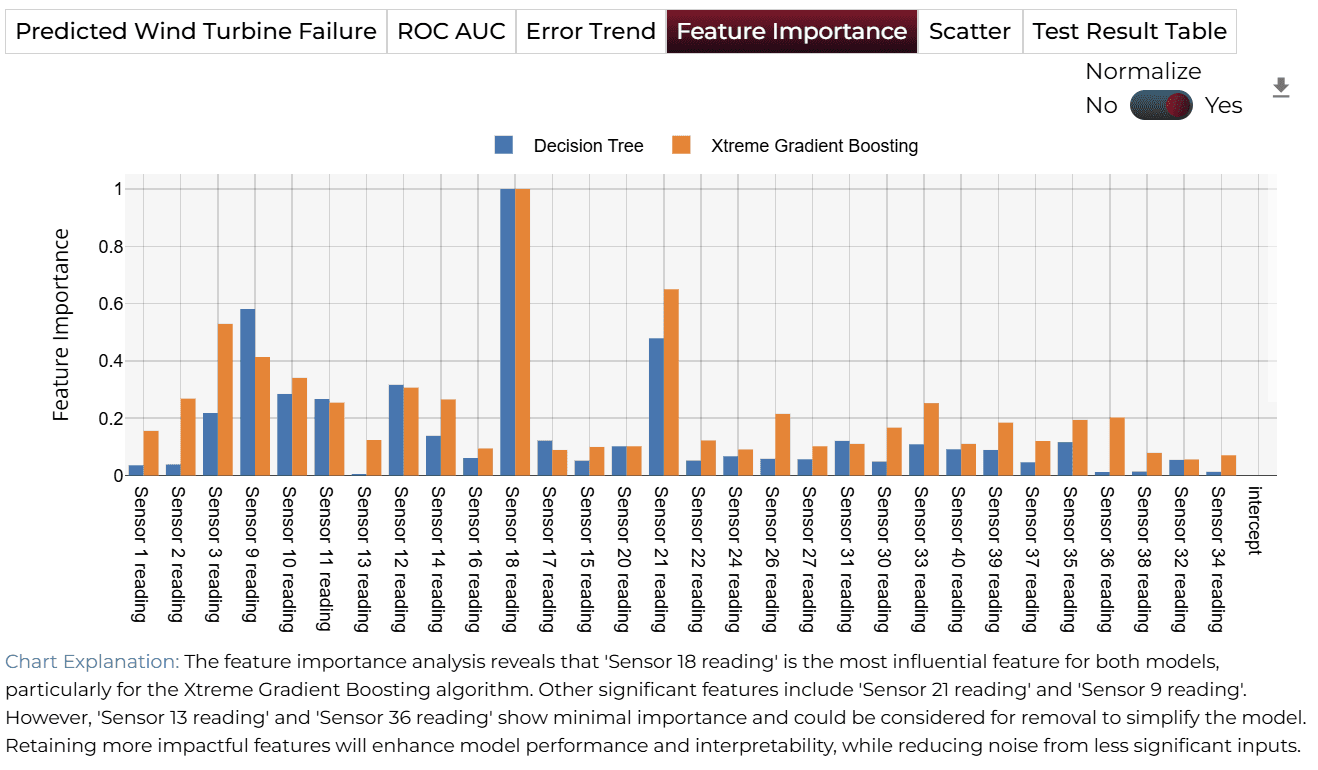
The most important factors include Sensor 18, Sensor 21, and Sensor 11 readings. Current results show '0' (no failure), suggesting turbines are operating safely. XGB showed the best usability with a low error rate.
BAI Application
Model Fine-Tuning/Manual Model Building
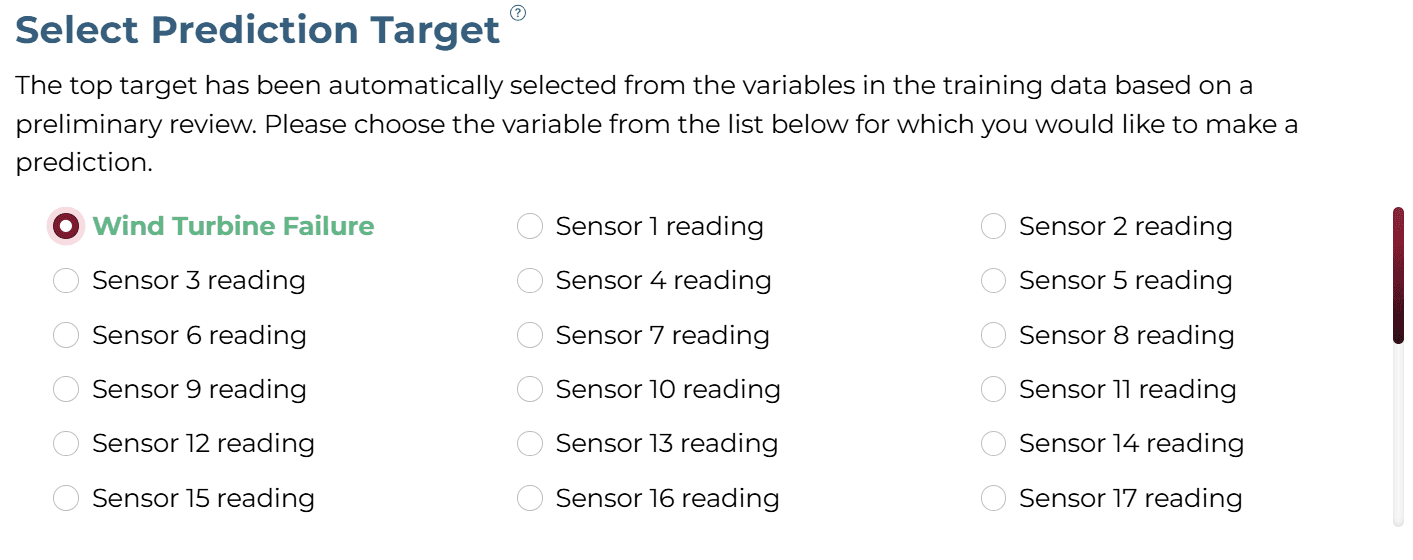
ASelecting Prediction Target
Failure indicator column was selected as the target.
BSelecting Analysis Type
Classification analysis type was selected for failure probability.

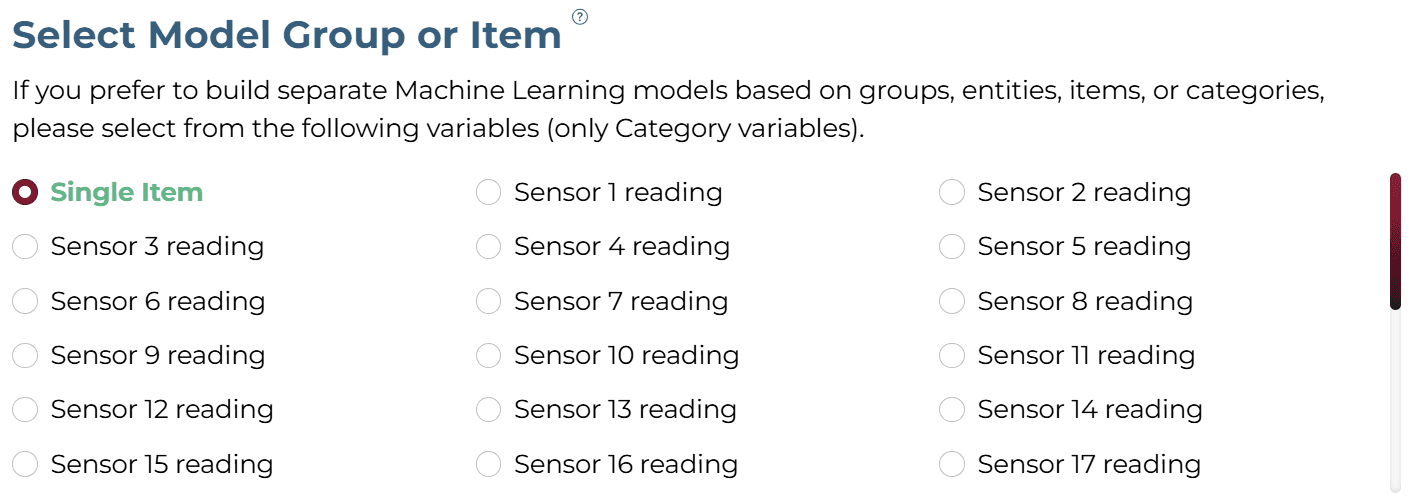
CSelecting Model Group/Item
DSelecting Features
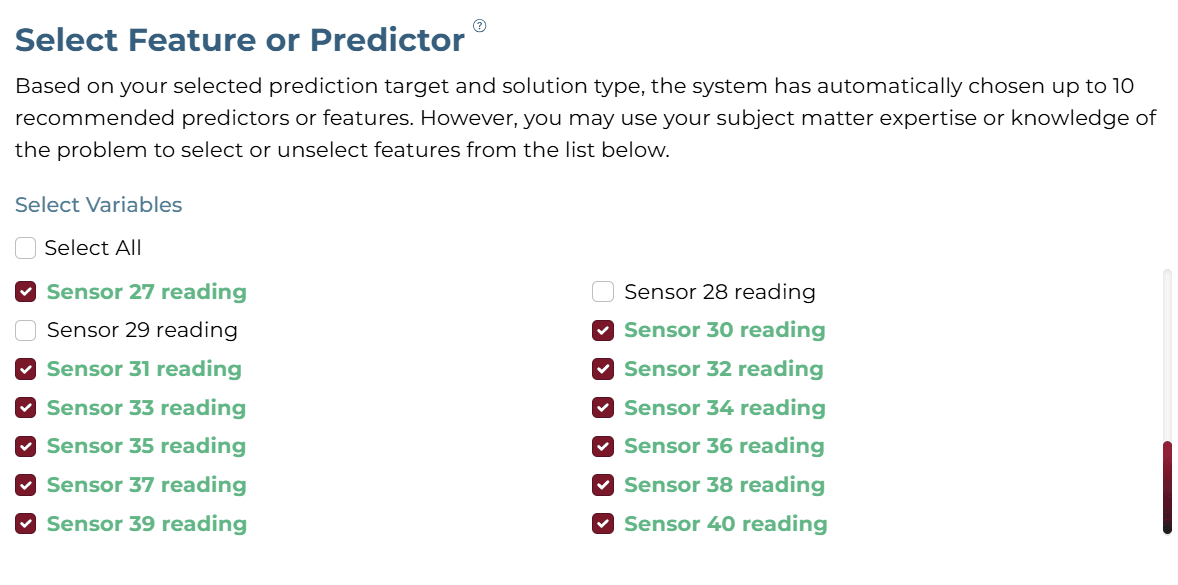
Selected 25 key sensors (1, 2, 3, 9-16, 18, 20-22, 24, 27, 30-33, 36-38, 40).
ESelecting Training Level
Moderate training level with XGBoost and Decision Tree.

AI Modeling Details
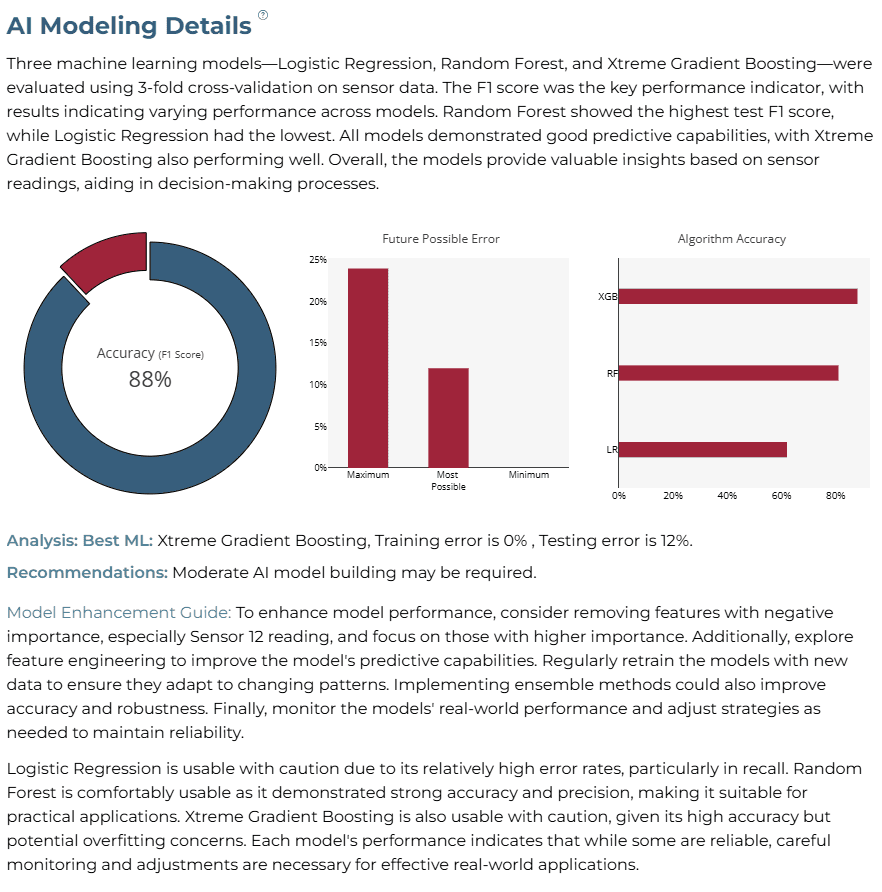
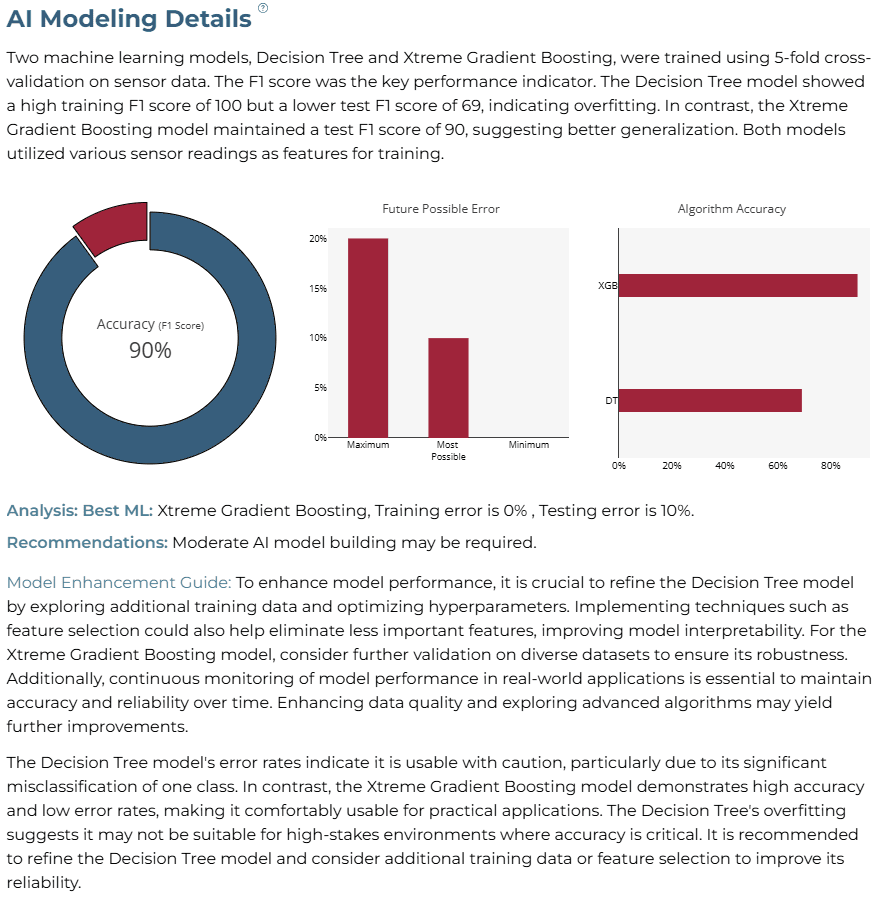
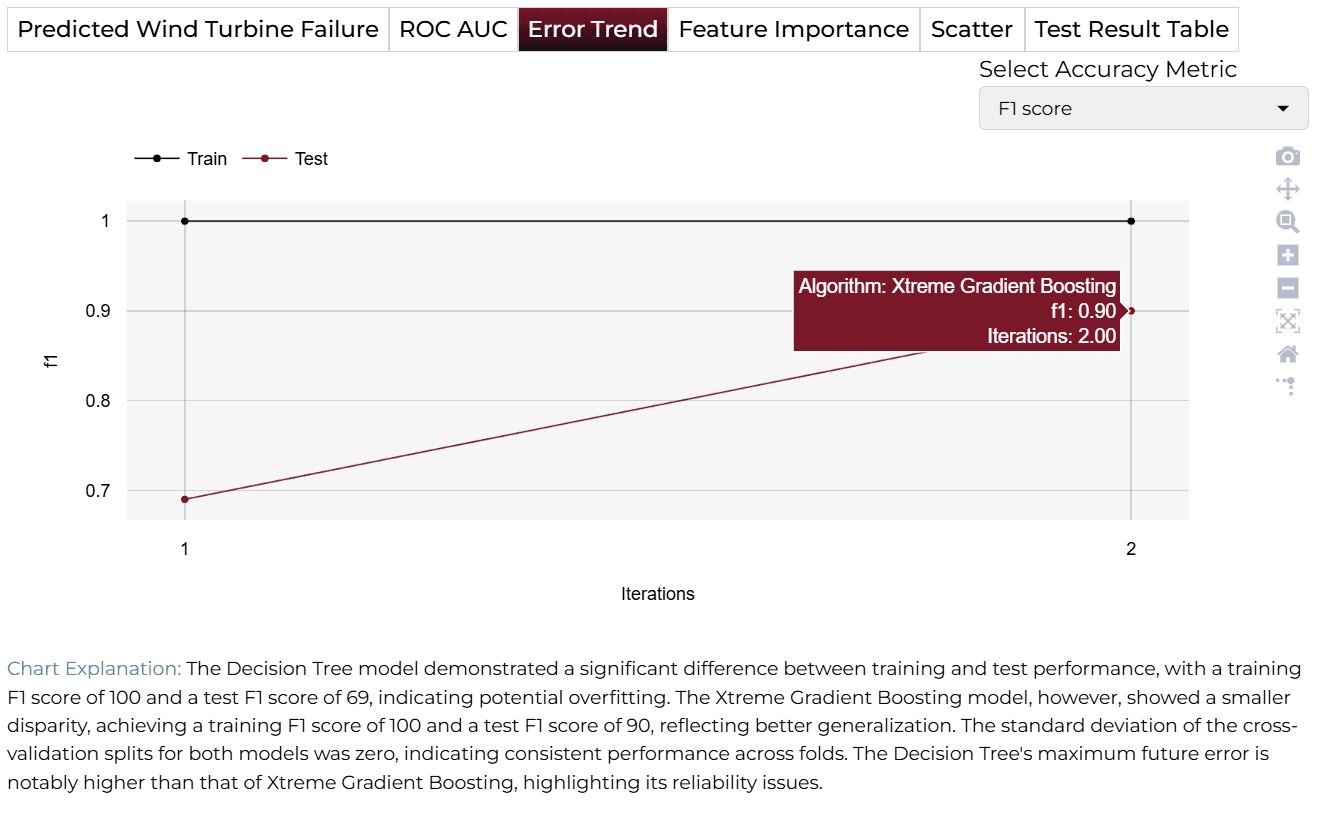
XGBoost maintained a test F1 score of 90. Decision Tree showed perfect training accuracy (100) but lower test accuracy (69), indicating overfitting. XGBoost is preferred for generalization.
Training Analysis Details
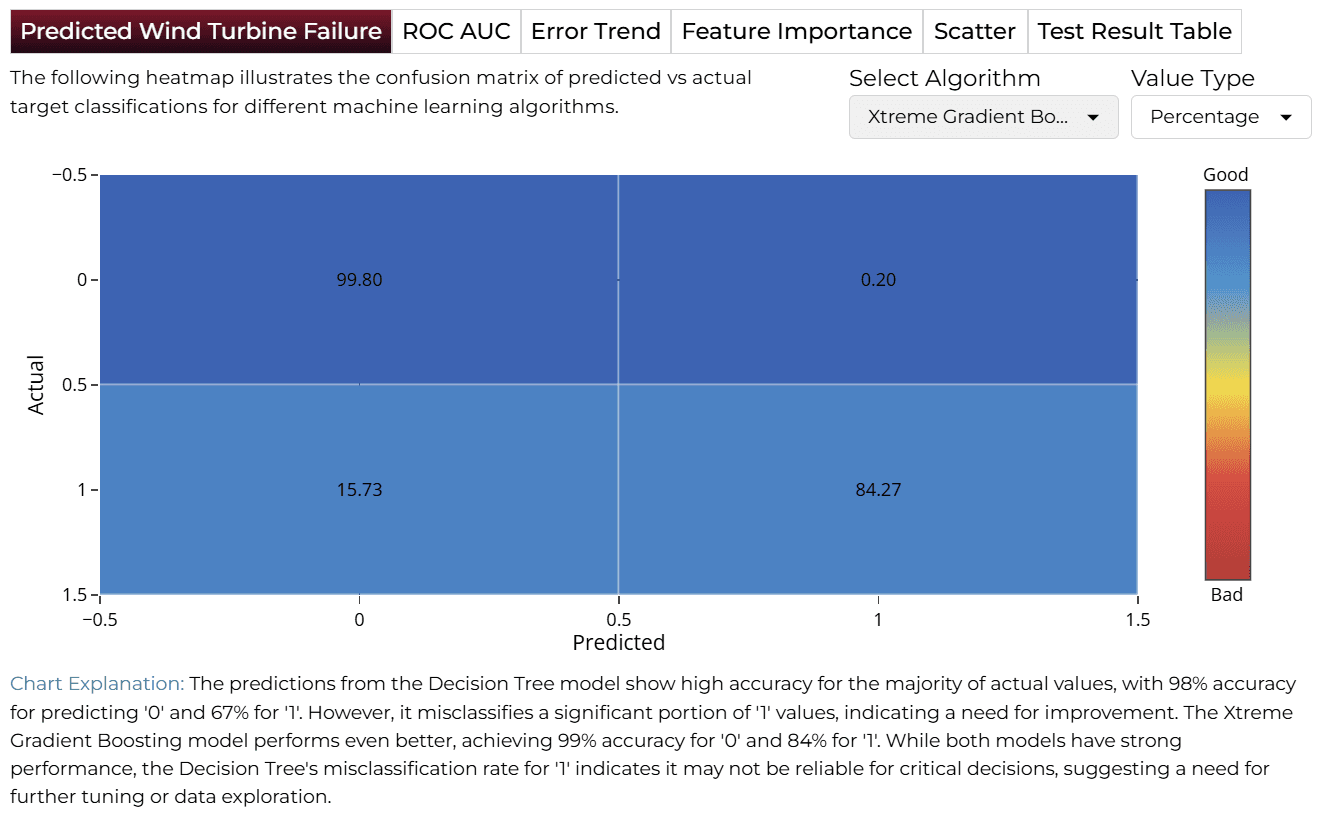
APredicted Target (Confusion Matrix)
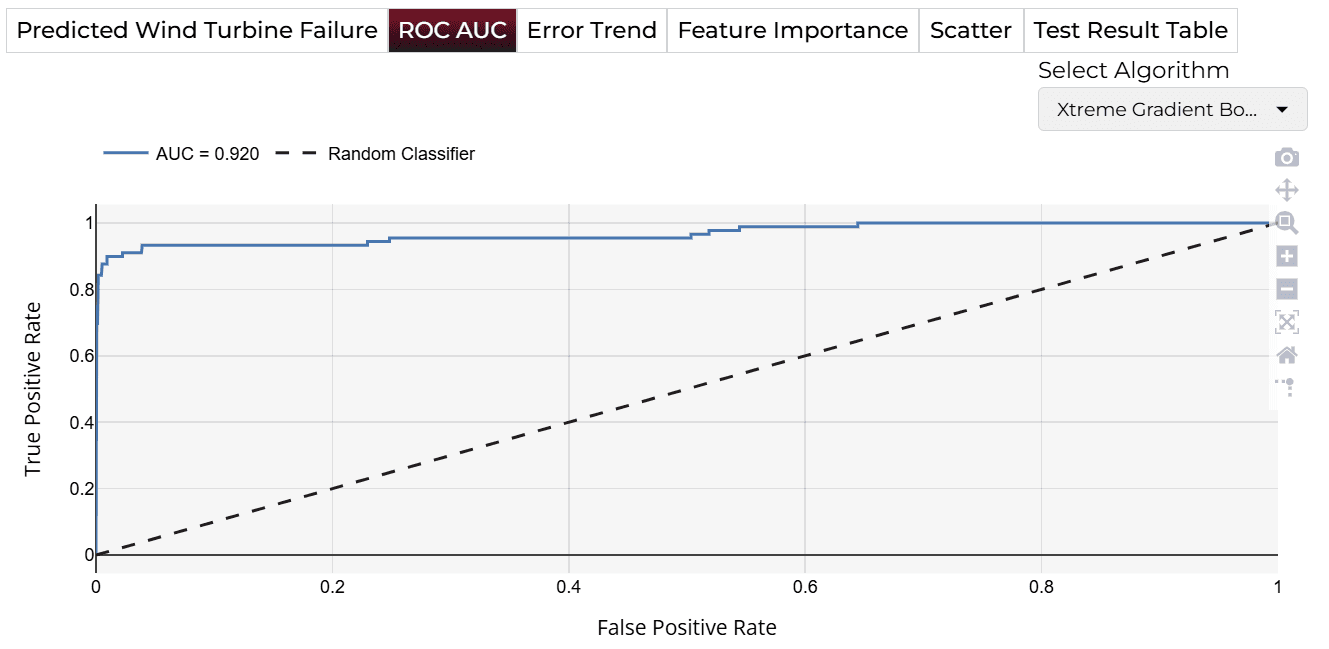
BPredicted Trend (ROC)
CError Trend
DFeature Importance
4AI APPLICATION
Manual Model Building
Adjust sliders for Sensor 1, Sensor 9, and Sensor 15 to explore failure scenarios. By modifying these and clicking ‘Analysis,’ the application dynamically updates the predicted failure outcome.
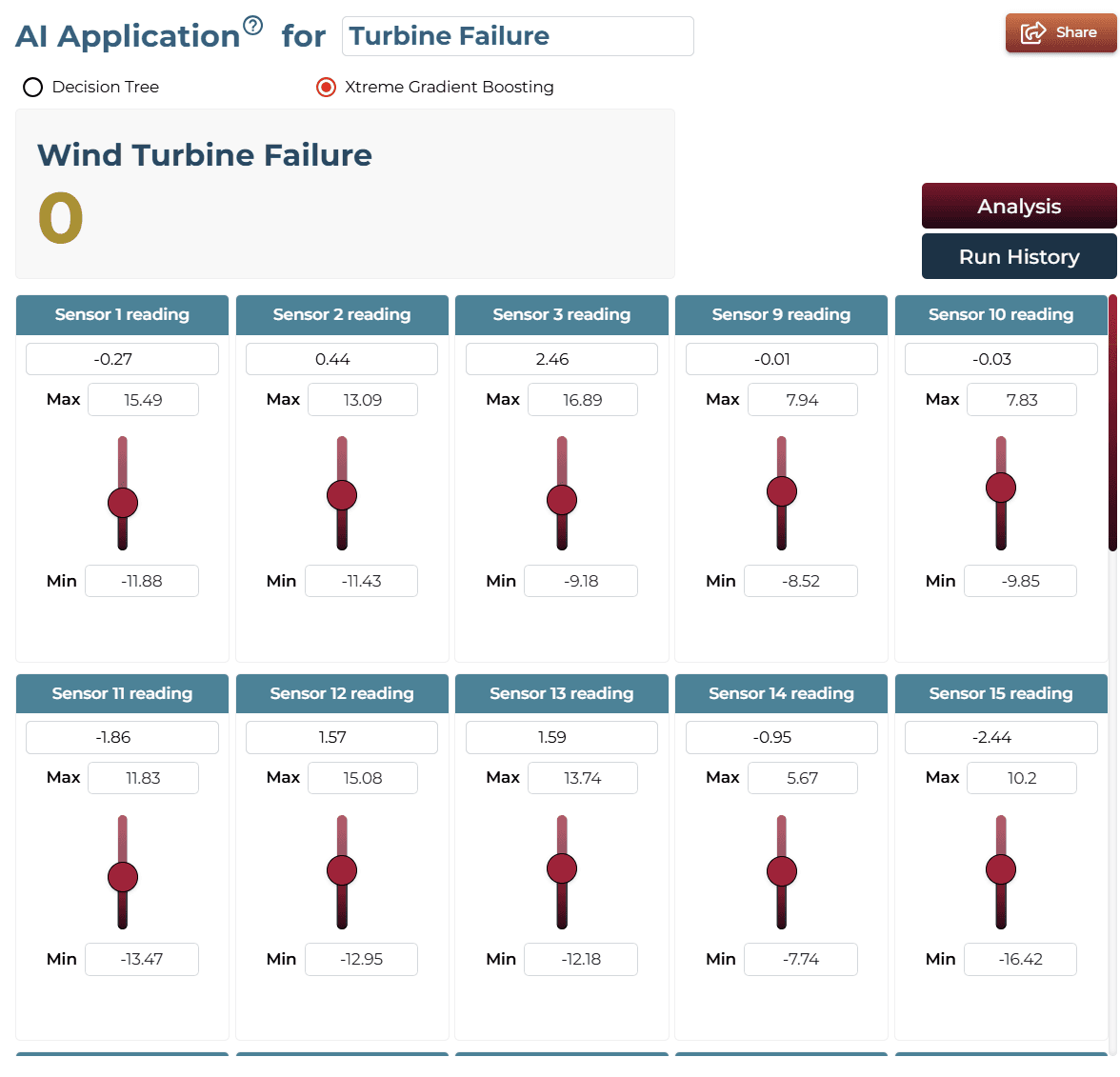
AI Application Demo
Observe failure risk in real-time by adjusting critical sensor variations.
Saving the Project
Save your turbine analysis by clicking the icon at the bottom left corner of the interface.

Sharing the Project
Generate shareable links once the project is saved for on-demand failure assessment.

Interested in similar AI solutions?
Explore our full suite of AI capabilities designed to transform your business operations.