


Predicting Wind Energy Generation for Efficient Power Management
Optimizing renewable energy production by predicting wind energy generation based on meteorological conditions.
1Overview & Strategic Importance

Problem Statement
The efficient generation of wind energy depends on various atmospheric conditions such as wind speed, air temperature, and pressure. Traditional forecasting methods often rely on manual analysis, which can be insufficient in dynamic weather. A predictive model capable of forecasting wind power generation based on meteorological parameters can enhance energy planning, reduce operational risks, and improve efficiency in wind energy systems.
Required Solutions
- Analyzing historical wind energy data to identify key factors affecting generation.
- Developing a predictive model to estimate power generated by systems based on atmospheric conditions.
- Supporting decision-making in energy management and resource planning for wind farms.
Solution Objectives
- Perform exploratory data analysis to understand the relationship between weather and output.
- Develop a regression-based model to predict energy output based on atmospheric composition.
- Provide insights that assist grid operators in optimizing wind energy utilization.
Understanding the Problem
Wind power generation is influenced by multiple factors including wind speed, temperature, and direction.
Machine learning models help forecast generation by identifying patterns in meteorological data. While enhancing planning, models should be complemented with real-time monitoring.
2About the Data
Data Collection
This dataset was taken from an active wind turbine's SCADA system in Turkey, recording speed, direction, and power at 10-minute intervals. It represents high-fidelity operational data for energy prediction.
Major Operational Parameters
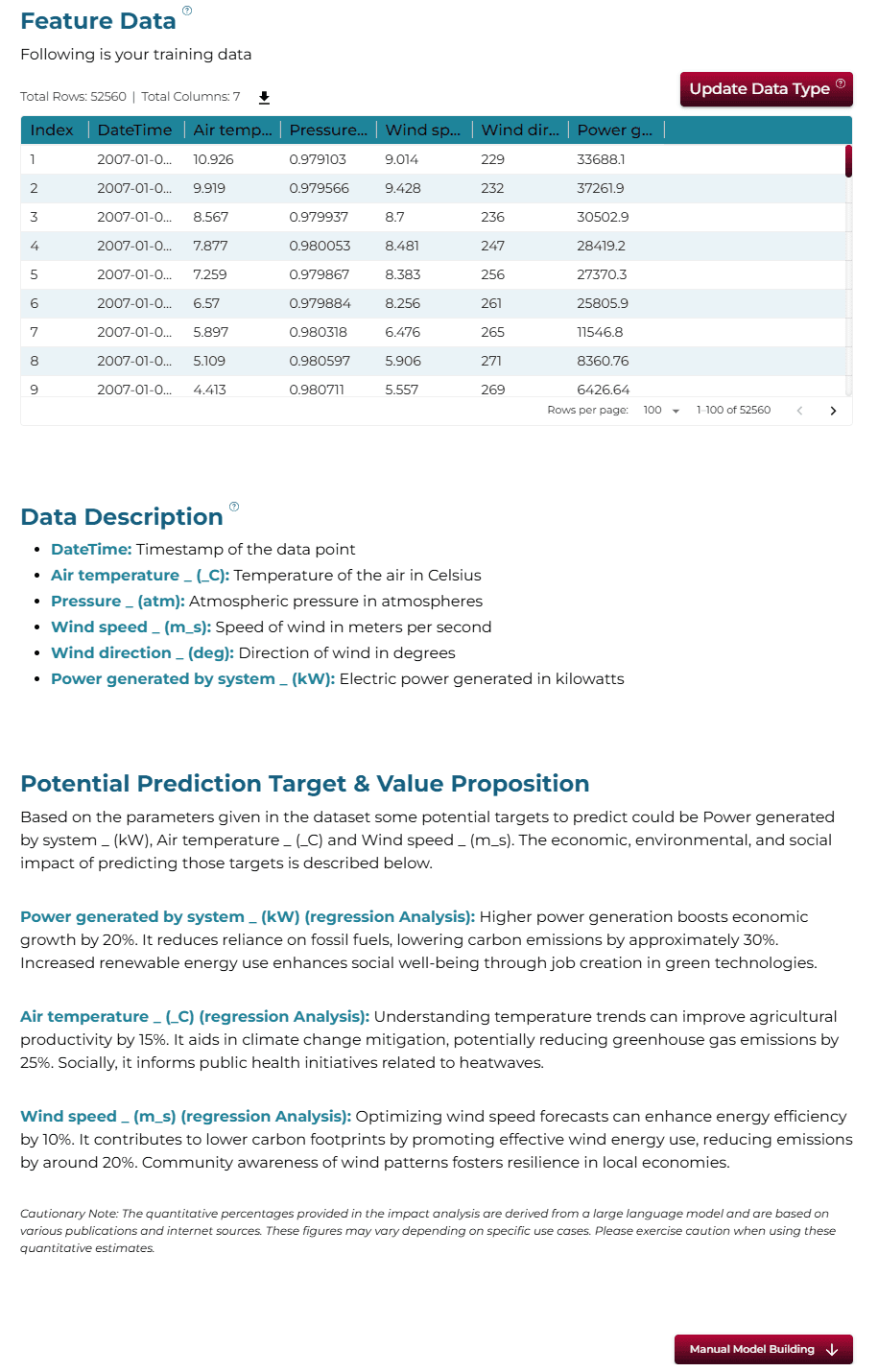
Download Training DataDateTimeThe timestamp indicating the specific date and time at which the measurement was recorded.
Air temperature | (°C)The measured temperature of the air in degrees Celsius, which can influence wind energy generation.
Pressure | (atm)The atmospheric pressure in atmospheres (atm), affecting air density and wind behavior.
Wind speed | (m/s)The speed of the wind in meters per second, a critical factor in determining wind power generation efficiency.
Wind direction | (deg)The direction of the wind in degrees, which helps in assessing wind patterns and optimizing turbine positioning.
Power generated by system | (kW)The amount of power generated by the wind energy system in kilowatts, serving as the target variable for prediction.
3Using iDareAI
Guided Mode Initialization
AUploading Dataset
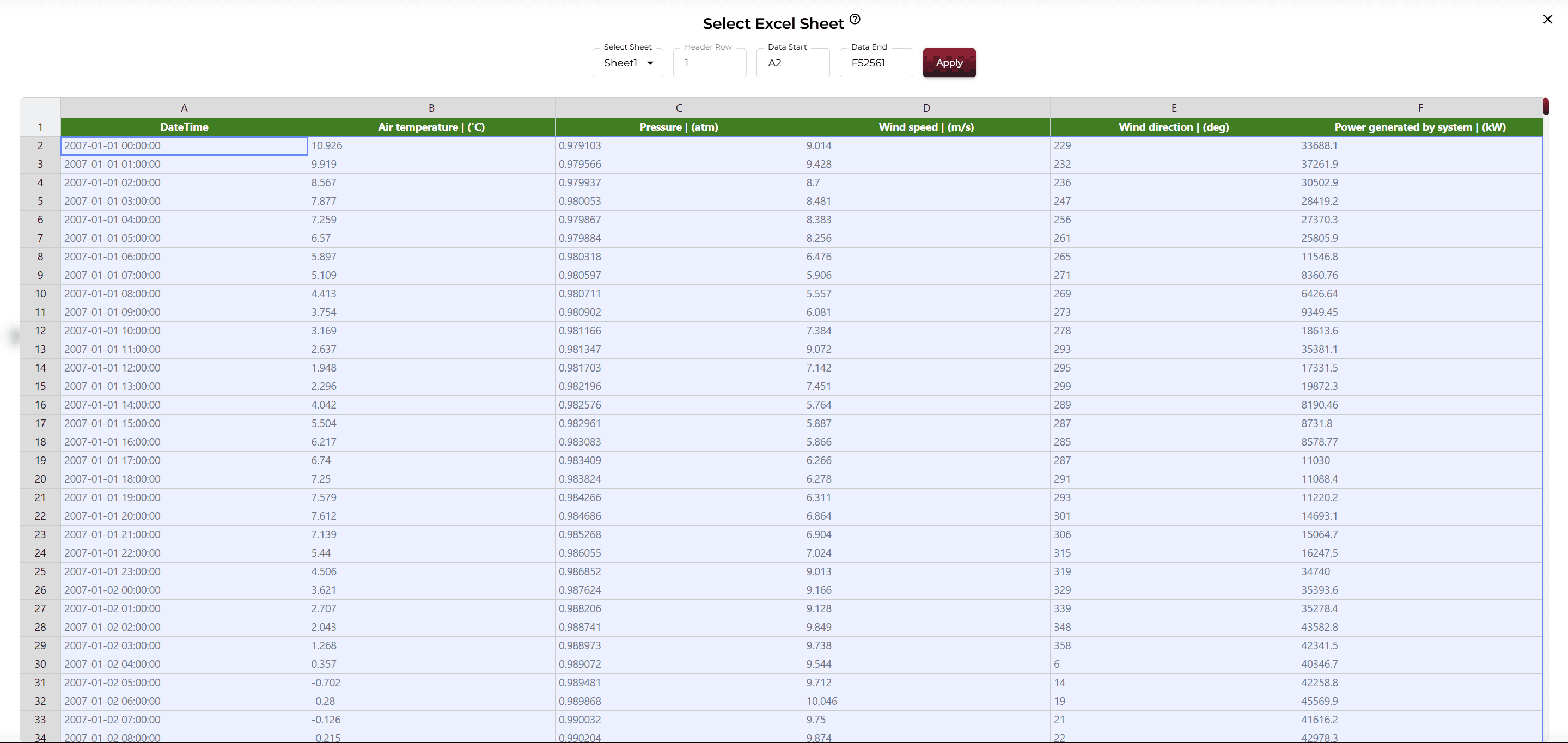
Click on the **'Upload CSV or Excel Data'** button → Select a source for the dataset → Upload `wind_energy_train.xlsx`. The system automatically identifies the meteorological targets.
BChoosing Analysis Mode
- How can power generated by wind energy be maximized?
- Which factors play the most important role in generating power from wind?
Operation Using Autonomous Guided Mode
AQuery Response
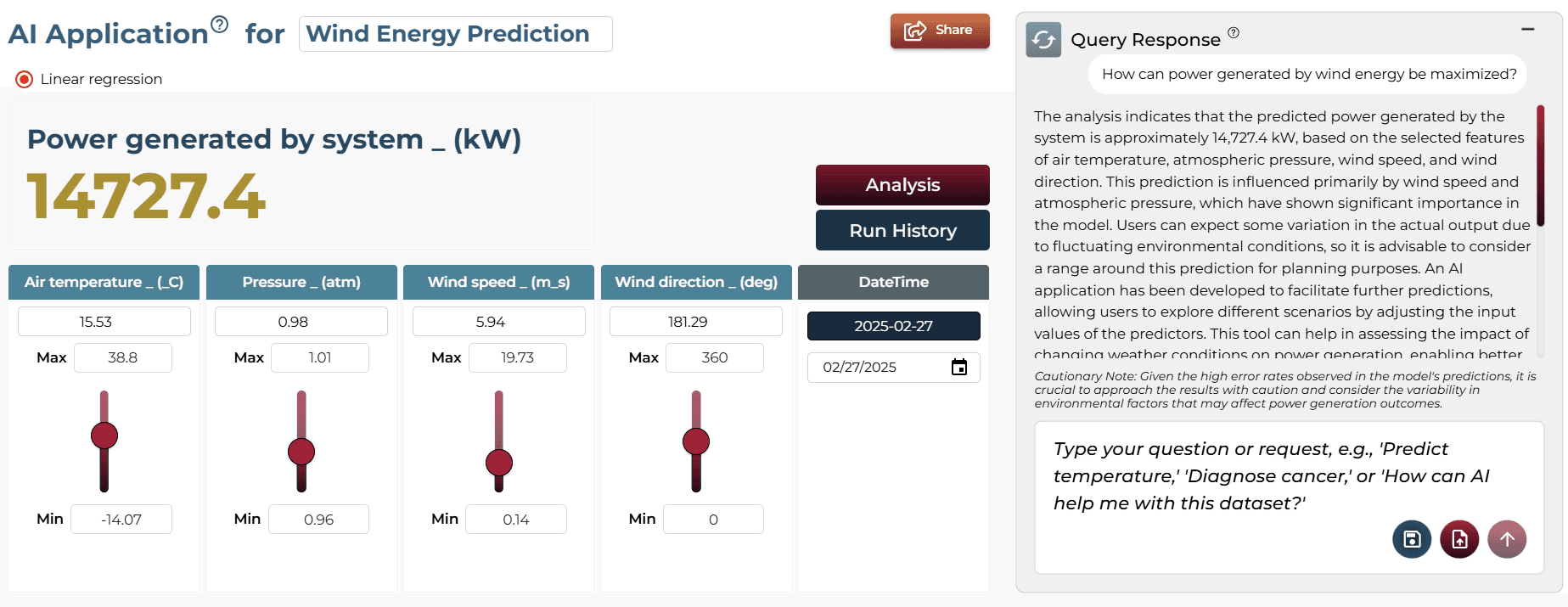
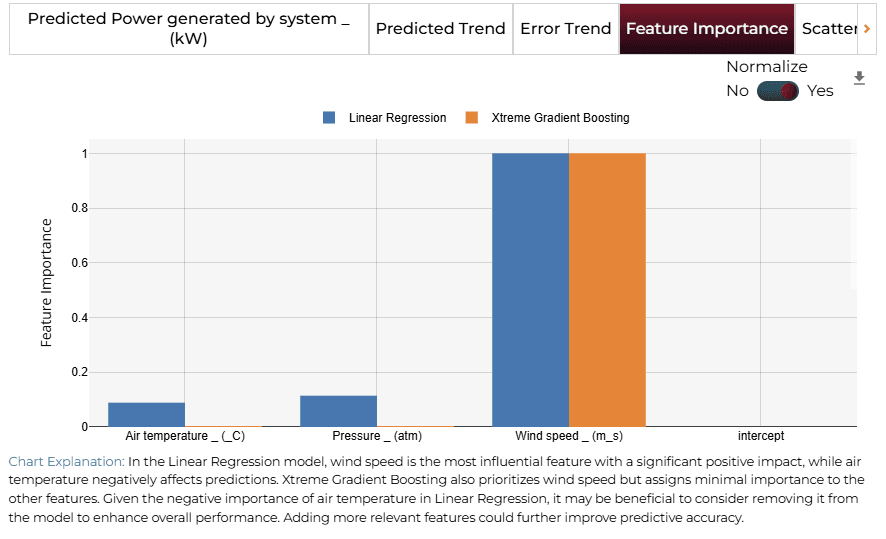
The Random Forest model demonstrated exceptional usability with very low test error percentage. Wind speed was identified as the most critical feature for energy maximization.
BAI Application
The generated application allows users to test various wind speed and temperature scenarios via sliders to see their immediate impact on generated kW.
Model Fine-Tuning/Manual Model Building
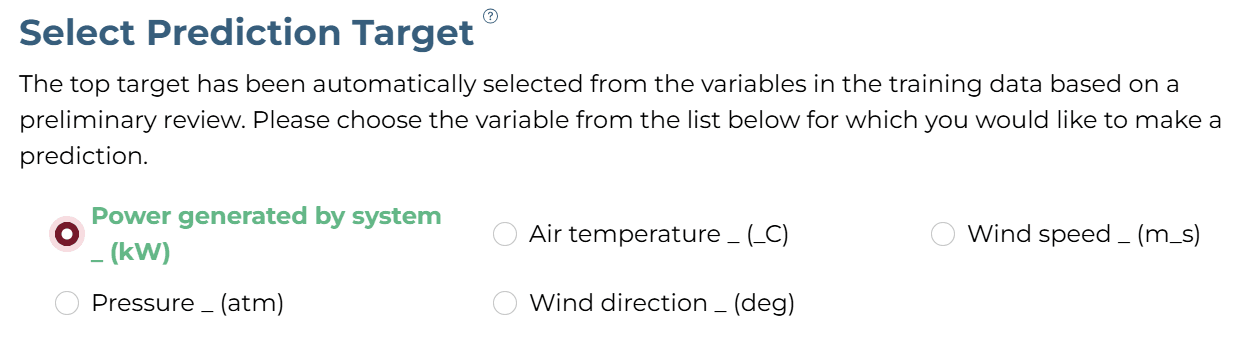
ASelecting Prediction Target
'Power generated by system | (kW)' was selected as the target column.
BSelecting Analysis Type
Target is a numerical value, so 'Regression' is selected.

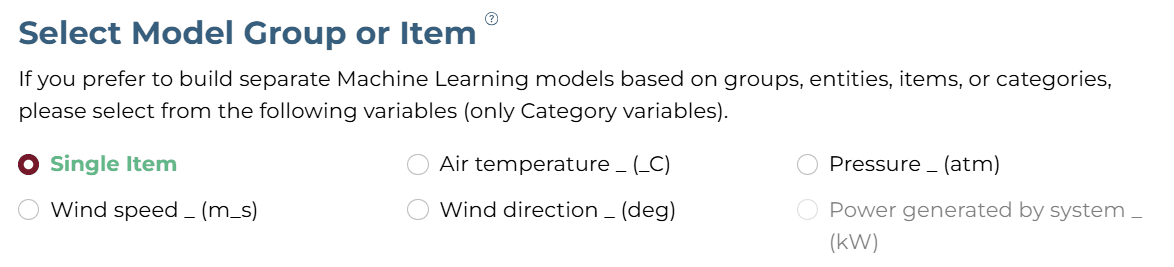
CSelecting Model Group/Item
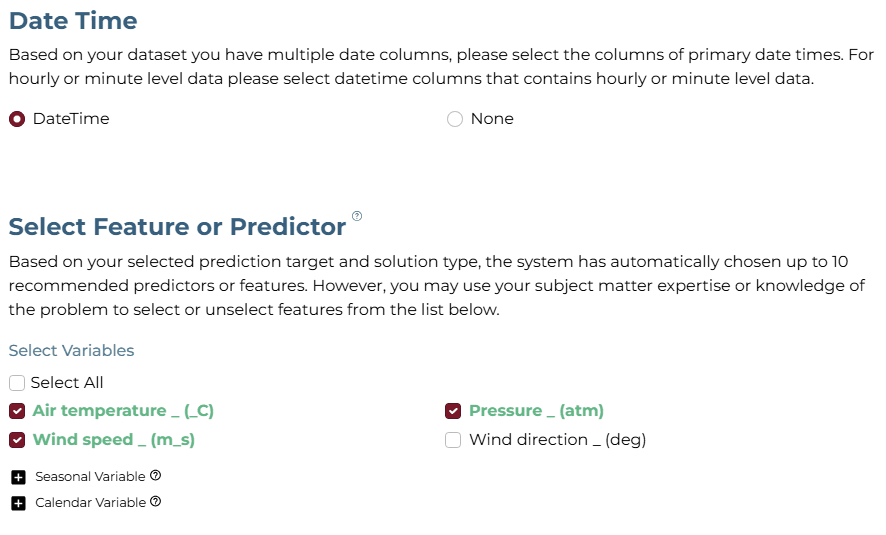
DSelecting Features
Select Air temperature, Wind speed, and Wind direction.
ESelecting Training Level

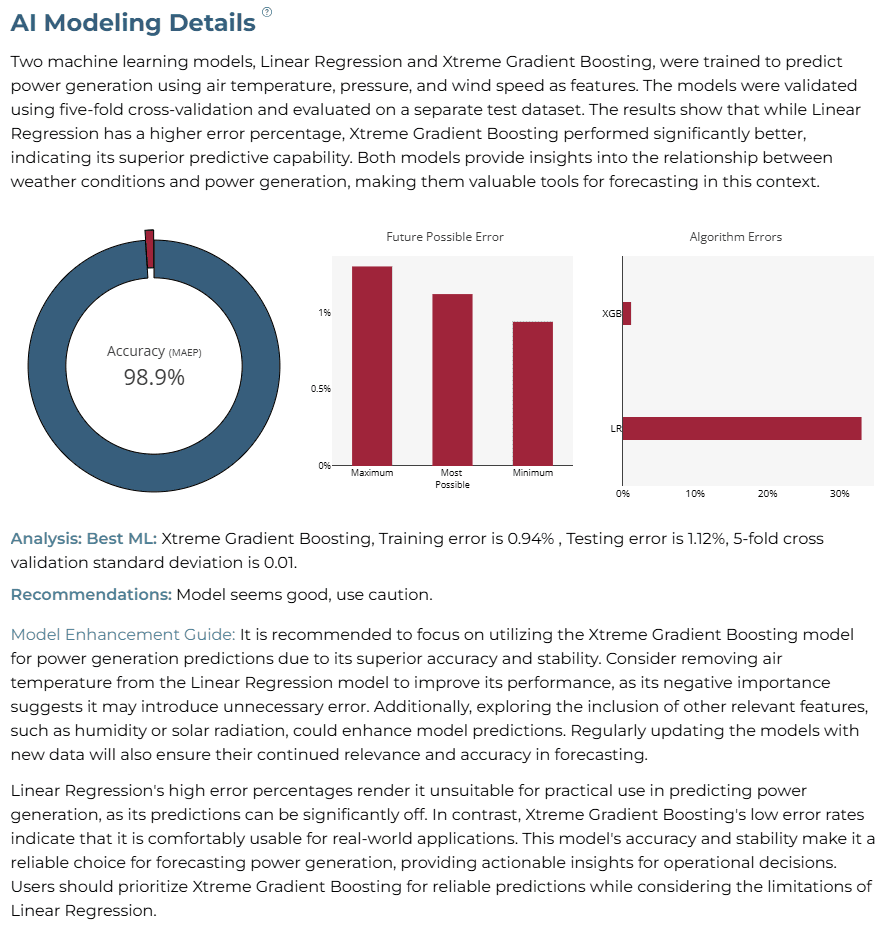
AI Modeling Details
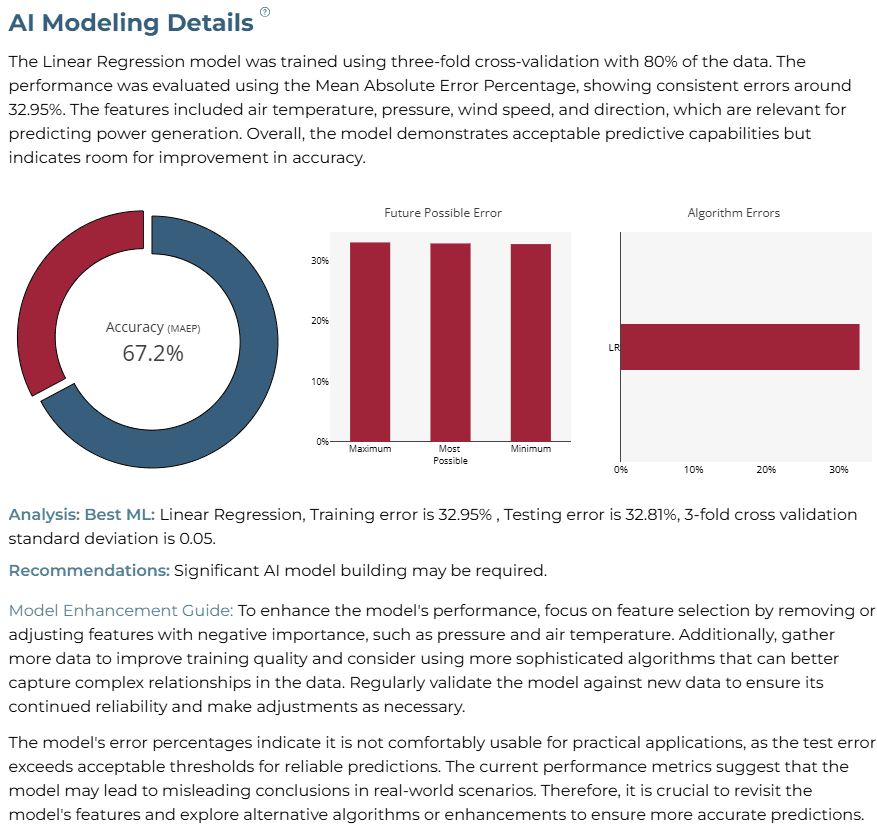
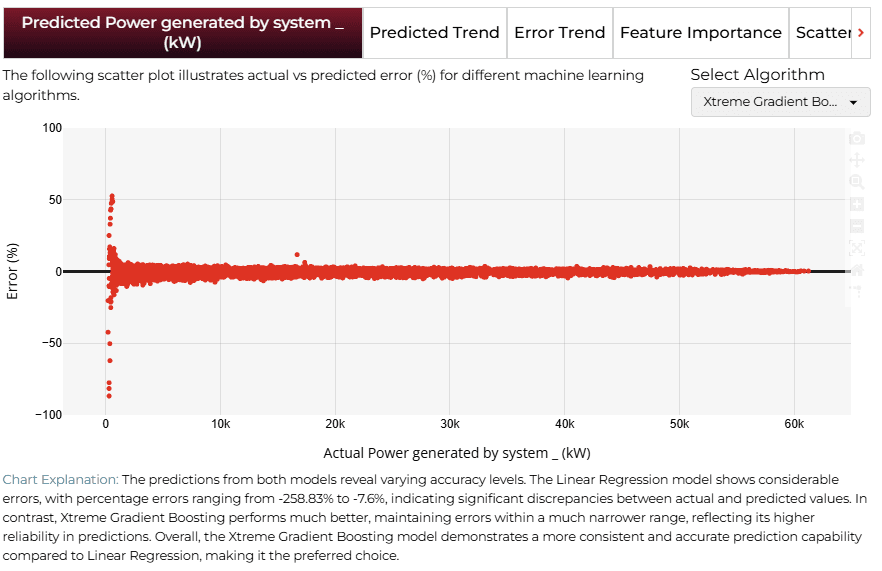
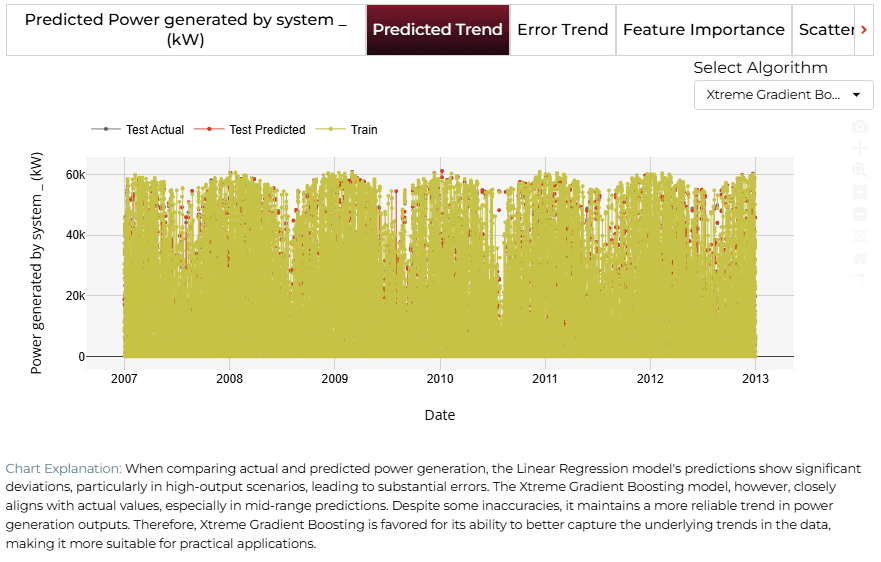
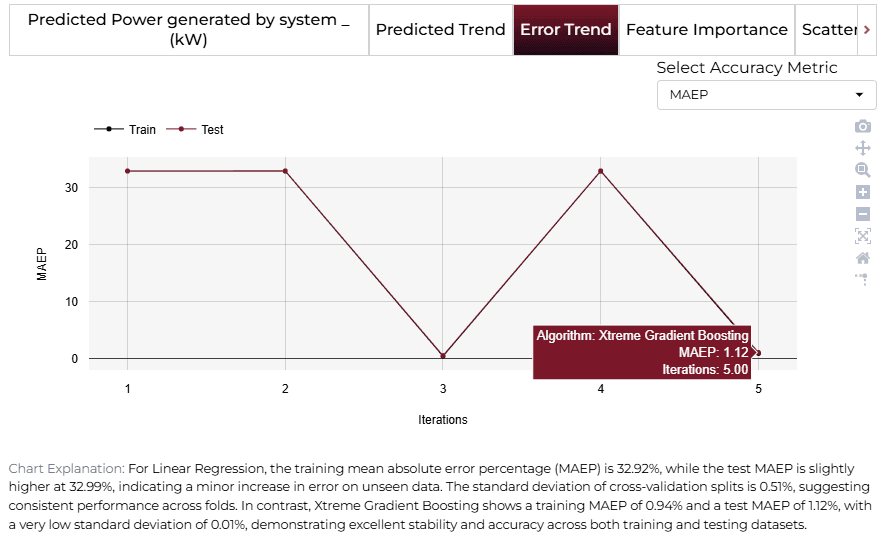
Xtreme Gradient Boosting demonstrated an accuracy of 98.9% with a testing error of 1.12%. It out-performed Linear Regression for this dataset.
Training Analysis Details
APredicted Target
BPredicted Trend
CError Trend
DFeature Importance
Finalize Models
Once accuracy reaches target levels, click 'Deploy' to start using your AI wind energy prediction application.

4AI APPLICATION
Manual Model Building
In Manual Training Mode, adjust sliders for Wind Speed and Air Temperature. Clicking ‘Get Response’ generates a tailored kW prediction based on those values.
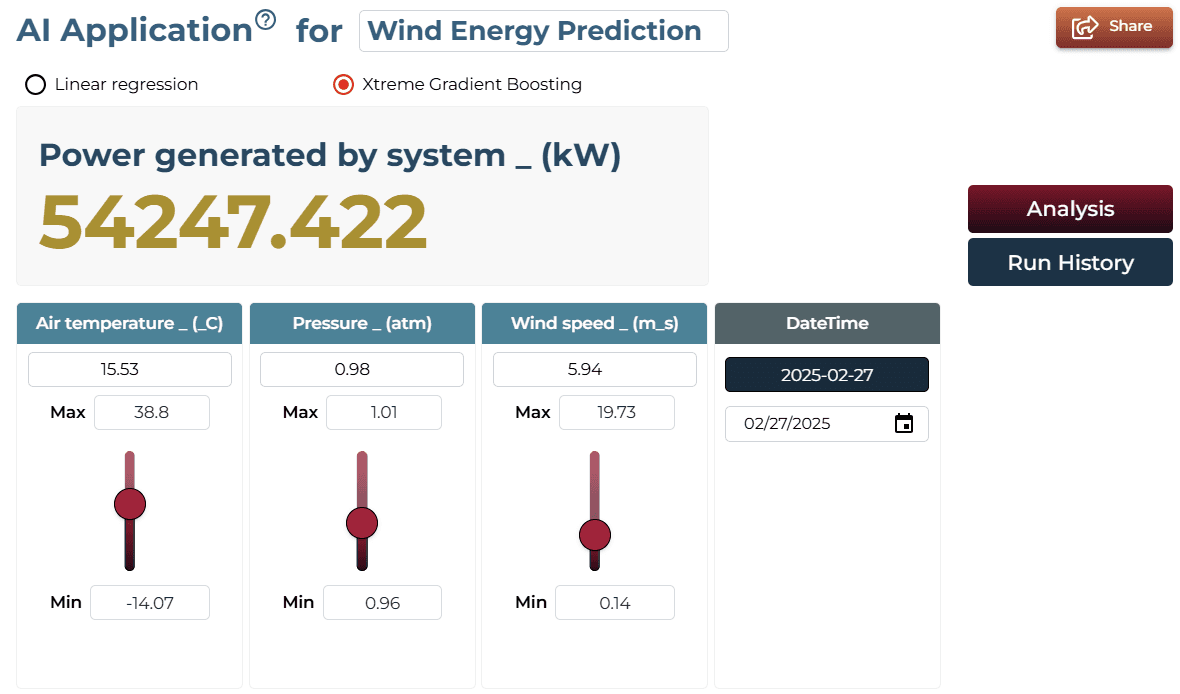
AI Application Demo
- Adjust operational variables like 'Wind speed' and 'Air temperature'.
- Observe how different weather conditions influence the expected power output in real-time.
Saving the Project
Save your project by clicking the icon at the bottom left corner of the textbox.

Sharing the Project
Share the application for single on-demand predictions once the analysis is saved.

Interested in similar AI solutions?
Explore our full suite of AI capabilities designed to transform your business operations.